Discover what Chinese people really eat for breakfast — from jianbing crepes and congee to steamed buns and soy milk. A city-by-city morning food guide.
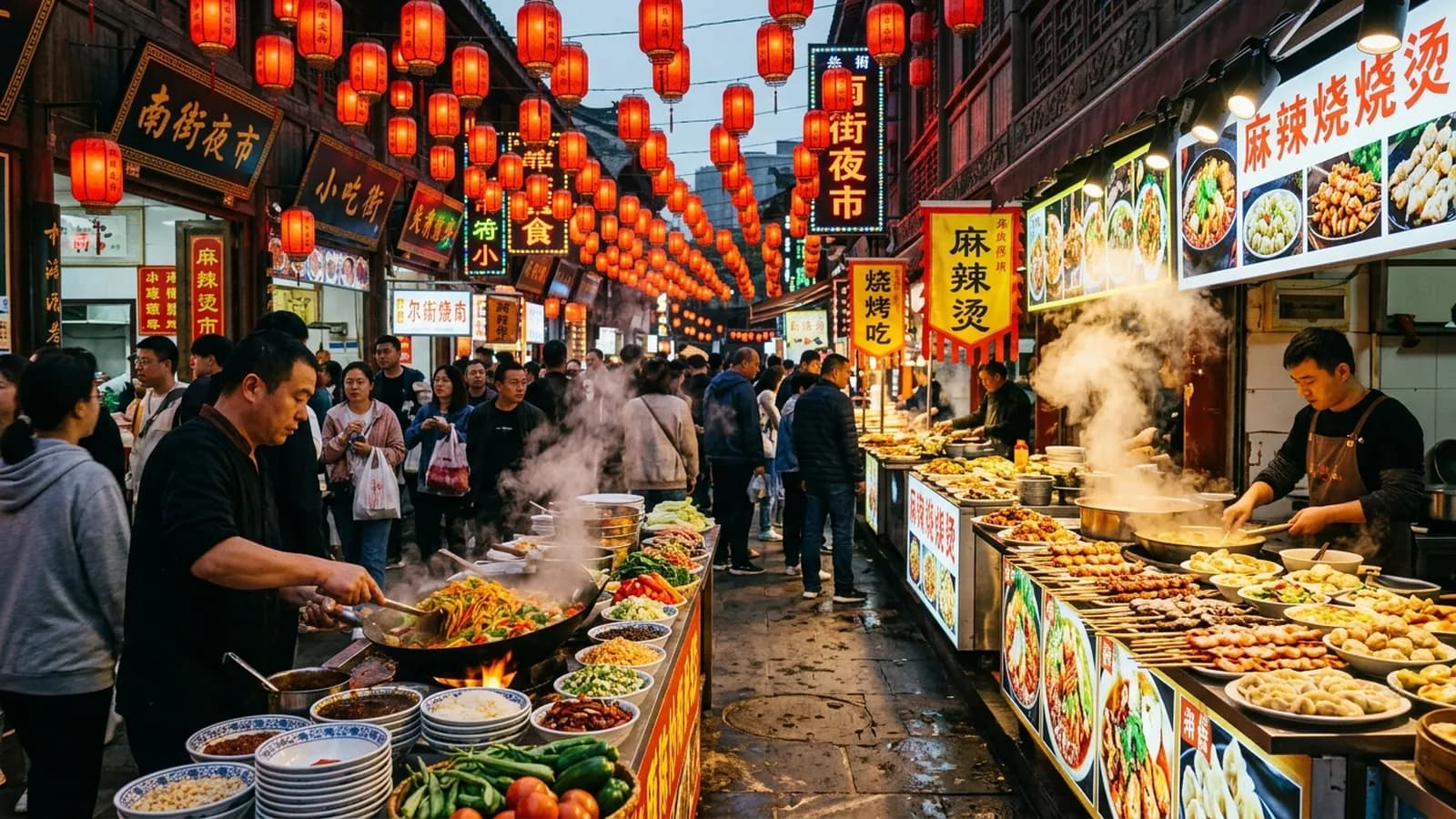
Forget cereal and toast. In China, breakfast is a full-blown culinary event that happens on every street corner, in steamy hole-in-the-wall shops, and at mobile carts that materialize before dawn and vanish by mid-morning. The Chinese breakfast tradition is one of the most vibrant, diverse, and affordable food experiences you can have as a traveler, and yet most visitors never explore it beyond their hotel buffet. That is a serious mistake.
During our time living and traveling across China, we discovered that the best meals of the day often happen before 9 AM. A sizzling jianbing crepe folded fresh on a griddle in Beijing. A bamboo steamer basket of xiaolongbao in Shanghai. A warming bowl of congee topped with century egg in Guangzhou. These are not tourist attractions. They are what hundreds of millions of people eat every single morning, and they cost next to nothing.
Key Takeaways
| Question | Answer |
|---|---|
| What is the most popular chinese breakfast? | Soy milk (doujiang) with fried dough sticks (youtiao) is the most widespread combination, found in every city and province |
| How much does breakfast cost? | 5-15 CNY ($0.70-$2 USD) for a full morning meal at street stalls and local breakfast shops |
| Where do locals eat breakfast? | Street carts, tiny breakfast shops (zaocandian), wet market stalls, and mobile vendors near metro stations |
| Is breakfast the same across China? | No. Northern China favors wheat-based foods (buns, pancakes, noodles) while southern China leans toward rice-based dishes (congee, rice noodles, dim sum) |
| What time is breakfast in China? | 6:00-9:00 AM; many popular stalls sell out by 8:30 AM, so early risers get the best options |
| Is street breakfast safe to eat? | Yes. Choose stalls with long queues and high turnover. Freshly cooked food from busy vendors is generally very safe |
The North-South Breakfast Divide
Before diving into specific dishes, it helps to understand the fundamental split in Chinese breakfast culture. China's food geography is shaped by agriculture: wheat dominates the north, rice dominates the south, and breakfast reflects this perfectly.
In northern cities like Beijing, Xi'an, and Tianjin, mornings revolve around wheat-based foods. You will find steamed buns, flatbreads, savory pancakes, and noodles. Breakfasts are hearty, filling, and designed to fuel people through cold winter mornings.
In southern cities like Guangzhou, Kunming, and Nanning, rice is king. Congee (rice porridge) forms the base of many morning meals, and rice noodles appear in countless regional variations. The Cantonese dim sum tradition--which outsiders often associate with lunch--actually originated as a morning meal, and many locals still treat it that way.
Then there are the universals. Soy milk and fried dough sticks, steamed buns, and tea eggs transcend the north-south divide. You will find them from Harbin to Hainan, albeit with local twists.
Jianbing (煎饼): China's Favorite Breakfast Crepe
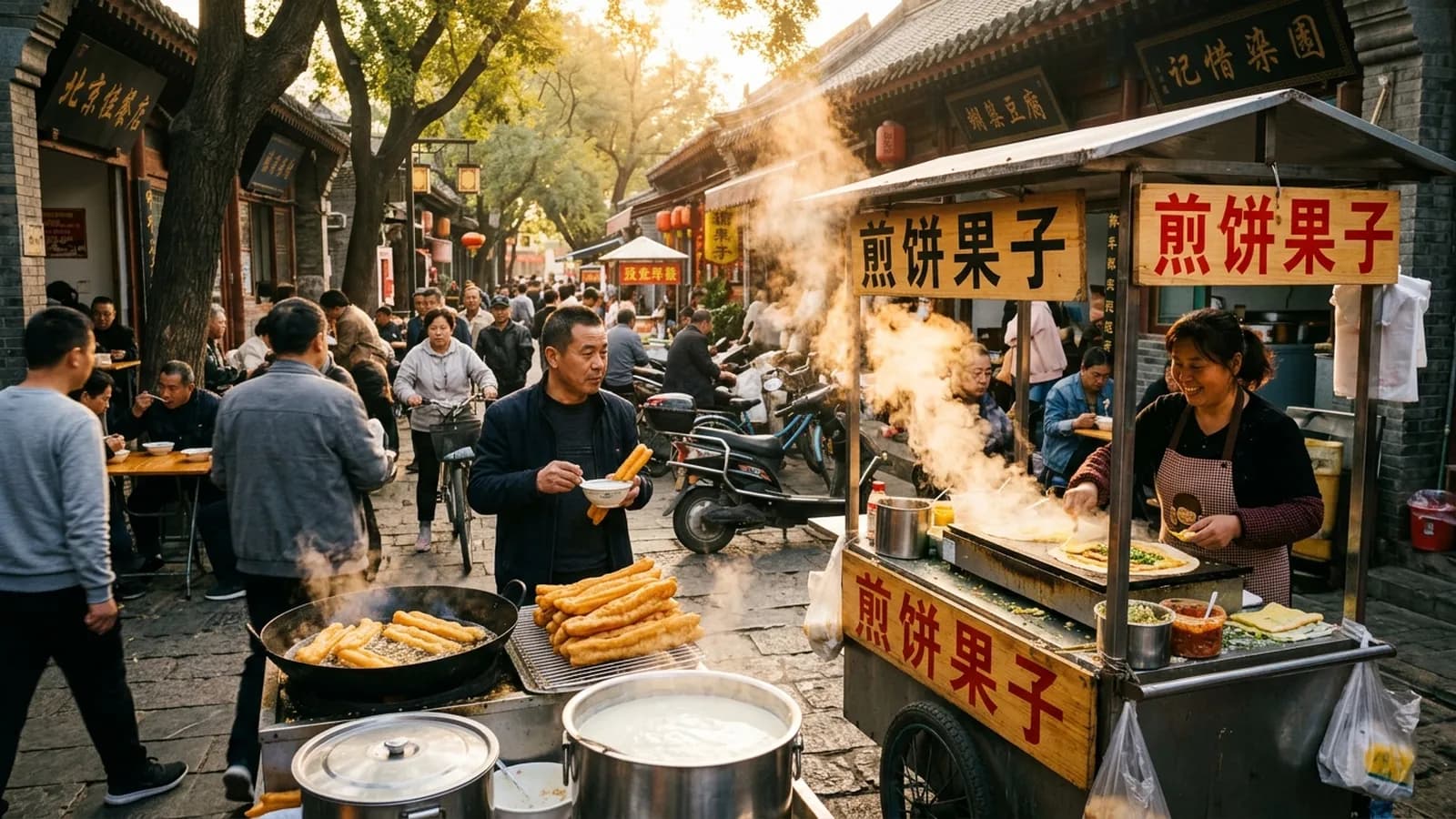
If there is one dish that defines Chinese breakfast street food culture, it is the jianbing. This thin, crispy savory crepe is made fresh on a circular griddle right before your eyes, and the entire process takes about two minutes.
The vendor spreads a thin batter of wheat and mung bean flour across the hot surface, cracks an egg on top, and sprinkles it with sesame seeds and chopped scallions. Once set, the crepe is flipped and smeared with a savory sauce--typically a mix of sweet bean paste (tianmianjiang) and chili sauce. A sheet of crispy fried wonton skin or fried dough (called baocui) is placed in the center, and the whole thing is folded into a portable rectangle you eat while walking to work.
Where to eat it: Originally a Tianjin specialty, jianbing is now ubiquitous across northern China. In Beijing, look for carts near any metro station entrance during morning rush hour. Each vendor has their own twist--some add lettuce, ham, or extra sauces.
Cost: 6-10 CNY ($0.85-$1.40 USD). Loaded versions with extra fillings run up to 12-15 CNY.
Local tip: The best jianbing vendors attract long lines. If you see a queue of office workers in business attire waiting patiently at a street cart at 7:30 AM, that is the one you want.
Doujiang and Youtiao (豆浆 + 油条): The Classic Duo
Soy milk and fried dough sticks is arguably the most iconic Chinese breakfast pairing, and it has been for centuries. This is the combination that transcends every regional boundary--you will find it in every city, every province, and every neighborhood in China.
Doujiang (soy milk) comes in two varieties: sweetened (tian doujiang) and savory (xian doujiang). The sweet version is what most foreigners expect--warm, subtly sweet, with a smooth, creamy texture. The savory version is a revelation: it is mixed with vinegar, soy sauce, dried shrimp, pickled mustard greens, and chopped youtiao, creating a silky, slightly curdled porridge that tastes far better than it sounds. Shanghai is famous for its savory soy milk, and we strongly recommend trying it.
Youtiao (fried dough sticks) are long, golden, airy strips of deep-fried dough. They are crispy on the outside, soft and chewy on the inside, and have a subtle savory flavor. The classic way to eat them is to tear off a piece, dunk it into your hot soy milk, and let it soak for a few seconds before eating. You will also see youtiao tucked inside jianbing, wrapped in rice rolls, or served alongside congee.
Cost: A cup of doujiang costs 2-4 CNY ($0.30-$0.55 USD). A pair of youtiao costs 2-3 CNY ($0.30-$0.40 USD). Together, a complete breakfast for under $1.
Congee / Zhou (粥): The Ultimate Comfort Breakfast
Congee--known as zhou in Mandarin--is rice porridge cooked low and slow until the grains break down into a thick, silky, comforting soup. It is one of the oldest breakfast foods in Chinese history, and it remains a daily staple for hundreds of millions of people, particularly in southern China.
Plain white congee (bai zhou) is the base, and it serves as a blank canvas for toppings. The most popular variations include:
- Piandan shourou zhou (皮蛋瘦肉粥): Century egg and lean pork congee--the most famous variety, with the distinct flavor of preserved egg adding depth
- Yu pian zhou (鱼片粥): Fish congee, popular in Guangdong, with thin slices of fresh fish that cook in the hot porridge
- Hong dou zhou (红豆粥): Sweet red bean congee, often eaten as a lighter breakfast or dessert
- Ba bao zhou (八宝粥): Eight-treasure congee with mixed grains, nuts, and dried fruits
Congee is usually served with small side dishes: pickled vegetables, fermented tofu, salted duck eggs, and peanuts. The combination of bland, warming porridge with intensely flavored sides creates a balanced meal that is gentle on the stomach and deeply satisfying.
Where to eat it: Everywhere, but especially in Guangzhou and across Guangdong province, where congee culture reaches its highest art form. In the north, congee shops are common but less dominant than bun and pancake vendors.
Cost: 5-12 CNY ($0.70-$1.65 USD) depending on toppings.
Baozi (包子): Steamed Buns With Every Filling Imaginable
Baozi are soft, fluffy steamed buns with fillings, and they are one of the most satisfying grab-and-go breakfasts in China. Every morning, bamboo steamers are stacked high in breakfast shops across the country, billowing white steam into the cool morning air.
The variety of fillings is enormous:
- Pork and cabbage (猪肉白菜): The classic, found everywhere
- Pork and chive (猪肉韭菜): Aromatic and savory, particularly popular in the north
- Char siu bao (叉烧包): Cantonese BBQ pork buns, sweet and savory, iconic in Guangzhou
- Vegetable buns (素菜包): Filled with mushrooms, glass noodles, and greens
- Red bean paste (豆沙包): Sweet buns, a favorite with children and anyone who likes dessert for breakfast
- Custard buns (奶黄包): Smooth, sweet custard filling that oozes when you bite in
The most famous baozi come from specific regional traditions. Tianjin's Goubuli baozi have been served since the 1850s and are a nationally recognized brand. In Chengdu, baozi tend to be smaller and spicier. In Shanghai, the bun tradition evolves into the legendary xiaolongbao.
Cost: 1-3 CNY per bun ($0.15-$0.40 USD). A typical breakfast of 3-4 buns with soy milk costs 8-12 CNY.
Xiaolongbao (小笼包): Shanghai's Soup Dumplings
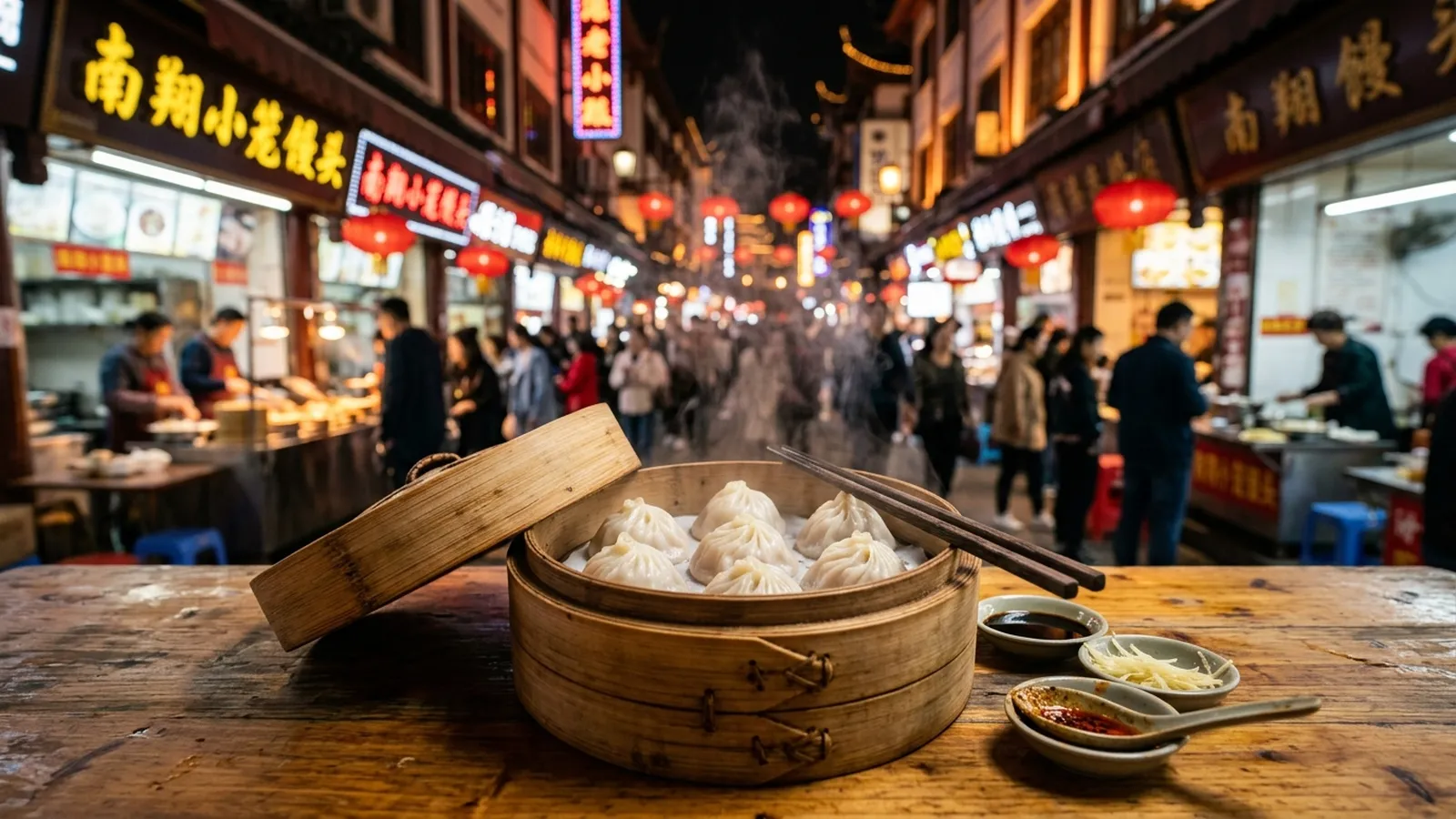
While baozi are found everywhere, xiaolongbao--Shanghai's famous soup dumplings--occupy a special place in Chinese breakfast culture. These delicate, thin-skinned dumplings are filled with seasoned pork and a hot, savory broth that bursts in your mouth when you bite through the wrapper.
Eating xiaolongbao properly is a learned skill. You pick one up carefully with chopsticks, place it on your spoon, nibble a small hole in the side, and sip the soup before eating the rest. Rushing this process guarantees a burned tongue and soup on your shirt.
The best xiaolongbao in Shanghai are found at neighborhood breakfast shops, not at the famous tourist chains. Look for small restaurants where locals crowd around shared tables in the morning, dipping their dumplings in a mixture of dark vinegar and shredded ginger.
Where to eat it: Shanghai is the undisputed capital, but excellent xiaolongbao are also found in Wuxi (where they originated), Hangzhou, and across the Jiangnan region. Wuxi-style xiaolongbao tend to be slightly sweeter than the Shanghai version.
Cost: 8-15 CNY for a steamer of 8-10 pieces ($1.10-$2 USD).
Mantou (馒头): Plain Steamed Bread
Mantou is the unfilled cousin of baozi--plain steamed bread with no stuffing. It may sound boring compared to the other options on this list, but mantou is a staple breakfast food across northern China and is deeply embedded in daily life.
These soft, pillowy white buns are eaten alongside savory dishes, dipped in congee, or stuffed into a pocket for an on-the-go snack. Some vendors sell fried mantou (zha mantou), which are sliced and pan-fried until golden and crispy on the outside while remaining fluffy inside. In some regions, you will find mantou made with corn flour, giving them a yellow color and a slightly sweet, grainy flavor.
Cost: 0.5-2 CNY per piece ($0.07-$0.30 USD). Among the cheapest breakfasts available.
Tea Eggs (茶叶蛋): The Convenience Store Classic
Tea eggs (cha ye dan) are hard-boiled eggs that have been cracked and simmered for hours in a fragrant broth of tea, soy sauce, star anise, cinnamon, and other spices. The result is an egg with a marbled brown-and-white pattern on the outside and a deeply savory, slightly smoky flavor throughout.
You will find tea eggs simmering in large pots at convenience stores (7-Eleven, FamilyMart), street stalls, train stations, and breakfast shops across China. They are the ultimate portable breakfast protein--easy to eat, filling, and available everywhere from 6 AM onwards.
Cost: 1.5-3 CNY per egg ($0.20-$0.40 USD).
Wonton Soup and Noodle Soup: A Bowl for Breakfast
The idea of eating soup for breakfast may seem unusual to Western visitors, but in China, a hot bowl of wonton soup or noodle soup is a perfectly normal way to start the day. In fact, in many cities, it is the preferred breakfast.
Wonton soup features thin-skinned dumplings filled with pork and shrimp, swimming in a clear, flavorful broth topped with dried seaweed, scallions, and a drizzle of sesame oil. Wonton breakfasts are especially popular in Shanghai, Guangzhou, and across southern China.
Noodle soup varies wildly by region:
- Wuhan's re gan mian (热干面): Hot dry noodles tossed in sesame paste, chili oil, and pickled radish--Wuhan's signature breakfast, eaten by millions every morning
- Lanzhou lamian (兰州拉面): Hand-pulled noodles in a rich beef broth with radish slices and chili oil--one of the most widespread breakfast noodles in China
- Guilin mi fen (桂林米粉): Rice noodles in savory broth topped with braised beef, peanuts, and pickled beans--the breakfast of choice in Guangxi province
- Chongqing xiao mian (重庆小面): Fiery, numbing noodles in chili oil--not for the faint-hearted at 7 AM, but locals love them
Cost: 8-18 CNY ($1.10-$2.50 USD) for a generous bowl.
City-by-City Morning Food Guide
Beijing: Savory and Wheat-Based
Beijing breakfast is all about jianbing, baozi, and doujiang-youtiao. Head to any residential neighborhood before 8 AM and you will find a cluster of breakfast carts and small shops serving these staples. The jianbing guozi here tends to be on the larger side with a generous amount of sauce and crispy filling. Beijing locals also enjoy douzhi (fermented mung bean milk), a pungent, acquired taste that most foreigners find challenging. Pair it with jiaoquan (fried dough rings) for the authentic local experience.
Shanghai: Delicate and Diverse
Shanghai's breakfast scene is one of the most diverse in China. Beyond xiaolongbao, look for ci fan tuan (sticky rice rolls stuffed with youtiao, pickled vegetables, and pork floss), sheng jian bao (pan-fried soup buns with a crispy bottom), and da bing (large sesame flatbread). Savory soy milk (xian doujiang) is a Shanghai specialty, and the Four Kings of Shanghai Breakfast--da bing, youtiao, ci fan tuan, and doujiang--remain the morning standard for locals.
Guangzhou: Dim Sum Capital
In Guangzhou, breakfast means yum cha (drinking tea), which is the Cantonese tradition of morning dim sum. Locals gather in teahouses as early as 6 AM to enjoy steamer baskets of har gow (shrimp dumplings), siu mai (pork dumplings), char siu bao (BBQ pork buns), cheung fun (rice noodle rolls), and dozens of other small dishes, all washed down with pots of pu-erh or chrysanthemum tea. This is breakfast as a social event--families and friends sharing dishes over leisurely conversation. For a quicker option, Guangzhou's streets also offer incredible congee and rice noodle rolls from humble morning stalls.
Chengdu: Spicy From the Start
Chengdu does not believe in easing into the day. Breakfast here can be as fiery as dinner. Dan dan mian with chili oil and minced pork is a popular morning noodle. Zhong shui jiao (Zhong-style dumplings in sweet-spicy sauce) are a beloved Chengdu breakfast treat. Baozi and doujiang are available everywhere, but even these often come with a spicy dipping sauce. The city's morning food stalls also serve maocai--essentially single-serving hot pot ingredients cooked in a spicy broth--which some locals eat as early as 7 AM.
Xi'an: The Muslim Quarter Morning
Xi'an's breakfast culture draws heavily from its Hui Muslim culinary tradition, particularly in the famous Muslim Quarter. Rou jia mo (肉夹馍)--often called "Chinese hamburger"--is a flatbread stuffed with slow-braised, chopped meat and is one of the most satisfying breakfasts in China. Pair it with a bowl of hu la tang (胡辣汤), a thick, peppery soup packed with vegetables, tofu, and meatballs. The combination of crispy bread with warming, spicy soup is the quintessential Xi'an morning. You will also find excellent liangpi (cold skin noodles) served with chili oil and vinegar, eaten year-round.
Where to Find Breakfast: A Practical Guide
Finding authentic Chinese breakfast is not difficult--you just need to know where to look and when to show up.
Street carts and mobile vendors are the most common breakfast source. These appear near residential compounds, metro stations, bus stops, and office buildings between 6:00 and 9:00 AM. They serve a limited menu (usually just one or two items) but do it exceptionally well. Look for the carts surrounded by locals.
Zaocandian (早餐店) are dedicated breakfast shops. These small, no-frills establishments typically have a few tables, a steaming counter, and a menu board on the wall. They serve a wider range of items--buns, congee, soy milk, noodles, and eggs--all at rock-bottom prices. These are where most working locals eat their morning meal.
Wet markets often have breakfast stalls inside or adjacent to them. These tend to open earliest (5:00-5:30 AM) and serve the freshest food, as the cooks have first pick of the morning's produce.
Convenience stores (7-Eleven, FamilyMart, Lawson) stock tea eggs, steamed buns, onigiri-style rice balls, and warm soy milk. Not as good as fresh street food, but reliable and available in every urban area.
Tip for travelers: Set your alarm early. The best breakfast vendors sell out fast, and many pack up by 8:30 or 9:00 AM. If you roll out of your hotel at 10 AM expecting street breakfast, you will find empty sidewalks.
How Much Does Chinese Breakfast Cost?
One of the most remarkable things about Chinese breakfast is how affordable it is. Here is a realistic cost breakdown:
| Breakfast Item | Typical Price (CNY) | Price (USD) |
|---|---|---|
| Jianbing | 6-10 | $0.85-$1.40 |
| Soy milk (doujiang) | 2-4 | $0.30-$0.55 |
| Youtiao (pair) | 2-3 | $0.30-$0.40 |
| Baozi (per bun) | 1-3 | $0.15-$0.40 |
| Congee | 5-12 | $0.70-$1.65 |
| Tea egg | 1.5-3 | $0.20-$0.40 |
| Xiaolongbao (steamer) | 8-15 | $1.10-$2.00 |
| Wonton soup | 8-15 | $1.10-$2.00 |
| Noodle soup | 8-18 | $1.10-$2.50 |
| Mantou | 0.5-2 | $0.07-$0.30 |
A complete, filling breakfast at a street stall or breakfast shop typically costs 5-15 CNY ($0.70-$2 USD). Even in expensive cities like Shanghai and Beijing, you can eat a generous morning meal for under 15 CNY if you eat where locals eat. Compare that to a hotel breakfast buffet at 80-200 CNY and the choice is clear.
Tips for Ordering Breakfast as a Foreigner
Ordering at Chinese breakfast stalls can be intimidating if you do not speak Mandarin, but it is far easier than you might think. Most stalls have a visible menu board with prices, and you can simply point at what you want. Here are some phrases that help:
- Zhe ge (这个) -- "This one" (while pointing)
- Yi ge (一个) -- "One of these"
- Liang ge (两个) -- "Two of these"
- Duo shao qian? (多少钱?) -- "How much?"
- Bu yao la (不要辣) -- "No spice" (useful in Sichuan and Hunan)
- Da bao (打包) -- "To go" (literally "pack it up")
Most vendors are patient and friendly, even amused, when foreigners attempt to order. Having a translation app like WeChat ready on your phone is helpful for more complex requests. Payment is almost always via QR code (WeChat Pay or Alipay), though small vendors in less touristy areas still accept cash.
Frequently Asked Questions
Is Chinese breakfast healthy?
Most traditional Chinese breakfast foods are nutritious and balanced. Congee is easy to digest and hydrating. Steamed buns provide carbohydrates without excessive oil. Soy milk is high in protein. However, some items--like youtiao (deep-fried) and jianbing with heavy sauces--are higher in fat and sodium. As with any cuisine, variety is key. A typical local breakfast of congee, a tea egg, and some pickled vegetables is a genuinely healthy meal.
Can I find vegetarian breakfast in China?
Yes, though you need to be specific. Vegetable baozi, plain congee with pickled vegetables, sweet soy milk, mantou, and red bean buns are all naturally vegetarian. However, many dishes contain hidden meat--pork is common in wonton fillings, congee toppings, and sauces. Learn the phrase wo chi su (我吃素, "I eat vegetarian") and ask before ordering items with unclear fillings.
What time should I go for breakfast?
The sweet spot is 6:30-8:00 AM. This is when the widest selection is available and everything is freshly prepared. Popular stalls begin selling out after 8:00 AM, and most street vendors have closed by 9:00-9:30 AM. If you are aiming for dim sum in Guangzhou, many teahouses open at 6:00 or 7:00 AM and the morning session runs until about 11:00 AM.
Are there Western breakfast options in China?
In major cities, yes. Starbucks, McDonald's, and local bakery chains serve coffee, pastries, and sandwiches. Many hotels offer Western-style breakfast buffets. However, Western breakfast in China tends to be more expensive and less satisfying than the local options. A McDonald's breakfast set costs 25-35 CNY--roughly three times what a full local breakfast costs--and it tastes the same as it does everywhere else. Our advice: save the Western food for home and embrace the local morning food culture while you are in China.
Is it safe to eat street breakfast?
Street breakfast in China is generally very safe, particularly from busy vendors with high turnover. Food is cooked fresh in front of you, ingredients are purchased daily from markets, and competition keeps quality high. The simple rule is: if the stall is busy with locals, it is safe. Avoid vendors with food that appears to have been sitting out for a long time, and stick to freshly cooked items. In over three years of eating street breakfast across China, we have never had a food safety issue.
How is Chinese breakfast changing?
Urban China is experiencing a gradual shift in breakfast habits, particularly among younger generations. Coffee culture is booming, and chains like Luckin Coffee and Manner Coffee are becoming morning staples alongside traditional stalls. Convenience store breakfasts are growing in popularity, and some young professionals skip traditional breakfast entirely in favor of a coffee and a pastry. However, the traditional breakfast infrastructure remains deeply entrenched. Even in hyper-modern cities like Shenzhen, the morning jianbing cart and the neighborhood baozi shop show no signs of disappearing. The old and new coexist, which means travelers get the best of both worlds.

关于作者
Go2China Team
Go2China编辑团队结合第一手旅行经验和深厚的文化知识,为您带来准确、最新的中国旅行指南——从长城和故宫到远离游客路线的隐藏宝地。
- ✓在中国各地长期生活和旅行
- ✓团队中有母语级普通话使用者
- ✓信息经官方中国旅游来源验证