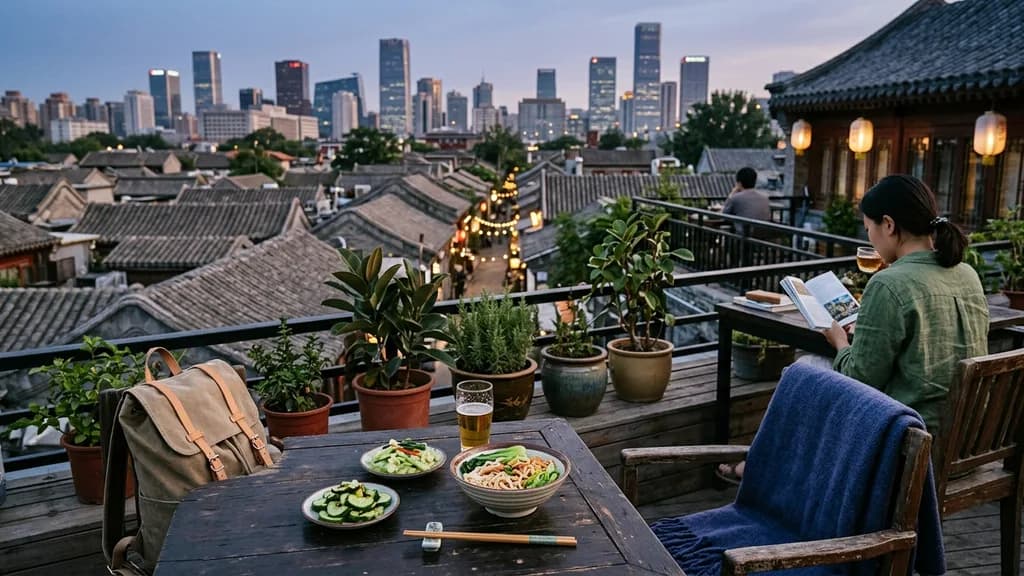
Real 2026 China costs - daily budgets $40-250, hotel/bullet train/meal prices in CNY + USD, and why China is 30-40% cheaper than Japan for Westerners.
Is China expensive in 2026? The short answer: no, but it depends on which China you plan to experience. A backpacker chasing street food and subway rides will spend about $45 a day. A Four Seasons guest ordering the tasting menu at Ultraviolet will clear $1,200 before lunch is served. This guide breaks down the real 2026 prices in both CNY and USD, using live hotel, train, and restaurant rates so you can price your trip to the yuan.
Key Takeaways
| Question | Answer |
|---|---|
| What is the average cost per day? | $40-70 budget, $90-160 mid-range, $250+ luxury. |
| Are hotels expensive? | Budget hotels 300-600 CNY ($42-84), mid-range 700-1,500 CNY ($100-210), luxury from 3,000 CNY ($420). |
| How much for meals? | Street food 10-30 CNY ($1.40-4.20), mid-range restaurants 80-200 CNY ($11-28) per person. |
| Is the bullet train affordable? | Yes. Beijing to Shanghai 553-933 CNY ($77-130) for 4.5-6 hours. |
| Is China cheaper than Japan? | Yes, roughly 30-40% cheaper across hotels, food, and transport. |
| Do credit cards work? | Limited. Mobile payments (WeChat Pay, Alipay) run the country in 2026. |
| How much is a typical attraction? | Forbidden City 40-60 CNY ($5.60-8.40), Great Wall Mutianyu 145 CNY ($20). |
1. The TL;DR: What a Day in China Actually Costs in 2026
Before we drill into each category, here is the headline math travelers actually want. Every figure assumes a 2026 exchange rate of 1 USD = 7.15 CNY, based on early-year averages from China's State Administration of Foreign Exchange.
| Travel style | Daily CNY | Daily USD | What you get |
|---|---|---|---|
| Shoestring | 200-360 CNY | $28-50 | Dorm bed, street food, subway, 1 free park |
| Budget | 290-500 CNY | $40-70 | Private hostel room, local restaurants, 1 paid attraction |
| Mid-range | 640-1,145 CNY | $90-160 | 3 or 4-star hotel, mid-range meals, Didi rides, 2 attractions, 1 bullet-train leg |
| Luxury | 1,790+ CNY | $250+ | 5-star hotel, fine dining, private driver, premium train class |
| Ultra-luxury | 7,000+ CNY | $980+ | Four Seasons, Ultraviolet-tier dining, black-car transfers |
The span is wide, but it is also honest. China is one of very few destinations where the same city can deliver a respectable $45 day and an unapologetic $1,000 day without the low end feeling like a compromise. That flexibility is the core reason the "expensive or not" question has no single answer.
2. Understanding CNY: The Context Westerners Miss
Most price panic comes from unfamiliar numbers. A 500 CNY hotel bill sounds steep until you convert it to $70. Here is the quick mental math to use all trip:
| CNY | USD (approx.) | Equivalent to |
|---|---|---|
| 10 CNY | $1.40 | Starbucks coffee, street noodles |
| 50 CNY | $7 | Casual lunch, short Didi ride |
| 100 CNY | $14 | Hostel bed, museum entry |
| 500 CNY | $70 | 3-star hotel night, mid bullet-train leg |
| 1,000 CNY | $140 | 4-star hotel, fine-dining set menu |
| 5,000 CNY | $700 | Luxury hotel night, private day tour |
Train yourself to divide CNY by 7 for a fast USD estimate. Most Western travelers instinctively multiply, which makes everything feel more expensive than it is.
Unlike India, Egypt, or parts of Southeast Asia, foreigner surcharges are almost nonexistent in China in 2026. Tickets, meals, and transport cost the same for locals and visitors. The few exceptions (passport handling at select museums, some hostels requiring a foreign-guest registration fee) add pennies, not dollars.
3. Hotel Costs Across Four Major Cities
Accommodation is usually the biggest single line item. Here is the 2026 reality, pulled from direct Booking.com rates for mid-April stays.
| Category | Beijing | Shanghai | Chengdu | Xi'an |
|---|---|---|---|---|
| Hostel dorm bed | 100-180 CNY ($14-25) | 140-250 CNY ($20-35) | 80-150 CNY ($11-21) | 90-160 CNY ($13-22) |
| Budget hotel | 300-500 CNY ($42-70) | 400-600 CNY ($56-84) | 250-450 CNY ($35-63) | 280-480 CNY ($39-67) |
| Mid-range (3-4 star) | 700-1,200 CNY ($98-168) | 900-1,500 CNY ($126-210) | 600-1,100 CNY ($84-154) | 650-1,150 CNY ($91-161) |
| Luxury (5 star) | 2,500-5,000 CNY ($350-700) | 3,000-7,000 CNY ($420-980) | 2,200-4,500 CNY ($308-630) | 2,300-4,800 CNY ($322-672) |
| Ultra-luxury | 6,000-10,000 CNY ($840-1,400) | 8,000-15,000+ CNY ($1,120-2,100) | n/a | n/a |
A few takeaways. Shanghai is consistently 10-20% pricier than Beijing across every tier. Chengdu and Xi'an are noticeably cheaper and deliver similar quality for the middle categories. The Four Seasons Shanghai Pudong averages 4,500-6,500 CNY ($630-910) per night in shoulder season, spiking to 8,000+ CNY ($1,120+) during Chinese New Year or National Day.
For most travelers, the smart play is a 700-1,000 CNY ($98-140) mid-range hotel with breakfast, rainfall shower, and smart-TV casting. You are not losing much compared to 5-star stays in terms of the actual sleep experience, and you free up 2,000+ CNY per day to spend on food and experiences.
4. Food Costs: From 10 CNY Dumplings to a $980 Tasting Menu
Food is where China shows off. You can legitimately eat extraordinarily well for under $10 a day, or spend more on one dinner than a luxury hotel night.
| Tier | Price per person | Example |
|---|---|---|
| Street food | 10-30 CNY ($1.40-4.20) | Jianbing, baozi, lamb skewers, noodles |
| Local diner | 30-70 CNY ($4.20-9.80) | Sit-down Sichuan, dumpling house, rice bowl |
| Mid-range restaurant | 80-200 CNY ($11-28) | Hotpot with drinks, Peking duck half |
| Upscale dining | 300-800 CNY ($42-112) | Whole Peking duck restaurant, hotel buffet |
| Fine dining | 1,500-3,000 CNY ($210-420) | Michelin one- or two-star tasting menu |
| Ultraviolet Shanghai | 4,000-7,000 CNY ($560-980) | 20-course sensory tasting, wine pairing extra |
One full day of food at local-plus tier (street breakfast, diner lunch, mid-range dinner) clocks in around 140-240 CNY, or roughly $20-34 per person per day. That is comparable to Southeast Asian costs and a fraction of Japan or South Korea.
For more regional price detail by cuisine, see eating like a local in China for under $8.
5. The Bullet Train: China's Best Bargain
China runs the largest high-speed rail network on earth, and the tickets are priced for domestic commuters, not tourists.
| Route | Distance | Second class | First class | Business class | Time |
|---|---|---|---|---|---|
| Beijing to Shanghai | 1,318 km | 553 CNY ($77) | 933 CNY ($130) | 1,748 CNY ($244) | 4.5-6 h |
| Shanghai to Hangzhou | 170 km | 73 CNY ($10) | 117 CNY ($16) | 219 CNY ($31) | 45 min |
| Beijing to Xi'an | 1,216 km | 516 CNY ($72) | 825 CNY ($115) | 1,630 CNY ($228) | 4.5 h |
| Shanghai to Chengdu | 1,900 km | 696 CNY ($97) | 1,113 CNY ($156) | 2,189 CNY ($306) | 11 h |
| Guangzhou to Shenzhen | 140 km | 75 CNY ($10) | 90 CNY ($13) | 215 CNY ($30) | 35 min |
Compare Beijing-Shanghai at $77 second class to the Tokyo-Osaka shinkansen at around $120 for similar distance and you see the gap. Second class is totally sufficient: reserved seats, two plugs per pair, quiet, and clean. First class mainly buys you more legroom and a wider seat angle. Business class is closer to lie-flat and costs about three times more, which rarely pencils out unless you are doing overnight travel.
Book via the official 12306 platform or a trusted reseller. Tickets release 15 days before travel and popular routes (Friday evenings, Sunday evenings, holidays) sell out within hours.
6. Urban Transport: Subways, Didi, Taxis
Big-city mobility in China is astonishingly cheap for the quality.
| Mode | Cost per ride | Notes |
|---|---|---|
| Beijing subway | 3-10 CNY ($0.42-1.40) | Distance-based, 27+ lines |
| Shanghai subway | 3-15 CNY ($0.42-2.10) | Largest metro system globally |
| Didi (Uber equivalent) | 15-50 CNY ($2.10-7) | Urban rides, 20% surge in rush hour |
| Taxi (metered) | 14 CNY flag + 2.3 CNY/km | Same price city-wide |
| Shared bike (Meituan/HelloBike) | 1.5-3 CNY ($0.21-0.42) | Per 30 min, unlock fee minimal |
| Airport express | 25-50 CNY ($3.50-7) | Subway link to city center |
A daily urban-transport budget of 40-60 CNY ($6-9) comfortably covers 4-6 Didi or subway trips. That is one-third of what you would spend in Tokyo and less than half of Bangkok's metered-taxi total for the same day.
7. Attractions: Iconic Sites Under $25
China's marquee sights are shockingly affordable for what they are.
| Attraction | City | Low season | High season |
|---|---|---|---|
| Forbidden City | Beijing | 40 CNY ($5.60) | 60 CNY ($8.40) |
| Great Wall Mutianyu (entry + cable car) | Beijing | 145 CNY ($20) | 145 CNY ($20) |
| Great Wall Badaling (entry only) | Beijing | 35 CNY ($5) | 40 CNY ($5.60) |
| Terracotta Warriors | Xi'an | 120 CNY ($17) | 120 CNY ($17) |
| Shanghai Tower observation deck | Shanghai | 180 CNY ($25) | 180 CNY ($25) |
| Giant Panda Base | Chengdu | 55 CNY ($7.70) | 55 CNY ($7.70) |
| Summer Palace | Beijing | 20 CNY ($2.80) | 30 CNY ($4.20) |
| Temple of Heaven | Beijing | 10 CNY ($1.40) | 15 CNY ($2.10) |
| Yu Garden | Shanghai | 30 CNY ($4.20) | 40 CNY ($5.60) |
| Li River cruise (Guilin) | Guilin | 210 CNY ($29) | 270 CNY ($38) |
For reference, an observation-deck ticket at Tokyo Skytree runs around $25-32, and the Eiffel Tower summit clocks in at 35 euros ($38). China's bucket-list sights are genuinely 40-60% cheaper than their international peers.
You can also pre-book skip-the-line tickets and guided tours through GetYourGuide, which adds convenience for an extra 15-30% over the face price.
8. Hidden Costs Most Blog Posts Skip
The sticker prices above are honest, but three costs catch first-time travelers off guard.
8.1 VPN subscription
A functional VPN is mandatory in 2026 for Google, WhatsApp, Instagram, Gmail, Western news, and most non-Chinese app stores. Budget $8-15 per month for a reliable provider with working Chinese servers (ExpressVPN, Astrill, NordVPN). Install and test it before you fly. Free VPNs almost universally fail inside China.
8.2 Passport fees and registration
A handful of museums and historic sites charge 5-20 CNY for foreigner passport-handling. Hotels are legally required to register your passport with local police within 24 hours, which is free but occasionally adds 15-30 minutes of front-desk time. Some hostels charge a one-time 30-50 CNY foreign-guest registration fee.
8.3 Translation and navigation apps
Google Translate's offline Chinese pack is free but mediocre. Serious travelers pay for Pleco Basic Bundle (one-time $30) or Waygo Pro ($12/year) for menu translation. Baidu Maps and Amap are free but Chinese-only, while Apple Maps works city-level in English.
Total 2026 hidden-cost estimate: $25-40 per traveler per trip on top of the headline daily budget.
9. Payment Reality: Why You Must Set Up Mobile Pay Before Arrival
This is the biggest friction point in China travel and the one most visitors fumble. Cash is dying, credit cards are inconsistent, and mobile payments run everything.
| Payment method | Acceptance (2026) |
|---|---|
| WeChat Pay / Alipay | 98%+ of all merchants |
| Cash (CNY) | ~70%, sometimes refused in cities |
| Visa / Mastercard | 4-5 star hotels, airlines, upscale malls only |
| American Express | Limited, airport and 5-star hotels only |
| Apple Pay | Works only when linked to WeChat or Alipay |
Since 2024, both WeChat Pay and Alipay accept foreign-issued Visa and Mastercard with no Chinese bank account required. Set this up before you fly or within the first 24 hours. Transactions under 200 CNY waive all fees; larger ones add ~3%.
10. China vs Japan: The Cost Comparison Westerners Actually Want
The most searched question tied to China's cost is how it stacks against Japan. Here is the direct 2026 head-to-head.
| Category | China (CNY / USD) | Japan (USD) | Savings |
|---|---|---|---|
| 3-star hotel | 700-1,200 CNY ($98-168) | $180-260 | 35-40% cheaper |
| Mid-range dinner | 80-200 CNY ($11-28) | $25-45 | 35-45% cheaper |
| High-speed train (1,300 km) | 553 CNY ($77) | $120-150 | 40% cheaper |
| Subway single ride | 3-10 CNY ($0.42-1.40) | $1.70-2.80 | 40-50% cheaper |
| Entry to top sight | 60 CNY ($8.40) | $15-25 | 45-65% cheaper |
| Luxury hotel | 3,000-8,000 CNY ($420-1,120) | $650-1,400 | 20-30% cheaper |
Across the board, China runs 30-40% cheaper than Japan at equivalent quality. The gap narrows at the ultra-luxury tier, where international hotel brands price closer to global rates. Southeast Asia (Thailand, Vietnam) remains cheaper than China by roughly the same margin. For a direct head-to-head with Thailand, see is China cheaper than Thailand?.
11. Budget Hacks That Actually Work in 2026
After crunching the numbers, here are the moves that save the most money without gutting the experience.
11.1 Choose second-class bullet train tickets
Second class is quiet, reserved, and air-conditioned. You save 40% versus first class and 70% versus business class. Use the savings on food or hotels.
11.2 Eat one meal per day at street level
Replacing one 150 CNY restaurant lunch with a 20 CNY jianbing saves 130 CNY daily, or $18 per day. Over a 10-day trip that is $180 you can redirect to one extra attraction splurge.
11.3 Stay two subway stops from the tourist core
Hotels on the immediate Bund, Wangfujing, or Qianmen cost 40-60% more than equivalent hotels 3-5 km out. Subway connections are fast and cheap, so the travel-time cost is minimal.
11.4 Prioritize free or under-30-CNY attractions
Beijing's hutongs, Shanghai's People's Square, the Temple of Heaven grounds, Chengdu's People's Park, and Xi'an's city walls all run under $5 and soak up half a day each.
11.5 Book bullet-train tickets 15 days out
Prices do not fluctuate, but popular seats sell out. A missed second-class ticket often forces you to buy first or business class at 2-3x the cost.
11.6 Use shared bikes for short hops
Meituan and HelloBike cost 1.5-3 CNY per 30-minute ride. For anything under 3 km, they are faster and cheaper than Didi.
12. Sample Budgets: A Week in China at Three Spending Tiers
Theory is fine, but travelers want a bottom-line number. Here is what a realistic 7-day Beijing-Xi'an-Shanghai trip costs in 2026.
| Item | Backpacker | Mid-range | Luxury |
|---|---|---|---|
| 6 hotel nights | 660 CNY ($92) | 5,400 CNY ($756) | 21,000 CNY ($2,940) |
| Food (7 days) | 980 CNY ($137) | 2,800 CNY ($392) | 10,500 CNY ($1,470) |
| Bullet trains (2 legs) | 1,069 CNY ($150) | 1,758 CNY ($246) | 3,378 CNY ($473) |
| Urban transport | 280 CNY ($39) | 560 CNY ($78) | 1,400 CNY ($196) |
| Attractions | 630 CNY ($88) | 1,260 CNY ($176) | 2,100 CNY ($294) |
| VPN + app fees | 70 CNY ($10) | 100 CNY ($14) | 100 CNY ($14) |
| Weekly total | 3,689 CNY ($516) | 11,878 CNY ($1,662) | 38,478 CNY ($5,387) |
| Per-day average | $74 | $237 | $770 |
For deeper per-day math at the entry level, read our $40 per day China budget guide and the longer-form is $1,000 enough for a week in China?.
For sample 7, 10, and 14-day itineraries that map to each tier, see our China itinerary guide.
13. Is China Expensive? Final Verdict
China in 2026 is not expensive in absolute terms and actively cheap in relative terms. For the quality of infrastructure, safety, food, and cultural depth you receive, the country sits in a price pocket that no other major destination matches. You will pay less than you would in Japan, South Korea, or Western Europe, and you will receive more scale (bullet-train network, hotel inventory, historical sites) than anywhere in Southeast Asia.
The one caveat: China punishes travelers who do not prepare. A trip without a working VPN, WeChat Pay, Alipay, or offline translation tools becomes expensive in time and stress, even if the headline prices stay low. Spend the $50 and one evening setting those up, and the math tips firmly in your favor.
Budget travelers can make $45 a day work. Mid-range travelers will love the $140 sweet spot. Luxury travelers can find Four Seasons nights and Michelin tasting menus at 25-30% off global prices. Whichever tier you choose, China in 2026 is one of the best value travel destinations on the map.
来源与参考
本文基于编辑研究并使用以下来源进行验证:

关于作者
Go2China Team
Go2China编辑团队结合第一手旅行经验和深厚的文化知识,为您带来准确、最新的中国旅行指南——从长城和故宫到远离游客路线的隐藏宝地。
- ✓在中国各地长期生活和旅行
- ✓团队中有母语级普通话使用者
- ✓信息经官方中国旅游来源验证