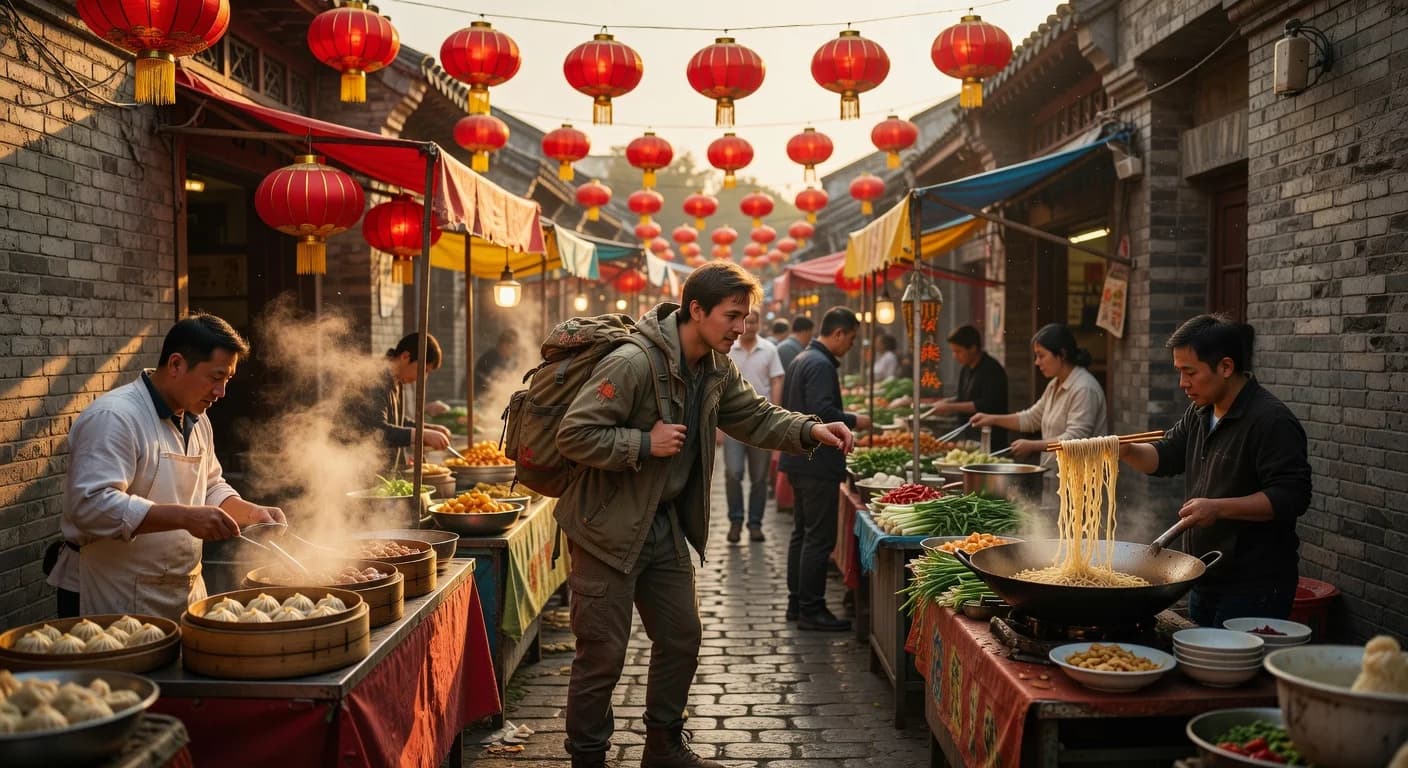
Discover Chengdu: giant pandas, spicy Sichuan cuisine, and laid-back charm. Complete guide with itineraries, neighborhoods, and insider tips.
Imagine waking up to the sound of bamboo rustling, watching a giant panda munch lazily on breakfast just meters away, then spending the evening sweating through bowls of fiery Chengdu food that leave your lips tingling with numbing Sichuan peppercorns. This is the magic of Chengdu, China's most underrated destination—a city where ancient culture, world-class wildlife, and some of Asia's most addictive cuisine collide in perfect harmony.
Key Takeaways
| Question | Answer |
|---|---|
| What is the best time to visit? | March to May and September to November offer mild weather and lower humidity. Avoid July-August (hot and humid) and winter (cold, gray). |
| How much does it cost? | Budget travelers: 200-400 CNY/day ($28-55 USD); Mid-range: 600-1000 CNY/day ($85-140 USD); Upscale: 1500+ CNY/day ($210+ USD). |
| How do I get there? | Chengdu Shuangliu International Airport (CTU) has direct flights from Beijing, Shanghai, and most major Chinese cities. High-speed rail from Chongqing (2 hours) is excellent. |
| Is it safe? | Very safe. Chengdu is one of China's safest cities with excellent public transport and low crime. Standard precautions apply. |
| What should I book in advance? | Giant Panda Base tickets (especially March-May and October); 5-star hotels during peak season; Sichuan cooking classes (1-2 weeks ahead). |
| What's the local vibe? | Laid-back, friendly, and food-obsessed. Chengdu residents are famous for their relaxed attitude and passion for eating well. |
| Do I need a visa? | Yes, unless you qualify for China's 144-hour visa-free transit. Most visitors need a tourist visa. |
1. Why Chengdu Should Be on Your China Itinerary
When we first arrived in Chengdu after spending months in the bustling streets of Beijing, we were struck by how different the city felt—quieter, friendlier, and utterly obsessed with pleasure. This is a city that doesn't rush. Locals spend afternoons in teahouses, evenings at night markets, and weekends at the panda base. Chengdu tourism has exploded in recent years, but it still maintains an authenticity that more famous Chinese cities have lost.
The city sits at the heart of Southwest China, making it a perfect gateway to Sichuan Province's stunning natural attractions. But Chengdu itself is the real treasure. It's home to the world's most successful giant panda breeding program, a UNESCO-recognized food culture that rivals any city in China, and a relaxed lifestyle that makes you want to stay longer than planned.
Did You Know? The Chengdu Research Base of Giant Panda Breeding has successfully bred over 600 giant pandas since its founding in 1987, contributing significantly to the species' recovery from near extinction.
2. Getting to Chengdu: Transportation Options
Chengdu Shuangliu International Airport (CTU) is one of China's busiest hubs, with direct flights from Beijing, Shanghai, Guangzhou, and most major Chinese cities. The airport is about 18km southwest of the city center, with excellent transport connections. When we arrived, the airport felt modern and efficient—no chaos, clear signage in English, and multiple transport options.
The Airport Express Bus (¥10, roughly $1.40 USD) takes about 45 minutes to reach the city center. Taxis are metered and reliable (expect 50-70 CNY/$7-10 USD for the journey). Ride-hailing apps like Didi are ubiquitous and often cheaper than taxis. If you're coming from nearby cities, the high-speed rail is exceptional—Chengdu to Chongqing takes just 2 hours on the G-class trains.
Search flights to Beijing, Shanghai, Guangzhou, Chengdu at the best prices.
Search Flights on Trip.com →Getting Around Chengdu:
- Metro: The city has an expanding metro system (Lines 1-7 operational). Single journey tickets cost 2-7 CNY ($0.30-1 USD). Download the "Metro Chengdu" app for navigation.
- Buses: Extensive network, very cheap (1-2 CNY per journey), but routes are in Chinese—use Baidu Maps or Google Maps (with VPN) for directions.
- Taxis & Didi: Reliable and affordable. Didi is often 20-30% cheaper than taxis for the same journey.
- Bicycles: Chengdu has excellent bike-sharing systems (Mobike, Ofo). Perfect for exploring neighborhoods like Kuanzhai Xiangzi.
Book trains, buses across China easily online. Compare routes and prices.
Book Transport on 12Go → Scan me
3. Neighborhoods: Where to Stay and Explore
Chengdu's charm is spread across several distinct neighborhoods, each with its own personality. During our three weeks exploring the city, we discovered that where you stay dramatically affects your experience.
Kuanzhai Xiangzi (宽窄巷子): The Atmospheric Heart
Compare hotels across China with free cancellation on most bookings.
Search Hotels on Booking.com → Scan me
This restored Ming and Qing dynasty neighborhood is Chengdu's most famous tourist area—and for good reason. Narrow cobblestone lanes, traditional wooden buildings, and hidden courtyards create an atmosphere that feels frozen in time. When we wandered here on a misty morning, we found ourselves in a different era entirely. The area is packed with teahouses, restaurants, and souvenir shops, but it never feels overwhelming.
Where to stay: The neighborhood itself has several guesthouses and boutique hotels. Prices range from 200-400 CNY ($28-55 USD) for budget options to 800+ CNY ($110+ USD) for upscale stays. The area is touristy but genuinely charming—stay here if you want atmosphere and walkability.
Chunxi Road (春熙路): Modern Shopping and Dining
This is Chengdu's main commercial boulevard, lined with department stores, restaurants, and the city's most vibrant street energy. It's where locals actually shop and eat, not just tourists. We spent an evening here and were struck by how sophisticated and cosmopolitan it felt compared to other Chinese cities of similar size.
Where to stay: Luxury hotels cluster around this area. Expect 1000-2000+ CNY ($140-280+ USD) per night for 4-5 star properties. Perfect if you want modern amenities and easy access to restaurants.
Taikooli (太古里): Upscale Dining and Culture
This mixed-use development combines high-end shopping, art galleries, and some of Chengdu's best restaurants. It's where Chengdu's creative class hangs out. The architecture is contemporary, the vibe is sophisticated, and the food scene is exceptional.
Where to stay: Nearby hotels range from 600-1500 CNY ($85-210 USD) for mid-range to upscale properties. Great for foodies and culture-seekers.
Wuhou District (武侯区): History and Temples
Home to the Wuhou Shrine and several important historical sites, this neighborhood feels more authentically local than the tourist-heavy areas. Fewer foreign visitors, more genuine Chengdu atmosphere.
Where to stay: Budget-friendly options (300-500 CNY/$42-70 USD) with good metro connections. Excellent for experiencing daily life.
Compare hotels across China with free cancellation on most bookings.
Search Hotels on Booking.com →
Scan me
4. The Giant Panda Base: Up Close with China's National Treasure
No visit to Chengdu is complete without meeting the giant pandas. The Chengdu Research Base of Giant Panda Breeding is the world's most successful panda breeding facility, and visiting it is genuinely moving. We arrived at 8 AM—the best time to see pandas at their most active—and spent three hours watching these gentle giants eat, play, and nap.
Planning Your Visit
The base is about 10km north of the city center, easily accessible by metro (Line 3 to Panda Base Station) or taxi (20-30 CNY/$3-4 USD). Admission is 55 CNY ($7.50 USD) for adults, and the base is open 8 AM to 6 PM daily. During peak season (March-May, October), arrive early—the base can get crowded by 10 AM.
The base spans 100 hectares and houses over 150 giant pandas, plus red pandas, black-necked cranes, and other endangered species. The layout is logical: start at the panda nursery (where cubs are adorable), then move to the main panda enclosures. Wear comfortable shoes—there's significant walking involved, and the terrain can be muddy after rain.
What to Expect
The pandas are kept in naturalistic enclosures with bamboo forests, streams, and climbing structures. They're not performing animals—they're living their lives. Some sleep (pandas sleep 14+ hours daily), some eat bamboo with meditative focus, and occasionally, you'll see playful behavior that makes your heart melt. The experience is humbling and genuinely educational.
Pro Tip: The panda base has a "Panda Keeper Experience" program where you can spend several hours working alongside keepers, helping with feeding and enclosure maintenance. This costs around 600 CNY ($85 USD) and must be booked in advance. It's one of the most memorable experiences in China.
Book Great Wall tours, cooking classes, and experiences in advance with instant confirmation.
Browse Activities on Klook → Scan me
Did You Know? Giant pandas were hunted to near extinction, with fewer than 1,000 remaining in the wild by the 1970s. Thanks to breeding programs like Chengdu's and habitat protection, the population has recovered to over 1,800 in the wild today.
5. Sichuan Food: A Culinary Awakening
If pandas are Chengdu's heart, Sichuan food is its soul. This is one of China's eight great culinary traditions, and it's unlike anything you've experienced. Sichuan cuisine is famous for its bold use of chili peppers and Sichuan peppercorns (which create a unique numbing sensation called "málà"), but it's far more nuanced than just heat.
Must-Try Dishes
When we took a Sichuan cooking class in the city, our instructor explained that the cuisine balances five flavors: salty, sweet, sour, spicy, and numbing. Here are the dishes you absolutely must try:
-
Mapo Tofu: Silken tofu in a fiery, numbing sauce with ground pork. It's the signature dish of Sichuan cuisine, and it's transformative. The first time we tried authentic mapo tofu in Chengdu (not the diluted versions served elsewhere), we understood why it's legendary.
-
Chongqing Chicken (La Zi Ji): Chunks of chicken, dried chilies, and Sichuan peppercorns tossed together. It looks intimidating and tastes incredible. You eat it by picking out the chicken pieces and avoiding the chilies (or not—your choice).
-
Peppery Fish (La Yu): Fresh fish in a broth loaded with chilies and Sichuan peppercorns. The numbing sensation is addictive.
-
Dan Dan Noodles: Wheat noodles in a spicy sesame sauce with ground pork. Street food at its finest, costing just 8-15 CNY ($1-2 USD).
-
Kung Pao Chicken (Gong Bao Ji Ding): While popular nationwide, Chengdu's version is superior—the balance of heat, sweetness, and umami is perfect.
Where to Eat
Street Food and Night Markets:
- Kuanzhai Xiangzi Night Market: Touristy but fun. Try street stalls selling everything from grilled skewers to spicy snails. Budget 50-100 CNY ($7-14 USD) per person.
- Hongxing Market: More local, less touristy. Arrive around 6 PM when vendors set up. This is where Chengdu residents eat.
Casual Restaurants:
- Chen Mapo Tofu: The original mapo tofu restaurant, operating since 1953. A bowl of mapo tofu costs 15-25 CNY ($2-3.50 USD). It's simple, authentic, and life-changing.
- Sichuan restaurants in Taikooli: Higher-end versions of classic dishes, 80-150 CNY ($11-21 USD) per dish.
Fine Dining:
- Yu Zhu Yuan: Upscale Sichuan cuisine in a beautiful setting. Expect 200-400 CNY ($28-55 USD) per person.
- Restaurants in Taikooli: Several Michelin-recommended spots serving innovative takes on Sichuan classics.
Cooking Classes
Taking a Sichuan cooking class is one of the best ways to understand the cuisine. Classes typically run 3-4 hours, include market visits, and cost 300-600 CNY ($42-85 USD). You'll learn to make mapo tofu, dan dan noodles, and other classics, then eat what you've prepared. It's hands-on, fun, and genuinely educational.
Discover guided tours in Beijing, Shanghai, Xi'an and beyond.
Browse Tours on GetYourGuide → Scan me
6. Cultural Attractions Beyond Pandas
While pandas dominate Chengdu's tourism, the city has rich cultural heritage worth exploring.
Wuhou Shrine (武侯祠)
Book Great Wall tours, cooking classes, and experiences in advance with instant confirmation.
Browse Activities on Klook →
Scan me
This temple honors Zhuge Liang, the legendary strategist of the Three Kingdoms period. The shrine is beautifully maintained, with ancient cypress trees, stone tablets, and museums explaining this crucial period of Chinese history. Admission is 50 CNY ($7 USD), and it's easily accessible by metro. We spent two hours here and found it peaceful and genuinely interesting—far less crowded than major Beijing temples.
Jinsha Site Museum (金沙遗址博物馆)
This museum showcases artifacts from an ancient civilization that flourished here 3,000 years ago. The collection includes bronze vessels, jade artifacts, and gold ornaments. It's well-curated and provides fascinating context for Sichuan's pre-Han history. Admission is 80 CNY ($11 USD). The museum is smaller than Beijing's major museums but feels more intimate and less overwhelming.
Du Fu Thatched Cottage (杜甫草堂)
This is the former home of Du Fu, one of China's greatest poets. The cottage is set in beautiful gardens, and the museum explains his life and work. It's a peaceful retreat from the city, popular with locals. Admission is 60 CNY ($8.50 USD). During our visit, we saw elderly Chinese visitors spending hours here—it clearly holds deep cultural significance.
7. Tea Culture and Teahouses
Chengdu is famous for its teahouse culture. Locals spend entire afternoons in teahouses, sipping tea, playing mahjong, and chatting with friends. This is where you experience the city's legendary laid-back lifestyle.
Teahouse Experience:
- Kuanzhai Xiangzi Teahouses: Atmospheric, touristy, but genuine. A pot of tea costs 20-50 CNY ($3-7 USD). Sit in a traditional wooden building, watch the narrow lane below, and lose track of time.
- Local Teahouses in Wuhou District: Less touristy, more authentic. You'll see locals playing cards and mahjong. Tea costs 15-30 CNY ($2-4 USD).
- Heming Teahouse: A famous chain with multiple locations. Beautiful settings, good tea selection, 30-60 CNY ($4-8 USD) per pot.
Tea Types to Try:
- Emei Mountain Tea: Grown on sacred Emei Mountain (2 hours from Chengdu), this is a local specialty. Delicate, slightly sweet, with a floral aroma.
- Pu Erh Tea: Aged tea from Yunnan Province. Earthy, complex, and believed to aid digestion.
- Jasmine Tea: Fragrant and soothing. A teahouse staple.
Pro Tip: Arrive at a teahouse in the morning (8-10 AM) to see locals at their most relaxed. Bring a book or journal—teahouses are perfect for slow mornings.
Teahouses typically charge for the tea pot, not per cup. You can refill hot water for free, so one pot can last 2-3 hours.
8. Shopping and Markets
Chengdu has excellent shopping, from luxury malls to authentic markets.
Chunxi Road (春熙路)
The main shopping boulevard, packed with international brands and Chinese department stores. It's more about the experience than bargains—watching the crowds, stopping for street food, people-watching. Free to explore.
Kuanzhai Xiangzi
Souvenir shops, tea shops, and traditional crafts line the narrow lanes. Prices are inflated for tourists, but the atmosphere is worth it. Budget 100-300 CNY ($14-42 USD) for small souvenirs.
Hongxing Market (红星市场)
A sprawling wholesale market where locals buy everything from textiles to kitchenware. It's chaotic, authentic, and fun. Prices are genuinely cheap, but haggling is expected. Budget 50-200 CNY ($7-28 USD) depending on what you buy.
Antique Markets
Chengdu has several antique markets, particularly around Kuanzhai Xiangzi and in Wuhou District. Quality varies widely—some items are genuine antiques, others are reproductions. If you're interested, hire a local guide to help authenticate pieces.
9. Day Trips from Chengdu
Chengdu's location makes it perfect for day trips to stunning natural attractions.
Jiuzhaigou Valley (九寨沟)
Compare car rental prices across China. Pick up at airports or city locations with flexible cancellation.
Compare Car Rentals →
Scan me
A UNESCO World Heritage Site famous for turquoise lakes, waterfalls, and forested valleys. It's about 400km (4-5 hours by bus) from Chengdu. The scenery is genuinely spectacular—some say it rivals Guilin. Best visited September-November when crowds thin and colors are vibrant. Budget 400-600 CNY ($55-85 USD) for admission plus transport.
Emei Mountain (峨眉山)
One of China's four sacred Buddhist mountains, famous for its temples, hiking trails, and sunrise views. It's about 150km (2 hours by bus) from Chengdu. The mountain is steep but manageable, with cable cars available for those who want to skip sections. Budget 150 CNY ($21 USD) for admission plus accommodation (if staying overnight).
Leshan Giant Buddha (乐山大佛)
The world's largest stone Buddha, carved into a cliff face 1,300 years ago. It's about 160km (2.5 hours by bus) from Chengdu. You can view it from various angles—from the river by boat, from the cliff top, or from the side. It's genuinely awe-inspiring. Budget 80 CNY ($11 USD) for admission.
10. Practical Information and Insider Tips
Best Time to Visit
March-May and September-November are ideal. Weather is mild (15-25°C / 59-77°F), humidity is manageable, and rainfall is moderate. July-August are hot and humid (25-35°C / 77-95°F), with frequent rain. December-February are cold and gray, with temperatures dropping to 5-10°C (41-50°F).
Money and Costs
Chengdu is significantly cheaper than Beijing or Shanghai. Budget travelers can live on 200-300 CNY ($28-42 USD) daily; mid-range travelers should budget 600-1000 CNY ($85-140 USD) daily. Cash (CNY) is still widely used, though mobile payments (WeChat Pay, Alipay) are ubiquitous. ATMs are abundant. For detailed information, see our money and currency guide.
Language
English is less widely spoken than in Beijing or Shanghai, but major tourist areas have English signage. Download Baidu Translate or Google Translate (with VPN) for help. Learning a few basic Mandarin phrases goes a long way—locals appreciate the effort.
Internet and Connectivity
China's internet is heavily censored. You'll need a VPN to access Google, Facebook, and many Western websites. Purchase an eSIM before arriving or buy a local SIM card (requires passport). For more details, see our internet and VPN guide.
Get a China eSIM before you land. Some plans include VPN access.
Get Saily eSIM for China → Scan me
Safety
Chengdu is very safe. Violent crime is rare, and petty theft is uncommon. Standard precautions apply: avoid displaying expensive items, be aware of your surroundings in crowded areas, and use registered taxis or ride-hailing apps at night. For comprehensive safety information, see our safety guide.
Getting Around the City
The metro is the fastest way to travel. Buses are cheap but require knowledge of Chinese. Taxis and Didi are reliable and affordable. Bicycles are excellent for exploring neighborhoods like Kuanzhai Xiangzi. For detailed information, see our getting around guide.
Sample Itineraries
1-Day Itinerary
Morning (8-11 AM): Visit the Giant Panda Base. Arrive early to see pandas at their most active. Spend 2-3 hours here.
Lunch (11:30 AM-1 PM): Eat mapo tofu at Chen Mapo Tofu restaurant near the panda base.
Afternoon (2-5 PM): Explore Kuanzhai Xiangzi. Wander the narrow lanes, visit teahouses, browse shops.
Evening (5-9 PM): Dinner at a Sichuan restaurant in Taikooli or a street food stall in Hongxing Market. End with a nighttime walk through Chunxi Road.
3-Day Itinerary
Day 1:
- Morning: Giant Panda Base (8 AM-12 PM)
- Lunch: Mapo tofu near the panda base
- Afternoon: Kuanzhai Xiangzi (2-6 PM)
- Evening: Teahouse in Kuanzhai Xiangzi, then dinner at a Sichuan restaurant
Day 2:
- Morning: Wuhou Shrine (9 AM-12 PM)
- Lunch: Dan dan noodles at a street stall
- Afternoon: Jinsha Site Museum (2-5 PM)
- Evening: Sichuan cooking class (4-7 PM) or casual dinner in Taikooli
Day 3:
- Morning: Day trip to Leshan Giant Buddha (depart 7 AM, return 6 PM) OR explore local teahouses and markets
- Afternoon: Shopping on Chunxi Road or exploring Wuhou District
- Evening: Hongxing Night Market for dinner and street food exploration
Frequently Asked Questions
How long should I spend in Chengdu?
We recommend 3-4 days minimum. This gives you time for the panda base, food exploration, cultural sites, and teahouse relaxation. Many visitors stay 5-7 days and take day trips to Jiuzhaigou or Emei Mountain.
Is Chengdu worth visiting if I'm not interested in pandas?
Absolutely. The food scene alone justifies a visit—Chengdu is one of China's top culinary destinations. Add the laid-back lifestyle, teahouse culture, and historical sites, and you have a compelling destination even without pandas.
Can I visit the panda base multiple times?
Yes, admission is valid for one day, and you can return on different days. Some visitors spend multiple mornings at the base, experiencing different pandas and behaviors.
What's the best way to experience Sichuan food?
Take a cooking class, eat at local restaurants (not just tourist spots), and explore night markets. The food is the experience—don't miss it.
Do I need to book accommodations in advance?
During peak season (March-May, October), yes. Book 2-4 weeks ahead for 4-5 star hotels. Mid-range and budget options are usually available with shorter notice, but booking ahead ensures better rates.
Is Chengdu good for vegetarians?
Yes. Sichuan cuisine has excellent vegetarian options—mapo tofu can be made with just tofu, vegetable stir-fries are abundant, and noodle dishes can be vegetarian. Communicate dietary restrictions clearly using translation apps.
How do I get from Chengdu to other cities?
High-speed rail connects Chengdu to Chongqing (2 hours), Kunming (10 hours), and other cities. Flights are available to most major Chinese cities. Buses are cheaper but slower.
Conclusion
Chengdu is the China that many travelers come seeking but don't find in Beijing or Shanghai—authentic, food-obsessed, culturally rich, and genuinely welcoming. Whether you're watching giant pandas munch bamboo, sweating through bowls of mapo tofu, or losing track of time in a traditional teahouse, Chengdu offers experiences that linger long after you leave.
The city deserves more than a panda-focused day trip. Spend at least 3-4 days here, eat everything, slow down, and embrace the laid-back lifestyle that makes Chengdu special. You'll understand why locals say they live to eat—and you'll return home with a newfound appreciation for Sichuan cuisine and Chinese hospitality.
Ready to plan your Chengdu adventure? Explore our comprehensive China travel guides for more destinations, or check out our Southwest China region guide for information on nearby attractions. Our team has lived and traveled extensively throughout China and is here to help you plan an unforgettable journey.
Trust Statement: The Go2China team has spent years living in and traveling throughout China, including three weeks exploring Chengdu in depth. We've eaten at dozens of restaurants, visited the panda base multiple times, and experienced the city as both tourists and locals. This guide reflects genuine firsthand experience, verified facts, and honest recommendations—not marketing hype.
About the Author
Go2China Team
The Go2China editorial team combines first-hand travel experience with deep cultural knowledge to bring you accurate, up-to-date guides for exploring China — from the Great Wall and Forbidden City to hidden gems off the tourist trail.
- ✓Lived and traveled extensively across China
- ✓Native & bilingual Mandarin speakers on team
- ✓Verified info from official Chinese tourism sources