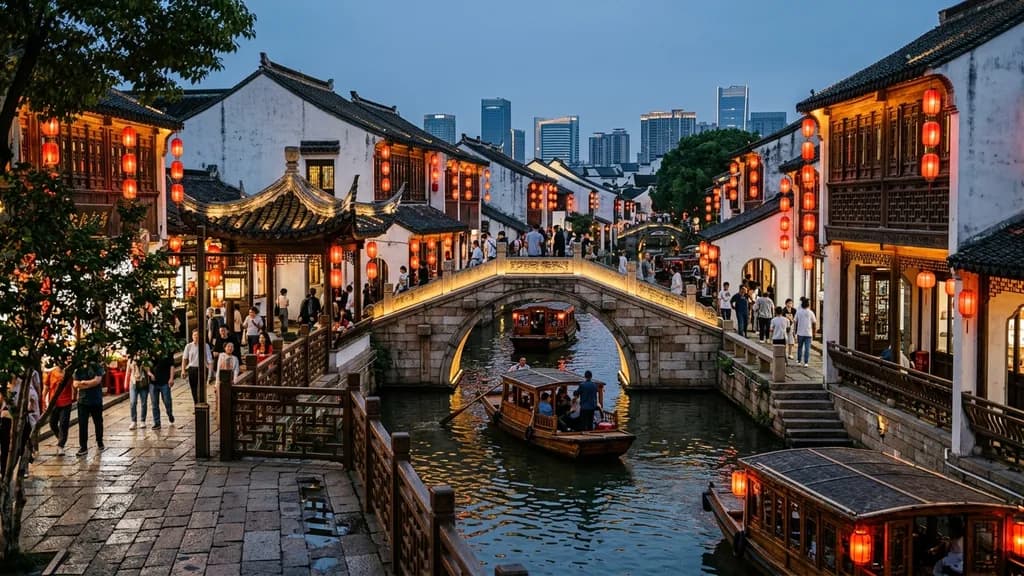
China or Japan for your 2026 East Asia trip? Honest 10-dim comparison - cost, food, infrastructure, visa reality, and how to do both if budget allows.
China vs Japan for Tourists: Honest 2026 Comparison
Picking between China and Japan for your 2026 East Asia trip feels a bit like being told to choose between the Roman Empire and Renaissance Florence. Both are civilizational heavyweights, both reward serious travelers, and both sit at very different ends of the "polish versus scale" spectrum. China is the 9.6-million-square-kilometer behemoth with 5,000 years of dynastic history, the world's largest bullet-train network, and prices that undercut Japan by roughly 30-40% across the board. Japan is the perfectionist's paradise - smaller, tighter, more refined, and almost frictionless once you land.
This honest 2026 comparison breaks down both countries across 10 dimensions so you can pick the right one (or both) for your trip. No tourism-board fluff, no hedging. If you've got limited time and want the real differences - cost, food, infrastructure, visa reality, the VPN situation in China - this is the guide.
TL;DR: 10-Dimension Verdict
For the impatient, here's the scoreboard. Both countries are excellent. The question is which one fits your travel style and budget.
| Dimension | Winner | Margin |
|---|---|---|
| Cost (daily budget) | China | 30-40% cheaper |
| Food variety | China | 8 regional cuisines vs Japanese core |
| Food refinement | Japan | World's best sushi, kaiseki, ramen |
| Historical scale | China | Great Wall, Forbidden City, Terracotta Army |
| Cultural preservation | Japan | Kyoto, Nara, living traditions |
| Infrastructure speed | China | 350 km/h bullet trains, bigger network |
| Infrastructure polish | Japan | JR on-time to the second, spotless everything |
| Language accessibility | Japan | More English, better menus |
| Visa ease | Japan | Visa-free 90 days most Western passports |
| Safety (street crime) | Tie | Both among world's safest |
Bottom line: Japan for a polished first-time Asia trip, China for scale and value. If budget allows, do both.
Quick Decision Matrix: Who Goes Where?
Before we go deep, here's the honest recommendation flowchart based on what travelers actually want out of an East Asia trip.
Pick China if you:
- Want maximum bang-for-buck (30-40% cheaper than Japan)
- Love epic-scale history - Great Wall, Terracotta Warriors, Forbidden City
- Enjoy regional food diversity across 8 major cuisines
- Don't mind some logistical friction (translation apps, VPN, cash-less payment learning curve)
- Are a repeat Asia traveler looking for something bigger
Pick Japan if you:
- Value seamless infrastructure and low-friction travel
- Care deeply about refinement over variety (sushi, kaiseki, tea ceremony)
- Want a visa-free entry and an English-tourist-friendly experience
- Love anime, gaming, design, fashion, or contemporary pop culture
- Are a first-time East Asia traveler
Do both if you:
- Have 2-3 weeks
- Have a $4,000-6,000 per-person budget excluding international flights
- Want the full East Asia comparison in one trip
Cost Comparison: Where Every Dollar Goes
This is the dimension where China wins decisively. Across hotels, food, transit, and attractions, China runs roughly 30-40% cheaper than Japan for comparable quality. Prices below reflect mid-range 2026 rates in major cities (Beijing/Shanghai vs Tokyo/Kyoto). Exchange rates used: 1 USD = 7.2 CNY = 150 JPY.
| Category | China (USD / CNY) | Japan (USD / JPY) | Savings |
|---|---|---|---|
| Mid-range hotel (per night) | $40-80 / ¥288-576 | $90-160 / ¥13,500-24,000 | 55% |
| Budget hostel | $12-25 / ¥86-180 | $25-45 / ¥3,750-6,750 | 50% |
| Street food meal | $2-5 / ¥14-36 | $6-10 / ¥900-1,500 | 60% |
| Mid-range restaurant | $8-18 / ¥58-130 | $18-35 / ¥2,700-5,250 | 50% |
| Metro ticket | $0.40-0.80 / ¥3-6 | $1.30-2.00 / ¥195-300 | 60% |
| Bullet train (500 km) | $40-75 / ¥288-540 | $100-180 / ¥15,000-27,000 | 55% |
| Museum/attraction entry | $4-15 / ¥29-108 | $8-25 / ¥1,200-3,750 | 45% |
| Daily budget (mid-range) | $60-100 / ¥432-720 | $120-180 / ¥18,000-27,000 | 40% |
A realistic two-week China itinerary lands at $1,400-2,000 per person excluding international flights, while the same trip in Japan runs $2,400-3,500. If you want a deeper dive on the China side of this equation, check our full comparison on whether China is cheaper than Thailand - spoiler, yes, and it's often cheaper than Japan too.
Food Head-to-Head: Variety vs Refinement
Food is where many travelers have their strongest opinions. The honest answer: these are completely different food cultures, and comparing them is like comparing a symphony to a jazz quartet. Both are brilliant. Both will change how you eat forever.
China: Overwhelming Regional Diversity
China has eight major recognized cuisines - Sichuan, Cantonese, Shandong, Jiangsu, Zhejiang, Fujian, Hunan, and Anhui - each with its own philosophy. Sichuan hotpot numbs your tongue with ma-la (numb-spicy) peppercorns. Cantonese dim sum is precision steamed-dumpling artistry. Xi'an's biang biang noodles are hand-pulled ropes with chili oil. Xinjiang's lamb skewers over charcoal could make a carnivore weep. Shanghai's xiaolongbao pour molten broth at the first bite.
Japan: Obsessive Refinement
Japan's food culture prizes shokunin (craftsman) dedication. A sushi chef might spend 20 years before being trusted with nigiri. Ramen shops refine a single broth for decades. Kaiseki tasting menus follow seasonal philosophy with meticulous plating. The range is narrower - sushi, ramen, tempura, yakitori, okonomiyaki, kaiseki, shabu-shabu - but the execution is often the world's best.
| Food Dimension | China | Japan |
|---|---|---|
| Regional variety | 8 major cuisines | 3-4 dominant styles |
| Heat/spice | Sichuan, Hunan fire | Generally mild |
| Cost per meal | $2-18 | $6-35 |
| Street food culture | Massive, everywhere | Limited (festival/izakaya) |
| Vegetarian-friendly | Moderate (Buddhist cuisine) | Hard (dashi everywhere) |
| Breakfast | Congee, baozi, youtiao | Rice, fish, miso, natto |
| Signature experience | Peking duck, hotpot | Omakase sushi, ramen crawl |
If food variety and cost are top priorities, China runs away with it. For a deep dive, see our complete regional cuisine guide for China. If you want a narrower range executed at a terrifyingly high standard, Japan wins.
Temples, History, and Architecture
China plays the scale game and wins. The Great Wall stretches over 21,000 km across deserts, mountains, and grasslands. The Forbidden City in Beijing contains 9,000 rooms and served 24 emperors across two dynasties. The Terracotta Army near Xi'an features 8,000 individually sculpted warriors guarding Emperor Qin's tomb. The Mogao Caves at Dunhuang hold 1,000 years of Buddhist murals. You don't visit these places so much as attempt to comprehend them.
Japan plays the preservation game and wins differently. Kyoto alone has 1,600 Buddhist temples and 400 Shinto shrines, many still used daily. Fushimi Inari's 10,000 red torii gates climb a forested mountain. Nara's Todai-ji houses a 15-meter bronze Buddha. Himeji Castle is Japan's best-preserved feudal fortress. The experience is intimate, living, and continuous - traditions didn't survive despite modernization, they adapted.
The Cultural Revolution reality check: China lost an enormous amount of cultural heritage between 1966-76 when temples, artifacts, and monasteries were destroyed. Japan's continuous cultural line is partly why its preservation is so striking. Many top Chinese temples visitors see today are reconstructions. Still spectacular, but worth knowing.
Infrastructure: Speed vs Polish
Both countries have infrastructure Western travelers will envy. They prioritize different things.
| Transit Dimension | China | Japan |
|---|---|---|
| High-speed rail top speed | 350 km/h (Fuxing) | 320 km/h (Shinkansen) |
| Network length | 45,000+ km (world's largest) | 3,000 km |
| On-time performance | Very high | Legendarily precise (seconds) |
| Tourist rail pass | No equivalent | JR Pass ($250-450 / 7-21 days) |
| Metro cities | 50+ cities with metros | 9 cities with metros |
| Biggest metro (daily riders) | Shanghai ~10M | Tokyo ~8M |
| Airport-to-city transit | Maglev (Shanghai), metros | Narita Express, metros |
| Payment | Alipay/WeChat Pay (cashless) | IC cards + increasing credit card |
China wins on speed and scale. The high-speed rail network is the largest on earth and covers the entire country. Beijing to Shanghai is 4.5 hours (1,300 km) at prices Japan can't match.
Japan wins on polish and predictability. Trains arrive within seconds of schedule, stations are immaculate, English signage is universal in tourist corridors, and the JR Pass remains an absurd deal for foreign tourists. The catch: JR Pass prices rose roughly 70% in late 2023, so always math it out for your specific routing.
Language Barrier: The Real Difference
This is where many first-time East Asia travelers get blindsided. Both countries speak languages most Westerners can't read, let alone speak. But the practical experience diverges.
Japan: English signage is broad in Tokyo, Kyoto, Osaka, Nara, and major tourist sites. Train announcements are bilingual. Restaurant menus often have pictures or English translations in tourist zones. Hotel staff in mid-range-plus properties speak functional English. You can navigate 90% of a two-week trip without speaking a word of Japanese.
China: English is scarcer. Signage exists at airports, major attractions, and high-end hotels, but neighborhood restaurants, taxis, and non-tourist transit rely on Mandarin. Google Translate and Google Maps don't work without a VPN. The workaround - and it's effective - is using Baidu Translate (works without VPN), Pleco for Chinese character lookup, and the translation feature inside Alipay and WeChat. Payment is easier than ordering food because Alipay's QR-code universality handles transactions silently.
The VPN reality in China: Google, Facebook, Instagram, WhatsApp, YouTube, and most Western apps are blocked. You need a VPN installed before you land (they're harder to download from inside the country). Japan has zero such restrictions - open internet, Google Maps works, Instagram works, everything works.
Visa Reality: Japan's Biggest Advantage
This single dimension is why many travelers pick Japan for a first East Asia trip.
| Visa Factor | China | Japan |
|---|---|---|
| US/EU/UK tourist visa | Required (e-visa available) | Visa-free 90 days |
| Canadian, Australian, NZ | Required | Visa-free 90 days |
| E-visa cost | $60-150 USD | N/A |
| E-visa processing | 4-7 days typical | N/A |
| Length | 30-60 days typical single entry | 90 days |
| Visa-free transit | Up to 240 hours (major cities) | Not needed |
| Entry friction | Visa + fingerprinting on arrival | Passport stamp, done |
Japan: Show up with a valid passport (6+ months remaining) and proof of onward travel. You get a 90-day stamp. That's the whole process.
China: Most Western tourists need a visa. The good news: the e-visa rollout has made it far easier than the old in-person application. The bad news: it still costs $60-150 and requires 4-7 days of processing plus documentation (itinerary, hotels, flights). For the complete breakdown, see our 2026 China visa guide. China's expanded 240-hour visa-free transit policy is genuinely useful - if you're flying into Beijing, Shanghai, Guangzhou, or about 50 other cities and flying out to a third country, you can enter visa-free for up to 10 days. This is a legitimate way to sample China on a round-trip that's really Tokyo-China-Seoul.
Safety: Both Elite, Different Risks
Both China and Japan are among the safest countries in the world for tourists. Street crime is essentially a non-factor in either country. Solo female travelers, families, and first-time visitors all report feeling dramatically safer than in major US or European cities.
Japan's risks: Earthquakes and typhoons are the main concerns. The country handles both with excellent infrastructure and clear warnings. Pickpocketing is rare but exists in Tokyo tourist zones.
China's risks: Criminal risk to tourists is near zero. The real concerns are administrative: the US State Department's Level 2: Exercise Increased Caution advisory cites arbitrary law enforcement, exit bans in rare cases involving business disputes, and restricted zones in Xinjiang and Tibet. For 99.9% of leisure tourists, none of this will ever come up. But the risk profile is political, not criminal.
Verdict: Tied on physical safety. Japan slightly ahead on predictability.
VPN Essential: China Yes, Japan No
Worth its own section because it catches so many travelers off guard. In China, the Great Firewall blocks Google (search, Maps, Gmail, Drive, YouTube), Facebook, Instagram, WhatsApp, Twitter/X, most Western news sites, and many cloud services. Booking.com and Airbnb mostly work but with glitches.
You must install a VPN before arriving in China. Major VPN provider websites and app stores are frequently blocked or heavily throttled, making in-country installation painful. Reliable 2026 options include ExpressVPN, NordVPN, Astrill (most reliable in China), and Mullvad. Budget $10-13 USD per month.
Japan has completely open internet. Use any service, any time. No prep needed.
The 2-3 Week Both-Trip Itinerary
If you can swing 21 days and roughly $4,000-6,000 per person excluding international flights, doing both is the smartest move. You're already spending 12-16 hours crossing the Pacific - splitting between two countries barely adds cost versus doing each separately.
The Classic 21-Day China + Japan Split (60/40):
Days 1-4: Beijing - Great Wall (Mutianyu or Jinshanling), Forbidden City, Temple of Heaven, Hutong neighborhoods, Peking duck.
Days 5-7: Xi'an - Terracotta Army, ancient city walls, Muslim Quarter street food.
Days 8-10: Chengdu - Panda research base, Sichuan hotpot, teahouse culture.
Days 11-13: Shanghai - The Bund, French Concession, skyline views from Shanghai Tower, day trips to Suzhou or Hangzhou.
Day 14: Fly Shanghai to Tokyo - 3-hour flight, $150-350 one-way.
Days 15-17: Tokyo - Shibuya/Shinjuku, Asakusa, teamLab, Tsukiji outer market, a ramen crawl.
Days 18-20: Kyoto - Fushimi Inari, Kinkaku-ji, Arashiyama bamboo grove, Gion district, a kaiseki dinner.
Day 21: Osaka and fly home - Dotonbori street food, Osaka Castle, international flight out of Kansai.
Flight logistics between them:
| Route | Flight Time | Typical Price (2026) |
|---|---|---|
| Tokyo (NRT/HND) ↔ Beijing (PEK) | 3.5 h | $300-600 RT |
| Tokyo ↔ Shanghai (PVG) | 3 h | $250-500 RT |
| Osaka (KIX) ↔ Shanghai | 2.5 h | $200-450 RT |
| Osaka ↔ Beijing | 3 h | $280-550 RT |
ANA, JAL, China Eastern, and Air China run multiple daily flights. Avoid connecting through Korea unless price dictates; direct is almost always under $600 round-trip.
Tourist Numbers: Crowds Reality Check
A quick reality check on scale. In 2024, Japan hit a record 36.8 million international visitors, overwhelming Kyoto during cherry blossom season and creating over-tourism pushback in places like Gion. China received roughly 60-65 million international tourists in 2019 (pre-COVID peak), dropped drastically through 2022, and has been recovering rapidly - 2024 numbers approached 30-35 million with expanded visa-free programs driving growth.
Practical takeaway: Japan's core tourist sites (Kyoto's Gion, Fushimi Inari, Tokyo's Senso-ji) are genuinely crowded in 2026. China's marquee sites (Great Wall, Forbidden City) have massive domestic tourist volume but spread across more infrastructure - you'll see crowds but have more room.
Recommended Tours and Experiences
For both countries, booking key experiences in advance saves hours and delivers better guides than walk-up options. Platforms like Klook and GetYourGuide run the most comparable inventory across China and Japan - useful when you're planning a combined trip.
China must-books:
- Great Wall private driver to Mutianyu or Jinshanling (skip the Badaling crowds)
- Terracotta Warriors guided entry from Xi'an
- Li River cruise in Guilin
Japan must-books:
- Tsukiji/Toyosu market tour in Tokyo
- Kyoto temple cycling tour
- Mt. Fuji day trip from Tokyo
Final Honest Take
For most first-time East Asia travelers, Japan is the easier, more comfortable trip. Visa-free, English-friendly, frictionless infrastructure, stunning food and design. You'll spend more, but you'll also stress less.
For travelers who want scale, value, and a bigger story, China is the better choice. The history is older and more monumental, the food is more varied, the prices are 30-40% lower, and the sheer size of what you're experiencing is hard to match anywhere on earth. The friction - visa, VPN, language - is real but manageable with an hour of prep.
For travelers who can swing 2-3 weeks, doing both is genuinely the best option. A 3.5-hour flight and $400 round-trip is the difference between "I went to Asia" and "I understood East Asia."
If China is your pick, start with our full China itinerary guide for detailed route planning. If you're leaning toward backpacker-style travel to stretch the budget further, our backpacking China guide covers the cheap-and-deep route.
Whichever you choose, 2026 is a great year to go. China's visa-free transit has never been broader, Japan's yen remains favorable for Western currencies, and both countries are investing heavily in tourist infrastructure. The real mistake is picking neither.
Sources & References
This article is based on editorial research and verified with the following sources:

About the Author
Go2China Team
The Go2China editorial team combines first-hand travel experience with deep cultural knowledge to bring you accurate, up-to-date guides for exploring China — from the Great Wall and Forbidden City to hidden gems off the tourist trail.
- ✓Lived and traveled extensively across China
- ✓Native & bilingual Mandarin speakers on team
- ✓Verified info from official Chinese tourism sources