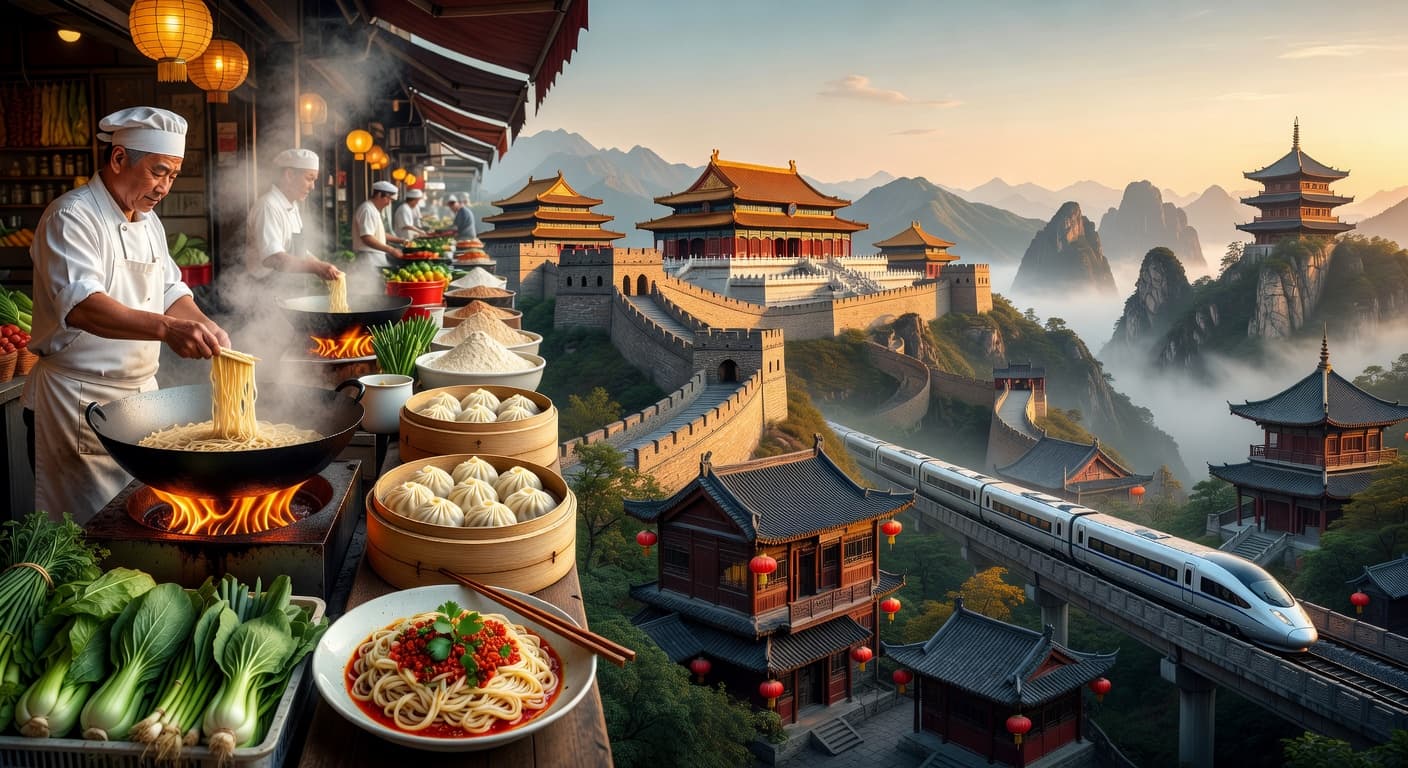
Discover China's regional cuisines beyond the "Big Eight"—from Cantonese dim sum to Sichuan hotpot, Xi'an street food to Yunnan specialties. Complete guide for
Food in China: A Complete Regional Cuisine Guide
If you think Chinese food is just one cuisine, you're in for a delicious surprise. Walk into a restaurant in Guangzhou and order dim sum—delicate, refined, bursting with umami from fermented soybeans and dried seafood. Then hop on a train to Chengdu and dive into a bubbling hotpot swimming in numbing Sichuan peppercorns and chili oil. These aren't variations on the same theme; they're entirely different culinary worlds that just happen to exist within the same country. Welcome to the extraordinary diversity of Chinese regional cuisine—a food landscape so vast and varied that it makes the concept of "one national cuisine" seem almost laughably incomplete.
For travelers planning a trip to China, understanding regional food differences isn't just food trivia—it's essential to experiencing authentic local culture. Whether you're exploring bustling street markets in Beijing, sitting down to a family-style meal in Shanghai, or discovering hidden food stalls in lesser-known cities, the regional cuisines of China tell the story of geography, history, and local tradition. This guide will help you navigate the incredible diversity of Chinese food, from the famous "Big Eight" cuisines to lesser-known regional specialties that deserve your attention.
Understanding China's Regional Cuisines: Beyond the "Big Eight"
Most travelers first encounter the concept of "China's eight great cuisines"—Cantonese, Sichuan, Hunan, Jiangsu, Zhejiang, Fujian, Shandong, and Anhui. It's a neat framework that's been repeated in countless travel guides and food blogs. But here's the thing: it's incomplete. This categorization actually originated from imperial banquet traditions rather than representing an exhaustive map of Chinese regional cooking. It overlooks entire regions with distinctive cuisines—like Xi'an's famous hand-pulled noodles, Yunnan's unique ethnic minority dishes, and the northern wheat-based cuisines of Lanzhou and Inner Mongolia.
The reality is more complex and far more interesting. China's culinary landscape contains dozens of regional cuisines, each shaped by local geography, climate, available ingredients, and cultural influences. Rather than trying to memorize a rigid classification system, it's more useful to think of Chinese cuisine as a continuum—neighboring regions influence each other, but move far enough in any direction and you'll find distinctly different food cultures.
What makes cuisines different? Food geographers and culinary experts generally look at a few key factors:
- Staple grains: The north favors wheat (noodles, dumplings, buns), while the south centers on rice
- Protein sources: Coastal regions emphasize seafood; inland areas favor pork, chicken, or in Muslim regions, lamb and beef
- Flavor profiles: Some regions love bold spice and heat, others emphasize subtle, refined flavors
- Cooking techniques: From steaming and braising to stir-frying and smoking, different regions have signature methods
- Preserved and fermented ingredients: These vary dramatically by region and season
The South: Cantonese, Teochew, Hakka, and the Pearl River Cuisines
Cantonese Cuisine: The Democratized Elite
Cantonese food deserves special attention because it's probably the most familiar Chinese cuisine to international travelers, yet it's often misunderstood. When Cantonese chefs talk about their cuisine's essence, they emphasize "keeping the original flavor"—a philosophy that can sound boring to Western ears. But this principle actually represents something sophisticated: the playful manipulation of ingredients while preserving their essential character.
The best way to experience Cantonese cuisine is through dim sum (yum cha in Cantonese), traditionally served with tea from morning until early afternoon. This isn't just breakfast; it's a social ritual. You'll sit in a restaurant while servers push carts laden with bamboo steamers, and you point to what looks good. Expect to pay ¥30–80 ($4–11 USD) for a few dishes plus tea at a casual dim sum house, up to ¥150–300 ($21–42 USD) per person at upscale establishments.
Must-try Cantonese dishes:
- Har gow (shrimp dumplings): Delicate wheat starch wrappers encasing plump shrimp
- Siu mai (pork dumplings): Open-topped bundles of seasoned pork and shrimp
- Char siu bao (barbecued pork buns): Soft, slightly sweet buns filled with glazed pork
- Cheung fun (rice noodle rolls): Silky sheets of rice noodles wrapped around shrimp, pork, or vegetables
- Turnip cake: Pan-fried cake made from grated turnip and rice flour, served with soy sauce
Where to eat dim sum: In Guangzhou (Canton), head to Lian Xiang Lou (联香楼) or Tian Hai Seafood Restaurant for reliable dim sum. In Hong Kong, Jing Fong in Central is legendary and affordable. In Shanghai, Nanxiang Steamed Bun Restaurant (南翔馒头店) specializes in xiaolongbao (soup dumplings), a different but equally essential dim sum experience.
Teochew Cuisine: The Refined Underdog
If Cantonese is the famous cousin, Teochew (Chaozhou) is the sophisticated but less-known sibling. Both regions share a coastal heritage, but Teochew cuisine is distinct. While Cantonese emphasizes preserved ingredients and complex preparation, Teochew cooking focuses on delicate, subtle flavors—often described as "light but not bland."
A typical Teochew meal includes congee (rice porridge) served with an array of pickled vegetables, salted fish, and preserved condiments. This isn't the sweet breakfast congee you might know from dim sum houses; it's a savory, communal meal where diners customize their bowl with various toppings.
Key Teochew specialties:
- Braised duck (卤鸭): Slowly braised until the meat is incredibly tender
- Fish balls (鱼丸): Springy spheres of minced fish, often served in soup
- Teochew-style preserved vegetables: Pickled mustard greens and other vegetables that add complexity to simple meals
- Oyster omelette (蚝烙): A crispy, savory pancake studded with fresh oysters
Hakka Cuisine: Mountain Food with a Hearty Soul
Hakka people historically migrated throughout southern China, and their cuisine reflects a pragmatic, make-do philosophy. Hakka food is heartier and more rustic than Cantonese, with bolder flavors and larger portions. The cuisine emphasizes preserved ingredients because of the Hakka tradition of mountain living, where fresh ingredients weren't always available.
Signature Hakka dishes:
- Hakka stuffed tofu (客家酿豆腐): Cubes of tofu with a savory meat filling, braised in a clay pot
- Pork belly with preserved vegetables (梅菜扣肉): Rich, fatty pork layered with salty pickled mustard greens
- Hakka salt-baked chicken (客家盐焗鸡): A whole chicken rubbed with salt and herbs, baked until the skin is crispy
- Abacus beads (算盘珠): Glutinous rice balls with meat filling, steamed in bamboo leaves
The Spicy South: Sichuan, Hunan, and Yunnan
Sichuan Cuisine: The Numbing Heat
If Cantonese cuisine whispers, Sichuan shouts. This is the cuisine of bold, complex flavors—specifically, the numbing-and-spicy sensation created by Sichuan peppercorns (花椒, huajiao) combined with chili heat. The numbing sensation (called "má" or 麻) is actually a neurological response to the compound hydroxy-alpha sanshool, which makes your mouth tingle as if it's been mildly anesthetized.
Sichuan cuisine isn't just about heat for heat's sake. The philosophy emphasizes balancing multiple flavor dimensions: numbing, spicy, sour, salty, and sweet, often in a single dish. This complexity is why Sichuan food has become so popular internationally—it's endlessly interesting.
Essential Sichuan experiences:
- Mapo tofu (麻婆豆腐): Silken tofu in a spicy, numbing sauce with minced pork—the quintessential Sichuan dish
- Chongqing chicken (辣子鸡): Chunks of chicken buried in dried chilies and Sichuan peppercorns
- Hot pot (火锅): A communal meal where diners cook raw ingredients in a simmering, spiced broth. Expect to spend ¥80–200 ($11–28 USD) per person at a casual hot pot restaurant
- Dan dan noodles (担担面): Noodles in a spicy, sesame-based sauce with minced pork and preserved vegetables
- Kung Pao chicken (宫保鸡丁): Diced chicken with peanuts in a sweet, spicy, tangy sauce
Where to eat: In Chengdu (the Sichuan capital), explore the street stalls around Kuanzhai Xiangzi (宽窄巷子), a restored historic neighborhood filled with casual eateries. For hot pot, Xiaolongkan is a popular chain found throughout Chengdu.
Hunan Cuisine: Fiercer Than Sichuan
While Sichuan uses Sichuan peppercorns for numbing sensation, Hunan doubles down on pure chili heat. Hunanese people eat more chilies per capita than almost any other Chinese region, and their cuisine reflects this fiery passion. Hunan food is also more rustic and less refined than Sichuan—it emphasizes bold, straightforward flavors and often includes preserved and smoked ingredients.
Hunan specialties:
- Chairman Mao's braised pork (毛氏红烧肉): Fatty pork belly braised in soy sauce and spices, allegedly the favorite dish of Mao Zedong
- Smoked fish (熏鱼): Fish preserved by smoking, often served cold as an appetizer
- Hunan preserved vegetables (湘菜咸菜): Various pickled and salted vegetables that define Hunan flavor
- Stir-fried offal: Hunan cooks aren't squeamish; duck gizzards, chicken hearts, and pig intestines are prized ingredients
Yunnan Cuisine: China's Most Diverse Regional Food
Yunnan, in southwestern China, is home to dozens of ethnic minorities—Yi, Bai, Dai, and others—each with their own culinary traditions. This makes Yunnan cuisine China's most ethnically diverse food culture. The region's tropical and subtropical climate means access to ingredients you won't find elsewhere in China: fresh herbs, unusual vegetables, and unique proteins.
Yunnan highlights:
- Crossing the bridge noodles (过桥米线): A poetic dish where you pour hot broth over rice noodles and raw ingredients (meat, vegetables, herbs) at the table, "crossing the bridge" from raw to cooked
- Pu'er tea: The region's famous fermented tea, which can be aged like wine. A quality pu'er cake costs ¥50–500+ ($7–70+ USD)
- Yunnan ham: Cured ham from the Dali region, often served with melon or in soups
- Bamboo shoots: Fresh or pickled, appearing in countless Yunnan dishes
- Dai cuisine: The Dai people's food features fresh herbs, lime, and fish—influenced by neighboring Thailand and Laos
Where to eat: In Kunming (Yunnan's capital), visit Nanluoguxiang Food Street for casual dining, or explore the Flower and Bird Market (花鸟市场) area for local restaurants.
The East: Jiangsu, Zhejiang, and Refined River Cuisine
Jiangsu and Zhejiang: The Merchant Class Heritage
The Yangtze River Delta region—encompassing Jiangsu and Zhejiang provinces—represents a different culinary philosophy from the bold, spicy south. These cuisines emphasize subtlety, sweetness, and the careful balance of flavors. Historically, this region's wealth came from trade and merchant activity, and the food reflects a refined, sophisticated sensibility.
Jiangsu cuisine is known for its "red-braised" dishes—meat and seafood slowly braised in soy sauce until deeply flavored and mahogany-colored. Zhejiang cuisine is slightly lighter and incorporates more fresh seafood and vegetables.
Jiangsu and Zhejiang classics:
- Beggar's chicken (叫花鸡): A whole chicken wrapped in lotus leaves and clay, baked until the clay hardens, then cracked open at the table—more theatrical than practical, but memorable
- Lion's head meatballs (狮子头): Large, delicate pork meatballs braised with cabbage, named for their shaggy appearance
- West Lake fish in vinegar sauce (西湖醋鱼): A Hangzhou specialty of tender fish in a sweet-and-sour sauce
- Longjing shrimp (龙井虾仁): Tender shrimp stir-fried with Longjing (Dragon Well) green tea leaves—a signature Hangzhou dish
- Xiaolongbao (小笼包): Soup dumplings with a delicate wrapper and savory pork and aspic filling
Where to eat: In Hangzhou, Louwailou (楼外楼) has been serving West Lake fish in vinegar sauce since 1848. In Suzhou, Songhelou is famous for beggar's chicken and other Jiangsu classics.
The North: Wheat, Noodles, and Bold Flavors
Shandong Cuisine: The Imperial Foundation
Shandong, in northern China, was historically the culinary foundation for imperial Chinese cooking. Shandong cuisine emphasizes technique and precision, with particular attention to seafood preparation. The region's famous for its wheat-based staples—noodles, dumplings, and steamed buns—rather than rice.
Shandong specialties:
- Peking duck (北京烤鸭): Though associated with Beijing, this dish has roots in Shandong cooking traditions. A whole duck is roasted until the skin is crackling and mahogany-colored, then carved tableside and served with thin pancakes, sweet bean sauce, and julienned vegetables. Expect ¥120–300 ($17–42 USD) for a whole duck at a mid-range restaurant
- Dezhou braised chicken (德州扒鸡): A whole chicken braised until the meat is incredibly tender, served cold or warm
- Jinan-style noodles: Wheat noodles in a savory broth with various toppings
- Sea cucumber and abalone: Expensive, prized seafood ingredients prepared with minimal interference to showcase their delicate flavors
Xi'an and Northwestern Cuisine: The Silk Road Influence
Xi'an, ancient China's capital, sits at the crossroads of the Silk Road. Its cuisine reflects centuries of cultural exchange—you'll find Muslim influences, noodle dishes reminiscent of Central Asia, and bold use of cumin and other warming spices.
Xi'an must-tries:
- Roujiamo (肉夹馍): Often called Chinese hamburgers, these are flatbreads stuffed with spiced, shredded pork. Street stalls sell them for ¥5–15 ($0.70–2 USD)
- Biangbiang noodles (裤带面): Impossibly wide, hand-pulled noodles served in a savory broth or with sauce
- Liangpi (凉皮): Cold, slippery rice noodles served with a spicy, vinegary sauce—perfect for hot weather
- Yangrou paomo (羊肉泡馍): A Muslim specialty of lamb soup with torn flatbread, warming and deeply flavorful
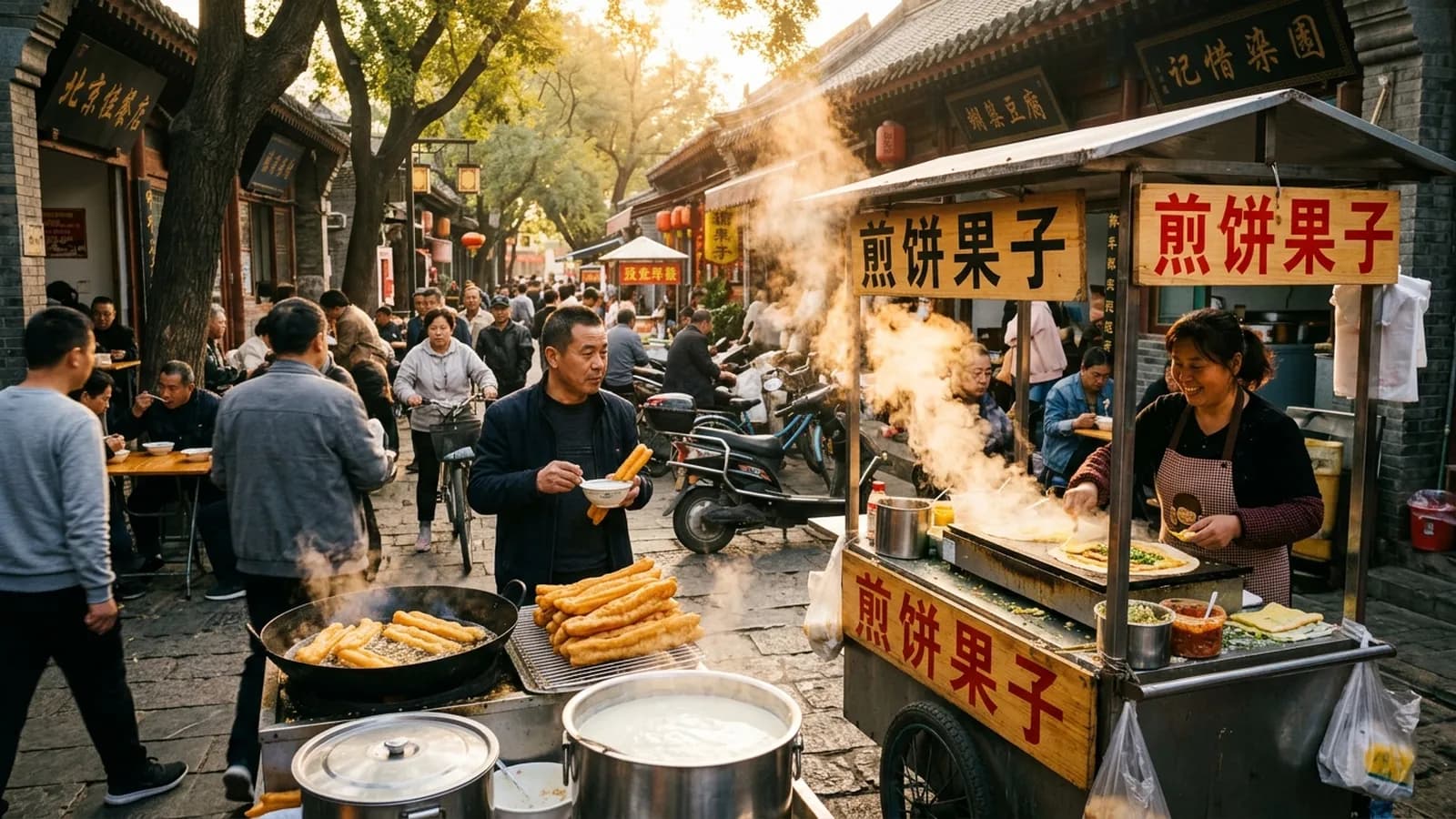
- Jianbing (煎饼): A crepe-like street food filled with egg, crispy wonton, scallions, and sauce
Street food paradise: Xi'an's Muslim Quarter (回民街) is legendary for street food. You can eat incredibly well for ¥30–50 ($4–7 USD) per person by hopping between stalls.
Lanzhou and the Northwest: Noodle Culture
Lanzhou, capital of Gansu province, is famous for hand-pulled noodles (拉面, lamian). These noodles are an art form—a skilled noodle maker stretches and folds dough until it becomes dozens of thin, perfectly uniform strands, all in a matter of minutes.
Lanzhou lamian experience:
- Beef noodle soup (牛肉面): Hand-pulled noodles in a rich, spiced beef broth with tender beef, cilantro, and pickled vegetables. A bowl costs ¥12–20 ($1.70–2.80 USD)
- Knife-cut noodles (刀削面): Noodles sliced directly into boiling water using a special knife
- Daoxiao mian (刀削面): Another knife-cut noodle style, popular in Shanxi province
Practical tip: Noodle shops typically open early (6–7am) for breakfast and close by mid-afternoon. If you want authentic hand-pulled noodles, seek out small, busy shops rather than tourist-oriented restaurants. The best indicator of quality is a line of locals waiting for a table.
Fujian and Coastal Seafood Cuisine
Fujian's cuisine, shaped by its long coastline and historical maritime trade, emphasizes fresh seafood and the umami-rich ingredients that come from the sea. The region's also known for its tea culture and for dishes that incorporate tea as an ingredient.
Fujian specialties:
- Buddha jumps over the wall (佛跳墙): A complex, slow-braised soup containing dozens of ingredients—dried seafood, mushrooms, meat, and more. It's expensive (¥100–300+ or $14–42+ USD per bowl) but worth trying once
- Fujian-style fish balls (鱼丸): Similar to Teochew fish balls but often larger and more delicate
- Oyster omelette (蚝烙): A Fujian specialty, crispy on the outside and custardy within
- Tea-smoked eggs: Eggs hard-boiled and smoked over tea leaves, giving them a distinctive flavor
- Oolong tea: Fujian produces some of China's finest oolong teas, like tie guanyin. A quality oolong costs ¥50–200+ ($7–28+ USD) per 50 grams
Anhui and Other Regional Cuisines
Anhui cuisine, less famous internationally, emphasizes wild ingredients and rustic preparation. The province's mountainous regions produce unique mushrooms, bamboo shoots, and wild vegetables that define local cooking.
Anhui highlights:
- Stinky tofu (臭豆腐): Tofu fermented until pungent, then fried or braised. It's an acquired taste, but locals swear by it
- Bamboo shoot dishes: Fresh or dried bamboo shoots appear in countless Anhui preparations
- Huangshan-style dishes: From the famous Yellow Mountain region, featuring local mushrooms and vegetables
Practical Tips for Eating Your Way Through China
Restaurant Etiquette and Ordering
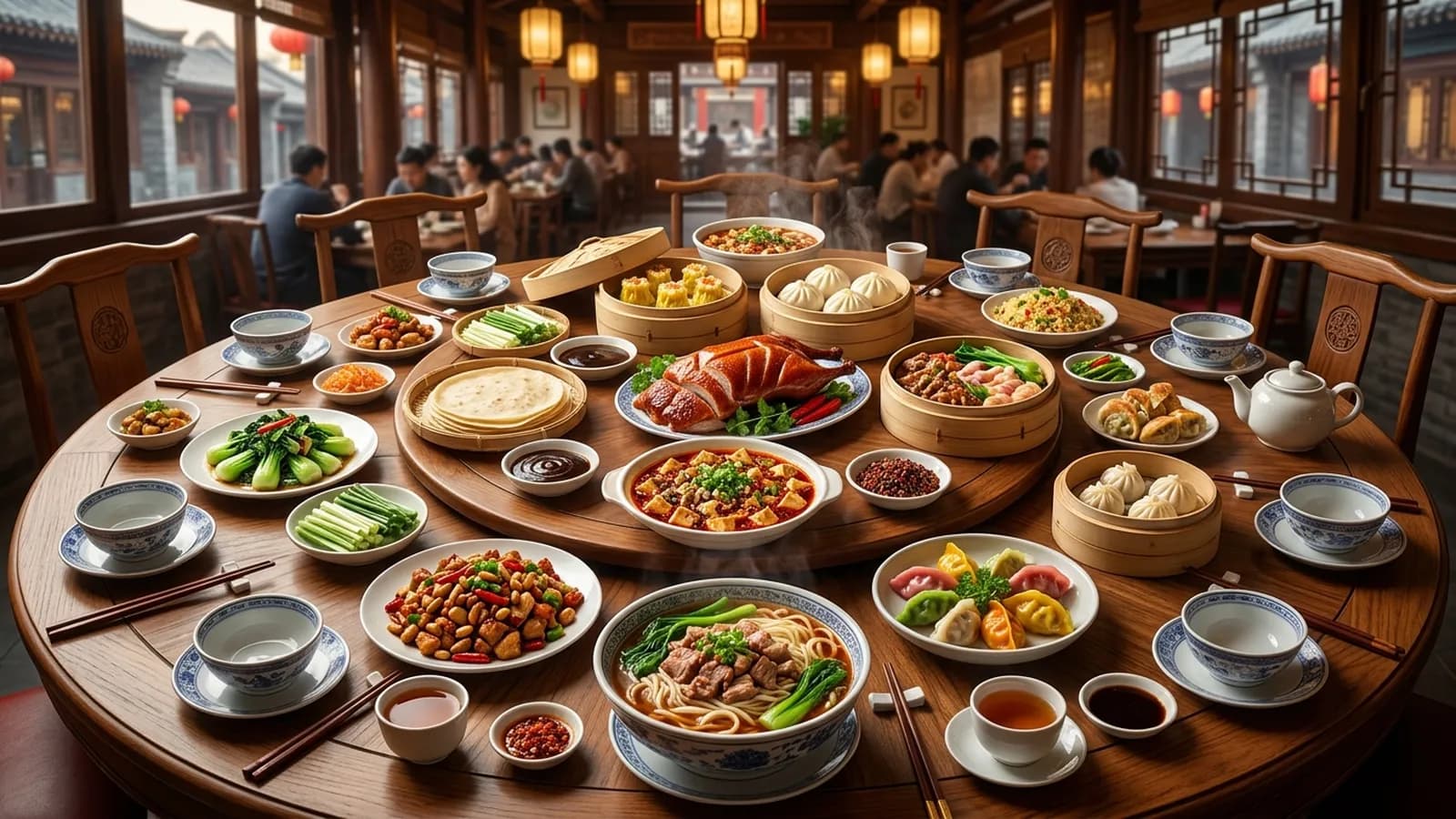
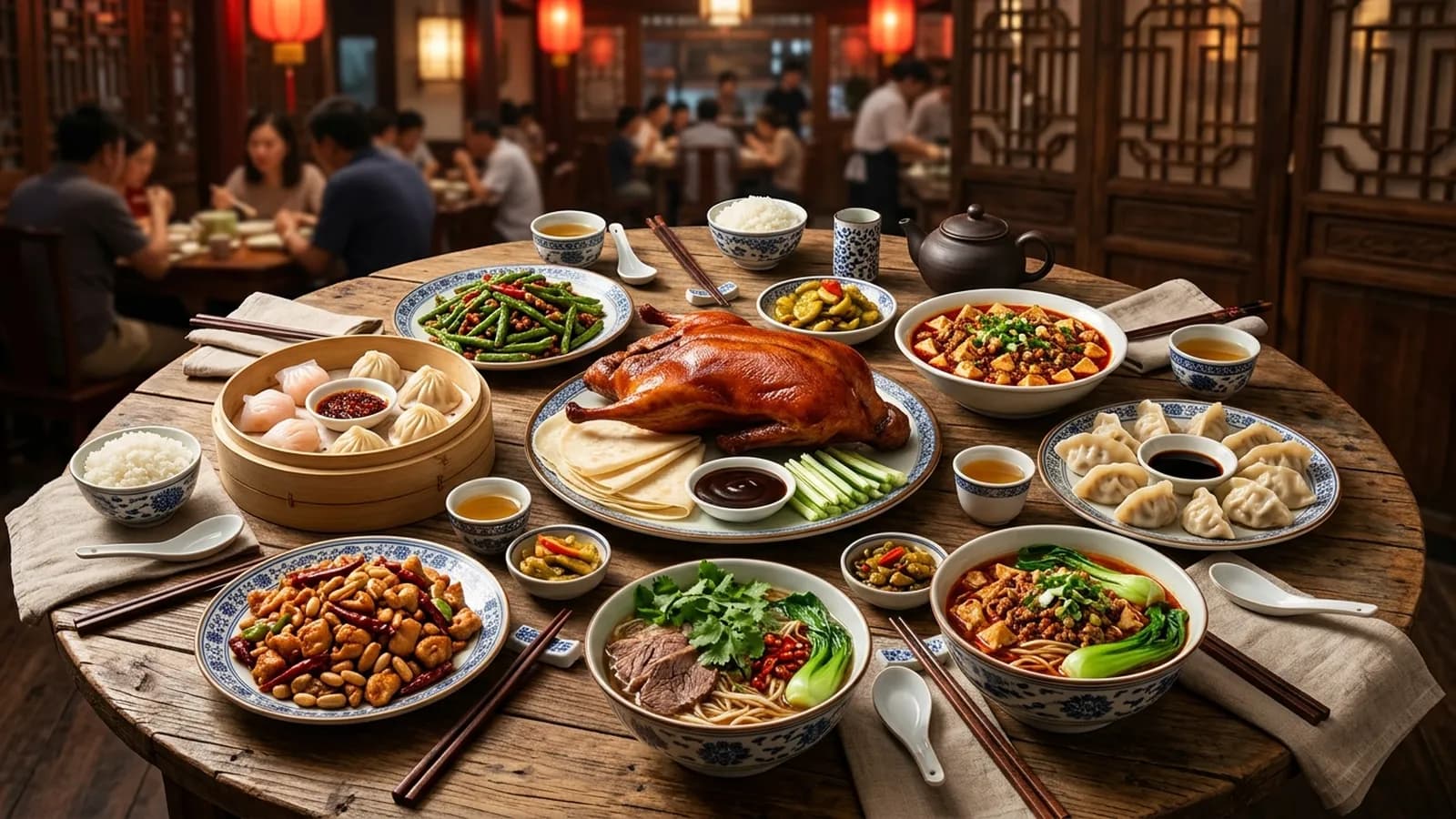
Group dining is the norm. Chinese meals are designed for sharing—dishes arrive at the table and diners serve themselves using communal spoons or chopsticks. If you're dining alone, you might feel awkward; consider joining a food tour or eating at noodle shops and street stalls where solo dining is normal.
How to order without a menu:
- Point at what other diners are eating and ask what it is (用手指着问"这是什么?", "Zhè shì shénme?")
- Show pictures on your phone or use a translation app
- Visit restaurants during peak hours (11:30am–1pm for lunch, 5–7pm for dinner) when you can see what's being served
- Ask your hotel staff to write down dish names in Chinese that you can show to servers
Timing matters. Restaurant hours are typically:
- Breakfast: 6–9am
- Lunch: 11am–2pm
- Dinner: 5–9pm
Many restaurants close between lunch and dinner service. After 9pm, you'll find it difficult to get a proper meal outside of major cities (though street food and night markets remain open).
Budget Guidelines
Street food and casual eateries: ¥10–30 ($1.40–4.20 USD) per person Mid-range restaurants: ¥30–100 ($4.20–14 USD) per person Upscale restaurants: ¥100–300+ ($14–42+ USD) per person
Prices vary significantly by city—Beijing, Shanghai, and Guangzhou are more expensive than inland cities. Regional specialties can be pricey; a single bowl of high-quality hand-pulled noodles might cost ¥20–30 ($2.80–4.20 USD), while a plate of premium abalone could easily exceed ¥200 ($28 USD).
Food Safety
- Avoid tap water; drink bottled or boiled water
- Street food is generally safe if it's busy and being cooked fresh
- Avoid raw or undercooked seafood unless you're at a reputable restaurant
- Peel raw vegetables and fruits, or eat them cooked
- Eat at busy restaurants; high turnover means fresher food
Language Essentials
Useful phrases:
- "这个很辣吗?" (Zhège hěn là ma?) = "Is this very spicy?"
- "不要辣" (Búyào là) = "Not spicy"
- "一份" (Yī fèn) = "One portion"
- "买单" (Mǎidān) = "The bill, please"
Dietary Restrictions
Vegetarian: Tell restaurants "我是素食者" (Wǒ shì sùshí zhě). Note that "vegetarian" in China sometimes means avoiding meat but including seafood and animal products.
Muslim: Look for restaurants with green signs indicating halal certification. These are common in areas with Muslim populations, particularly in the northwest.
Allergies: Write down your allergies in Chinese and show them to restaurant staff. Common allergens include peanuts (花生, huāshēng), shellfish (贝类, bèilèi), and sesame (芝麻, zhīma).
Regional Beverages and Drinks
Tea Culture
Tea isn't just a beverage in China—it's a cultural practice. Each region has signature teas:
- Longjing (Dragon Well) from Zhejiang: Light, floral, slightly sweet
- Tie Guanyin (Iron Goddess of Mercy) from Fujian: Complex, fruity oolong
- Pu'er from Yunnan: Earthy, aged like wine, aids digestion
- Keemun from Anhui: Dark, wine-like black tea
- Jasmine tea: Scented green tea, popular throughout China
At restaurants, tea typically costs ¥5–30 ($0.70–4.20 USD) per pot. In teahouses, you might spend more but get an educational experience and multiple infusions.
Baijiu
This potent spirit (40–65% alcohol) is served at formal dinners and celebrations. Regional varieties include Moutai from Guizhou and Wuliangye from Sichuan. A small glass costs ¥20–50+ ($2.80–7+ USD) at restaurants, depending on the brand.
Conclusion: Your Culinary Journey Through China
China's regional cuisines represent one of the world's greatest culinary traditions—not because of a single, unified style, but because of the incredible diversity within its borders. From the refined dim sum of Guangzhou to the fiery hotpot of Chengdu, from Xi'an's street food to Hangzhou's delicate fish dishes, every region tells a story through its food.
As you plan your trip to China, don't just check off famous tourist sites. Dedicate time to eating—seek out local restaurants, explore night markets, chat with vendors about what's seasonal and special. Food is the most direct way to understand a place's geography, history, and culture. Whether you're navigating a menu in Mandarin, discovering a new favorite dish, or sharing a communal meal with locals, eating in China is an adventure in itself.
The beauty of Chinese regional cuisine is that there's always something new to discover, even for experienced travelers. Start with the famous cuisines, but don't stop there. Venture into lesser-known regions, try unfamiliar ingredients, and embrace the complexity and diversity that makes Chinese food so endlessly fascinating.

About the Author
Go2China Team
The Go2China editorial team combines first-hand travel experience with deep cultural knowledge to bring you accurate, up-to-date guides for exploring China — from the Great Wall and Forbidden City to hidden gems off the tourist trail.
- ✓Lived and traveled extensively across China
- ✓Native & bilingual Mandarin speakers on team
- ✓Verified info from official Chinese tourism sources