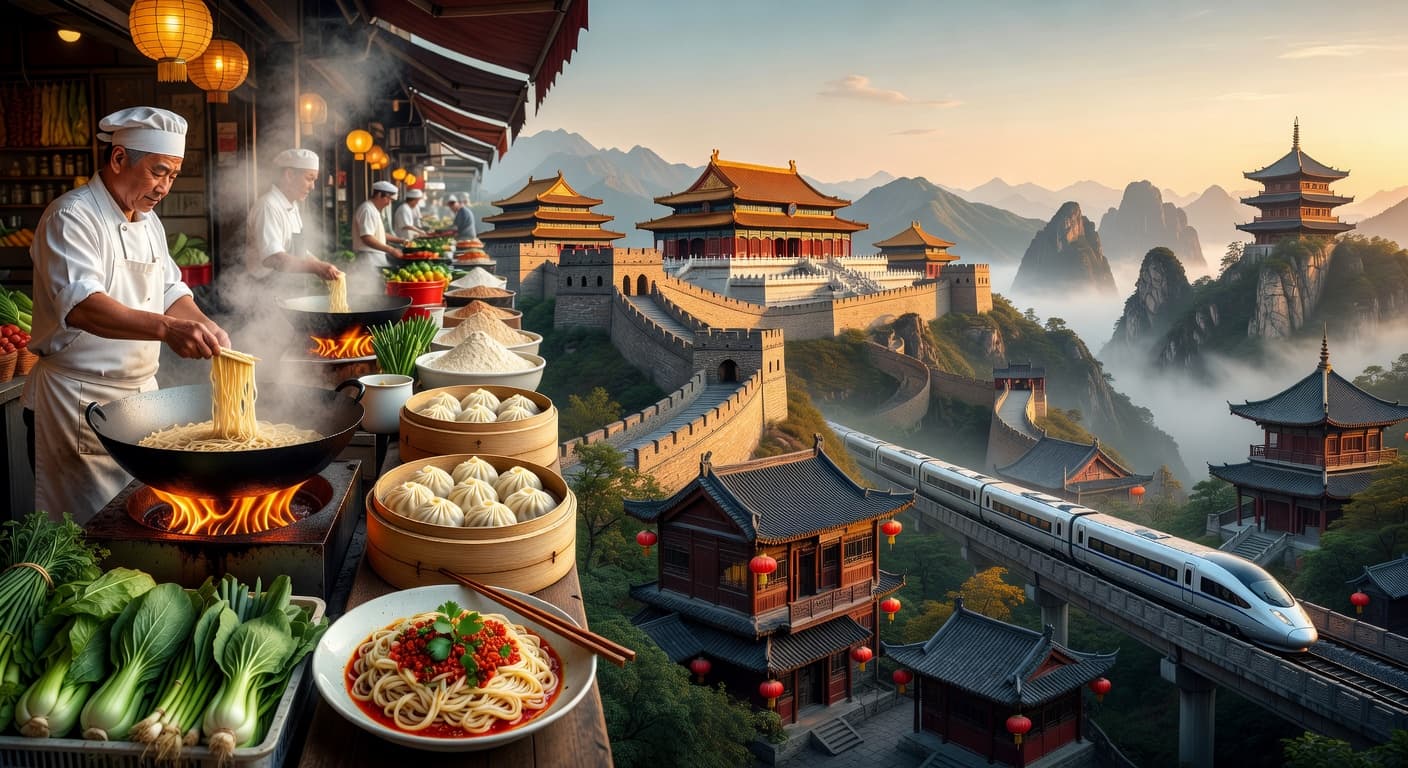
The ultimate guide to food in China — explore all 8 Great Cuisines, regional specialties, street food, and where to eat in every major city.
Food in China is not one cuisine — it is dozens, each shaped by geography, climate, local ingredients, and centuries of cultural evolution. After years traveling across China's provinces and eating our way through night markets, family-run noodle shops, and roadside stalls, we can say this with certainty: no country on earth offers the sheer diversity of flavors that China does. A meal in Chengdu tastes nothing like a meal in Guangzhou, and both are worlds apart from what you find in Qingdao or Hangzhou. Understanding Chinese cuisine means understanding its regions — and that is exactly what this guide delivers.
Key Takeaways
| Question | Answer |
|---|---|
| How many major cuisines does China have? | Eight Great Cuisines (八大菜系), each tied to a specific province or region with distinct flavor profiles |
| Which cuisine is the spiciest? | Sichuan and Hunan cuisines are the spiciest; Sichuan uses numbing peppercorns, Hunan uses pure chili heat |
| What is the most popular Chinese food for foreigners? | Cantonese cuisine (dim sum, roast meats) and Sichuan cuisine (kung pao chicken, mapo tofu) are the most internationally recognized |
| How much does a meal cost in China? | Street food: 8-20 CNY ($1-3 USD); local restaurants: 20-60 CNY ($3-8 USD); mid-range: 80-200 CNY ($11-28 USD) |
| Is it safe to eat street food in China? | Yes, especially at busy stalls with high turnover; millions of locals eat street food daily |
| Can vegetarians eat well in China? | Yes, Buddhist vegetarian restaurants exist in every major city, and many dishes can be adapted |
Understanding China's Culinary Landscape
China's food culture is organized around the concept of the Eight Great Cuisines (八大菜系, ba da cai xi). This classification system dates back centuries and groups regional cooking styles by their dominant flavors, techniques, and ingredients. The eight are: Sichuan, Cantonese, Shandong, Hunan, Jiangsu, Zhejiang, Fujian, and Anhui.
What unifies all Chinese cooking is a philosophical approach to food. The concepts of yin and yang (balancing cooling and warming foods), the five flavors (sweet, sour, bitter, spicy, salty), and the importance of texture (the Chinese palate values crunch, chewiness, and silkiness as much as taste) underpin every regional tradition. Freshness is paramount — ingredients are often purchased the same morning they are cooked.
Did You Know? Chinese culinary history stretches back over 5,000 years. The philosopher Confucius wrote extensively about the importance of proper food preparation, and his teachings on balance and harmony directly shaped Chinese cooking philosophy.
Source: Encyclopaedia Britannica
Sichuan Cuisine (川菜) — The Numbing Fire of the Southwest
Flavor profile: Spicy, numbing (ma la), bold, complex, layered heat Home region: Sichuan Province — Chengdu, Chongqing, Leshan Price range: Budget-friendly; street food 8-15 CNY ($1-2 USD), restaurant dishes 25-60 CNY ($3.50-8 USD)
Sichuan cuisine is China's most internationally famous regional cooking style, and for good reason. The defining ingredient is the Sichuan peppercorn (花椒, hua jiao), which produces a tingling, numbing sensation on the tongue called "ma" (麻). Combined with chili peppers for heat ("la," 辣), this creates the legendary ma la (麻辣) flavor that defines the cuisine.
But reducing Sichuan food to "spicy" misses the point. The cuisine formally recognizes 24 distinct flavor combinations, including sweet-and-sour, garlic paste, and fish-fragrant (鱼香, which contains no fish but uses seasonings traditionally paired with fish).
Signature Dishes
- Mapo Tofu (麻婆豆腐): Silken tofu in a fiery sauce of chili bean paste, fermented black beans, minced pork, and Sichuan peppercorns. The original version at Chen Mapo Tofu restaurant in Chengdu, established in 1862, remains a pilgrimage site for food lovers.
- Kung Pao Chicken (宫保鸡丁): Diced chicken stir-fried with peanuts, dried chilies, and Sichuan peppercorns. Named after a Qing Dynasty governor, this dish exemplifies the Sichuan balance of spicy, sweet, and tangy.
- Hot Pot (火锅): A communal bubbling pot of spicy broth into which diners cook thinly sliced meats, vegetables, and noodles. The Chongqing variation is intensely spicy, using beef tallow and dozens of dried chilies.
- Dan Dan Noodles (担担面): Thin wheat noodles in a sauce of sesame paste, chili oil, Sichuan peppercorn, and minced pork. Named after the carrying poles (dan dan) that street vendors used to transport the noodle pots.
- Twice-Cooked Pork (回锅肉): Pork belly first boiled, then sliced and stir-fried with fermented bean paste, garlic, and leeks. A dish that locals consider the true test of a Sichuan chef's skill.
Where to Eat
In Chengdu, head to Yulin Road (玉林路) for a dense concentration of local restaurants. The Jinli Ancient Street night market offers tourist-friendly versions of classic dishes, while the residential neighborhoods around Tongzilin are where locals eat. For an authentic hot pot experience, Chongqing is unbeatable — the city's Jiefangbei district is a hotpot paradise.
Cantonese Cuisine (粤菜) — The Art of Fresh and Delicate
Flavor profile: Fresh, mild, sweet, lightly seasoned, emphasis on natural ingredient flavors Home region: Guangdong Province — Guangzhou, Shenzhen, Hong Kong, Foshan Price range: Moderate; dim sum 30-80 CNY ($4-11 USD) per person, restaurant dinners 60-150 CNY ($8-21 USD)
Cantonese cuisine is the most widely known Chinese cooking style outside of China, largely because the majority of early Chinese emigrants came from Guangdong Province. If you have eaten at a "Chinese restaurant" in Europe, North America, or Southeast Asia, you have almost certainly eaten a version of Cantonese food.
What sets Cantonese cooking apart is its restraint. Cantonese chefs use minimal seasoning to let natural ingredient quality shine. Freshness is paramount — markets sell live fish and vegetables picked that morning. The cooking techniques lean toward steaming, stir-frying over extreme heat (wok hei, the "breath of the wok"), and roasting.
Signature Dishes
- Dim Sum (点心): A meal of small steamed, fried, and baked dishes served in bamboo baskets alongside tea. Classic items include har gow (shrimp dumplings), siu mai (pork dumplings), char siu bao (BBQ pork buns), and cheung fun (rice noodle rolls). Dim sum is typically a morning or midday affair.
- Roast Goose (烧鹅): Marinated in a blend of five-spice, soy sauce, and honey, then roasted until the skin is crackling and lacquered. The Cantonese equivalent of Peking Duck, though locals will argue it is superior.
- Steamed Fish (清蒸鱼): A whole fish steamed with ginger and scallions, finished with a drizzle of hot oil and light soy sauce. The simplicity of this dish makes ingredient quality everything — a test of the restaurant's supply chain.
- Wonton Noodle Soup (云吞面): Thin egg noodles with shrimp-filled wontons in a clear broth. Deceptively simple, but the broth takes hours to prepare and the wontons require precise wrapping.
- Char Siu (叉烧): Cantonese barbecued pork, glazed with a sticky mixture of honey, five-spice, and fermented red bean curd. The meat should be tender with caramelized, slightly charred edges.
Where to Eat
Guangzhou's Shangxiajiu Pedestrian Street and Beijing Road are packed with restaurants serving traditional Cantonese food. For the best dim sum experience, visit a traditional tea house (茶楼) in the morning — locals call this "yum cha" (drinking tea). The Liwan District has some of the oldest and most respected dim sum restaurants. In Shenzhen, the Dongmen area offers a more modern take on Cantonese cuisine.
Shandong Cuisine (鲁菜) — The Imperial Kitchen of the North
Flavor profile: Savory, salty, aromatic, rich use of garlic and scallions, emphasis on seafood and grain-based dishes Home region: Shandong Province — Qingdao, Jinan, Yantai Price range: Moderate; seafood dishes 40-120 CNY ($5.50-17 USD), standard dishes 25-60 CNY ($3.50-8 USD)
Shandong cuisine is considered the oldest and most influential of the Eight Great Cuisines, having served as the foundation for imperial court cooking during several dynasties. The province's coastal cities (Qingdao, Yantai) provide abundant seafood, while inland areas around Jinan are known for grain-based foods and braised dishes. Shandong chefs are famous for their knife skills and mastery of bao (explosive stir-frying at extremely high heat).
Signature Dishes
- Braised Sea Cucumber (葱烧海参): Sea cucumber braised with scallions in a rich brown sauce. Considered one of the pinnacles of Chinese haute cuisine, this dish appears regularly at state banquets.
- Sweet and Sour Carp (糖醋鲤鱼): A whole Yellow River carp, deep-fried and served in a glossy sweet-and-sour sauce. The presentation — with the fish appearing to leap from the plate — is as important as the taste.
- Dezhou Braised Chicken (德州扒鸡): A whole chicken marinated in over a dozen spices and slow-braised until the meat falls off the bone. This dish has been produced in the city of Dezhou for over 300 years.
- Jinan Pot Stickers (锅贴): Pan-fried dumplings with a crispy bottom and juicy pork filling. Jinan claims to have invented this technique.
- Four Joy Meatballs (四喜丸子): Four large meatballs braised in brown sauce, traditionally served at celebrations to represent happiness, prosperity, longevity, and good fortune.
Where to Eat
In Qingdao, the Beer Street (啤酒街) area near the Tsingtao Brewery offers excellent seafood restaurants where you can pair fresh catches with local beer. Jinan's Furong Street food district is known for traditional Shandong restaurants. For a more upscale experience, look for restaurants specializing in Lu Cai (鲁菜) — many display this designation prominently.
Hunan Cuisine (湘菜) — Pure Heat Without the Numbing
Flavor profile: Hot, sour, smoky, heavy use of fresh and dried chilies, pickled vegetables, and smoked meats Home region: Hunan Province — Changsha, Xiangtan, Hengyang Price range: Budget-friendly; street food 8-15 CNY ($1-2 USD), restaurant dishes 20-50 CNY ($3-7 USD)
Hunan cuisine is often confused with Sichuan, but the heat is fundamentally different. Where Sichuan uses numbing peppercorns, Hunan delivers pure, direct chili heat — sharper, more aggressive, and without the tingling. Mao Zedong, Hunan's most famous son, reportedly said: "No chili, no revolution." The cuisine also features heavy use of smoking and curing techniques for meats and pickling for vegetables.
Signature Dishes
- Chairman Mao's Red-Braised Pork (毛氏红烧肉): Thick cubes of pork belly braised in soy sauce, sugar, chili, and star anise until meltingly tender. Named after Mao Zedong, who reportedly ate this dish throughout his life.
- Steamed Fish Head with Chopped Chilies (剁椒鱼头): A massive fish head smothered in a vibrant layer of chopped fresh red and green chilies, then steamed. Visually dramatic and intensely flavorful.
- Stir-Fried Smoked Pork with Garlic Shoots (蒜苗炒腊肉): Smoked pork sliced thin and stir-fried with garlic shoots. The smokiness of the meat against the freshness of the greens is quintessential Hunan.
- Changsha Stinky Tofu (长沙臭豆腐): Deep-fried fermented tofu served with chili sauce. The smell is pungent, but the taste is crispy, tangy, and addictive. A Changsha street food icon.
- Dong'an Chicken (东安子鸡): Chicken cooked with vinegar, chilies, and Sichuan peppercorns (one of the few Hunan dishes that uses them). The sour-spicy combination is distinctive.
Where to Eat
Changsha's Taiping Street (太平街) is a pedestrian food street packed with Hunan specialties. The city's night food markets — particularly around Pozi Street — are legendary for stinky tofu, grilled skewers, and noodle soups. For a restaurant experience, the Huogongdian (火宫殿) complex in Changsha is a historic food hall that has served Hunan cuisine since 1747.
Jiangsu Cuisine (苏菜) — Sweet Elegance of the Yangtze Delta
Flavor profile: Slightly sweet, refined, soft textures, elaborate presentation, focus on braising and stewing Home region: Jiangsu Province — Suzhou, Nanjing, Yangzhou, Wuxi Price range: Moderate to expensive; refined dishes 50-150 CNY ($7-21 USD), banquet dishes 150-400 CNY ($21-56 USD)
Jiangsu cuisine reflects the wealth of the Yangtze River Delta, emphasizing precise knife work, elaborate presentation, and a characteristic sweetness that rounds out savory elements. Historically prepared for scholars and officials, the cuisine prioritizes delicate textures and aesthetics over aggressive flavors.
Signature Dishes
- Squirrel-Shaped Mandarin Fish (松鼠鳜鱼): A whole fish scored and deep-fried so it fans out like a squirrel's tail, topped with sweet-and-sour sauce. Theatrical presentation with crispy exterior and tender flesh.
- Nanjing Salted Duck (南京盐水鸭): Duck brined and gently poached, served cold with incredibly tender meat and a clean, floral flavor.
- Lion's Head Meatballs (狮子头): Large, soft pork meatballs braised in clear broth with napa cabbage. The texture should be loose and almost mousse-like.
- Xiaolongbao (小笼包): Thin-skinned soup dumplings filled with pork and rich broth that bursts when you bite through. Originating in the Jiangsu tradition.
- Yangzhou Fried Rice (扬州炒饭): The original fried rice — egg, shrimp, char siu, peas, scallions. Every grain individually coated in egg and oil.
Where to Eat
In Nanjing, the Confucius Temple (Fuzi Miao) area has street vendors and traditional restaurants. Suzhou's Guanqian Street has been a food destination for centuries. Yangzhou offers outstanding breakfast culture with dumplings, noodles, and buns in traditional tea houses.
Zhejiang Cuisine (浙菜) — Fresh Simplicity from the Land of Fish and Rice
Flavor profile: Fresh, tender, mellow, light seasoning, emphasis on seasonal ingredients and natural flavors Home region: Zhejiang Province — Hangzhou, Ningbo, Shaoxing, Wenzhou Price range: Moderate; standard dishes 30-80 CNY ($4-11 USD), specialty items 80-200 CNY ($11-28 USD)
Zhejiang is historically called the "land of fish and rice" (鱼米之乡), and its cuisine reflects that abundance. Hangzhou has been a culinary center since the Southern Song Dynasty (1127-1279). The cuisine divides into four sub-styles: Hangzhou (refined, historical), Ningbo (seafood), Shaoxing (Shaoxing wine-based dishes), and Wenzhou (light soups). The common thread is freshness and restraint — flavors are clean, and cooking never masks the ingredient.
Signature Dishes
- Dongpo Pork (东坡肉): Pork belly slow-braised in Shaoxing wine, soy sauce, and sugar until meltingly tender. Named after the Song Dynasty poet Su Dongpo.
- West Lake Vinegar Fish (西湖醋鱼): Freshwater carp poached and served in a sweet-and-sour vinegar sauce. A signature Hangzhou dish.
- Longjing Shrimp (龙井虾仁): River shrimp stir-fried with Dragon Well tea leaves. The tea adds fragrance and delicate bitterness that complements the sweet shrimp.
- Beggar's Chicken (叫花鸡): Whole chicken wrapped in lotus leaves and clay, then slow-baked. Cracking open the hardened clay at the table releases fragrant steam.
- Ningbo Rice Cake Soup (宁波年糕汤): Sliced rice cakes in savory broth with greens and pork. Comfort food at its most elemental.
Where to Eat
Hangzhou's Hefang Street near West Lake is a popular food street, though the side alleys offer more authentic options. The restaurants around West Lake itself serve classic Hangzhou dishes, with Louwailou being one of the city's oldest (operating since 1848). In Shaoxing, seek out restaurants that specialize in dishes cooked with local Shaoxing wine — the cooking wine and the city share a name for good reason.
Fujian Cuisine (闽菜) — Umami and the Sea
Flavor profile: Umami-rich, light, sweet-and-sour, emphasis on soups and broths, seafood-heavy, use of fermented and preserved ingredients Home region: Fujian Province — Xiamen, Fuzhou, Quanzhou Price range: Moderate; street food 10-20 CNY ($1.40-3 USD), seafood restaurants 50-150 CNY ($7-21 USD)
Fujian cuisine is the least known of the Eight Great Cuisines outside China, but one of the most rewarding. The province balances seafood with wild mountain ingredients, and its cooking is defined by mastery of umami through fish sauce, shrimp paste, dried seafood, and slow-simmered broths. Three sub-styles exist: Fuzhou (soups, light flavors), Minnan (Xiamen/Quanzhou, Southeast Asian influences), and Western Fujian/Hakka (mountain cooking, preserved meats).
Signature Dishes
- Buddha Jumps Over the Wall (佛跳墙): A legendary soup of sea cucumber, abalone, scallops, mushrooms, and dozens of premium ingredients, slow-simmered for up to two days. The name suggests even a Buddhist monk would leap over a wall to taste it.
- Oyster Omelet (蚵仔煎): Crispy-chewy omelet of eggs, sweet potato starch, and fresh oysters, topped with sweet chili sauce. A Fujian and Taiwanese street food icon.
- Fuzhou Fish Balls (福州鱼丸): Hand-pounded fish paste formed into balls and stuffed with minced pork, served in clear broth. Springy texture with a burst of savory filling.
- Ban Mian (拌面): Xiamen-style noodles tossed with peanut sauce, soy, and scallions. Available on every corner for under 10 CNY.
- Satay Noodle Soup (沙茶面): Noodles in a rich satay broth with seafood, tofu, and vegetables. Reflects Fujian's Southeast Asian trading heritage.
Where to Eat
Xiamen's Zhongshan Road pedestrian street and the historic Gulangyu Island offer concentrated Fujian food experiences. In Fuzhou, the Three Lanes and Seven Alleys (三坊七巷) historic district has both street food stalls and traditional restaurants. Quanzhou, often overlooked by tourists, has some of the most authentic Minnan cuisine — its West Street area is a food lover's treasure.
Anhui Cuisine (徽菜) — Wild Herbs and Mountain Flavors
Flavor profile: Savory, slightly wild, heavy use of braising and stewing, emphasis on wild herbs, mushrooms, and game, liberal use of ham and bamboo shoots Home region: Anhui Province — Huangshan (Yellow Mountain), Hefei, Shexian Price range: Budget to moderate; standard dishes 25-60 CNY ($3.50-8 USD), wild game specialties 60-150 CNY ($8-21 USD)
Anhui cuisine is the most rustic of the Eight Great Cuisines. Born around Huangshan (Yellow Mountain), it draws on wild ingredients — bamboo shoots, wild mushrooms, stone frogs, and medicinal herbs. The cuisine favors braising and stewing over stir-frying, and makes heavy use of Jinhua ham as a flavoring agent. The cooking is hearty, designed for a mountainous region where people needed calorie-dense, warming food.
Signature Dishes
- Stinky Mandarin Fish (臭鳜鱼): Fish fermented for several days until pungent, then braised in soy sauce and chili. Despite the smell, the flavor is rich and nuanced. Anhui's most famous dish.
- Li Hongzhang Hotchpotch (李鸿章杂烩): A luxurious soup of seafood, chicken, ham, mushrooms, and vegetables, named after a Qing Dynasty statesman.
- Braised Bamboo Shoots with Jinhua Ham (火腿炖笋): Bamboo shoots slow-braised with Jinhua ham. The ham's saltiness and bamboo's sweetness create deep umami.
- Egg Dumplings (蛋饺): Thin egg wrappers around pork filling, braised in broth. A traditional home-cooking staple.
- Huangshan Wild Mushroom Stew (黄山野菇炖): Mountain mushrooms simmered in chicken broth with goji berries and herbs.
Where to Eat
Anhui cuisine is best experienced in the Huangshan region itself, where small restaurants near the mountain serve dishes made from locally gathered ingredients. The town of Tangkou at the base of Huangshan has numerous family-run restaurants. In Hefei, the provincial capital, look for restaurants displaying "Hui Cai" (徽菜) signage. Shexian, an ancient merchant town, preserves some of the most traditional Anhui cooking.
Chinese Street Food: The Soul of Everyday Eating
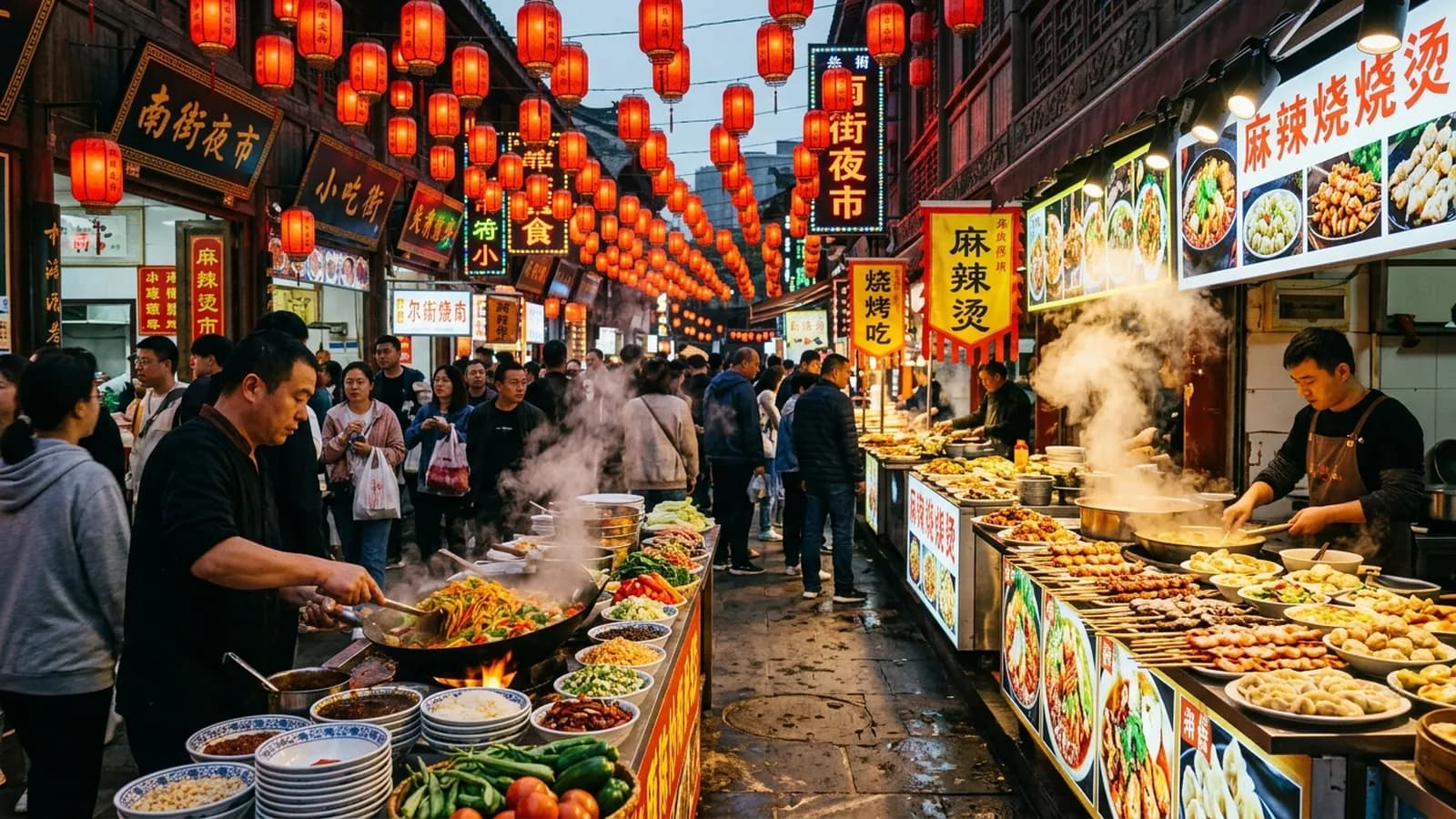
Beyond the Eight Great Cuisines, China's street food culture is a world of its own. Every city has its night markets and morning stalls, and the variety is staggering. Street food in China is not a lesser category — some of the country's most beloved dishes are fundamentally street food.
Must-Try Street Foods Across China
- Jiaozi (饺子): Boiled, steamed, or pan-fried dumplings filled with pork, vegetables, or shrimp. Available everywhere, costing 8-15 CNY for a generous portion.
- Jianbing (煎饼): China's breakfast crepe. A thin batter spread on a griddle, topped with egg, scallions, cilantro, crispy wonton skin, and hoisin and chili sauces. Found on every street corner in northern cities for 6-10 CNY.
- Roujiamo (肉夹馍): Often called the "Chinese hamburger." Slow-braised spiced pork (or lamb) stuffed into a crispy flatbread. A Xi'an specialty that has spread nationwide. 8-15 CNY.
- Chuanr (串儿): Grilled meat skewers seasoned with cumin, chili, and salt. Originally from Xinjiang in northwest China, now ubiquitous at night markets. 2-5 CNY per skewer.
- Spring Rolls (春卷): Thin pastry wrappers filled with vegetables or meat and deep-fried until golden. 3-8 CNY each.
- Tanghulu (糖葫芦): Candied hawthorn berries on a stick — a traditional winter snack from northern China. 5-10 CNY.
For a deeper dive into eating affordably, see our guide to eating like a local in China for under $8 a day.
Chinese Breakfast: How Locals Start the Day
Chinese breakfast culture is rich and varies dramatically by region. Forget toast and cereal — mornings in China revolve around hot, savory, and often soupy dishes.
Northern China Breakfast Staples
- Youtiao (油条) with Doujiang (豆浆): Deep-fried dough sticks paired with warm soy milk (sweetened or savory). The most classic Chinese breakfast, costing 4-8 CNY.
- Baozi (包子): Steamed buns filled with pork, vegetables, or sweet red bean paste. 1.5-4 CNY each.
- Zhou (粥): Rice congee, served plain or with preserved egg, shredded pork, or century egg. A gentle start to the day. 5-12 CNY.
Southern China Breakfast Staples
- Dim Sum/Yum Cha: In Guangdong, breakfast means going to a tea house for dim sum — har gow, siu mai, cheung fun, and dozens of other small dishes with tea.
- Rice Noodle Rolls (肠粉): Silky rice noodle sheets filled with shrimp, pork, or vegetables and drizzled with soy sauce. 8-15 CNY.
- Xiaolongbao (小笼包): In Shanghai and Jiangsu, soup dumplings are a morning staple. 10-20 CNY for a steamer basket.
Dining Etiquette: How to Eat Like a Local
Understanding basic dining etiquette helps you navigate Chinese restaurants with confidence and earn respect from locals.
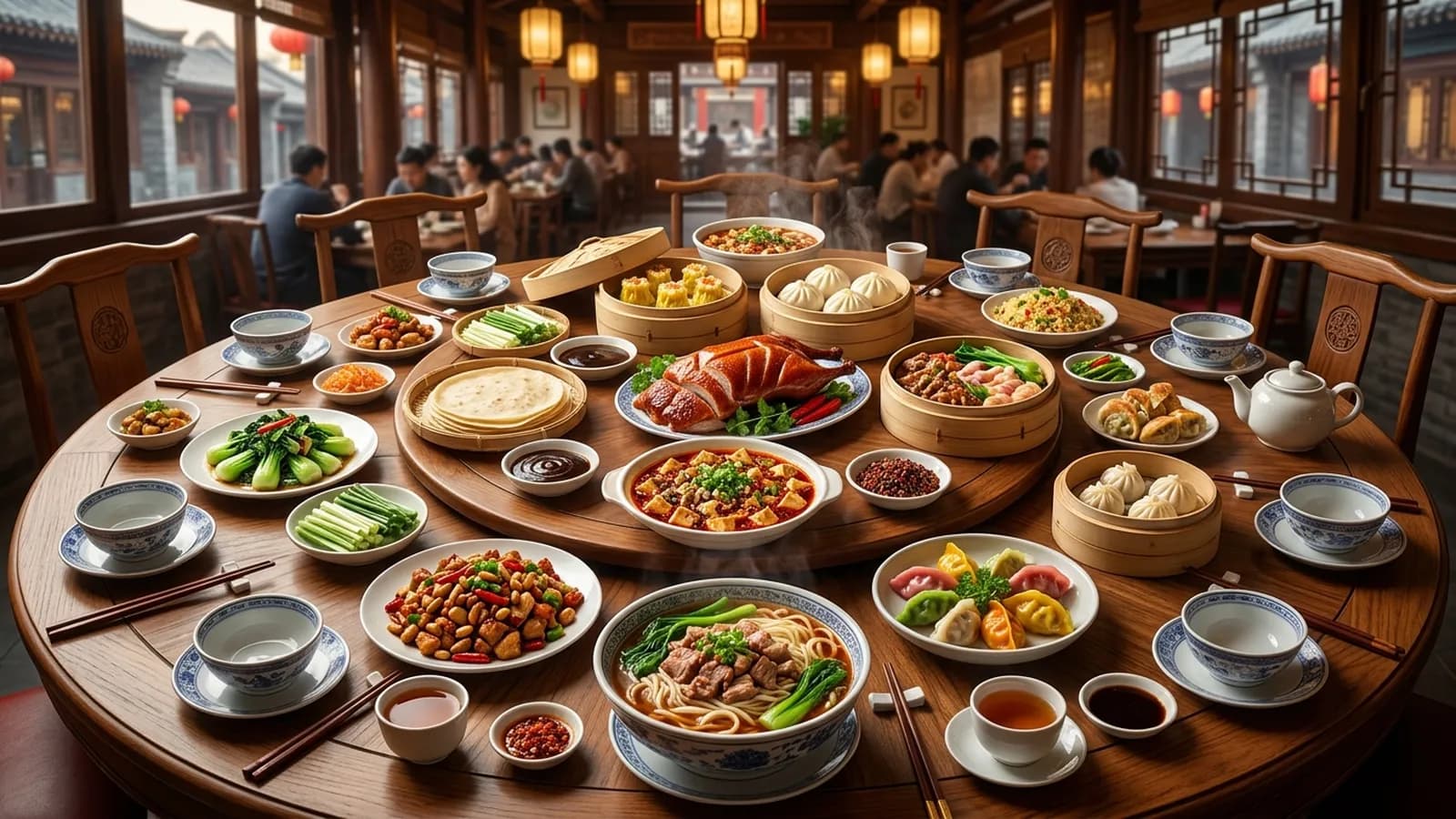
- Communal dining is the norm. Dishes are placed in the center of the table and shared. Order one dish per person plus a soup, and everyone eats from every plate.
- Use the lazy Susan. At round tables, spin it gently to access dishes. Wait for the host or eldest person to start eating first.
- Chopstick rules matter. Never stick chopsticks upright in rice (this resembles funeral incense). Do not point with chopsticks or use them to spear food.
- Tea etiquette. When someone pours you tea, tap two fingers on the table as a silent "thank you." Refill others' cups before your own.
- Toasting. If drinking baijiu (Chinese grain spirit) or beer, toast with "ganbei" (干杯, literally "dry glass") for a full drink, or "suiyi" (随意, "as you please") for a sip.
- Fighting for the bill is expected. At the end of a meal, it is customary to insist on paying. This "bill fight" is a social ritual — let the host win gracefully.
- Bones on the table. It is normal to place small bones and shells on the table or a small plate, not back in the serving dish.
How to Order Food in China: Useful Phrases
Even with translation apps, knowing a few key phrases makes ordering food in China much smoother.
| English | Chinese | Pinyin | When to Use |
|---|---|---|---|
| Menu, please | 请给我菜单 | Qing gei wo caidan | Starting your order |
| What do you recommend? | 你推荐什么? | Ni tuijian shenme? | Asking for house specialties |
| Not spicy | 不辣 | Bu la | Ordering in Sichuan or Hunan |
| A little spicy | 微辣 | Wei la | Moderate spice level |
| I am vegetarian | 我吃素 | Wo chi su | Dietary restrictions |
| No meat | 不要肉 | Bu yao rou | Specifying no meat |
| The bill, please | 买单 | Maidan | Paying |
| Delicious! | 好吃! | Hao chi! | Complimenting the food |
| One more of this | 再来一份 | Zai lai yi fen | Reordering a dish |
| Takeaway | 打包 | Dabao | Getting leftovers wrapped |
Pro Tip: In most Chinese restaurants, you order by pointing at the menu or at photos on the wall. Many restaurants now have QR code ordering via WeChat — scan the code on your table, browse the digital menu with photos, and place your order directly. Set up WeChat Pay before your trip to take advantage of this.
Vegetarian and Vegan Options in China
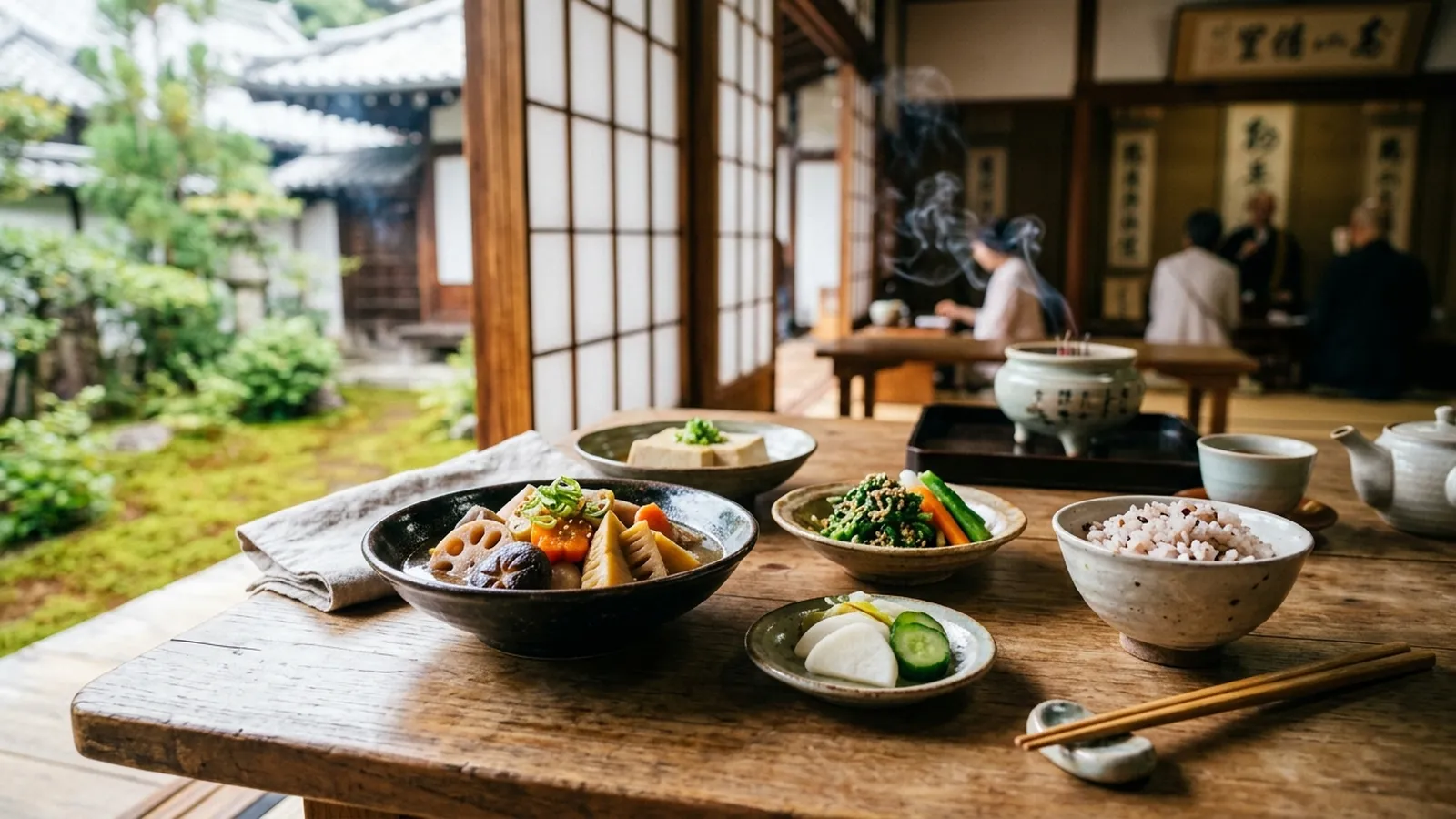
Vegetarian travel in China requires some strategy, but it is entirely feasible. Buddhism has a long tradition of vegetarian cooking in China, and most major cities have dedicated Buddhist vegetarian restaurants (素菜馆, su cai guan). These restaurants create elaborate dishes that mimic the appearance and texture of meat using tofu, seitan, mushrooms, and gluten — a "vegetarian duck" or "vegetarian fish" made entirely from plant ingredients.
Beyond Buddhist restaurants, many standard dishes can be ordered without meat:
- Mapo Tofu — request it without pork (不要肉)
- Stir-fried vegetables — available in every restaurant (素菜, su cai)
- Tomato-egg stir-fry (番茄炒蛋) — a comfort food staple
- Buddhist noodle soups — mushroom and vegetable broth based
- Tofu dishes — dozens of preparations from silken to dried to fermented
Be aware that "vegetable dishes" sometimes contain small amounts of meat or animal-based broths. Saying "wo chi su" (I eat vegetarian) clearly communicates your needs.
Frequently Asked Questions
What is the most popular food in China?
There is no single answer because popularity varies by region. Nationally, hot pot is one of the most widely enjoyed dining experiences, transcending regional boundaries. Jiaozi (dumplings), fried rice, and noodle soups are everyday staples. Kung Pao Chicken and Mapo Tofu from Sichuan, Peking Duck from Beijing, and dim sum from Guangdong are among the most famous nationally and internationally.
Is Chinese food safe for tourists?
Yes. Stick to busy restaurants and stalls with high turnover, and you will have no issues. Street food cooked fresh in front of you is generally very safe. Avoid raw shellfish at questionable establishments, and drink bottled or boiled water rather than tap water.
How do I handle food allergies in China?
Food allergies are less commonly understood in China than in Western countries. Write your allergies in Chinese characters on a card and show it to restaurant staff. Common allergens to communicate: peanuts (花生, huasheng), shellfish (贝类, beilei), gluten (麸质, fuzi), soy (大豆, dadou). For severe allergies, eat at larger restaurants where staff are more likely to have experience with dietary restrictions.
What is the difference between Sichuan and Hunan spicy food?
Sichuan uses Sichuan peppercorns that create a numbing sensation (ma) alongside chili heat (la) — the combination called "ma la." Hunan uses pure chili heat without the numbing element, making it more direct and often hotter.
Do I need to tip at restaurants in China?
No. Tipping is not customary in China and can even cause confusion. Prices include service. In upscale hotels or restaurants catering to international guests, a service charge may be added to the bill, but additional tipping is not expected.
What is baijiu and should I try it?
Baijiu (白酒) is China's national spirit, a clear grain alcohol typically ranging from 40-60% ABV. It has a strong, distinctive flavor that divides opinion. If offered, try a small sip. Popular brands include Moutai (the most prestigious), Wuliangye, and Luzhou Laojiao. Be warned: "ganbei" toasts at Chinese dinners can add up quickly.
Where can I find the best food markets in China?
Every major city has excellent food markets. Standouts include: Wangfujing Snack Street in Beijing, Chengdu's Jinli Street, Changsha's Taiping Street, Xi'an's Muslim Quarter, Guangzhou's Shangxiajiu, and Shanghai's Yuyuan Bazaar. For a less touristy experience, visit any city's local wet market in the morning.
China's food culture is a lifelong journey of discovery. Whether you are slurping numbing noodles in a Chengdu back alley, savoring delicate dim sum in a Guangzhou tea house, or cracking open a clay-baked chicken in Hangzhou, you are participating in one of the world's oldest culinary traditions. Go hungry, stay curious, and never say no when a local offers to take you to their favorite restaurant.

About the Author
Go2China Team
The Go2China editorial team combines first-hand travel experience with deep cultural knowledge to bring you accurate, up-to-date guides for exploring China — from the Great Wall and Forbidden City to hidden gems off the tourist trail.
- ✓Lived and traveled extensively across China
- ✓Native & bilingual Mandarin speakers on team
- ✓Verified info from official Chinese tourism sources