Discover the best Great Wall hiking sections near Beijing. Compare routes, costs, difficulty levels, and operators to find your perfect trek.
The Great Wall of China stretches over 21,000 kilometers across northern China, yet most visitors hike just a handful of restored sections near Beijing. After three years exploring the Wall's various segments—from the crowded tourist sections to remote, crumbling stretches—our team has learned that choosing the right hiking route depends entirely on your fitness level, time, and what kind of experience you're seeking.
Key Takeaways
| Question | Answer |
|---|---|
| What is the best time to visit? | September to October and April to May offer ideal weather; avoid July-August (hot/humid) and December-February (freezing) |
| How much does it cost? | Day trips range from ¥200–¥500 (USD $28–$70); multi-day treks ¥1,500–¥3,500 (USD $210–$490) |
| How do I get there? | Most sections accessible by bus (1–2 hours from Beijing); hire a driver or book a tour for convenience |
| Is it safe? | Yes, but bring water, sun protection, and sturdy hiking boots; avoid hiking alone on remote sections |
| What should I book in advance? | Tours during peak season (April–May, September–October); accommodation for multi-day treks |
1. Understanding the Great Wall's Different Sections
The Great Wall hiking experience varies dramatically depending on which section you choose. Near Beijing, you'll find three distinct categories: heavily restored tourist sections, moderately restored segments, and wild, crumbling stretches that feel frozen in time. Each offers a completely different experience, and understanding these differences is crucial before booking.
The restored sections—like Badaling and Mutianyu—feature well-maintained stairs, cable cars, and souvenir shops. They're perfect for families and visitors with limited mobility, but they're crowded year-round. The moderately restored sections, such as Juyongguan and Jinshanling, strike a balance between accessibility and authenticity. The wild sections—Simatai, Jiankou, and Huanghuacheng—demand serious fitness and preparation but reward you with solitude and raw beauty.
Restored vs. Wild Sections
When we visited Badaling during peak season, we encountered thousands of tourists in a single afternoon. The Wall itself is magnificent, but the experience felt more like navigating a shopping mall than exploring a historical monument. In contrast, our trek along the wild Jiankou section the following week—where we saw only a handful of other hikers—felt like discovering the Wall as it truly exists: weathered, challenging, and utterly authentic.
Key considerations for choosing:
- Restored sections: Best for first-time visitors, families, and those with limited time (2–4 hours)
- Moderately restored: Ideal for casual hikers seeking balance (4–6 hours)
- Wild sections: For experienced hikers ready for exposure and scrambling (6–10+ hours)
Distance and Elevation Gain
The Wall's topography varies significantly. Badaling climbs steadily but never steeply; Mutianyu features cable car options to bypass elevation. Jinshanling offers rolling terrain with manageable grades. Simatai, however, includes near-vertical scrambles and exposed sections that demand respect. Jiankou combines steep climbs with narrow ridgelines—exhilarating but not for those afraid of heights.
Did You Know? The Great Wall was built over 2,000 years by multiple dynasties, with the Ming Dynasty (1368–1644) responsible for most of the sections visible today.
Source: UNESCO World Heritage Centre
Book Great Wall tours, cooking classes, and experiences in advance with instant confirmation.
Browse Activities on Klook → Scan me
2. Badaling: The Classic Tourist Route
Badaling is the most visited section of the Great Wall, attracting over 10 million visitors annually. Located just 43 kilometers northwest of Beijing, it's easily accessible and heavily restored, making it the default choice for first-time visitors and tour groups.
The hike itself is straightforward: a 2–3 hour round trip covering approximately 4 kilometers with moderate elevation gain. The Wall here is wide, well-paved, and features clear signage. A cable car operates in both directions, allowing visitors to hike one way and ride down—a popular option for those with limited stamina.
Best For and Practical Details
Badaling is ideal for families with children, elderly visitors, and anyone visiting Beijing for just a day or two. The section is open year-round, and facilities are excellent: parking, restaurants, souvenir shops, and clean restrooms are abundant. Entrance fees are approximately ¥40 (USD $5.50) for the Wall itself, with cable car rides at ¥100 (USD $14) each direction.
Pros and cons of Badaling:
- Excellent accessibility: Cable car, clear paths, minimal scrambling
- Comprehensive facilities: Restaurants, shops, clean restrooms
- Crowded year-round: Expect thousands of visitors, especially April–May and September–October
- Less authentic: Heavy restoration and commercialization diminish the sense of discovery
- Limited hiking challenge: Not rewarding for experienced trekkers
Getting There
Badaling is served by multiple bus routes from Beijing. The most direct option is the S2 train from Beijing North Railway Station, which takes approximately 1 hour and costs ¥6 (USD $0.85). Buses from various Beijing locations cost ¥10–¥20 (USD $1.40–$2.80) and take 1.5–2 hours. Hiring a private driver costs ¥400–¥600 (USD $56–$84) for a full day.
Book trains, buses across China easily online. Compare routes and prices.
Book Transport on 12Go → Scan me
3. Mutianyu: The Scenic Middle Ground
Mutianyu, located 73 kilometers northeast of Beijing, offers a compelling alternative to Badaling. This section is less crowded, more scenic, and features 22 restored watchtowers set against forested mountains. During our visit in early October, we encountered a fraction of Badaling's crowds while enjoying superior views.
The main hiking loop is approximately 2.5 kilometers and takes 2–3 hours. The route includes cable car options in both directions, a toboggan ride down (a uniquely fun way to descend), and a chairlift. Alternatively, you can hike the entire loop without mechanical assistance for a more authentic experience.
Hiking Options and Difficulty
Compare hotels across China with free cancellation on most bookings.
Search Hotels on Booking.com → Scan me
Mutianyu's flexibility is its greatest strength. Visitors can customize their experience: hike up and cable car down, cable car up and hike down, or hike both directions. The terrain is moderately steep but never exposed or dangerous. The forested setting provides natural shade, making it more comfortable than Badaling during hot months.
For a more challenging experience, consider hiking the extended loop that connects Mutianyu to neighboring sections—approximately 5–6 kilometers taking 4–5 hours. This option feels significantly less crowded while still maintaining good trail conditions.
Why Mutianyu appeals to different hikers:
- Scenic beauty: Forested mountains and fewer crowds create a more immersive experience
- Flexible difficulty: Cable cars allow customization for different fitness levels
- Reasonable crowds: Popular but far less overwhelming than Badaling
- Toboggan descent: A unique, fun way to descend (¥100/USD $14)
- Entrance fee: Approximately ¥140 (USD $19.50), higher than Badaling but worth it
Booking and Logistics
Mutianyu requires advance booking during peak season (April–May, September–October). Entrance tickets and cable car passes must be purchased together; you cannot enter without pre-booking online. The journey from Beijing takes 1.5–2 hours by bus or private car. Several tour operators offer all-inclusive packages (¥300–¥500/USD $42–$70) that include transport, entrance, and a guide.
Compare hotels across China with free cancellation on most bookings.
Search Hotels on Booking.com →
Scan me
4. Jinshanling: The Hiker's Sweet Spot
Jinshanling represents our team's favorite compromise between accessibility and authenticity. Located 120 kilometers northeast of Beijing, this section features a mix of restored and wild Wall, allowing hikers to experience both the Wall's grandeur and its raw, weathered character.
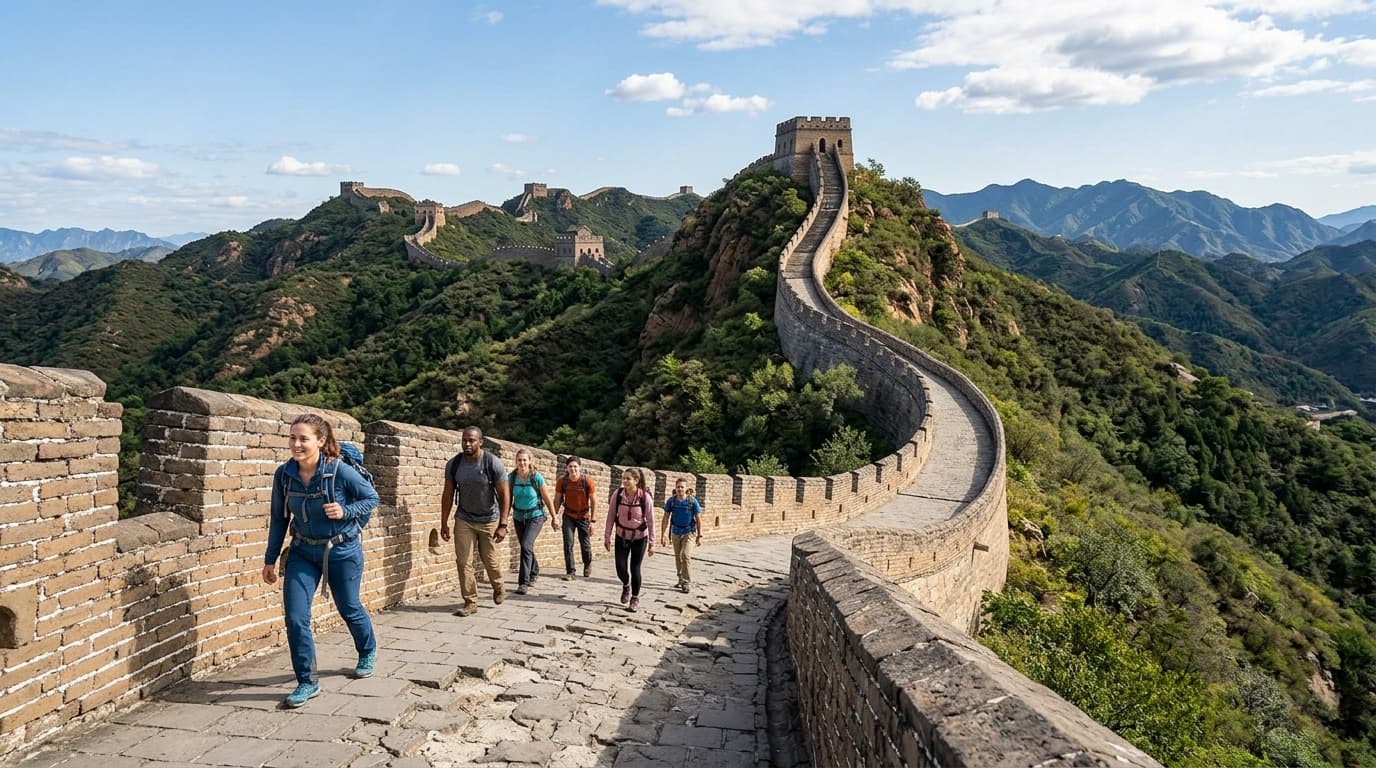
The classic Jinshanling hike is a 5–6 kilometer loop taking 3–4 hours, with moderate elevation changes and no cable cars or tourist infrastructure. The Wall here is less crowded than Badaling or Mutianyu, yet still well-maintained enough to be safe. You'll encounter other hikers, but rarely the overwhelming crowds of the major tourist sections.
The Jinshanling Experience
What makes Jinshanling special is its variety. The route includes restored sections with clear staircases, partially ruined segments requiring careful footwork, and stunning vistas across forested valleys. During our October visit, we hiked for hours without encountering more than a dozen other people—a stark contrast to the thousands at Badaling.
The terrain is genuinely hiking, not just walking. You'll scramble over uneven stones, navigate narrow passages, and climb steep sections. It's not dangerous, but it demands attention and reasonable fitness. The reward is an authentic Great Wall experience without the extreme exposure or technical difficulty of truly wild sections.
What to expect on the Jinshanling loop:
- Mixed terrain: Restored and wild sections create visual and physical variety
- Manageable crowds: Popular with hikers but never overwhelming
- Genuine challenge: Requires fitness and sure-footedness but no technical climbing
- Entrance fee: Approximately ¥65 (USD $9), one of the cheapest options
- No cable cars: You hike both up and down; no shortcuts available
Getting There and Booking
Reaching Jinshanling requires more effort than Badaling or Mutianyu. Public transport is limited; most visitors hire a private driver (¥500–¥700/USD $70–$98 for a full day) or book a tour (¥400–¥600/USD $56–$84). The drive from Beijing takes 2–2.5 hours. Several hiking-focused tour operators offer Jinshanling trips with experienced guides who can point out historical details and optimize your route.
Did You Know? Jinshanling was partially restored in the 1980s using traditional Ming Dynasty techniques, making it one of the most historically accurate reconstructions on the Wall.
Source: China Daily
5. Simatai: For Experienced Hikers Only
Simatai, located 110 kilometers northeast of Beijing, is the Great Wall's most dramatic and challenging section. It features steep climbs, exposed ridgelines, and sections so narrow that hikers must use cables and chains to ascend. This is not a casual stroll; it's a serious mountain hike that demands fitness, experience, and respect.
Our team's Simatai experience was unforgettable—and humbling. The Wall climbs nearly vertically in places, with drops of hundreds of meters on either side. The views are extraordinary, but they come with genuine exposure and risk. We encountered experienced mountaineers, not casual tourists.
The Challenge and the Reward
A typical Simatai hike covers 5–7 kilometers and takes 4–6 hours, depending on your fitness and how many sections you tackle. The route includes the famous "Heavenly Ladder"—a near-vertical section with chains bolted into the Wall for handholds. Beyond that lies the "Black Dragon Ridge," an even more exposed and technical section.
Simatai is open for daytime hikes, but many visitors prefer the night hike experience, starting at dusk and hiking under moonlight. This adds an extra layer of adventure (and risk) to an already challenging experience.
Essential considerations for Simatai:
- Fitness requirement: Serious cardiovascular fitness and climbing experience essential
- Exposure: Multiple sections with significant drops; not for those afraid of heights
- Technical sections: Chains and cables required on steeper portions
- Entrance fee: Approximately ¥100 (USD $14) for daytime; night hikes ¥150–¥200 (USD $21–$28)
- Guides strongly recommended: A local guide (¥300–¥500/USD $42–$70) is invaluable for route optimization and safety
Is Simatai Right for You?
Ask yourself honestly: Have you hiked steep mountain terrain before? Are you comfortable with exposure and scrambling? Do you have good balance and upper body strength? If you answered "yes" to all three, Simatai is an incredible experience. If you hesitated on any answer, consider Jinshanling or a guided tour that allows you to tackle only the less technical sections of Simatai.
6. Jiankou: The Adventurer's Challenge
Jiankou is the Great Wall's most remote and least restored section accessible from Beijing. Located 150 kilometers northeast, it features narrow ridgelines, steep scrambles, and virtually no crowds. This is the Wall as it exists in its natural state—weathered, challenging, and absolutely stunning.
A typical Jiankou hike covers 6–8 kilometers and takes 5–7 hours. The route includes multiple steep ascents and descents, narrow ridgelines where you're literally walking the Wall's spine, and sections requiring hands-on scrambling. The exposure is significant; this is not a hike for those uncomfortable with heights.
The Jiankou Experience
Book Great Wall tours, cooking classes, and experiences in advance with instant confirmation.
Browse Activities on Klook →
Scan me
When we hiked Jiankou in September, we encountered perhaps 20 other hikers across the entire day—a profound contrast to Badaling's thousands. The Wall here is crumbling in places, overgrown in others, and utterly authentic. You're not hiking a restored monument; you're exploring a wild mountain ridge that happens to be part of the Great Wall.
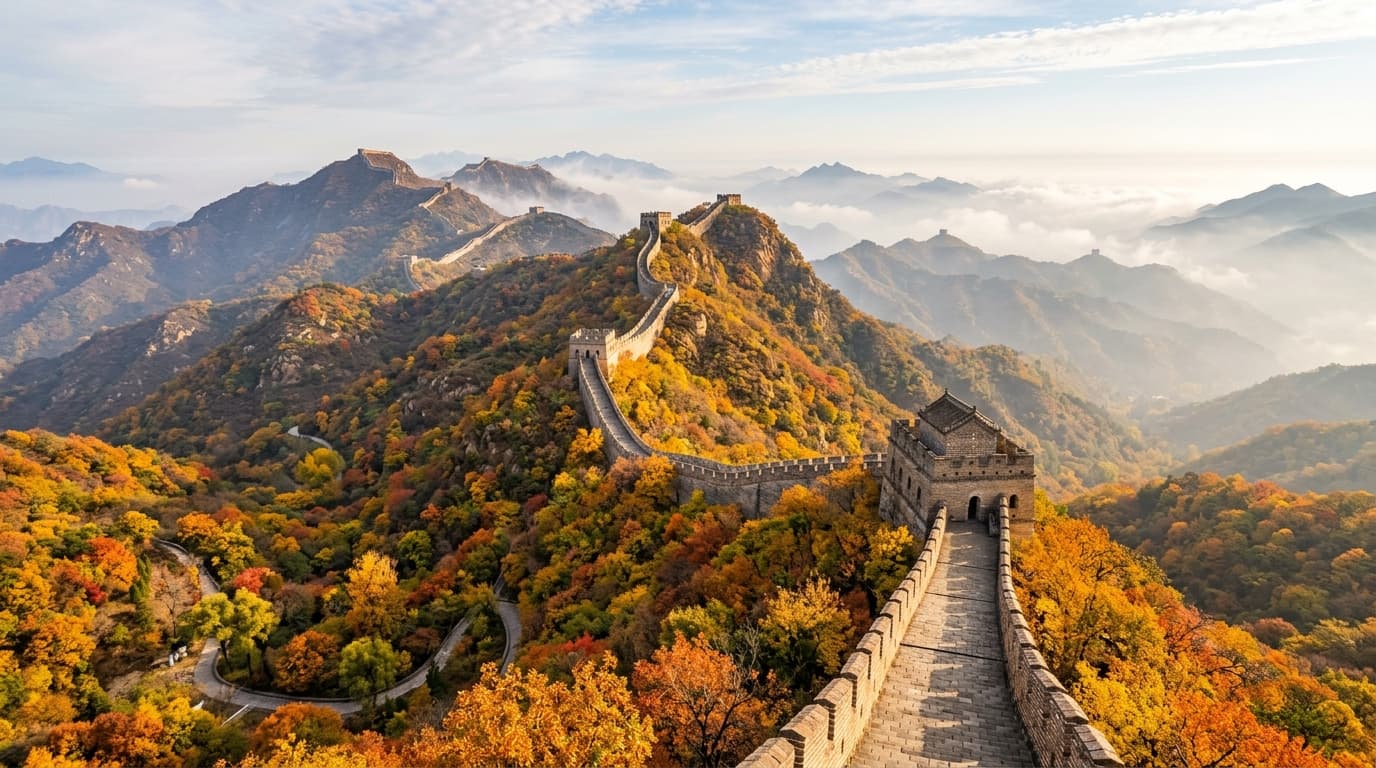
The views are extraordinary. From the highest points, you can see the Wall snaking across multiple ridgelines, disappearing into forested valleys. The sense of discovery and remoteness is unmatched among easily accessible Great Wall sections.
Why choose Jiankou:
- Authentic wilderness: Minimal restoration; the Wall exists in its natural state
- Solitude: Rarely crowded, even during peak season
- Technical challenge: Scrambling, exposure, and serious elevation gain
- Stunning photography: The ridge-top vistas are among the Wall's most dramatic
- Entrance fee: Approximately ¥100 (USD $14)
Logistics and Safety Considerations
Jiankou requires a full day commitment and serious preparation. The drive from Beijing takes 3–3.5 hours. Public transport is not practical; hire a private driver or book a specialized hiking tour. A guide is strongly recommended; the route-finding can be confusing, and having local knowledge enhances the experience significantly.
Start early—ideally 6–7 AM—to maximize daylight hours. Bring substantial water (at least 3 liters), high-energy snacks, and a headlamp in case you're slower than anticipated. The weather can change rapidly; bring a rain jacket even on clear-looking mornings.
Discover guided tours in Beijing, Shanghai, Xi'an and beyond.
Browse Tours on GetYourGuide → Scan me
7. Huanghuacheng: Water, Walls, and Wilderness
Huanghuacheng offers a unique Great Wall experience: a section that literally emerges from a reservoir. Located 80 kilometers north of Beijing, this section combines hiking, scrambling, and even swimming (in summer) into a single adventure.
The classic Huanghuacheng route is approximately 6–7 kilometers and takes 4–5 hours. It includes restored Wall sections, wild crumbling stretches, and a dramatic descent to the water's edge where the Wall meets the reservoir. In summer, many hikers swim across the water to access the Wall's continuation on the opposite shore.
The Unique Appeal of Huanghuacheng
Huanghuacheng feels different from other Great Wall sections. The presence of water creates a distinct landscape; you're hiking through forested mountains that frame a sparkling reservoir. The Wall's relationship with the landscape feels more organic here—less like a monument imposed on nature, more like a structure that evolved with its environment.
The hiking is moderately challenging but not technical. Scrambling is required in places, but nothing as exposed as Simatai or Jiankou. The route appeals to hikers seeking something different from the typical Wall experience.
Huanghuacheng highlights:
- Unique setting: The only Great Wall section that meets a major reservoir
- Moderate difficulty: Challenging but accessible to fit casual hikers
- Swimming option: In summer, you can swim between Wall sections (bring a dry bag)
- Fewer crowds: Popular with Beijing hikers but not overwhelmed with tourists
- Entrance fee: Approximately ¥50 (USD $7)
Best Time and Practical Tips
Huanghuacheng is excellent year-round, but summer offers the swimming option. Spring and fall provide ideal hiking weather. Winter can be cold and icy on exposed sections. The drive from Beijing takes 1.5–2 hours. Several tour operators offer Huanghuacheng trips (¥350–¥550/USD $49–$77) that include transport and a guide.
8. Multi-Day Great Wall Treks
For those with more time, multi-day Great Wall treks offer an immersive experience impossible in a single day. These treks typically cover 15–30 kilometers over 2–4 days, combining multiple sections and including camping or guesthouse accommodation.
Popular Multi-Day Routes
The Jinshanling to Simatai trek is the most popular multi-day option. This 2–3 day trek covers approximately 15 kilometers, combining the accessible Jinshanling section with the challenging Simatai terrain. You'll experience the full spectrum of Great Wall hiking in a single journey.
The Juyongguan to Jinshanling traverse offers a more moderate 2-day option, covering approximately 12 kilometers with moderate difficulty. This route is ideal for hikers seeking multi-day experience without extreme technical challenge.
Costs for multi-day treks:
- Budget option: ¥1,500–¥2,000 (USD $210–$280) including transport, guide, accommodation, and meals
- Mid-range option: ¥2,000–¥2,500 (USD $280–$350) with better accommodation and more experienced guides
- Premium option: ¥2,500–¥3,500 (USD $350–$490) with small group sizes, excellent guides, and quality lodging
What's Included and What to Prepare
Most multi-day trek packages include transport from Beijing, an experienced guide, accommodation, and meals. You'll need to bring your own hiking boots, backpack, and personal items. Many operators provide camping equipment if needed.
Physical preparation is essential. Multi-day treks demand sustained effort over consecutive days. Train with day hikes beforehand, and ensure your fitness level matches the trek's difficulty rating.
Book multi-day treks at least 2-3 weeks in advance, especially during peak season (April-May and September-October). Small group sizes fill quickly.
9. Best Times to Visit and Weather Considerations
The Great Wall hiking season is essentially April through October, though each month offers different conditions.
Seasonal Breakdown
Compare car rental prices across China. Pick up at airports or city locations with flexible cancellation.
Compare Car Rentals →
Scan me
Spring (April–May): Mild temperatures (15–25°C / 59–77°F), wildflowers blooming, and clear skies make spring the most popular season. Expect crowds at major sections. Early April offers solitude before peak season; late May is warmer but more crowded.
Summer (June–August): Hot and humid (25–35°C / 77–95°F), with occasional thunderstorms. The heat is challenging for serious hiking, and afternoon thunderstorms can be dangerous on exposed sections like Simatai. Summer is best for Huanghuacheng's swimming option.
Fall (September–October): Crisp, clear weather (15–25°C / 59–77°F), excellent visibility, and manageable crowds make fall our team's favorite season. Early September still carries some summer heat; late October approaches winter cold. This is the ideal hiking window.
Winter (November–March): Cold (−5 to 10°C / 23–50°F), with ice and snow on exposed sections. Most casual hikers avoid winter, but experienced mountaineers appreciate the solitude and dramatic frozen landscapes.
Did You Know? The Great Wall receives approximately 10 million visitors annually, with over 80% visiting during the April–October hiking season.
10. Booking Guide: Operators, Costs, and Logistics
Choosing a Tour Operator vs. Going Solo
Solo hiking is feasible for Badaling, Mutianyu, and Jinshanling if you're comfortable with self-navigation and basic logistics. You'll save money (¥100–¥200 vs. ¥400–¥600 for a tour) but sacrifice local knowledge and convenience.
Guided tours are strongly recommended for Simatai, Jiankou, Huanghuacheng, and multi-day treks. A good guide enhances the experience significantly, points out historical details, optimizes your route, and provides safety on technical sections.
Tour Operator Comparison
| Operator Type | Best For | Cost | Rating |
|---|---|---|---|
| Budget group tours | Budget-conscious travelers, first-time visitors | ¥300–¥500 | ⭐⭐⭐⭐ |
| Small group specialists | Serious hikers, photography enthusiasts | ¥600–¥1,000 | ⭐⭐⭐⭐⭐ |
| Private guides | Customized experiences, flexible schedules | ¥800–¥1,500 | ⭐⭐⭐⭐⭐ |
| Multi-day trek operators | Immersive experiences, remote sections | ¥1,500–¥3,500 | ⭐⭐⭐⭐⭐ |
Booking Process
- Decide on your section based on fitness level, time available, and experience
- Choose your dates considering weather and crowd levels (avoid peak weekends)
- Book in advance (2–4 weeks for peak season, 1 week for shoulder season)
- Confirm logistics: transport pickup time, what to bring, cancellation policy
- Prepare physically: do day hikes beforehand if attempting challenging sections
- Arrange insurance: travel insurance covering hiking activities is recommended
What to Bring
Essential items for any Great Wall hike:
- Sturdy hiking boots with ankle support and good grip
- Minimum 2 liters of water (3+ for full-day hikes)
- High-energy snacks: nuts, energy bars, dried fruit
- Sun protection: sunscreen, hat, sunglasses
- Rain jacket: weather changes rapidly
- Headlamp: useful even on daytime hikes if you're slower than anticipated
- First aid kit: blister treatment, pain relief, bandages
- Phone with offline maps: download maps before departure
Cost Breakdown for a Typical Day Trip
Budget option (Badaling solo):
- Transport: ¥30 (bus)
- Entrance: ¥40
- Cable car (optional): ¥100
- Food/water: ¥50
- Total: ¥120–¥220 (USD $17–$31)
Mid-range option (Jinshanling guided tour):
- Organized tour: ¥500 (includes transport, entrance, guide)
- Personal food/water: ¥50
- Total: ¥550 (USD $77)
Premium option (Simatai with specialist guide):
- Organized tour: ¥800 (small group, experienced guide)
- Personal food/water: ¥100
- Total: ¥900 (USD $126)
Get a China eSIM before you land. Some plans include [VPN](https://nordvpn.tpo.lv/ekHF1i55) access.
Get Saily eSIM for China → Scan me
Frequently Asked Questions
What's the easiest Great Wall section for beginners?
Badaling is the easiest and most accessible, with cable cars, clear paths, and minimal scrambling. Mutianyu offers a good balance of ease and authenticity. Both are suitable for families and visitors with limited hiking experience.
Can I hike the Great Wall in winter?
Yes, but only experienced mountaineers should attempt challenging sections like Simatai or Jiankou. Ice and snow create serious hazards. Easier sections like Badaling and Mutianyu are hikeable in winter if you have appropriate gear and footwear.
How far in advance should I book?
For peak season (April–May, September–October), book 2–4 weeks in advance. For shoulder season (March, June, November), 1–2 weeks is sufficient. Summer and winter allow last-minute bookings but offer fewer operator options.
Is it safe to hike alone?
Badaling, Mutianyu, and Jinshanling are safe for solo hikers during daylight hours. Simatai, Jiankou, and night hikes are not recommended solo. Always inform someone of your plans and carry a fully charged phone.
What fitness level do I need?
Badaling/Mutianyu: Casual fitness; you can walk at your own pace with cable car options. Jinshanling: Moderate fitness; ability to climb stairs and navigate uneven terrain. Simatai/Jiankou: Serious fitness; cardiovascular endurance and climbing experience essential.
Can I combine Great Wall hiking with other Beijing activities?
Absolutely. Most visitors combine a Great Wall hike with visits to the Forbidden City, Beijing museums, and local food experiences. A typical itinerary dedicates 1–2 days to the Great Wall and 2–3 days to Beijing city attractions.
Conclusion
The Great Wall hiking experience you choose should match your fitness level, available time, and desire for either accessibility or authenticity. First-time visitors and families will love Badaling or Mutianyu for their convenience and facilities. Serious hikers seeking genuine challenge should head to Simatai or Jiankou. The sweet spot for most visitors is Jinshanling—a section that delivers authentic Great Wall experience without extreme technical difficulty.
Book your Great Wall adventure during spring or fall for ideal weather, and don't hesitate to hire a guide for challenging sections. The Great Wall is one of humanity's most extraordinary achievements; experiencing it on foot—whether on a crowded tourist section or a remote, crumbling ridge—is an unforgettable privilege.
For more information on planning your Beijing trip and combining Great Wall hiking with other activities, explore our comprehensive Beijing attractions guide and practical travel information.
Ready to book your Great Wall adventure? Start planning today—the Wall has been waiting for 2,000 years; it will be worth the wait.
The Go2China Team has personally explored every Great Wall section mentioned in this guide. Our recommendations are based on genuine experience, not commercial partnerships. We believe in honest, practical travel advice that helps you make the most of your time in China.

About the Author
Go2China Team
The Go2China editorial team combines first-hand travel experience with deep cultural knowledge to bring you accurate, up-to-date guides for exploring China — from the Great Wall and Forbidden City to hidden gems off the tourist trail.
- ✓Lived and traveled extensively across China
- ✓Native & bilingual Mandarin speakers on team
- ✓Verified info from official Chinese tourism sources