Explore China's diverse noodle traditions from hand-pulled lanzhou to spicy chongqing xiaomian. Regional varieties, where to eat, and how to order like a local.
If there's one thing that unites China's vast culinary landscape, it's the humble noodle—but calling them "humble" does them a tremendous disservice. Noodle types across China represent centuries of regional innovation, with each province and city claiming its own distinct varieties, preparation methods, and flavor profiles that tell stories of geography, climate, and local culture. From the hand-pulled lanzhou beef noodles of the northwest to the slippery xiaomian of Chongqing, noodles aren't just a staple—they're a window into understanding how Chinese people eat, live, and celebrate their regional identities.
Key Takeaways
| Question | Answer |
|---|---|
| What are the main noodle types in China? | Lanzhou beef, dan dan, xiaomian, chow mein, ramen-style, and regional wheat/rice varieties across 8+ major styles |
| Where should I try authentic noodles? | Street stalls and small family-run shops in Beijing, Shanghai, Chengdu, and Guangzhou |
| How much do noodles cost? | CNY 8–25 (USD 1–3.50) for street noodles; CNY 25–50 (USD 3.50–7) at casual restaurants |
| What's the best time to eat noodles? | Breakfast, lunch, or late-night snacks—noodle shops operate early morning through midnight |
| Do I need to book ahead? | No; most noodle shops are walk-in only, though popular spots may have short queues during peak hours |
| What should I order first? | Start with regional specialties: lanzhou in the northwest, dan dan in Sichuan, xiaomian in Chongqing |
| Is it safe to eat street noodles? | Yes; busy stalls with high turnover are safest—avoid places with stagnant broth or poor hygiene |
1. Understanding China's Noodle Culture: More Than Just Carbs
Chinese noodle culture runs deeper than most Western food traditions. Noodles symbolize longevity in Chinese philosophy—their length represents a long life—which is why they appear at birthdays, New Year celebrations, and family gatherings. When we explored the early-morning noodle stalls in Beijing's hutong neighborhoods, we watched elderly locals slurp bowls with the reverence others reserve for fine wine, each slurp a meditation and a connection to decades of tradition.
The diversity of noodle types reflects China's geography and history. Wheat-based noodles dominate the north, where wheat grows abundantly, while rice noodles are the staple in the south. The Silk Road left its mark too—you'll find influences of Central Asian and Middle Eastern spice in the noodles of Xinjiang and Gansu provinces. Understanding this context transforms noodle eating from casual consumption into cultural exploration.
The Philosophy Behind Noodle Preparation
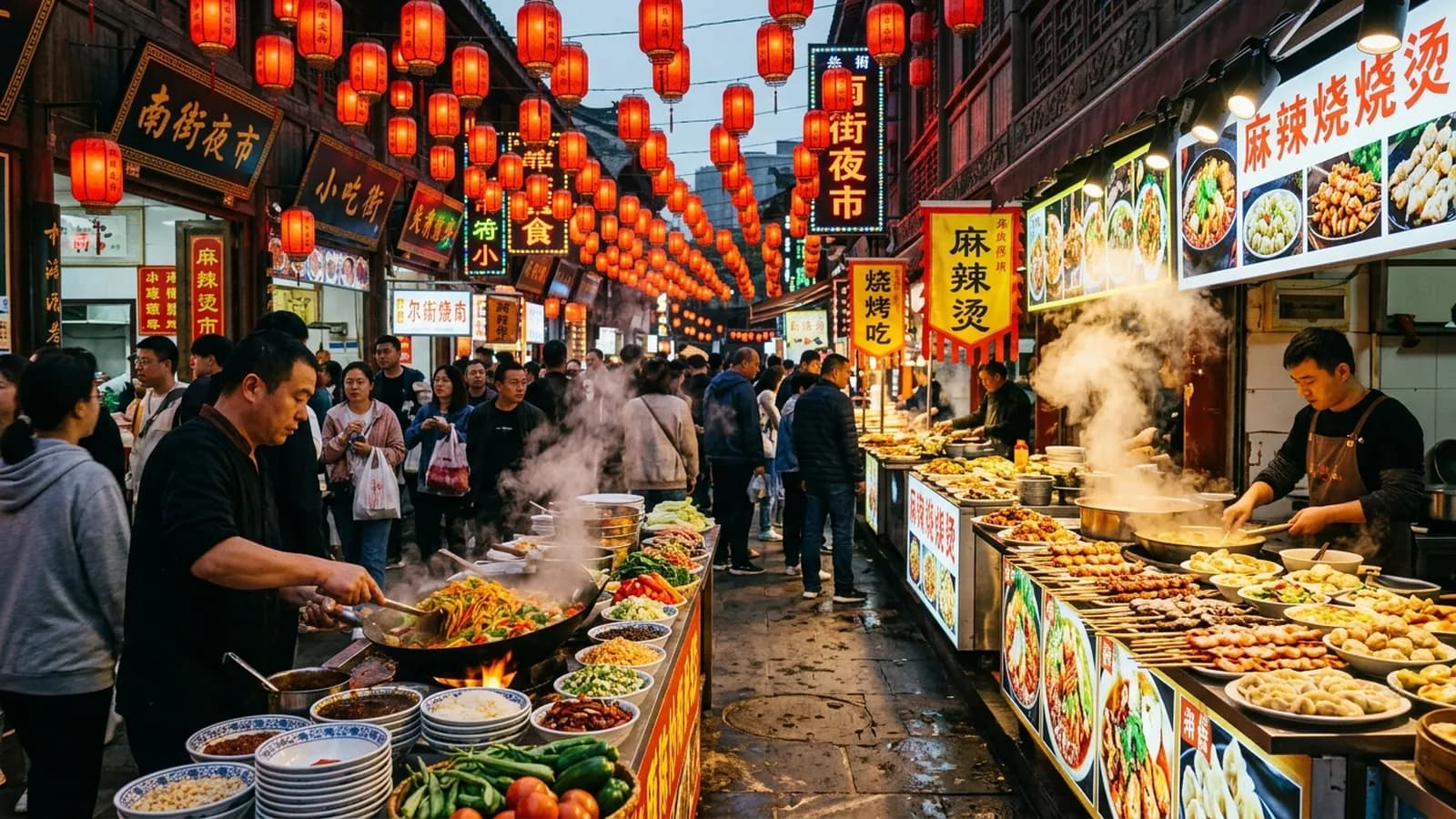
Noodle-making in China is considered an art form, with masters spending decades perfecting their craft. The way noodles are pulled, twisted, or cut affects not just texture but how they absorb broth and sauce. In our time in Chengdu, we watched a dan dan noodle vendor prepare 20 bowls in rapid succession, each one identical in portion and presentation—a skill that takes years to master.
Regional Identity Through Noodles
Each region takes pride in its noodle traditions. Ask someone from Lanzhou about their beef noodles, and they'll passionately explain why theirs are superior to other regions' versions. This isn't mere boasting—it reflects genuine differences in water quality, spice blends, and technique that have been refined over generations. During our travels through Northwest China, we discovered that the mineral content of local water actually affects how noodles cook and absorb broth.
Book Great Wall tours, cooking classes, and experiences in advance with instant confirmation.
Browse Activities on Klook → Scan me
2. Lanzhou Beef Noodles (兰州牛肉面): The Hand-Pulled Icon
Lanzhou beef noodles are perhaps China's most recognizable noodle dish internationally, and for good reason. These hand-pulled wheat noodles swim in a rich, aromatic beef broth infused with star anise, cardamom, and chili oil, topped with tender beef, cilantro, and pickled mustard greens. The noodles themselves are the star—stretched by hand into various thicknesses, each strand absorbing the broth's deep flavors.
The dish originated in Lanzhou, the capital of Gansu Province in northwest China, but has spread to nearly every city in the country. What makes authentic lanzhou beef noodles distinctive is the broth, which simmers for hours with beef bones, spices, and aromatics. The hand-pulling technique requires strength and precision—a skilled noodle maker can stretch dough into dozens of identical strands in minutes.
How to Order Lanzhou Beef Noodles Like a Local
When you enter a lanzhou noodle shop, you'll typically see a menu board with noodle thickness options:
- 粗 (cū) — Thick noodles, hearty and chewy
- 二细 (èr xì) — Medium thickness, the most popular choice
- 细 (xì) — Thin noodles, delicate and quick-cooking
- 毛细 (máo xì) — Hair-thin, for those who want maximum broth absorption
Point to your preferred thickness, or simply say "二细一碗" (èr xì yī wǎn) — "one bowl of medium noodles." The vendor will hand-pull your noodles fresh to order. Our team's experience in Beijing's Lanzhou noodle district showed us that the best shops have lines out the door by 7 AM—a sign of quality and consistency.
Regional Variations and Best Spots
| Noodle Style | Broth Base | Signature Toppings | Best Region |
|---|---|---|---|
| Lanzhou Beef | Beef bone, star anise, chili | Cilantro, pickled greens, beef | Gansu, nationwide |
| Qinghai Hand-Pulled | Mutton or beef | Scallions, cilantro, chili oil | Qinghai Province |
| Shaanxi Biangbiang | Light broth or dry | Sesame oil, chili, vegetables | Shaanxi Province |
| Ningxia Spicy Beef | Beef with extra chili | Cilantro, peanuts, chili oil | Ningxia Province |
Budget Option: Street-level lanzhou stalls charge CNY 8–15 (USD 1.20–2.20) for a basic bowl. Pro Tip: Arrive before 8 AM to avoid queues and get the freshest broth of the day—vendors typically prepare a new batch early morning.
Most lanzhou noodle shops close by 2-3 PM, so plan your visit for breakfast or early lunch. Dinner options are rare.
3. Dan Dan Noodles (担担面): Sichuan's Spicy Sensation
Dan dan noodles are Sichuan's gift to the noodle world—a fiery, numbing, utterly addictive dish that combines wheat noodles with a sauce made from sesame paste, chili oil, Sichuan peppercorns, and minced meat. The name comes from the bamboo pole (called a "dan dan") that street vendors historically used to carry noodles and sauce on either end. These days, you'll find them in restaurants, but the best versions still come from small family-run shops.
The magic of dan dan noodles lies in the balance of flavors: the nutty sesame paste, the numbing tingle of Sichuan peppercorns (málà), the heat of chili oil, and the savory punch of minced pork or beef. Unlike lanzhou noodles, which are served in broth, dan dan noodles are typically tossed with sauce, making them drier and more concentrated in flavor.
The Málà Experience: Understanding Sichuan Peppercorns
Compare hotels across China with free cancellation on most bookings.
Search Hotels on Booking.com → Scan me
Sichuan peppercorns don't actually taste peppery—they contain hydroxy-alpha sanshool, a compound that creates a numbing, tingling sensation on your tongue and lips. This sensation, called "málà" (麻辣, literally "numbing-spicy"), is central to Sichuan cuisine. When we first tried dan dan noodles in Chengdu, the málà hit us like an electric current—it's an acquired taste, but once you understand it, you'll crave it.
Ordering and Customization
Most dan dan noodle shops let you customize spice levels:
- 不要辣 (búyào là) — Not spicy (for the uninitiated)
- 微辣 (wēi là) — Mildly spicy
- 中辣 (zhōng là) — Medium spicy
- 特辣 (tè là) — Extra spicy (locals' choice)
You can also request more or less sesame paste, additional minced meat, or extra vegetables. The noodles themselves are typically thin wheat noodles, though some shops use egg noodles for extra richness. Best Spot: Head to Chengdu's food guide or look for small shops in residential neighborhoods—the most authentic versions are in places tourists rarely venture.
Did You Know? Sichuan peppercorns were banned in the United States from 1968 to 2005 due to concerns about citrus canker. China has been using them for over 3,000 years in traditional medicine and cooking.
Source: Smithsonian Magazine
4. Chongqing Xiaomian (重庆小面): The Breakfast of Champions
Chongqing xiaomian translates to "small noodles," but there's nothing small about the flavor impact. This is Chongqing's most iconic breakfast dish—thin wheat noodles served in a spicy, aromatic broth made with chili oil, Sichuan peppercorns, sesame paste, and a complex blend of spices. Unlike dan dan noodles, xiaomian is served in broth, making it more of a soup-noodle hybrid.
Xiaomian is the working person's breakfast in Chongqing. You'll see construction workers, office employees, and students queuing at xiaomian stalls before 7 AM, slurping bowls in minutes before heading to work. The dish is designed for speed and satisfaction—it fills you up, wakes you up with its spice, and costs just CNY 5–10 (USD 0.70–1.40).
The Xiaomian Ritual
There's a specific way locals eat xiaomian. First, they mix the noodles with the broth and sauce thoroughly, ensuring every strand is coated. Then they taste it, often adding more chili oil or sesame paste to suit their preference. The toppings—typically peanuts, bean sprouts, cilantro, and sometimes minced pork—are mixed in as you eat. During our time in Chongqing, we noticed that the speed and confidence with which locals ate xiaomian was almost meditative—they knew exactly how much spice they could handle.
Customization and Ordering
Xiaomian shops typically have a checklist system where you indicate your preferences:
- Spice level: 不辣, 微辣, 中辣, 特辣 (not spicy to extra spicy)
- Broth amount: 少汤 (little broth), 正常 (normal), 多汤 (extra broth)
- Toppings: Choose from peanuts (花生), bean sprouts (豆芽), cilantro (香菜), pork (肉), egg (蛋)
Pro Tip: Go early—the best xiaomian shops sell out by 10 AM. The broth quality degrades as the day goes on. Budget Option: Xiaomian is one of China's cheapest noodle dishes; expect to pay CNY 5–12 (USD 0.70–1.70) for a full bowl.
Compare hotels across China with free cancellation on most bookings.
Search Hotels on Booking.com →
Scan me
5. Shanghai Thick Noodles (上海粗面): Chewy and Satisfying
Shanghai thick noodles, or "cu mian," are a world away from the delicate hand-pulled noodles of the northwest. These are sturdy, chewy wheat noodles, typically served in a light broth with toppings like shrimp, bok choy, and sometimes a soft-boiled egg. The noodles themselves are the focus—they have a satisfying chew that comes from their thickness and the way they're cooked.
Shanghai noodle culture reflects the city's history as a cosmopolitan trading hub. While lanzhou noodles are about the broth and dan dan noodles are about the sauce, Shanghai noodles celebrate the noodle itself. The broth is often light and clean, allowing the noodle's texture to shine. When we visited Shanghai's food scene, we found that locals take their noodle texture seriously—overcooked noodles are considered a cardinal sin.
Variations You'll Find in Shanghai
- Shrimp and pork wonton noodles (大馄饨面) — Thick noodles with wontons and a light pork broth
- Eel noodles (鳝面) — Thick noodles topped with stir-fried eel and vegetables
- Scallop noodles (干贝面) — Broth made from dried scallops, creating a sweet umami depth
Ordering Tips
Ask for "粗面" (cū miàn) to specify thick noodles. Most Shanghai noodle shops will ask about your preferred toppings and broth strength. Best Spot: Look for small neighborhood noodle shops in Huangpu District or near the Yu Garden area—these are where locals eat, not tourists.
6. Cantonese Chow Mein (炒面): The Stir-Fried Classic
Cantonese chow mein represents a different noodle philosophy altogether. Rather than being served in broth, these noodles are stir-fried with vegetables, protein, and sauce, creating a dish that's crispy on the outside and tender within. The technique requires high heat and constant motion—a skilled wok cook can prepare a plate of chow mein in under two minutes.
The beauty of chow mein is its versatility. You can find versions with chicken, shrimp, beef, or vegetables. The sauce is typically a combination of soy sauce, oyster sauce, and sometimes a touch of sesame oil. What distinguishes Cantonese chow mein from other stir-fried noodle dishes is the emphasis on wok heat and the slight char that develops on the noodles—locals call this "wok hei" (锅气), or "breath of the wok."
Types of Chow Mein You'll Encounter
Book Great Wall tours, cooking classes, and experiences in advance with instant confirmation.
Browse Activities on Klook →
Scan me
- Crispy chow mein (脆炒面) — Noodles are fried until crispy, then tossed with sauce and toppings
- Soft chow mein (软炒面) — Noodles remain tender; sauce is absorbed rather than creating a crust
- Mixed seafood chow mein (海鲜炒面) — Shrimp, scallops, squid, and sometimes fish roe
During our time in Guangzhou, we learned that the quality of chow mein depends almost entirely on the cook's skill and the heat of their wok. A mediocre cook can make chow mein taste one-dimensional; a great cook creates layers of flavor and texture.
Did You Know? Chow mein became popular in the United States in the early 1900s through Chinese immigrant communities, but the versions served in American Chinese restaurants bear little resemblance to authentic Cantonese chow mein.
Source: China Daily
7. Rice Noodles: The Southern Staple
While wheat dominates the north, rice noodles are the soul of southern Chinese cuisine. These delicate, slightly translucent noodles are made from rice flour and water, resulting in a texture that's more tender than wheat noodles and a flavor that's subtly sweet. Rice noodles appear in countless regional dishes, each with its own character.
Key Rice Noodle Dishes
Guilin Rice Noodles (桂林米粉) — Perhaps the most famous rice noodle dish, these thin noodles are served in a broth made from pork bones, with toppings like pickled vegetables, peanuts, and sometimes snail meat (螺蛳粉's cousin). The broth is lighter and more delicate than northern broths, allowing the noodle's subtle rice flavor to come through. When we explored Guilin, we found that locals eat rice noodles for breakfast, lunch, and dinner—it's that central to the regional diet.
Yunnan Cross-Bridge Noodles (云南过桥米线) — This dish comes with a story. Legend says a woman would carry hot broth to her husband studying on an island, crossing a bridge each time. The broth would cool by the time she arrived, so she started adding a layer of oil to keep it hot. Today, cross-bridge noodles arrive with a pot of piping-hot broth, raw ingredients (meat, vegetables, herbs), and thin rice noodles that cook in the broth at your table. It's interactive, theatrical, and delicious.
Chongqing Xiao Mian with Rice Noodles (米线小面) — Some Chongqing vendors offer xiaomian made with rice noodles instead of wheat, creating a lighter but equally spicy version.
Ordering Rice Noodles
Rice noodle shops typically offer choices:
- Thickness: Thin (细), medium (中), thick (粗)
- Broth type: Clear (清汤), pork bone (骨汤), or spicy (辣汤)
- Toppings: Meat, vegetables, preserved items
Budget Option: Rice noodles are among the cheapest noodle options, typically CNY 6–15 (USD 0.85–2.10). Pro Tip: Rice noodles are best eaten fresh; the texture deteriorates quickly if they sit in broth too long, so eat immediately after they're served.
Discover guided tours in Beijing, Shanghai, Xi'an and beyond.
Browse Tours on GetYourGuide → Scan me
8. Ramen-Style Noodles: Japan's Influence in China
While ramen is Japanese, Chinese ramen-style noodles have become increasingly popular in major cities, particularly among younger diners. These are typically curly, alkaline noodles served in rich broths—often tonkotsu (pork bone), miso, or shoyu (soy sauce) bases. The difference between Chinese ramen and authentic Japanese ramen is subtle but real; Chinese versions often incorporate local flavors and ingredients.
In Shanghai and Beijing, ramen shops have proliferated over the past decade, attracting diners who appreciate the rich, complex broths and the theatrical presentation. Many Chinese ramen shops blend Japanese technique with Chinese flavors—you might find a tonkotsu broth infused with Sichuan peppercorns or a miso base with Chinese herbs.
Why Ramen Appeals to Modern China
Ramen represents modernity and international sophistication to younger Chinese diners. The ritual of eating ramen—the loud slurping, the appreciation of broth complexity, the customization options—aligns with how Chinese people approach food culture. A bowl of ramen costs CNY 35–60 (USD 5–8.50), making it more expensive than traditional Chinese noodles but still affordable for casual dining.
9. Biangbiang Noodles (陕西油泼面): Shaanxi's Dramatic Dish
Biangbiang noodles are impossible to miss once you've seen them—they're the widest noodles in Chinese cuisine, sometimes 3-4 inches across. These hand-pulled wheat noodles are served either in a light broth or, more commonly, dressed with hot oil, chili, sesame oil, and vinegar, creating a dramatic presentation as the oil sizzles and pops over the noodles.
The character "biangbiang" (陕西油泼面) is one of the most complex characters in Chinese, with 42 strokes, and it's primarily used for this noodle dish. The name is onomatopoetic—it represents the sound of slapping the dough against the counter when making the noodles. During our time in Shaanxi Province, we watched noodle makers slap dough with rhythmic precision, each impact stretching and thinning the dough into those characteristic wide ribbons.
The Oil-Pouring Ceremony
Compare car rental prices across China. Pick up at airports or city locations with flexible cancellation.
Compare Car Rentals →
Scan me
The most theatrical aspect of biangbiang noodles is the oil-pouring. The noodles are arranged on a plate, topped with minced garlic, cilantro, and sometimes minced meat. Then, boiling oil infused with chili flakes is poured over the noodles, creating a sizzle and releasing aromatic smoke. This isn't just for show—the hot oil cooks the garlic and cilantro slightly, intensifying their flavors.
Ordering Biangbiang
Most biangbiang shops offer simple choices:
- With meat (肉) or vegetarian (素)
- Spice level: Not spicy (不辣), mild (微辣), medium (中辣), hot (特辣)
- Broth or dry (汤 or 干)
Budget Option: Biangbiang is inexpensive, typically CNY 8–15 (USD 1.15–2.15). Pro Tip: Biangbiang noodles are best eaten immediately—the wide noodles absorb oil and lose their texture if they sit.
10. Ordering Noodles Like a Local: Essential Phrases and Etiquette
Understanding how to order noodles in Chinese transforms your experience from tourist to participant. Most noodle shops operate on a simple system: you order at the counter, pay, and receive your bowl within minutes. Here are essential phrases:
Basic Ordering:
- 一碗面 (yī wǎn miàn) — One bowl of noodles
- 两碗面 (liǎng wǎn miàn) — Two bowls of noodles
- 要辣吗? (yào là ma?) — Do you want it spicy?
- 不要辣 (búyào là) — Not spicy
- 微辣 (wēi là) — Mildly spicy
Customization:
- 多一点汤 (duō yīdiǎn tāng) — Extra broth
- 少一点汤 (shǎo yīdiǎn tāng) — Less broth
- 加菜 (jiā cài) — Add vegetables
- 加肉 (jiā ròu) — Add meat
Noodle Shop Etiquette
Slurping is not only acceptable but encouraged—it aerates the noodles and helps cool them. Loud eating is a sign of appreciation. Most noodle shops don't have table service; you eat quickly and leave, making room for the next customer. Tipping is not customary in China, though some modern restaurants in major cities may have a tip option on their payment terminal.
When we ate noodles in small shops across Beijing, Chengdu, and Guangzhou, we noticed that the best experience came from embracing the local pace and style—no lingering, no quiet contemplation, just pure noodle appreciation.
Download a translation app like Google Translate before visiting noodle shops in smaller cities. Most vendors don't speak English, but showing them a photo or text translation works perfectly.
Comparison Table: Major Noodle Types at a Glance
| Noodle Type | Region | Broth/Sauce | Key Flavors | Best Time | Cost |
|---|---|---|---|---|---|
| Lanzhou Beef | Gansu/Nationwide | Rich beef broth | Anise, cumin, chili | Breakfast/Lunch | CNY 10–20 |
| Dan Dan | Sichuan | Sesame sauce | Málà, sesame, meat | Lunch/Dinner | CNY 12–25 |
| Xiaomian | Chongqing | Spicy broth | Málà, chili, sesame | Breakfast | CNY 5–12 |
| Shanghai Thick | Shanghai | Light pork broth | Clean, subtle umami | Lunch | CNY 12–20 |
| Chow Mein | Guangdong | Stir-fried | Wok heat, soy, oyster | Lunch/Dinner | CNY 15–30 |
| Guilin Rice | Guangxi | Light broth | Delicate, slightly sweet | Breakfast/Lunch | CNY 6–15 |
| Biangbiang | Shaanxi | Oil-dressed or light broth | Garlic, chili, sesame | Lunch/Dinner | CNY 8–15 |
| Ramen-Style | Major cities | Rich tonkotsu/miso | Complex, umami-forward | Lunch/Dinner | CNY 35–60 |
We may earn a small commission from bookings made through our links, at no extra cost to you. This helps us keep creating free travel guides.
Frequently Asked Questions
What's the difference between dan dan noodles and xiaomian?
Dan dan noodles are tossed with a thick sesame-based sauce and are typically drier, while xiaomian is served in a spicy broth. Dan dan originated in Sichuan and emphasizes sesame paste; xiaomian is Chongqing's signature and emphasizes chili oil and the málà sensation. Both are spicy, but xiaomian is generally spicier and more broth-forward.
Can I find vegetarian noodle options in China?
Absolutely. Most noodle shops offer vegetarian versions—ask for "素面 (sù miàn)" or "素的 (sù de)" meaning vegetarian. You'll get noodles with vegetable toppings and often a lighter broth. However, some broths may contain small amounts of meat stock, so if you're strictly vegetarian, ask "没有肉 (méiyǒu ròu)" — no meat.
Are noodles healthy? How many calories in a typical bowl?
A typical bowl of noodles contains 400–600 calories, depending on the type and toppings. Noodles are primarily carbohydrates with some protein from toppings. They're not particularly high in vegetables, so consider ordering a side of stir-fried greens (炒青菜) to balance your meal. The broth-based noodles are generally lighter than oil-dressed varieties.
What's the best noodle dish for someone who doesn't like spicy food?
Try Shanghai thick noodles or Guilin rice noodles with a clear broth—these are naturally mild. You can also order any noodle dish and specifically request "不要辣" (búyào là) — not spicy. Lanzhou beef noodles can be made non-spicy, though you'll miss some of the traditional flavor profile. Chow mein is also customizable for non-spicy preferences.
How do I know if a noodle shop is clean and safe?
Look for high customer turnover—busy shops are generally safer because ingredients move quickly. Check that the broth looks clear and fresh, not cloudy or discolored. Watch how the vendor handles food and whether they wash their hands between orders. In our experience, the busiest, most popular shops (indicated by lines of locals) are almost always the safest and best-quality options.
Can I order noodles for delivery in China?
Yes, absolutely. Apps like Meituan (美团) and Eleme (饿了么) allow you to order from noodle shops and have them delivered. However, noodles are best eaten fresh from the shop—delivery can take 20–40 minutes, during which noodles may become soggy. For the best experience, visit the shop in person.
What's the etiquette for eating noodles in a Chinese restaurant?
Slurp loudly—it's expected and appreciated. Eat quickly; lingering is not typical in casual noodle shops. Don't leave a tip. It's acceptable to leave some broth in the bowl if you're full. If you're eating with others, it's polite to let elders or guests eat first. Most importantly, show appreciation for the food through your eating style and, if appropriate, a compliment to the vendor.
Conclusion
Noodle types across China represent far more than just a convenient meal—they're edible history, regional pride, and a direct connection to how Chinese people live and celebrate their culinary heritage. From the hand-pulled lanzhou beef noodles of the northwest to the fiery xiaomian of Chongqing, each noodle variety tells a story of geography, culture, and generations of refinement.
The best way to understand Chinese noodle culture is to eat your way through it. Start with our complete Chinese food guide to explore other iconic dishes, then venture into neighborhood noodle shops in Beijing, Shanghai, Chengdu, and Guangzhou. Order confidently, slurp loudly, and embrace the local pace. You'll discover that noodles aren't just food—they're a window into understanding China itself.
For more regional food experiences, explore our guides to Sichuan cuisine, Cantonese dim sum, and hot pot dining. Each region of China offers distinct culinary traditions waiting to be explored.
Trust Statement: The Go2China team has spent years living in and traveling throughout China, experiencing these noodle traditions firsthand across multiple provinces and cities. Our recommendations come from genuine local knowledge, not generic travel guides. We're committed to providing accurate, trustworthy information that helps you experience China like a local, not a tourist.

About the Author
Go2China Team
The Go2China editorial team combines first-hand travel experience with deep cultural knowledge to bring you accurate, up-to-date guides for exploring China — from the Great Wall and Forbidden City to hidden gems off the tourist trail.
- ✓Lived and traveled extensively across China
- ✓Native & bilingual Mandarin speakers on team
- ✓Verified info from official Chinese tourism sources