The 25 best things to do in China in 2026 — from the Great Wall and Terracotta Warriors to street food in Chengdu, Shanghai's skyline, and hidden gems most tourists miss.
China is not one destination -- it is dozens of countries stitched together under a single flag. With 57 UNESCO World Heritage Sites, a high-speed rail network that stretches further than any on Earth, and a food culture so deep you could spend a lifetime eating and never repeat a dish, the list of things to do in China can feel genuinely overwhelming. We have spent years crisscrossing this country, and we still stumble on something jaw-dropping with every trip. Whether you are watching dawn break over the Great Wall with fog pooling between watchtowers, slurping fiery dan dan noodles at a Chengdu night market, or floating past karst peaks on the Li River, China delivers experiences that simply do not exist anywhere else.
This guide covers the 25 best activities in China across every category -- bucket-list landmarks, natural wonders, culinary adventures, city experiences, and off-the-beaten-path gems most tourists never find. We have included practical details like prices in CNY (with USD equivalents), opening hours, and transport tips so you can stop wondering what to do in China and start planning.
Key Takeaways
| Question | Answer |
|---|---|
| How many days do you need? | 10-14 days for the classic route (Beijing, Xi'an, Shanghai); 3-4 weeks to cover natural wonders and hidden gems |
| What does it cost? | Budget: ~200-400 CNY/day ($28-56); Mid-range: ~500-1,000 CNY/day ($70-140); Luxury: ~1,500+ CNY/day ($210+) |
| Best time to visit? | Spring (April-May) and autumn (September-November) for most regions; see our weather overview |
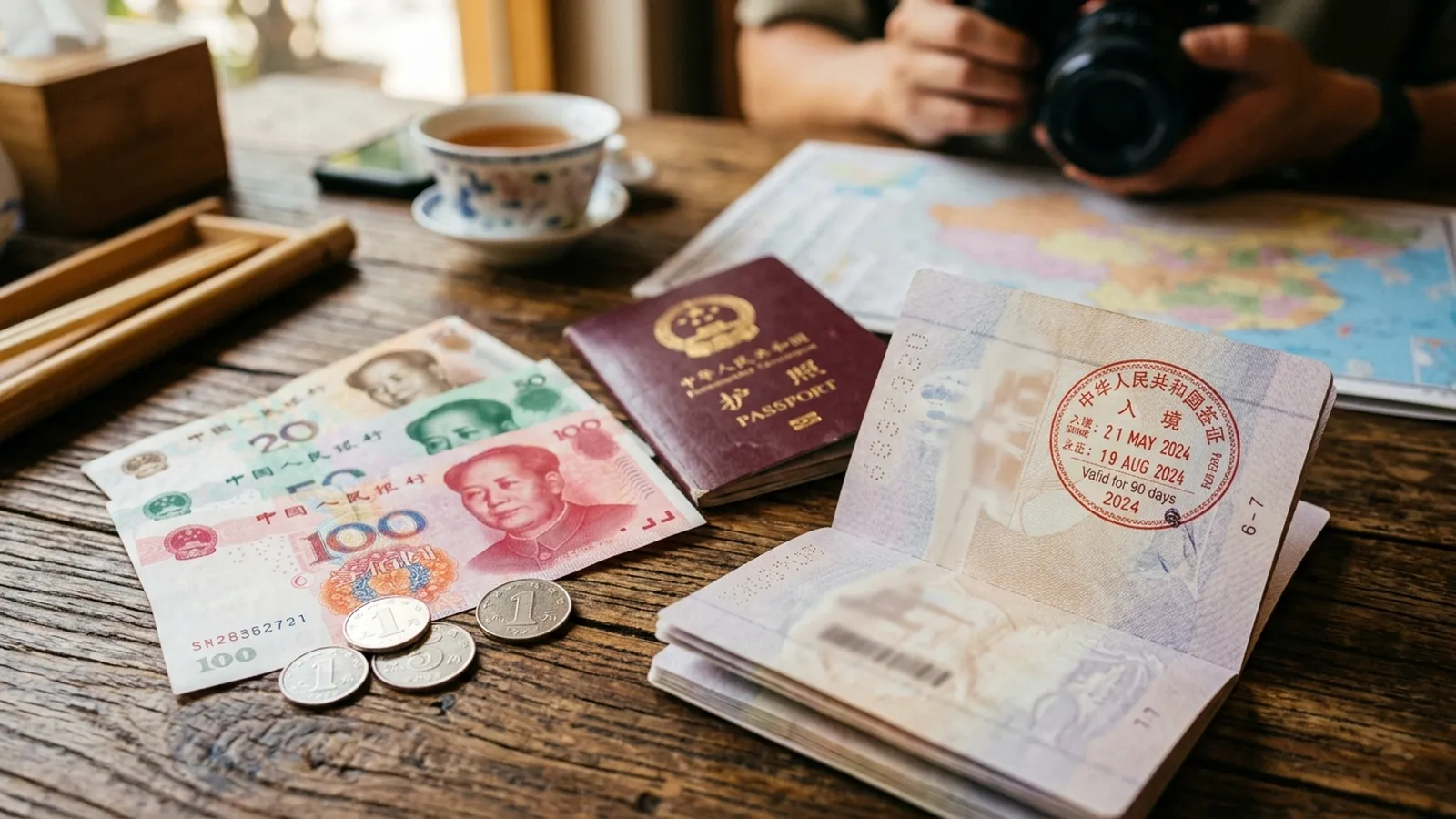
| Do you need a visa? | Most nationalities do; China expanded visa-free transit to 240 hours in 2024. See our 2026 visa guide |
| Is it safe? | Extremely safe for tourists; violent crime against foreigners is nearly unheard of |
| Can you get by in English? | In Beijing, Shanghai, and Hong Kong, yes. Elsewhere, download a translation app and learn survival phrases |
| What should you book in advance? | Great Wall and Forbidden City tickets, high-speed rail, and panda base visits during peak season |
Jump to a section:
- Iconic Historical Sites
- Breathtaking Natural Landscapes
- Unforgettable Food Experiences
- Best City Experiences
- Unique & Off-the-Beaten-Path Adventures
- Fun Things to Do With Kids
- How to Plan Your Trip
Iconic Historical Sites You Can't Miss
China has more UNESCO World Heritage Sites than almost any country on the planet, and walking through these places feels less like visiting a museum and more like stepping into a different century entirely.
1. Walk the Great Wall at Mutianyu
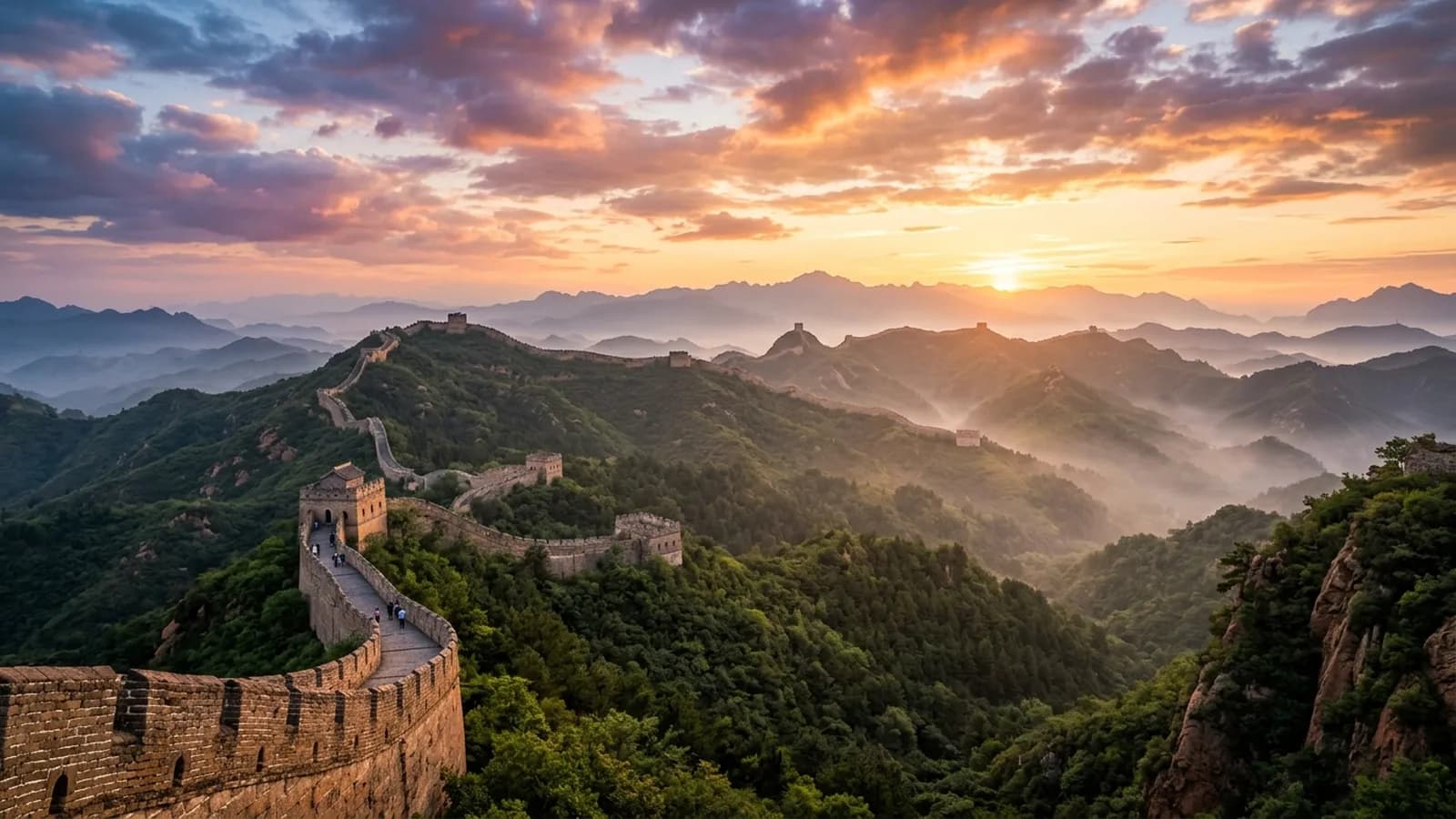
The Great Wall is where every China itinerary begins, and for good reason -- standing on a 2,000-year-old fortification that stretches across mountain ridges as far as you can see is genuinely humbling. The Mutianyu section, about 90 minutes north of Beijing, is our top recommendation for most visitors. It is the longest fully restored section open to tourists, with 23 original watchtowers, a vegetation coverage rate of 96 percent that makes the scenery spectacular, and significantly fewer crowds than the more famous Badaling section.
Mutianyu sits at a higher altitude than Badaling, which means broader panoramic views and more dramatic photography. The cable car ride up provides sweeping valley views, and the toboggan ride down is genuinely fun for all ages.
- Entry: ~45 CNY ($6 USD) plus cable car ~120 CNY ($17 USD) round trip
- Hours: 7:30 AM - 6:00 PM (summer); 8:00 AM - 5:00 PM (winter)
- Getting there: Direct bus from Dongzhimen Hub in Beijing (~90 minutes), or book a private car (~400-500 CNY/$56-70 round trip)
Pro Tip: Arrive before 8:00 AM to walk the wall in near-solitude. The tour buses from Beijing typically arrive around 10:00 AM. Walk east toward watchtower 23 -- most visitors go west, so you will have long stretches entirely to yourself. Read our detailed Great Wall hiking routes guide for trail-by-trail breakdowns of every major section.
2. Discover the Terracotta Warriors in Xi'an
When farmers drilling a well in 1974 accidentally cracked open one of history's greatest archaeological discoveries, they had no idea they were revealing over 8,000 life-sized clay soldiers, horses, and chariots built to guard Emperor Qin Shi Huang in the afterlife. Standing at the edge of Pit 1 and looking out over row upon row of warriors in battle formation -- no two faces identical -- is one of those moments that genuinely stops you in your tracks. Xi'an is worth the trip for this alone, but the city's ancient wall and Muslim Quarter street food make it a multi-day destination.
- Entry: ~120 CNY ($17 USD) March-November; ~90 CNY ($13 USD) December-February
- Hours: 8:30 AM - 6:00 PM (summer); 8:30 AM - 5:30 PM (winter)
- Getting there: Tourist bus 306 (line 5) from Xi'an Railway Station, ~7 CNY, roughly 1 hour
Pro Tip: Hire an English-speaking guide at the entrance (~200 CNY/$28) -- the context transforms the visit from "impressive statues" to "mind-blowing story." Spend extra time in Pit 3, the command headquarters, and the exhibition hall where you can examine individual faces up close.
3. Explore the Forbidden City in Beijing
If you are looking for things to do in Beijing, the Forbidden City belongs at the top of the list. This is not just a palace -- it is 72 hectares of imperial power, 980 surviving buildings, and 500 years of dynastic drama. Walking the central axis from the Meridian Gate to the Gate of Divine Prowess, you pass through increasingly grand courtyards designed to make visitors feel insignificant beside the emperor's authority. It still works.
- Entry: ~60 CNY ($8 USD) April-October; ~40 CNY ($6 USD) November-March. Clock Gallery and Treasure Gallery each ~10 CNY extra and absolutely worth it.
- Hours: 8:30 AM - 5:00 PM (last entry 4:00 PM); closed Mondays
- Book in advance: Tickets sell out, especially during holidays. Book through the Palace Museum's official WeChat mini-program at least 2-3 days ahead.
Pro Tip: Skip the central axis crowds by immediately turning into the side halls after the Meridian Gate. The western galleries and the Palace of Gathered Elegance (where concubines lived) are fascinating and nearly empty. Allow 3-4 hours minimum. Combine with a walk to Beijing's Jingshan Park directly behind the palace for the best aerial view of the entire complex.
4. Visit the Potala Palace in Lhasa
Perched at 3,700 meters above sea level, the Potala Palace rises 13 stories above Lhasa like something from a dream. This was the winter residence of the Dalai Lama for centuries and remains the spiritual heart of Tibetan Buddhism. The sheer scale -- over 1,000 rooms containing priceless murals, statues, and tombs -- combined with the thin mountain air creates an experience that is both physically and emotionally intense.
- Entry: ~200 CNY ($28 USD) May-October; ~100 CNY ($14 USD) November-April. Daily visitor caps apply.
- Hours: 9:00 AM - 4:00 PM; visiting time limited to 1 hour inside
- Permit: Foreign visitors to Tibet require a Tibet Travel Permit arranged through a licensed travel agency. You cannot visit independently -- group tours with a guide are mandatory.
Pro Tip: Arrive in Lhasa 1-2 days before visiting the Potala Palace to acclimatize to the altitude. Drink plenty of water, avoid alcohol, and take it very slow on the palace's steep staircases. The pilgrim circuit around the base of the palace (the Kora) at sunset, walking alongside Tibetan pilgrims spinning prayer wheels, is equally moving and completely free.
5. Wander Through the Summer Palace Gardens
The Summer Palace, a UNESCO World Heritage Site on the outskirts of Beijing, is where emperors escaped the oppressive summer heat of the Forbidden City. The complex combines a vast lake (Kunming Lake, which covers three-quarters of the grounds) with classical Chinese garden architecture -- covered walkways, ornate pavilions, arched bridges, and forested hills. The 728-meter-long Long Corridor, painted with over 14,000 individual scenes, is the longest painted corridor in the world.
- Entry: ~30 CNY ($4 USD) for park grounds; ~60 CNY ($8 USD) combined ticket including all buildings
- Hours: 6:30 AM - 6:00 PM (summer); 7:00 AM - 5:00 PM (winter)
- Getting there: Metro Line 4 to Beigongmen Station, then a 5-minute walk
Pro Tip: Rent a paddle boat on Kunming Lake (~60 CNY/$8 per hour) for a perspective of the palace that most visitors miss. In the late afternoon, the Seventeen-Arch Bridge casts golden reflections on the lake that are among the most photographed scenes in Beijing.
Breathtaking Natural Landscapes
China's geography spans everything from subtropical jungle to Himalayan glaciers. The natural landscapes below are not just scenic -- they are the kind of places that fundamentally recalibrate your sense of what the planet is capable of producing.
6. Cruise the Li River in Guilin
The Li River cruise from Guilin to Yangshuo is one of those rare tourist experiences that exceeds every postcard and Instagram photo you have ever seen. For four to five hours, you drift past an unfolding scroll painting of conical karst peaks, bamboo groves, water buffalo grazing on riverbanks, and fishermen casting nets from narrow bamboo rafts. The scenery on the 20-yuan banknote? That is taken from a specific bend on this river.
- Cost: Full cruise Guilin to Yangshuo ~210-450 CNY ($30-63 USD) depending on boat class
- Duration: 4-5 hours; departs from Mopanshan or Zhujiang Pier around 9:00-10:00 AM
- Alternative: Shorter bamboo raft trips from Yangshuo ~150-200 CNY ($21-28 USD, 1.5 hours) if time is limited
Pro Tip: Book a seat on the upper deck of the cruise boat -- the views are vastly superior and worth the small price difference. Once in Yangshuo, rent a bicycle and ride the Yulong River path for a quieter, more intimate karst experience without the crowds.
7. Hike the Avatar Mountains in Zhangjiajie
The towering sandstone pillars of Zhangjiajie National Forest Park, shrouded in mist and draped in emerald foliage, genuinely look like they belong on another planet. James Cameron confirmed they directly inspired the floating mountains of Pandora in Avatar, and standing on the glass-bottomed Zhangjiajie Grand Canyon Bridge -- 430 meters long, 300 meters above the canyon floor -- you might agree you have left Earth. The Yuanjiajie scenic area, home to the renamed "Avatar Hallelujah Mountain," and Tianzi Mountain are the highlights.
- Entry: ~225 CNY ($32 USD) for a 4-day pass including shuttle buses within the park
- Getting there: Fly into Zhangjiajie Hehua Airport (30 minutes to the city), or take high-speed rail to Zhangjiajie West Station
- Best time: April-May and September-November for clearer views; avoid Golden Week (October 1-7)
Pro Tip: Take the Bailong Elevator -- the world's tallest outdoor elevator at 326 meters -- for a dramatic shortcut from the base to Yuanjiajie (~72 CNY/$10). Arrive at the park entrance 15 minutes before opening to beat the crowds. Budget 2-3 full days to explore properly; rushing through in one day means missing Tianzi Mountain's sea-of-clouds sunrise.
8. Trek Tiger Leaping Gorge in Yunnan
One of the deepest river gorges in the world, Tiger Leaping Gorge cuts between Jade Dragon Snow Mountain (5,596 meters) and Haba Snow Mountain (5,396 meters) with the Jinsha River thundering below. The two-day high trail hike along the gorge rim is widely considered one of the best treks in all of Asia -- a physical challenge rewarded with panoramic views of snow-capped peaks, terraced farms clinging to cliffsides, and the raw power of the river far below.
- Entry: ~65 CNY ($9 USD)
- Getting there: Bus from Lijiang (~2 hours, ~35 CNY) to Qiaotou village at the gorge entrance
- Trail: The high trail runs approximately 22 km from Qiaotou to Tina's Guesthouse. Most hikers do it in 2 days with an overnight at Halfway Guesthouse (~80-150 CNY/$11-21).
Pro Tip: The "28 Bends" section on day one is the most grueling -- a steep zigzag climb gaining 600 meters. Start early in the morning when temperatures are cooler. The reward at the top is a panorama of the gorge that makes every labored breath worthwhile. Bring sturdy hiking shoes; the path can be slippery after rain.
9. See the Rainbow Mountains in Zhangye
The Zhangye Danxia National Geopark in Gansu Province is one of those places that makes you question whether Photoshop invented it. Bands of crimson, gold, jade, and violet ripple across mountains in patterns that look like a painter used the entire palette. The colorful sandstone and siltstone formations, shaped by 24 million years of geological forces, cover over 500 square kilometers and were designated a UNESCO World Heritage Site.
- Entry: ~75 CNY ($10 USD) including shuttle bus between viewing platforms
- Hours: 5:30 AM - 7:30 PM (summer); 7:30 AM - 6:00 PM (winter)
- Getting there: High-speed rail from Lanzhou (~3 hours) or Xi'an (~5 hours) to Zhangye station, then taxi or private car (~160-180 CNY/$22-25) to the park, about 40 minutes
- Duration: Allow 3-4 hours to visit all five viewing platforms
Pro Tip: Visit at sunset -- golden light ignites the red and orange layers in ways that morning light simply cannot match. Platform 4 offers the most dramatic sunset viewpoint. Platform 2, the highest in the park at 666 steps, provides a full 360-degree panorama. June through September offers the best colors, as occasional rainfall deepens the hues.
10. Discover Jiuzhaigou Valley's Turquoise Lakes
Jiuzhaigou's absurdly colorful lakes, layered waterfalls, and snow-dusted peaks feel like they were designed by someone with unlimited access to a color-saturation slider. The turquoise, emerald, and sapphire hues of Five Flower Lake and the mirror-surface reflections of Mirror Lake are among the most photographed natural scenes in China.
- Entry: ~169-250 CNY ($24-35 USD) depending on season; sightseeing bus ~90 CNY ($13 USD)
- Hours: 8:30 AM - 5:00 PM (daily visitor limits -- book well in advance)
- Getting there: Fly to Jiuzhai Huanglong Airport (1.5 hours from Chengdu) or take a scenic but long bus ride (8-10 hours from Chengdu)
- Best season: Late September through November for autumn foliage framing the electric-blue lakes. Spring (April-May) is quieter with snow-melt waterfalls at full power.
Pro Tip: Start at the far end of the Rize Valley and work your way back -- most tour groups begin at the entrance and move forward, so you will have the remote lakes to yourself in the morning. Nuorilang Waterfall, 20 meters high and 270 meters wide, is the widest in China and worth arriving early to photograph without crowds.
Unforgettable Food Experiences
Chinese cuisine is not one cuisine -- it is at least eight major regional traditions, each as distinct from each other as Italian food is from Thai. Eating your way across China is not just one of the best things to do in China; it might be the primary reason to go.
11. Eat Street Food in Chengdu's Night Markets
Chengdu is a city that lives to eat. The Sichuan capital earned UNESCO's "City of Gastronomy" designation, and spending an evening wandering the night markets on Jinli Ancient Street or Kuanzhai Alley is an assault on the senses in the best possible way. Skewered rabbit heads (~15 CNY/$2), dan dan noodles (~12 CNY/$1.70), malatang choose-your-own-ingredients spicy soup (~20-35 CNY/$3-5), and the mouth-numbing sensation of Sichuan peppercorns are experiences you will remember long after the heat fades.
- Cost: A full street food dinner: ~30-60 CNY ($4-8 USD) per person
- Best markets: Jinli Ancient Street (touristy but beautiful), Yulin neighborhood (where locals actually eat), Jianshe Road night market (authentic and crowded)
- Hours: Night markets peak from 6:00 PM - 11:00 PM
Pro Tip: Follow the longest queue. In Chengdu, a line of locals outside a street stall is the most reliable restaurant review you will find. Ask for "wei la" (slightly spicy) if you want to ease in before going full heat. Check our guide on eating like a local for under $8 a day and explore more of China's regional food culture.
12. Try Authentic Peking Duck in Beijing
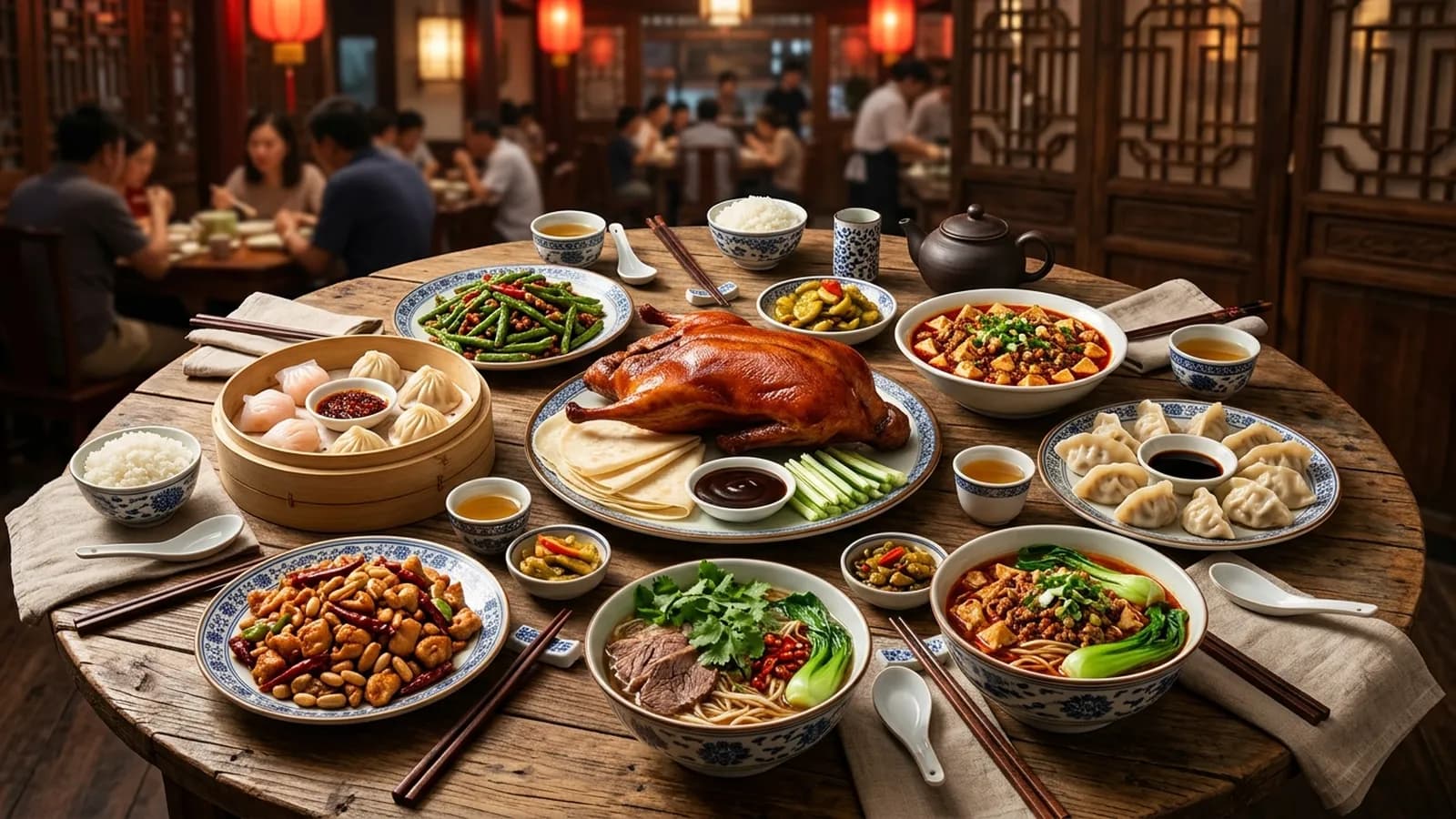
Peking duck is not just a meal -- it is a 600-year-old ritual. The whole duck is roasted until the skin turns paper-thin and impossibly crispy while the meat stays succulent. A chef then carves it tableside with surgical precision, and you wrap slices in thin pancakes with hoisin sauce, scallions, and cucumber. Eating it in Beijing, where the dish was perfected during the Ming Dynasty, is a culinary pilgrimage.
- Cost: Half duck ~150-200 CNY ($21-28); full duck ~250-400 CNY ($35-56) at respected restaurants. Budget options exist for ~80-120 CNY.
- Where to go: Quanjude (the 1864 original, touristy but authentic) or Da Dong (modern interpretation, stunning presentation). For a local experience, Siji Minfu near Tiananmen has excellent duck at lower prices with shorter waits.
- Reservation: Book 1-2 days ahead for dinner at popular restaurants
Pro Tip: Order the duck soup made from the carcass after carving -- most tourists skip it, but this rich, milky broth is considered the best part by locals. Ask for "san chi" (three courses) to get the full progression: crispy skin dipped in sugar, meat in pancakes, and the soup finale.
13. Have Dim Sum in Guangzhou
Dim sum in its birthplace is a revelation. In Guangzhou, the tradition of "yum cha" (drinking tea with small dishes) is not just a meal -- it is a morning ritual that can stretch for hours. Steaming bamboo baskets of har gow (crystal shrimp dumplings), char siu bao (BBQ pork buns), cheung fun (silky rice noodle rolls), and chicken feet in black bean sauce roll past your table on carts while you sip chrysanthemum tea.
- Cost: ~60-120 CNY ($8-17 USD) per person for a full spread
- When to go: Arrive by 7:00-8:00 AM on weekends for the authentic experience. Dim sum is traditionally a morning-to-early-afternoon affair.
- Where: Guangzhou Restaurant (est. 1935), Dian Dou De (old-school cart service), or Bingsheng Mansion for a modern take
Pro Tip: Look for restaurants still using the cart system rather than order-by-paper menus. Pointing at dishes as they roll by is half the fun and eliminates the language barrier entirely. When the tea runs low, tip the teapot lid open -- this is the traditional signal that you need a refill, and staff will come without you needing to flag anyone.
14. Explore a Traditional Food Market
Every Chinese city has at least one bustling food market that reveals more about local culture than any museum. Unlike sanitized supermarkets, traditional "wet markets" are raucous, fragrant, overwhelming sensory experiences where vendors sell live fish, hand-pulled noodles, tofu made that morning, and produce you have never seen before. Xi'an's Muslim Quarter (Huimin Jie) is the most famous food street for tourists -- 500 meters of lamb skewers (~3-5 CNY/$0.50), roujiamo (Chinese "hamburgers," ~8-15 CNY/$1-2), and persimmon cakes.
- Cost: Grazing through a market: ~20-50 CNY ($3-7 USD)
- Best markets: Xi'an Muslim Quarter, Shanghai's Old City God Temple, Guangzhou's Shangxiajiu Street, and Kunming's local morning markets
- Hours: Most traditional markets are busiest 7:00-10:00 AM
Pro Tip: Markets are cash-friendly environments. Have small bills (1, 5, and 10 CNY notes) ready. Point and smile -- market vendors are universally friendly to curious foreigners, and most will let you sample before you buy. For a deep dive into Chinese culinary culture, read our complete regional cuisine guide.
Best City Experiences
China's cities are where 5,000 years of history collides with bleeding-edge modernity. Each major city has its own distinct personality, and the urban experiences below rank among the most memorable things to do in China.
15. See Shanghai's Skyline From the Bund
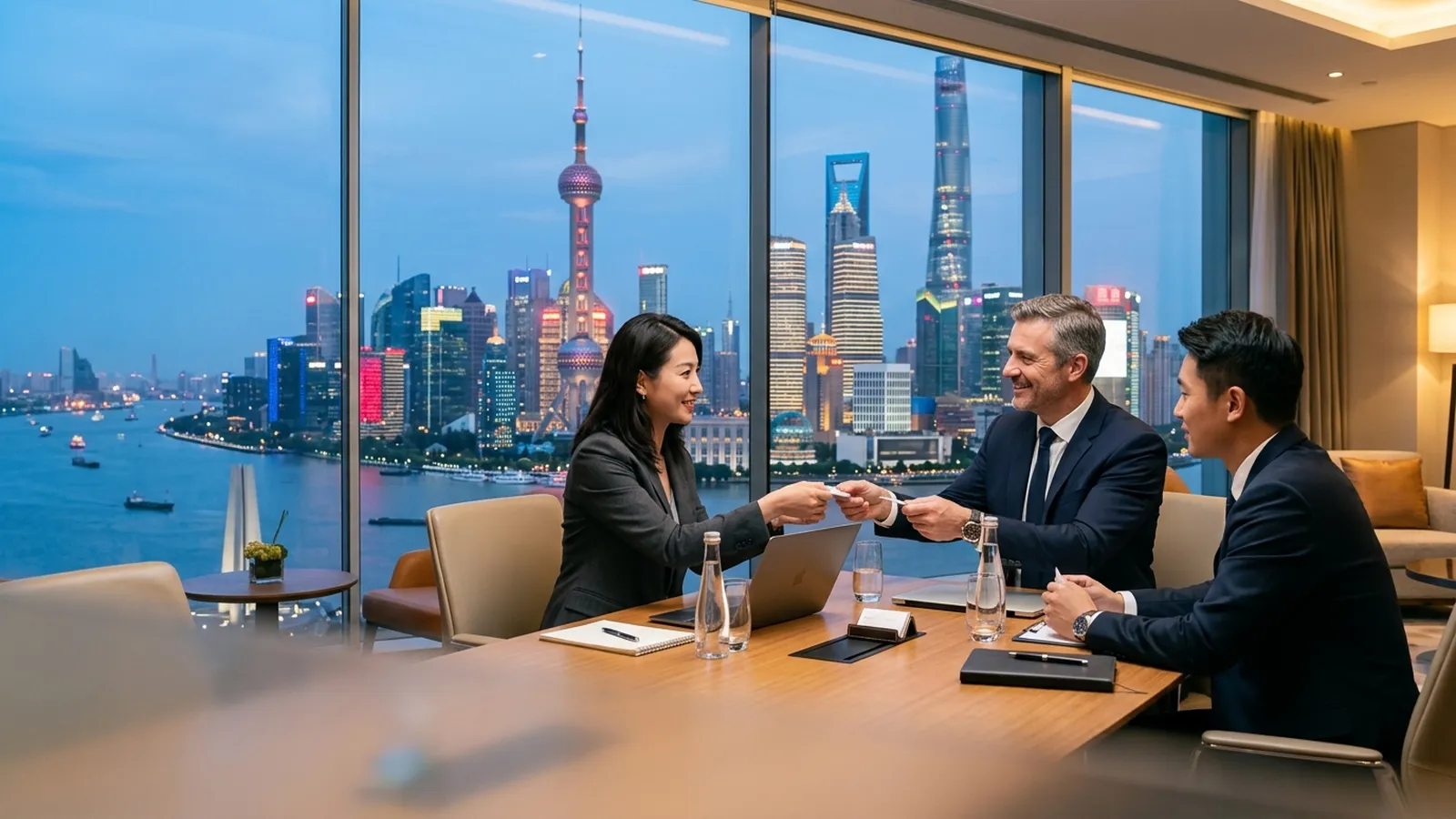
Standing on the Bund at night and looking across the Huangpu River at Pudong's skyline -- the needle of the Oriental Pearl Tower, the bottle-opener silhouette of the Shanghai World Financial Center, and the spiraling Shanghai Tower (632 meters, the tallest building in China) -- is one of those moments that recalibrates your sense of what a city can be. This is the quintessential things to do in Shanghai experience, and it is completely free.
- Shanghai Tower observation deck: ~180 CNY ($25 USD), open 8:30 AM - 9:30 PM
- The Bund walk: Free, best after sunset when the buildings illuminate
- Best viewpoint: The section of the Bund between Nanjing Road and the Waibaidu Bridge offers the widest panorama
Beyond the skyline, Shanghai rewards deep exploration. Wander the French Concession's tree-lined streets for independent cafes, explore Tianzifang's alleyways packed with studios, or take a day trip to the ancient water towns near Shanghai for a canal-laced counterpoint to the city's vertical ambition.
Pro Tip: Cross the river by taking the Bund Sightseeing Tunnel (~55 CNY/$8) for a psychedelic light-show ride, or simply take Metro Line 2 to Lujiazui and walk to the sky bridges connecting the three supertall towers. The views from the free sky lobbies in the IFC Mall are nearly as good as the paid observation decks.
16. Get Lost in Hong Kong's Markets & Temples
Hong Kong compresses jungle-covered mountains, a world-class harbor, Michelin-starred dim sum joints, and frenetic street markets into an area smaller than most national parks. Take the Star Ferry across Victoria Harbour (~2.7 HKD/$0.35), ride the Peak Tram to Victoria Peak for the iconic skyline view (~62 HKD/$8 round trip), then disappear into the alleyways of Mong Kok's Ladies Market and Temple Street Night Market for haggling, street food, and pure sensory overload.
- Must-visit temples: Man Mo Temple on Hollywood Road (incense coils hanging from the ceiling, completely free), Wong Tai Sin Temple in Kowloon (famous for fortune-telling)
- Markets: Temple Street Night Market (opens ~4:00 PM), Ladies Market in Mong Kok, Cat Street antiques
- Cost: A full day of ferries, trams, street food, and market browsing: ~200-300 HKD ($25-38 USD)
Pro Tip: Hong Kong has separate entry requirements from mainland China -- most Western passport holders can enter visa-free for 90 days. The Ding Ding trams on Hong Kong Island cost just ~3 HKD ($0.40) per ride and are the best way to see the city's layered streets at ground level.
17. Explore Ancient Suzhou's Canal Gardens
Known as the "Venice of the East," Suzhou is the antidote to China's megacity frenzy. The city's nine UNESCO-listed classical gardens are masterpieces of landscape design where every rock, pond, and pavilion is positioned to create the illusion of infinite space within a walled compound. The Humble Administrator's Garden, the largest and most famous, covers 5 hectares of interconnected pools, bridges, and bamboo groves.
- Humble Administrator's Garden: ~70 CNY ($10 USD); allow 2 hours
- Master of the Nets Garden: ~40 CNY ($6 USD); smaller but more intimate, famous for evening performances of traditional music (March-November, extra ~100 CNY/$14)
- Getting there: High-speed rail from Shanghai (~25 minutes, ~40 CNY/$6)
Pro Tip: Walk Pingjiang Road, a 2,500-year-old canal street lined with teahouses, silk shops, and buskers playing traditional instruments. It is the most atmospheric street in Suzhou and best experienced in the early morning before tour groups arrive. Rent a small boat (~80 CNY/$11) for a canal ride through the old neighborhoods.
18. Experience Chongqing's Vertical City & Hot Pot
Chongqing is unlike any other city in China -- or the world. Built across impossibly steep hills at the confluence of the Yangtze and Jialing rivers, it is a vertical city where a building's entrance might be on the eighth floor, where a highway runs through a residential tower, and where the neon-lit Hongya Cave complex clings to a riverside cliff like something from a Studio Ghibli film. And then there is the hot pot -- Chongqing's fiery, mouth-numbing, communal hot pot is a culinary experience that borders on performance art.
- Hot pot dinner: ~80-150 CNY ($11-21 USD) per person at popular chains like Dezhuang or Qinma
- Hongya Cave: Free entry; best viewed from across the river after dark
- Liziba Monorail Station: A subway station built inside a residential building -- the train passes through the building's floors, and watching it from the outside is surreal and free
Pro Tip: Order the "yuan yang" (split pot) with one spicy and one mild broth if it is your first time -- even locals sometimes need a break from the full-spicy broth. The spice builds, so pace yourself. Read our Chongqing hotpot city guide for neighborhood-by-neighborhood restaurant recommendations.
Unique & Off-the-Beaten-Path Adventures
These are the experiences that separate a good China trip from an unforgettable one -- the stories you will still be telling years later.
19. Sleep in a Cave Hotel in Yan'an
In northern Shaanxi Province, people have carved dwellings into the loess plateau cliffsides for over 4,000 years. These "yaodong" (cave homes) stay cool in summer and warm in winter, and in the city of Yan'an -- historically significant as the endpoint of the Long March -- several have been converted into boutique cave hotels. Sleeping on a traditional kang (heated brick bed) inside a vaulted cave carved from golden earth is one of the most unusual accommodation experiences in China.
- Cost: ~200-500 CNY ($28-70 USD) per night for a renovated cave hotel
- Getting there: High-speed rail from Xi'an (~2 hours) or domestic flight to Yan'an Nanniwan Airport
- What else to do: Visit the Revolutionary Memorial Hall, explore the pagoda hill overlooking the city, and eat local Shaanxi noodles (biangbiang noodles, wide as a belt)
Pro Tip: Ask for a cave room with a traditional kang bed rather than a Western-style bed. The kang is heated from below by a fire channel and stays perfectly warm even in the cold northern Shaanxi winters. The curved ceilings create surprisingly good acoustics -- the silence inside is almost meditative.
20. Ride the World's Fastest Train (Shanghai Maglev)
The Shanghai Maglev is the world's fastest commercial train, using magnetic levitation technology to float above the track without wheels. The train connects Pudong International Airport to the Longyang Road metro station in just 8 minutes, covering 30 kilometers at speeds that peak at 431 km/h (268 mph). An LCD screen inside the cabin displays the current speed in real time, and watching the number climb past 400 is a genuine thrill -- passengers cheer and take photos when "431" flashes on the display.
- Cost: ~50 CNY ($7 USD) one-way; ~40 CNY ($6 USD) with same-day flight ticket
- Duration: 8 minutes
- Operates: 6:45 AM - 9:40 PM, every 15-20 minutes
Pro Tip: Sit in the front car for the most dramatic speed sensation. The train accelerates to 300 km/h in just over 2 minutes, and the moment you realize you are moving faster than a Formula 1 car on absolutely smooth, silent rails is unforgettable. Combine this with our broader transport guide for booking high-speed rail across China.
21. Visit the Mogao Caves on the Silk Road
The Mogao Caves at Dunhuang are the world's greatest treasure house of Buddhist art -- 492 cave temples carved into a desert cliff face containing 45,000 square meters of murals and over 2,000 painted sculptures spanning 1,000 years of artistic creation. Walking through these dim, incense-scented caves while a guide illuminates Tang Dynasty frescoes with a flashlight is one of the most profound cultural experiences in China. The caves sit at the edge of the Gobi Desert, and the journey to get there -- along the ancient Silk Road -- is an adventure in itself.
- Entry: ~258 CNY ($36 USD) for the standard visit (2 films + 8 caves with guide); ~100 CNY ($14 USD) for emergency tickets with fewer caves during peak season
- Hours: 8:00 AM - 6:00 PM (summer); 9:00 AM - 5:30 PM (winter)
- Getting there: Fly to Dunhuang Airport, then bus Route 12 (~8 CNY, 40 minutes) to the Digital Exhibition Center. All visitors start with two documentary films, then take a free shuttle to the caves.
Pro Tip: Book standard tickets at least 1 month in advance during peak season (June-October) -- they sell out. Photography is prohibited inside the caves to protect the pigments. The Digital Exhibition Center's dome-screen film showing cave interiors in stunning detail is worth arriving early for. Combine with a sunset visit to the Mingsha Sand Dunes and Crescent Moon Spring, just 6 km from Dunhuang city center.
22. Stargaze at Qinghai Lake
Qinghai Lake, the largest lake in China, sits on the Tibetan Plateau at 3,200 meters elevation in a region so sparsely populated that the night sky looks like it was painted by someone who went overboard with the stars. On clear nights, the Milky Way arcs directly overhead and reflects off the mirror-still water. In summer (July-August), the surrounding grasslands explode with electric-yellow rapeseed flowers stretching to the horizon.
- Cost: Camping on the lakeshore ~50-100 CNY ($7-14 USD) for a basic campsite or free wild camping. Guesthouses in nearby Heimahe town ~150-300 CNY ($21-42 USD).
- Getting there: Bus from Xining (~3 hours, ~50 CNY) or hire a private car for a day trip (~500-800 CNY/$70-112)
- Best time: July-August for rapeseed flowers and warm-enough camping; October-November for the clearest skies
Pro Tip: The lake's western shore near Bird Island is the least developed and offers the darkest skies. Bring warm layers even in summer -- temperatures at 3,200 meters drop sharply after sunset. If camping is not your style, the solar-powered eco-lodges at Erlangjian offer heated rooms with lake views.
23. Cycle Through Yangshuo's Karst Landscapes
The countryside around Yangshuo in Guangxi Province is flat-to-rolling, threaded with quiet roads, and surrounded by those iconic karst limestone towers that look like a traditional Chinese ink painting made real. Renting a bicycle and pedaling through rice paddies, past grazing water buffalo, and alongside the jade-green Yulong River is one of the most peaceful things to do in China -- the kind of slow travel that China rewards above all else.
- Cost: Basic bike rental ~30-50 CNY ($4-7 USD) per day; e-bike ~80-150 CNY ($11-21 USD) per day
- Best route: Yulong River cycling path from Yangshuo to Jiuxian Village (~20 km round trip). Stop at the Dragon Bridge, a 600-year-old stone arch, and swim in the river.
- Duration: Half day to full day depending on pace and stops
Pro Tip: Start early in the morning when mist clings to the karst peaks and the light is soft. Avoid the main road to Moon Hill (busy with tour buses) and instead follow the smaller paths along the Yulong River. The rice terraces near Yangshuo are most beautiful in May-June (bright green) and September-October (golden before harvest).
Fun Things to Do in China With Kids
China is more family-friendly than most people expect. These activities are specifically designed to engage younger travelers while giving parents something to enjoy too.
24. Cuddle Giant Pandas in Chengdu
The Chengdu Research Base of Giant Panda Breeding is not a zoo -- it is a legitimate conservation facility set in bamboo forest where you can watch pandas in semi-natural habitats. Seeing a 100 kg panda delicately strip bamboo leaves, or watching cubs tumble over each other in the nursery, creates pure joy in children and adults alike. The base has paved paths, a small museum, and is genuinely educational about conservation efforts.
- Entry: ~55 CNY ($8 USD) for adults; children under 6 free
- Hours: 7:30 AM - 6:00 PM (last entry 5:00 PM)
- Getting there: Taxi from downtown Chengdu (~30 minutes, ~40 CNY/$6) or Metro Line 3 to Panda Avenue Station then shuttle bus
Pro Tip: Arrive at opening (7:30 AM) -- pandas are most active during morning feeding time and tend to nap through the afternoon. Head straight to the sub-adult enclosures where playful teenage pandas wrestle and tumble. The red panda area at the back of the park is often overlooked but equally delightful for kids. Read our full Chengdu pandas and Sichuan food guide for a complete itinerary.
25. Ride the Toboggan Down the Great Wall
Yes, you can toboggan down the Great Wall. At the Mutianyu section, a stainless-steel toboggan track winds down the mountainside from the wall to the base -- a sliding cart on rails that you control with a hand brake. Kids (and adults, if we are being honest) absolutely love it. The ride takes about 5 minutes and offers views of the wall snaking along the ridge above you as you descend.
- Cost: Included in some cable car + toboggan combo tickets (~120 CNY/$17 USD); standalone toboggan ~100 CNY ($14 USD)
- Age requirement: Children must be at least 1.2 meters tall to ride alone; younger children can ride with a parent
- When: Open during regular Mutianyu hours; can close during rain
Pro Tip: The toboggan is the most fun way to descend after hiking the wall, and it avoids the knee-punishing stairs. Lines are shortest before 10:00 AM and after 3:00 PM. Combine with the cable car up for a "greatest hits" Great Wall experience that keeps kids engaged the entire time.
Bonus: Visit Shanghai Disneyland
Shanghai Disneyland, while not a uniquely Chinese experience, is a world-class theme park with some China-only attractions. The Tron Lightcycle Power Run roller coaster (one of the fastest Disney coasters globally) and Pirates of the Caribbean: Battle for the Sunken Treasure (a boat ride with stunning projection technology) are standouts. The park is also notably less crowded on weekdays than its Western counterparts.
- Cost: ~475 CNY ($67 USD) for regular-day tickets; ~599 CNY ($84 USD) for peak days
- Hours: 9:00 AM - 8:30 PM (varies by season)
- Getting there: Metro Line 11 from central Shanghai directly to Disneyland Station (~45 minutes)
Pro Tip: Visit on a Tuesday or Wednesday outside of school holidays for the shortest wait times. Download the Shanghai Disneyland app for real-time ride wait times and use the paid Lightning Lane service (~150 CNY/$21) for the top 3-4 rides if visiting during busier periods. The evening fireworks show over the Enchanted Storybook Castle is worth staying for regardless of your children's ages.
How to Plan Your China Trip
With 25 incredible experiences to choose from, the practical questions matter. Here are the answers to what travelers ask most.
How Many Days Do You Need in China?
For a first-time visitor, 10-14 days covers the classic Golden Triangle route: Beijing (3-4 days for the Great Wall, Forbidden City, Summer Palace, and hutongs), Xi'an (2 days for the Terracotta Warriors and Muslim Quarter), and Shanghai (2-3 days for the Bund, French Concession, and modern China). Add Chengdu for pandas and Sichuan food, or Guilin for the Li River, and you need 2-3 weeks. For the off-the-beaten-path adventures on this list -- Zhangjiajie, the Silk Road, Qinghai Lake -- plan 3-4 weeks minimum. China rewards depth over breadth, so resist the urge to rush between cities.
What's the Best Time to Visit?
Mid-September through November is the sweet spot for most of China -- warm but not oppressive, dry, and the autumn foliage in Jiuzhaigou and Huangshan is spectacular. April and May are equally pleasant. Avoid Golden Week (October 1-7) and Chinese New Year (January/February) unless you specifically want to experience the festivals, as transport prices spike and availability plummets. Summer works well for Tibet, Qinghai, and Xinjiang; winter is ideal for Harbin's ice festival and Yunnan's mild climate. Read our weather overview guide for month-by-month breakdowns by region.
Do You Need a Visa?
Most nationalities require a visa to enter mainland China. However, China significantly expanded its visa-free transit policies in 2024, allowing citizens of many countries to enter visa-free for up to 240 hours (10 days) through designated ports. For longer stays, apply for a tourist L visa through your nearest Chinese embassy. The process typically takes 5-7 business days and costs vary by country. Hong Kong and Macau have separate entry requirements and are generally visa-free for most Western passport holders. Check our full 2026 visa guide for step-by-step instructions, and see our visa cost breakdown by country for exact fees.
How Much Does a Trip Cost?
Is 1,000 dollars enough for a week in China? Absolutely -- and you will likely have money left over. China offers exceptional value compared to Japan, South Korea, and most Western destinations. A comfortable mid-range week runs roughly $500-800 USD per person (excluding international flights), covering 3-star hotels, local restaurants, train tickets, and attraction entries. Budget travelers can manage on ~$40 USD per day staying in hostels and eating street food. Luxury travelers spending $150+ per day get premium hotels, private guides, and fine dining. Attraction entry fees are modest by international standards -- a full day of major sightseeing rarely exceeds $30-40 USD. See our detailed budget travel guide for day-by-day cost breakdowns.
Is China Safe for Tourists?
China is one of the safest countries in the world for tourists. Violent crime against foreigners is exceptionally rare, and petty crime (pickpocketing, scams) is less common than in most European capitals. The main risks are traffic (drivers can be aggressive), tourist-area scams (the "art student" and "tea ceremony" scams in Beijing and Shanghai), and food hygiene at unregulated street stalls. Use common sense, keep valuables secure in crowded areas, and read our guide on common China scams and how to avoid them. For a comprehensive overview, visit our safety guide.
Can You Get By Without Speaking Chinese?
In Beijing, Shanghai, Hong Kong, and major tourist sites -- yes, with patience. Most attraction signage includes English, international hotels have English-speaking staff, and younger Chinese people in cities often speak some English. Outside these zones, English virtually disappears. Download a translation app with offline capabilities (Google Translate or Pleco) before departure and learn a handful of survival phrases: "ni hao" (hello), "xie xie" (thank you), "duo shao qian" (how much?), and "cesuo zai nar" (where is the toilet?). Setting up WeChat with its built-in translation feature is also invaluable. Read our full language tips guide for practical phrases and communication strategies.
Your China Adventure Starts Here
The sheer volume of things to do in China can feel paralyzing, but here is the honest truth: you cannot do it all in one trip, and you should not try. China rewards patience and curiosity. Spend an extra morning on the Great Wall instead of rushing to the next landmark. Sit in that Chengdu teahouse for three hours watching locals play mahjong. Accept the invitation to join the morning tai chi group in the park even if you feel ridiculous. Say yes to the dish you cannot identify on the menu.
The moments that stay with you from China are rarely the Instagram-perfect landmarks -- they are the unplanned conversations, the meals shared with strangers who do not speak your language, and the quiet realization that a civilization this old and this vast still has the power to surprise you every single day.
Start with what excites you most from this list, plan the logistics around it, and leave room for the unexpected. China will fill in the gaps.

About the Author
Go2China Team
The Go2China editorial team combines first-hand travel experience with deep cultural knowledge to bring you accurate, up-to-date guides for exploring China — from the Great Wall and Forbidden City to hidden gems off the tourist trail.
- ✓Lived and traveled extensively across China
- ✓Native & bilingual Mandarin speakers on team
- ✓Verified info from official Chinese tourism sources