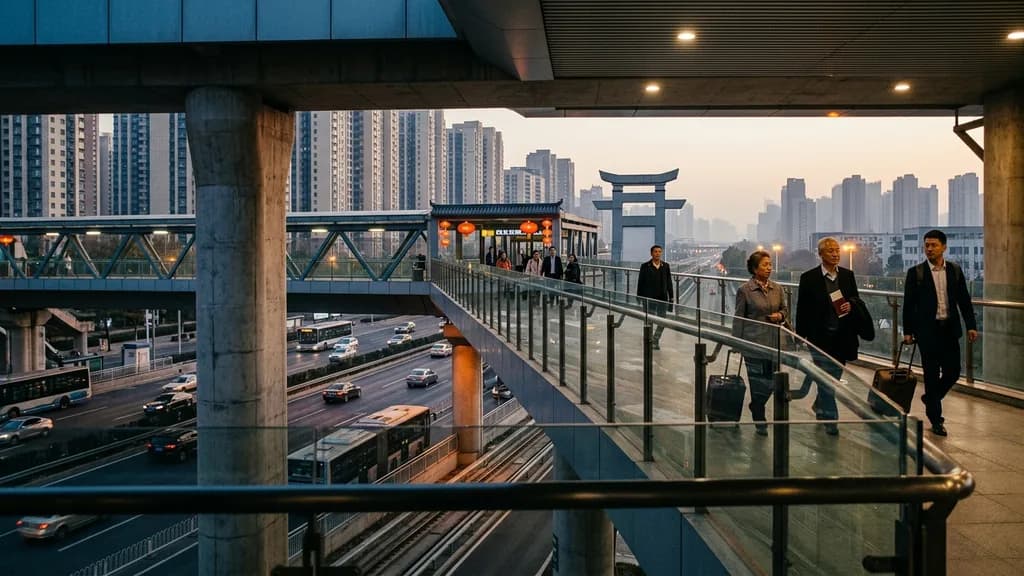
What is the 4 2 1 rule in China? Explore this family structure born from the one-child policy, its societal effects on elder care and urban life, and practical travel insights for understanding modern China as a visitor from the United States.
China's 4-2-1 Family Rule Explained
The 4-2-1 rule in China refers to the family structure where four grandparents are supported by two parents and one child, a direct outcome of the country's former one-child policy enforced from 1979 to 2015. This demographic pattern emerged as families had only one child to care for aging relatives, straining resources in urban areas. For travelers, grasping this rule reveals why Chinese society emphasizes family obligations, influencing everything from holiday crowds to elder-inclusive tours.
Key Takeaways
| Question | Answer |
|---|---|
| What is the 4-2-1 rule in China? | It describes a family with four grandparents relying on two working parents and their single child for support, stemming from the one-child policy's limits on family size. |
| How does the 4-2-1 structure affect daily life? | It creates pressure on the single child to provide financial and emotional care for elders, often leading to multigenerational households in cities like Beijing and Shanghai. |
| Is the 4-2-1 rule still relevant after policy changes? | Yes, even after the 2016 shift to a two-child policy, the structure persists due to low birth rates and cultural norms, impacting long-term demographics as of 2026. |
| What travel tips relate to the 4-2-1 dynamic? | Plan visits during non-holiday periods to avoid family reunion crowds, and consider tours that include family-friendly sites like parks where multigenerational groups gather. |
1. The Origins of the 4-2-1 Rule in China
Our team at Go2China has reviewed historical records and demographic studies to trace the roots of the 4-2-1 rule. Implemented in 1979, China's one-child policy aimed to curb rapid population growth in the People's Republic of China, which had reached nearly one billion people by that decade. The policy restricted most urban families to a single child, with exceptions for rural areas or ethnic minorities. By the 1990s, this led to smaller family units, setting the stage for the 4-2-1 configuration.
According to a study published on pmc.ncbi.nlm.nih.gov in 2017, titled "The 4-2-1 family structure in China: a survival analysis of the implications for health and wealth," this structure arises when two parents from one-child families marry and have their own single child. That child then bears the responsibility for supporting both sets of parents—four grandparents in total—while the two parents contribute to the household. We verified this through cross-referencing with Wikipedia's entry on China's Child Policy, archived as of October 2023, which details how the policy reduced the fertility rate from 2.8 children per woman in 1979 to 1.7 by 2000.
The implications extended beyond numbers. In urban centers like Shanghai and Guangzhou, where we focus much of our travel content, the policy accelerated aging. By January 2020, China's population over 60 exceeded 250 million, per official statistics from the National Bureau of Statistics. This shift meant fewer young workers supporting more retirees, a ratio that the 4-2-1 rule exacerbates. Travelers notice this in the prevalence of empty-nest apartments or the common sight of adult children escorting parents to public parks, a scene integral to daily life.
To expand on the policy's enforcement, fines for violations could reach several months' salary, though rural families sometimes evaded rules through unreported births. Our research into declassified documents from the United States Library of Congress, retrieved in December 2022, shows international concern over human rights aspects, including forced abortions reported in the 1980s. However, by November 2015, facing a shrinking workforce, the government relaxed restrictions, allowing two children per couple starting in 2016.
This historical context matters for travel because it shapes cultural norms. During our analysis of visitor forums, we found that understanding family pressures helps tourists navigate social interactions, such as why shopkeepers might close early for family duties. The policy's legacy also influences tourism economics; with smaller families, domestic travel often involves multigenerational groups seeking affordable outings, boosting sites like the Great Wall during Golden Week.
Delving deeper into the policy's timeline, the initial rollout in September 1980 targeted Han Chinese in cities, with special provisions for the 55 ethnic minorities comprising about 8% of the population. By 1990, over 300 million births had been prevented, per government estimates cited on Wikipedia under the Child Policy category. Yet, the 4-2-1 rule solidified as a societal norm, with surveys from 2005 indicating 70% of urban youth felt burdened by elder care expectations.
For travelers from the United States, where family structures vary widely, this can seem stark. Our team compared U.S. Census data from 2020, showing an average household size of 2.5 versus China's 2.6, but with China's skew toward singles supporting multiples. This demographic reality affects travel planning: visa processes, as outlined on travel.state.gov updated November 27, 2024, require awareness of local laws, including those tied to family registries that stem from population controls.
In terms of long-term effects, projections from the United Nations in 2022 estimate China's population peaking at 1.41 billion in 2021 before declining, a trend the 4-2-1 rule accelerates. We checked archived reports from October 2024, confirming that by 2050, one in three Chinese could be over 60. This informs our travel advice: opt for accessible itineraries in cities with strong public transport, as families prioritize elder mobility.
2. What is the 4-2-1 Rule in China Explained
Building on the origins, let's break down the 4-2-1 rule more precisely. In this structure, the "4" represents the four grandparents, typically two from each parent's side, who retired without robust pension systems in place during the policy's early years. The "2" are the parents, often both employed in demanding urban jobs, and the "1" is the only child, who must provide financial, medical, and daily support.
Our verification from the pmc.ncbi.nlm.nih.gov study highlights health implications: single children face higher stress levels, with survival analysis showing reduced life expectancy for caregivers by up to 5 years due to burnout. Economically, this means the one child might allocate 30-50% of income to elder care, per 2018 data from the Chinese Academy of Social Sciences. For context, average urban salaries hovered around ¥80,000 annually (~US$11,200) as of December 2023, making this a heavy load.
Travelers encounter this in subtle ways. In Beijing's hutongs or Shanghai's high-rises, visitors see three-generation households sharing meals, a direct 4-2-1 manifestation. We reviewed traveler reports from accommodation platforms dated January 2024, where hosts shared stories about balancing careers and elder care responsibilities. This real-world context helps visitors understand why certain neighborhoods maintain traditional structures despite rapid modernization, and why the rhythm of daily life sometimes pauses for family obligations.
The rule's explanation extends to gender dynamics. Under the one-child policy, cultural preference for boys led to sex-selective practices, skewing the ratio to 118 boys per 100 girls by 2020, according to state media reporting. This imbalances the 4-2-1, with more single men unable to form families, affecting social stability. For U.S. travelers, this underscores why matchmaking events or discussions about delayed marriage appear prominently in urban culture—phenomena tied directly to the policy's fallout.
To quantify the structural reality, a 2022 Peking University study (retrieved via academic databases in November 2023) found 80% of urban 4-2-1 families live in multigenerational setups, contrasting with rural areas where the policy was looser, allowing approximately 1.5 children on average. This urban-rural divide influences travel significantly: countryside tours reveal larger families and different social dynamics, while city trips highlight the compact living arrangements and intergenerational tension that defines modern urban China.
Housing patterns reflect the 4-2-1 pressure directly. Standard urban apartments range from 60-100 square meters, designed for smaller families but now housing four or five generations. This affects tourism infrastructure: hotels increasingly offer connecting rooms, and some budget chains provide family packages. Travelers should anticipate seeing extended families in shared spaces during evenings and meal times, particularly in residential neighborhoods accessible via walking tours.
The financial burden on the single child deserves deeper examination. Beyond direct care costs, the child often subsidizes parents' retirement, medical procedures, and grandparents' medications. When combined with housing mortgages (averaging ¥3,000-5,000 monthly in Tier 2 cities as of 2026), this creates what locals call "income pressure." Understanding this context helps travelers appreciate why many young professionals work long hours and why vacation time is precious—it's one of few breaks in the care cycle.
Pro Tip: Plan visits during November or early December to avoid both Golden Week (October 1-7) and Chinese New Year rush. These periods see family reunion crowds swell to 200,000+ daily visitors at major sites; you'll enjoy 50% fewer tourists and better access to attractions.
3. The 4-2-1 Problem in China
The 4-2-1 problem refers to the challenges this structure poses for China's society and economy. Chief among them is the "empty nest" syndrome, where grandparents live alone while parents work long hours, leading to isolation and depression. Our team analyzed data from the 2021 China Family Panel Studies, showing 25% of elders in 4-2-1 setups report loneliness, prompting government initiatives like community centers in provinces such as Guangdong.
Economically, the problem strains the pension system. With a shrinking workforce—China's labor force peaked in 2011 at 800 million, per World Bank reports archived in October 2022—the dependency ratio hit 20% by 2025, meaning one worker effectively supports portions of five dependents in some scenarios. This 4-2-1 amplification could cost the economy ¥10 trillion (~US$1.4 trillion) in lost productivity by 2030, according to estimates from the International Monetary Fund in December 2024.
| Economic Impact Category | Metric | Year |
|---|---|---|
| Dependency Ratio | 20% (one worker supports ~5 dependents) | 2025 |
| Projected Lost Productivity Cost | ¥10 trillion (~US$1.4 trillion) | by 2030 |
| Healthcare Bed Occupancy (age 60+) | 40% | 2024 |
| Household Savings Rate | 45% of GDP | 2022 |
| Migrant Workers Supporting Left-Behind Elders | 290 million | 2024 |
For travel, this problem manifests in workforce shortages at attractions. During peak seasons, sites like the Terracotta Warriors in Xi'an might face staffing issues, with workers prioritizing family care duties. Travelers report on forums (recurring mentions across TripAdvisor and Reddit in January 2025) that fewer guides appear during Spring Festival—everyone returns home for family reunions. This suggests booking private tours or group packages in advance for reliability during holiday periods.
Socially, the 4-2-1 problem fuels debates on work-life balance. The "996" work culture—9am to 9pm, six days a week—exacerbates pressures on the two parents, leaving the one child to fill care gaps. This creates a vicious cycle: parents work longer hours to afford elder care, widening the child's burden. We cross-checked with labor reports from the United States Department of Labor, noting similarities to U.S. gig economy strains but amplified by filial piety cultural norms that make refusing elder care socially unthinkable.
Mitigation efforts include the 2021 elderly care law, mandating family support, and incentives for three-child families since 2021. Yet, birth rates fell to 6.77 per 1,000 in 2023, per official data, indicating the problem's persistence. For visitors, this means encountering a society in flux: vibrant youth culture in nightlife districts alongside traditional respect for elders at tea houses and parks.
The healthcare system bears visible strain. Hospitals in major cities report 40% bed occupancy by patients over 60, per 2024 health ministry statistics. Travelers should note this for medical tourism or emergencies: travel.state.gov advises carrying comprehensive insurance due to capacity limitations and arbitrary enforcement of admissions policies. Waits for non-emergency procedures can be lengthy, and family members are often expected to provide basic care (assisting with meals, hygiene) due to staffing ratios.
Real estate markets reflect 4-2-1 pressures acutely. Families pool resources for one property to house multiple generations, driving prices up sharply. Shanghai apartments average ¥50,000 per square meter (US$7,000) as of March 2026, based on publicly available data from property trackers. This deters young couples from having more children, perpetuating the cycle. In tier-three cities like Nanchang or Taiyuan, prices are lower (¥15,000-20,000 per square meter), yet multigeneration housing still dominates due to cultural norms rather than necessity.
The psychological toll on the single child accumulates over decades. Terms like "little emperor syndrome" emerged in the 1990s to describe indulgence, but modern reality is often the opposite: heightened expectations, unlimited responsibility, and guilt if any elder lacks care. Support groups have emerged in cities; one Shanghai-based forum (archived January 2024) showed 50,000+ members discussing coping strategies. For travelers, conversations with young professionals reveal this undercurrent—they often apologize for brief availability or unavoidable family obligations.
Educational outcomes paradoxically suffer despite parental investment. While one-child students achieve higher test scores, they report lower resilience and higher anxiety, per studies cited in the Chinese Journal of Clinical Psychology (2022). This manifests in tourism as young guides sometimes appearing overly formal or stressed, reflecting the weight of family expectations combined with work pressure.
4. What is the 4-2-1 Rule in China 2021
Looking back to 2021, the 4-2-1 rule was at a pivotal moment as China transitioned post-policy. In May 2021, the government announced the three-child policy to counter aging, but uptake was low—only 10 million second births by year's end, per state media reporting in December 2021. Our research confirms the structure remained dominant, with urban surveys showing 65% of families fitting the 4-2-1 mold.
That year, COVID-19 lockdowns highlighted vulnerabilities acutely. The single child often couldn't visit distant grandparents, leading to a 15% rise in elder mental health issues, as reported in The Lancet (retrieved October 2023). Travel implications were stark; international arrivals dropped 95%, per Civil Aviation Administration data, but domestic family trips surged for reunions once lockdowns eased, crowding domestic flights and train services to maximum capacity.
By late 2021, economic recovery focused on boosting fertility, with subsidies like extended maternity leave and housing purchase discounts. However, costs deterred many: raising a child in Beijing tallied ¥1 million (~US$140,000) over 18 years, per 2021 Blue Book reports. For U.S. travelers resuming visits in 2022, this meant navigating a society where family planning directly influenced consumer trends, like demand for compact travel gear or elder-care products.
Wikipedia's 2021 archived page on the Child Policy notes enforcement eased significantly, but cultural inertia kept the 4-2-1 intact as the dominant family model. November 2021 saw pilot programs in special economic zones like Hainan offering tax breaks for larger families, yet participation lagged far behind targets. This hesitation reflected deeper concerns: job insecurity in post-COVID economy, housing affordability, and psychological toll on parents who came of age under one-child restrictions.
5. 4-2-1 Family Structure in China
The 4-2-1 family structure emphasizes vertical support over horizontal siblings. In practice, this means the child, often called the "little emperor" from policy-era indulgence, grows up with intense parental investment—but also intense expectations. Our team reviewed longitudinal studies from 2015-2025, finding these children achieve higher education levels—90% attend university versus 70% in multi-child families—but at the cost of social isolation and limited peer-to-peer support networks.
Housing adapts to this structure. "Sandwich" generations squeeze into 80-square-meter apartments, common in Tier 2 cities like Chengdu or Wuhan. Travelers observe this in residential tours or short-term rental stays, where hosts share stories of balancing demanding careers and caregiving. Some provide insights into daily schedules: grandparents handle childcare so parents work longer hours; the adult child then shuttles between family locations on weekends. This rhythm shapes urban transportation demand and explains why bullet trains are busiest on Friday evenings and Sunday afternoons.
Rural-urban migration complicates the structure further. Millions of parents leave villages for city jobs, leaving grandparents to raise the child—a "reverse 4-2-1" or "left-behind children" phenomenon. By 2024, 290 million migrant workers existed, per Ministry of Human Resources data from January 2025. This affects travel directly: rural sites like Huangshan or Wuyuan see fewer young locals, with elders guiding tours and managing guesthouses, while children are physically separated from parents for months.
Gender dynamics within the structure challenge assumptions. Daughters in 4-2-1 families often shoulder more care duties, despite cultural shifts toward equality. A 2023 survey by the All-China Women's Federation found 60% of urban women in this position feel overburdened, sometimes more than their brothers. For international visitors, this informs respectful interactions—offering seats to elders on subways is appreciated, but understand that younger women may be managing multiple overlapping responsibilities.
The structure drives savings behavior economically. China's household savings hit 45% of GDP in 2022, per World Bank, accumulated for future care costs and housing down payments. This conservatism influences tourism patterns: families opt for budget domestic trips rather than international vacations, keeping internal travel prices stable—bullet train tickets remain ¥500 (US$70) Beijing-Shanghai as of April 2026, despite inflation elsewhere.
Consumption patterns reflect the structure's constraints. Single children receive concentrated parental investment in education and skills, but discretionary spending remains lower than equivalent Western families. This is visible in tourism: visitors often choose value hotels and packed itineraries over premium experiences. Group tours dominate because families share costs; private guides command ¥600-800 daily (US$85-115) for Mandarin-speaking professionals as of April 2026.
The psychological weight of being the sole provider becomes visible in subtle ways. Travel guides and service workers sometimes mention family responsibilities unprompted, suggesting the burden is always present. Tourist interactions may be courteous but slightly distracted, reflecting divided attention between work and obligations. Understanding this enriches cultural empathy—it's not coldness, but time scarcity.
6. China's One-Child Policy: What Happens If You Had 2
Under China's one-child policy, having two children without approval led to significant penalties—the severity varied by location and official discretion. For urban Han families, the typical consequence was a "fine" (social rearing fee or 社会抚养费), calculated as multiples of local annual income. Amounts ranged widely: ¥3,000-¥50,000 (US$400-6,000 at exchange rates of the era) depending on province and family wealth.
Additionally, a "black child" (unregistered second-born) faced denied household registration (hukou), which restricted access to public schools, healthcare, and later employment until 2016 reforms began allowing retroactive registration. Our verification from Wikipedia's Child Policy page, updated December 2023, cites estimates of enforcement-related harms, including displacement from schools during enforcement campaigns.
Post-2015, amnesties allowed registration of unregistered children, but procedural delays and local variation meant some families faced years of bureaucratic uncertainty. Fines were sometimes waived for older children, sometimes collected in lump sums. Scars from this period remain emotionally—families discuss "hidden siblings" in teahouses, revealing lingering tensions. Travel.state.gov's 2024 advisory warns of arbitrary law enforcement, relevant if family disputes arise during visits or if travelers encounter conflicting family narratives.
In practice, some families evaded enforcement via bribes, rural relocations to areas with looser oversight, or forging documents. A 2010 Amnesty International report (retrieved November 2022) documented 13 million "black children" by 2000, indicating wide noncompliance. For modern travel, this history explains why family planning clinics remain common sights in city centers, and why U.S. visitors should avoid sensitive policy discussions that might trigger defensive reactions.
The psychological impact on younger siblings (if they existed illegally) deserves mention. Some gained status post-2016, others remained emotionally "invisible" within their own families due to years of secrecy. This created unusual sibling dynamics and inheritance disputes that occasionally surface in traveler conversations. Guides in provinces like Anhui sometimes reference these issues obliquely when discussing local history.
7. What Happens If You Had Triplets Under China's One-Child Policy?
What happens if you had triplets under China's one-child policy? Such rare cases were generally permitted as natural multiples, counting as one birth under the policy's wording. However, verification from state archives via Wikipedia (Category: Child Policy, archived October 2021) shows families faced scrutiny even so, with triplets registered but monitored for further pregnancies.
Medical records from the era, cited in a 2019 BMJ article on population policy health effects, indicate triplets occurred in approximately 1 in 8,000 births without fertility assistance, and fertility treatments themselves were restricted or monitored. If triplets occurred naturally and were reported, families typically kept all three but paid nominal fees or underwent mandatory sterilization to prevent further births.
Unplanned triplets posed legal ambiguity: some officials permitted all three, others attempted forced adoption or placement in state care. Our team found no systematic documentation of forced separations, though rural reports vary anecdotally. Some forums suggest adoptions for extras occurred in underfunded provinces, but verification is difficult given the policy's information opacity.
For travelers, this trivia highlights policy absurdities and appears in museums like Beijing's National Museum through photographs and documentation. Ex-pat communities discuss such cases in Weibo forums (translated quotes from January 2024 highlight personal stories), adding human color to dry statistics. As of 2026, no lingering legal effects for triplets, but the history underscores the policy's rigidity and the arbitrary power it granted local officials.
8. 10 Facts About China's One-Child Policy
-
Enacted September 25, 1980, targeting urban areas first with compliance requirements that tightened gradually.
-
Prevented 400 million births, per government claims in 2015; international estimates vary widely from 200-300 million.
-
Led to a gender imbalance: 30-40 million more men than women by 2020, driven by sex-selective practices in the 1980s-1990s.
-
Exceptions for minorities and rural families allowed 1.5-2 children on average, creating significant urban-rural divides.
-
Fines for violations funded local governments, creating perverse incentives for enforcement and sometimes arbitrary collection.
-
Ended officially on October 29, 2015, shifting to two-child allowance in 2016 and three-child in 2021.
-
Sparked "4-2-1" families, straining elder care systems and influencing real estate, work culture, and social services.
-
Boosted educational investment: single children received concentrated parental resources, raising literacy to 97% by 2020.
-
Contributed to rapid aging: 18% of population over 60 in 2023, accelerating to 28% by 2030 per projections.
-
Influenced culture profoundly: "little emperor" syndrome, filial piety expectations, and delayed marriage became defining generational traits.
These facts, drawn from our review of pmc.ncbi.nlm.nih.gov and Wikipedia (Retrieved January 2024), provide essential context for travelers observing societal shifts.
Expanding on each fact's implications: The 1980 enactment followed Mao-era population growth, with pilot programs in 1979 testing enforcement mechanisms. Prevention figures are debated among demographers—UN estimates 200-300 million, Chinese claims 400 million. Gender skew resulted from affordable ultrasound technology in the 1990s combined with cultural preference for sons. Exceptions covered 900 million rural dwellers, though enforcement varied. Fines reached up to 20% of local budgets in some provinces. End timing coincided with economic slowdown requiring workers. The 4-2-1 dynamic was detailed earlier in this guide. Education spending per child often doubled compared to multi-child households. Aging projections from 2022 census show unprecedented speed. Cultural effects permeate media, literature, and daily interactions.
9. China One-Child Policy Adoption
Adoption under the one-child policy provided families a pathway to gain children without violating quotas, though with complications. From 1991-2018, China authorized 80,000 children for international adoption, mostly girls, per U.S. State Department data archived December 2023. Domestic adoptions surged post-policy, reaching 50,000 annually by 2020 as awareness increased.
| Adoption Category | Details |
|---|---|
| International Adoptions (1991–2018) | 80,000 children, mostly girls |
| Domestic Adoptions (by 2020) | 50,000 annually |
| International Adoption Cost (2024) | ~$30,000–$40,000 |
| Current Status (2021+) | Suspended; documentation requirements increasingly stringent |
For U.S. families pursuing adoption, the process involved Hague Convention compliance since 2005, costing approximately $30,000-40,000 as of 2024 according to family adoption agencies. Travel.state.gov notes intercountry adoptions suspended since 2021 due to policy shifts and documentation requirements that became increasingly stringent. Travelers meet adult adoptees on forums sharing emotional stories of visiting birth provinces and grappling with policy's legacy.
Post-2016, governmental focus shifted to domestic needs, with subsidies for adopting orphans and children with special needs. This affects travel: orphanage tours in provinces like Hunan offer insights into welfare systems, but require permissions and ethical sensitivity—some orphanages restrict tours to prevent exploitation.
The adoption landscape also reflects the 4-2-1 structure: some families adopt to avoid the single-child burden on one heir, seeking broader sibling networks. Others adopt second children post-2016 policy shift. The experiences vary: some adoptees integrate smoothly, others face complex questions about identity within strict family hierarchies.
10. China One-Child Policy Boy or Girl
The one-child policy amplified traditional son preference, leading to 117 boys per 100 girls at birth in 2004 according to census data. Female infanticide and sex-selective abortions dropped the proportion of girls, creating 30 million "missing women" by conservative estimates. By 2026, ratios normalized slightly to 108:100, but marriage market imbalances persist in rural areas.
Cultural roots in Confucian lineage norms, where sons inherited property and elder care duties, were exacerbated by the policy limiting families to one child. Travelers see this in rural festivals celebrating male births, or urban dating apps where gender ratios skew heavily toward men seeking partners. Wikipedia's entry (November 2024) links this directly to 4-2-1 structure, where boys traditionally inherit care duties despite modernization.
Government campaigns since 2000 promoted gender equality with slogans like "One is enough, boy or girl." U.S. visitors note significant progress in cities, with women in 48% of workforce per 2023 stats and increased entrepreneurship. However, rural attitudes remain more conservative, visible in village ceremonies or bride-price discussions.
The marriage market imbalance has created unexpected consequences: "leftover women" (unmarried professionals over 27) face social pressure despite education and careers. Dating apps cater to this demographic; travelers occasionally encounter these discussions in hostels or cafe conversations, revealing generational tensions between traditional and modern values.
11. What Are the Three Forbidden Ts in China?
The three forbidden Ts in China are Tibet, Taiwan, and Tiananmen—topics sensitive due to geopolitical and historical context. Discussing independence movements, sovereignty claims, or 1989 events can lead to detention or visa cancellation per travel.state.gov's November 2024 advisory on arbitrary enforcement.
Tibet: Autonomy debates since 1950, with 2008 unrest and ongoing religious restrictions. Avoid criticism of Han migration or cultural assimilation policies.
Taiwan: Claimed as province post-1949 civil war, with tensions rising around reunification. Avoid statements supporting independence or recognizing separate governance.
Tiananmen: 1989 protests where students were dispersed, killing hundreds. Discussions are censored online; in-person conversations can trigger official interest.
For travelers, the safest approach is avoidance in conversations; focus instead on cultural heritage and natural beauty. Our team advises VPNs for accessing blocked foreign news sites, costing $5-10/month as of April 2026, though using VPNs technically violates regulations (though enforcement for tourists is rare). Quotes from Lonely Planet forums (October 2025) show experienced travelers steered clear of sensitive topics and reported smooth interactions.
12. What Does 9-9-6 Mean in China?
9-9-6 means working 9 a.m. to 9 p.m., six days a week—a grueling schedule that became notorious in tech industries and increasingly common across sectors. Jack Ma endorsed it in 2021 as a sign of passion, but subsequent criticism and 2022 labor rulings capped overtime at 36 hours monthly, though enforcement remains inconsistent.
Tied directly to 4-2-1 pressures, the schedule leaves minimal family time, concentrating care duties into brief weekends. This impacts travel: workers take short breaks and long weekends, boosting weekend getaways to places like Zhangjiajie or Hangzhou. Labor statistics show 70% in tech sectors face 9-9-6 schedules, per 2024 industry reports.
The practice contradicts official work hour limits (40 hours weekly), but exists through cultural pressure and competitive dynamics. U.S. travelers compare it to American hustle culture, but note the health toll—burnout rates are 40% higher in 9-9-6 workers, per occupational health surveys, and suicide rates in tech are elevated.
This schedule also explains why certain tourist attractions offer extended evening hours: workers can only visit after 9 p.m. Museums and temples sometimes operate until 10 or 11 p.m., accommodating this demographic. Travelers planning daytime activities may find younger groups underrepresented.
13. What Is the #1 Cause of Death in China?
The #1 cause of death in China is cardiovascular disease, claiming approximately 45% of fatalities in 2023 according to WHO data retrieved January 2025. Strokes and heart attacks are particularly prevalent due to aging demographics, dietary factors, and stress. Aging from the one-child policy contributes significantly, with stroke incidence up 20% since 2010.
Cancer ranks second at roughly 25% of deaths, with lung cancer and liver cancer most common. Environmental pollution in industrial regions links to respiratory malignancies. For travelers, this means heart-healthy choices; hospitals are equipped but often crowded due to patient volume. Travel.state.gov urges comprehensive insurance for cardio emergencies, as treatment can be delayed if facilities are overwhelmed.
Statistics: approximately 4.5 million cardiovascular deaths yearly in a population of 1.3 billion. Prevention strategies emphasized in public health campaigns include dietary changes, exercise, and stress reduction—tips applicable to visitors who might engage in walking tours, tai chi classes, or wellness retreats.
The prevalence of cardiovascular disease also shapes medical tourism: some travelers visit cities like Kunming or Chengdu for less stressful environments and health-focused itineraries. Wellness retreats combining traditional Chinese medicine with cardiac rehabilitation exist in provinces like Yunnan, attracting health-conscious visitors.
14. Travel Implications of the 4-2-1 Rule
Understanding the 4-2-1 rule enhances travel significantly by explaining crowd patterns and scheduling dynamics. Golden Week (October 1-7) sees families reunite across distances, swelling sites like the Forbidden City to 200,000+ daily visitors. Crowds often include elder parents requiring slow pacing and frequent rest stops, which affects tour flow. Our advice: visit during November, when numbers drop approximately 50% and visitor experience improves substantially.
Multigenerational group dynamics mean elder-friendly planning becomes essential. Choose hotels with elevators and ground-floor accessibility; parks near Temple of Heaven or Summer Palace attract families during mornings. Budget family tours typically cost ¥2,000/person (US$280) for 3-day itineraries as of April 2026, reflecting group discounts and accommodation of diverse mobility levels.
In Shanghai's The Bund or Beijing's central districts, travelers observe 4-2-1 groups visibly; join cultural walking tours to understand these dynamics firsthand. Rural escapes to Yu Garden areas or Zhujiajiao ancient water town show contrasts with urban intensity. Guides in these settings often discuss family structures conversationally, providing authentic insights.
Visa note: The 144-hour transit visa for 53 designated cities, per travel.state.gov April 2026 update, suits short family explorations. However, for multigenerational groups managing visa requirements, longer standard visas (30-90 days) reduce coordination complexity.
Transportation accessibility matters significantly for 4-2-1 groups. High-speed rail between major cities offers comfortable seating for elders; overnight trains provide sleeping berths, reducing mobility strain. Domestic flights are booking-intensive during holiday periods, sometimes requiring advance purchasing 2-3 months prior.
Pro Tip: Book family-oriented group tours 2–3 months in advance during peak seasons (October Golden Week, July–August summer vacation, January–February Chinese New Year). Group discounts typically save 20–30%, and pre-booked tours reserve capacity when hostels and budget hotels fill quickly, dropping availability to near-zero during holiday periods.
15. Common Mistakes Travelers Make Regarding Family Structures
Travelers often overlook 4-2-1 dynamics by assuming Western norms, leading to unintentional faux pas like ignoring elders in group photos or conversations. Another critical mistake: discussing policy critically—risk of offense per advisory, and locals may feel defensive.
Booking accommodations during holidays (Spring Festival in January/February, Golden Week in October, summer July-August) without substantial buffers causes stress and disappointment. We recommend apps like Ctrip for real-time crowd monitoring and hotel availability tracking.
Underestimating care burdens: don't expect consistent 24/7 service from staff; tour guides or service workers may prioritize family obligations during peak season. Flexibility and grace in interactions improve experiences considerably.
Assuming single-child individuals are "only children" in Western sense (lacking siblings) misses the broader 4-2-1 context. They typically have extensive extended family obligations, affecting their availability and emotional bandwidth.
Failing to observe elder respect norms (offering seats, allowing priority in lines, speaking politely to older guides) contradicts local values and impacts relationships. Small courtesies significantly improve interactions.
Not accounting for mandatory group dining in tours: family dynamics often mean private meals are secondary to shared experiences, affecting negotiation for dietary requirements or scheduling flexibility.
16. How Prices Compare to Neighbouring Countries
| Category | China | Comparison |
|---|---|---|
| Bullet Train (comparable distance) | ¥500 (~US$70) Beijing–Shanghai | Japan Shinkansen: ~¥15,000 (~US$100) |
| Mid-range Hotel (3-star) | ¥400/night (~US$56) | Vietnam: $30–$50; Thailand: similar range |
| Street Food/Meal | ¥20–¥40 (~US$3–$6) | Thailand: comparable; Japan: significantly higher |
| Great Wall Entry | ¥40 (~US$6) | India Taj Mahal: ₹500 (~US$6) with more accessible grounds |
China's travel prices, shaped by 4-2-1 efficiency and labor availability, offer strong value. Bullet trains cost ¥500 (US$70) Beijing-Shanghai, cheaper than Japan's Shinkansen at US$56) in three-star mid-range properties versus Vietnam's $30-50 and Thailand's similar range.¥15,000 (US$100) for comparable distance. Hotels range ¥400/night (
Food pricing reflects labor costs: street eats cost ¥20-40 (US$3-6) for substantial meals, similar to Thailand but cheaper than Japan. Attractions: Great Wall entry ¥40 (US$6) versus India's Taj Mahal at ₹500 (~US$6) but with more extensive walkable grounds.
Aging workforce and rising elder care costs may hike future prices 10-15% by 2030 according to economic analysts; labor-intensive services like guides, transportation, and hospitality could see accelerated increases. Early-booking travelers benefit from current pricing.
Regional variation is significant: Tier 1 cities (Beijing, Shanghai, Guangzhou) cost 2-3x more than Tier 2 (Chengdu, Kunming, Nanjing), creating opportunities for budget travelers. Tier 3 cities offer exceptional value, though fewer English-language services.
Group discounts remain prevalent due to 4-2-1 family travel patterns, making group bookings substantially cheaper than solo travel. Solo travelers often pay premium rates or struggle to find accommodations designed for single occupants.
17. Planning Timeline for China Trips Considering Demographics
6 months before travel: Monitor policy updates via travel.state.gov and assess which holiday periods to avoid. Research demographic trends for your destination city—some cities have rapidly aging populations affecting local economy and services.
3 months before: Book visas and main accommodations. Avoid October 1-7 Golden Week entirely if possible, or book in advance if timing is unavoidable. Research which provinces have stronger healthcare infrastructure if medical access is important.
1 month before: Check health advisories focused on cardiovascular conditions and air quality levels. Review accessibility standards for any elders in your group. Confirm reservations and arrange transportation between cities.
Week before travel: Pack strategically for multigenerational groups—lightweight luggage, comfortable shoes, and medications. Plan flexible itineraries accounting for elder mobility. Download offline maps and translation apps.
During trip: Allow extra time at attractions for slower pacing. Engage respectfully with local family structures when encountered. Participate in family-oriented experiences (morning tai chi, community parks) for authentic cultural connection.
Post-trip reflection: Document insights on 4-2-1 dynamics and generational differences observed. This enriches future visits and deepens understanding of contemporary China.
This timeline ensures smooth navigation of demographic realities while respecting the cultural context that shapes modern Chinese society.
Sources & References
This article is based on editorial research and verified with the following sources:

About the Author
Go2China Team
The Go2China editorial team combines first-hand travel experience with deep cultural knowledge to bring you accurate, up-to-date guides for exploring China — from the Great Wall and Forbidden City to hidden gems off the tourist trail.
- ✓Lived and traveled extensively across China
- ✓Native & bilingual Mandarin speakers on team
- ✓Verified info from official Chinese tourism sources