Explore China's magical winter: Harbin Ice Festival, snow activities, and festive celebrations. Complete guide with booking tips and travel planning.
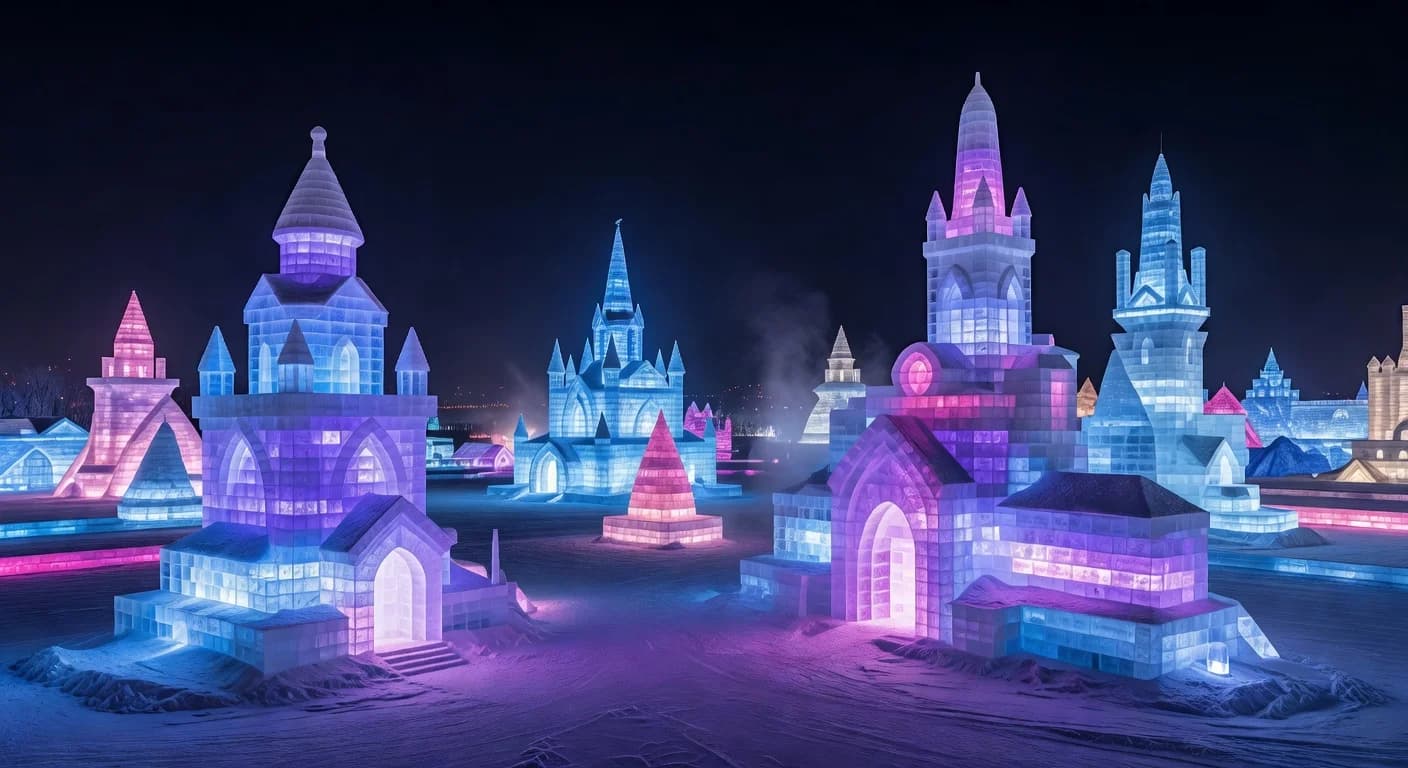
Imagine stepping into a fairytale where entire palaces shimmer in electric blue, colossal ice sculptures tower overhead, and the air bites with crystalline cold—this is the Harbin Ice Festival, China's most spectacular winter celebration. Every January, the frozen Songhua River transforms into a canvas for thousands of artisans who carve, sculpt, and illuminate ice into breathtaking architectural wonders that rival the real thing.
Key Takeaways
| Question | Answer |
|---|---|
| What is the best time to visit? | January to February for peak ice festival season; December to March for general winter activities |
| How much does it cost? | Festival entry: 300–400 CNY ($40–55 USD); accommodation varies 200–1,500 CNY/night depending on comfort level |
| How do I get there? | Fly to Harbin from major cities; high-speed rail from Beijing (12 hours) or Shanghai (20+ hours) |
| Is it safe? | Yes; Harbin is safe for tourists. Dress warmly—temperatures drop to -10°C to -20°C (-14°F to -4°F) |
| What should I book in advance? | Festival tickets, hotels, and flights 4–8 weeks ahead; tours fill quickly during peak season |
1. Understanding the Harbin Ice Festival: China's Winter Masterpiece
The Harbin Ice Festival isn't just a seasonal event—it's a cultural phenomenon that draws hundreds of thousands of visitors annually to Northeast China. Held on the frozen Songhua River, the festival showcases ice sculptures ranging from delicate figurines to full-scale replicas of famous landmarks. When we visited in January, we were struck by the sheer ambition: entire temples, pagodas, and mythical creatures carved from ice blocks weighing tons, then illuminated with LED lights that transformed them into glowing jewels against the night sky.
The festival officially runs from January 5 to February 28, though the exact dates shift slightly year to year depending on ice conditions. The main exhibition area, known as the Ice and Snow World, sprawls across the frozen river and adjacent parks. What makes it uniquely Chinese is the blend of traditional cultural motifs—dragons, phoenixes, pagodas—with modern architectural references and fantastical designs that seem pulled from fantasy films.
The Ice Sculpture Experience
Walking through the Ice and Snow World feels surreal. Sculptures stand three, four, even five stories tall, carved with astonishing detail. Dragons coil around towers, intricate lattice patterns cover walls, and entire scenes from Chinese mythology unfold in crystalline form. During the day, the sculptures glow softly in natural light; at night, the LED illumination transforms them into something otherworldly—blues, purples, reds, and greens dance across the ice. Our team spent hours photographing the same sculptures in different light conditions; each visit revealed new details.
Beyond the Main Festival
While the Ice and Snow World is the headline attraction, Harbin's winter season offers much more. The city hosts the Harbin International Ice Sculpture Competition, where master sculptors from around the world compete in real-time, and the Snow Sculpture Art Expo features massive snow creations in nearby parks. These events run concurrently with the main festival, creating a month-long celebration of ice and snow artistry.
Compare hotels across China with free cancellation on most bookings.
Search Hotels on Booking.com → Scan me
2. When to Visit: Timing Your Winter Adventure
January and February are peak season for the Harbin Ice Festival, with the festival officially running from January 5 to late February. However, timing matters significantly. Early January sees fewer crowds and the freshest ice sculptures, though some installations may still be under construction. Mid-January through early February represents the sweet spot: the festival is fully operational, sculptures are pristine, and the weather, while brutally cold, is stable.
During our time in Northeast China, we learned that late February brings warmer temperatures (still well below freezing, but approaching -5°C to -10°C), which can cause minor melting and reduce the sculptures' visual impact. If you're sensitive to extreme cold, late February offers a slightly more comfortable experience at the cost of some aesthetic degradation.
Weather Expectations and Preparation
Harbin in winter is genuinely cold. Temperatures typically range from -10°C to -20°C (-14°F to -4°F), with wind chill making it feel even more severe. Snow is virtually guaranteed, creating a pristine white backdrop for the ice sculptures. The upside: the cold preserves the ice perfectly, and the dry air means less wind-driven moisture (though you'll still want a good windbreaker).
Pro Tip: Book accommodations with heated indoor connections to nearby attractions. Many hotels in central Harbin link via underground passages, allowing you to move between venues without facing the full brunt of the cold.
Crowd Management Strategy
January 5–15 sees moderate crowds, with weekdays quieter than weekends. Chinese New Year (late January/early February) brings massive domestic tourism surges—avoid these peak weeks if you dislike crowds. February 1–15 offers a balance: the festival is fully mature, crowds have thinned slightly post-holiday, and the sculptures remain in excellent condition.
Book your festival tickets online 2–3 weeks in advance to secure entry times and avoid on-site queues, which can stretch 1–2 hours during peak days.
3. Getting to Harbin: Transportation Options
Harbin is accessible via multiple routes, though the journey itself is part of the adventure. The city sits in Heilongjiang Province, roughly 1,200 km northeast of Beijing. Most international visitors fly into Harbin Taiping International Airport, which has direct connections from major Chinese cities and limited international routes.
Flight Options
Compare hotels across China with free cancellation on most bookings.
Search Hotels on Booking.com →
Scan me
Flying is the fastest option. From Beijing, flights take 2–2.5 hours; from Shanghai, roughly 3 hours. Prices vary seasonally, but expect 400–800 CNY ($55–110 USD) for domestic flights during winter. Book 4–6 weeks in advance for better rates. International travelers can fly into Beijing or Shanghai first, then connect to Harbin.
High-Speed Rail Alternative
China's high-speed rail network connects Harbin to major cities. From Beijing, the journey takes approximately 12 hours via the Beijing-Harbin high-speed line; from Shanghai, 20+ hours with connections. While slower than flying, rail offers a more immersive travel experience and avoids airport hassles. Tickets typically cost 400–600 CNY ($55–85 USD) from Beijing.
Getting Around Harbin
Once in Harbin, use the metro system (clean, efficient, English signage), taxis, or ride-hailing apps like DiDi. The Ice and Snow World is located on the frozen Songhua River, about 20 minutes from central Harbin by taxi. Most hotels offer shuttle services to the festival during peak season.
Book trains, buses across China easily online. Compare routes and prices.
Book Transport on 12Go → Scan me
4. Festival Venues: Where the Magic Happens
The Harbin Ice and Snow World is the primary venue, occupying roughly 750,000 square meters on the frozen Songhua River. Entry costs approximately 300–400 CNY ($40–55 USD), with discounts for children and seniors. The festival operates from 9 AM to 10 PM daily, though the evening hours (6 PM–10 PM) offer the most spectacular light displays.
Ice and Snow World Layout
The venue is divided into themed zones. The main sculpture garden features monumental pieces—towering pagodas, mythical creatures, and architectural replicas. A separate ice slide area offers thrilling descents down frozen slopes (additional fee: ~50 CNY/$7 USD). There's also an ice maze, ice skating rink, and performance stages where traditional music and dance shows occur nightly.
Secondary Venues Worth Visiting
The Zhaolin Park Ice Sculpture Exhibition showcases smaller, more intricate sculptures in a more intimate setting. Entry is 120 CNY ($16 USD). The Sun Island Snow Sculpture Art Expo features massive snow creations and is free to enter (though some activities charge separately). During our visit, we found the snow sculptures equally impressive to the ice pieces—the scale is staggering, and the artistry rivals any sculpture museum.
| Venue | Best For | Entry Cost | Hours |
|---|---|---|---|
| Ice and Snow World | Grand spectacle, nighttime lights | 300–400 CNY | 9 AM–10 PM |
| Zhaolin Park | Detailed sculptures, quieter experience | 120 CNY | 9 AM–5 PM |
| Sun Island Snow Expo | Massive snow art, daytime exploration | Free (activities extra) | 9 AM–5 PM |
| Ice Sculpture Competition | Live artistry, skill demonstrations | 100–150 CNY | Varies |
Did You Know? The Harbin Ice Festival has been running since 1985, when local artists first displayed ice lanterns on the frozen river. Today, it attracts over 1 million visitors annually and has inspired similar festivals across China and internationally.
5. What to See and Do: Beyond the Ice Sculptures
While the ice sculptures are the headline, Harbin's winter season offers diverse activities. The city itself is worth exploring—it has a fascinating Russian colonial heritage visible in its architecture, churches, and food culture.
Ice Activities and Winter Sports
Beyond viewing sculptures, you can participate in winter activities. Ice skating is available at multiple rinks throughout the city, including within the Ice and Snow World. Sledding down ice slides is thrilling and costs 50–100 CNY ($7–14 USD) per run. For the adventurous, ice fishing on the Songhua River is a traditional activity—local guides offer half-day experiences for 200–400 CNY ($28–55 USD).
Cultural Experiences
Visit the Sophia Cathedral, an iconic Russian Orthodox church with distinctive onion domes, now a museum. The Harbin Polarland aquarium showcases Arctic marine life and offers polar bear viewing. The Central Avenue (Zhongyang Dajie) is a historic pedestrian street lined with Russian-influenced architecture, perfect for warming up with hot drinks at traditional cafés.
Local Food and Warming Up
Harbin's cuisine reflects its Russian influence. Try Harbin red sausage (a local specialty), hearty stews, and warming soups. Hot pot restaurants are abundant and perfect for warming up after hours in the cold. Local drinks include hot chrysanthemum tea and warming rice wine. During our time there, we discovered that eating warm food frequently is essential—your body burns calories rapidly in extreme cold.
Budget-Friendly Eats: Street vendors near the festival sell grilled corn, roasted chestnuts, and sweet potato—all warming and affordable (10–20 CNY/$1.50–3 USD).
Book Great Wall tours, cooking classes, and experiences in advance with instant confirmation.
Browse Activities on Klook → Scan me
6. Accommodation: Where to Stay
Harbin offers accommodation across all price ranges, though winter rates are higher than other seasons. Budget options (hostels, budget hotels) range 150–300 CNY ($20–40 USD); mid-range hotels, 400–800 CNY ($55–110 USD); luxury properties, 1,000–2,000+ CNY ($140–280+ USD).
Best Neighborhoods
Book Great Wall tours, cooking classes, and experiences in advance with instant confirmation.
Browse Activities on Klook →
Scan me
Central Harbin (around Zhongyang Dajie) offers walkability and proximity to restaurants and attractions, though it's busier and pricier. Songbei District is closer to the Ice and Snow World, reducing travel time. During our stay, we found that being near the festival venue saved significant time and energy—you can return to your hotel to warm up midday without losing hours to commuting.
Booking Strategy
Book 6–8 weeks in advance for peak season (mid-January to early February). Prices spike 30–50% during Chinese New Year. Many hotels offer festival shuttle services—confirm this when booking, as it's a major convenience. Look for properties with heated indoor connections to nearby buildings; this feature is invaluable in extreme cold.
Pro Tip: Mid-range hotels often offer better value than luxury properties during winter. A 500 CNY hotel with good heating and shuttle service beats a 1,500 CNY luxury hotel without convenient festival access.
7. Practical Travel Tips: Staying Safe and Comfortable
Harbin's extreme cold demands preparation. Frostbite and hypothermia are real risks if you're unprepared. During our time there, we observed tourists underdressed—a mistake that forced them to cut visits short.
Essential Packing List
- Thermal layers: Merino wool or synthetic base layers (cotton absorbs sweat and worsens cold exposure)
- Insulated jacket: -20°C rated minimum
- Winter boots: Insulated, waterproof, with good traction (ice is slippery)
- Hat, gloves, scarf: Wool or synthetic; protect your face from wind
- Hand and foot warmers: Chemical heat packs are lifesavers
- Sunscreen and lip balm: Winter sun reflects off snow; UV protection is essential
- Moisturizer: The dry cold causes severe chapping
Health and Safety Considerations
Harbin is safe for tourists. Petty theft is rare, and the police presence is visible. However, the cold itself is the primary hazard. Limit outdoor exposure to 1–2 hours at a time, then warm up indoors. Drink plenty of water (dehydration occurs in dry cold). If you have respiratory issues, consult a doctor before visiting—the cold can aggravate asthma and other conditions.
Safety Note: The frozen river is safe for walking in designated areas, but stay on marked paths. Ice thickness is monitored, but accidents can happen.
Budget Breakdown
| Category | Cost (CNY) | Cost (USD) |
|---|---|---|
| Festival entry | 300–400 | $40–55 |
| Hotel (mid-range, 3 nights) | 1,200–2,400 | $165–330 |
| Flights (domestic, round-trip) | 800–1,600 | $110–220 |
| Food (daily, budget to mid-range) | 100–300 | $14–40 |
| Activities (ice skating, sledding, tours) | 200–500 | $28–70 |
| Total (3 days, per person) | 2,600–5,200 | $360–715 |
Get a China eSIM before you land. Some plans include [VPN](https://nordvpn.tpo.lv/ekHF1i55) access.
Get Saily eSIM for China → Scan me
8. Beyond Harbin: Winter Experiences Across China
While Harbin is the winter crown jewel, other regions offer compelling cold-weather experiences. Northeast China has multiple winter destinations worth exploring.
Jilin Province: Skiing and Snow
Jilin Province, adjacent to Harbin, is China's premier skiing destination. Yabuli Ski Resort offers runs for all levels, with lift passes around 300–500 CNY ($40–70 USD) per day. The resort is 3–4 hours from Harbin by car. If you're combining the ice festival with skiing, this is an excellent add-on.
Changbai Mountain: Snow and Hot Springs
Changbai Mountain straddles the China-North Korea border and offers stunning winter scenery—snow-covered peaks, frozen waterfalls, and natural hot springs. The contrast of soaking in warm water while surrounded by snow is unforgettable. Access is via Jilin City, about 4 hours from Harbin. Winter access can be limited due to snow; check conditions before planning.
Winter in Other Regions
For those unable to reach the far northeast, Beijing offers winter charm—the Great Wall dusted with snow is magical, and the city hosts smaller ice sculpture exhibitions. Shanghai rarely freezes, but winter offers clear skies and fewer crowds.
Did You Know? China's northeast experiences some of the world's most extreme winter conditions. Harbin's average January temperature is -17°C (1°F), comparable to northern Canada and Scandinavia.
Source: China Daily
9. Booking and Planning: Step-by-Step Guide
8 Weeks Before Travel
- Decide on dates: Choose between early January (fewer crowds, construction ongoing), mid-January to early February (peak season, fully operational), or late February (warmer, fewer crowds, some melting).
- Book flights: Search from your departure city to Harbin. Domestic flights are cheaper; international travelers should book Beijing or Shanghai connections.
- Reserve accommodation: Book hotels with festival shuttle services. Mid-range properties offer best value.
4 Weeks Before Travel
Compare car rental prices across China. Pick up at airports or city locations with flexible cancellation.
Compare Car Rentals →
Scan me
- Purchase festival tickets: Buy online through the official Harbin Ice and Snow World website or authorized vendors. Avoid buying from scalpers on-site.
- Plan activities: Book ice sculpture competitions, guided tours, or skiing trips if interested.
- Arrange transportation: Book trains or additional flights for side trips to Jilin Province or Changbai Mountain.
1 Week Before Travel
- Confirm bookings: Email hotels to confirm shuttle services and check-in procedures.
- Prepare packing list: Order any missing cold-weather gear.
- Download offline maps: WeChat Maps and Baidu Maps work well; download offline versions in case of connectivity issues.
- Arrange travel insurance: Cold-weather travel carries risks; ensure coverage includes medical evacuation.
On-Site Tips
- Arrive early: Get to the Ice and Snow World by 9 AM to beat crowds.
- Plan for darkness: The festival is best experienced at night (6 PM–10 PM) when lights are on. Spend mornings exploring other venues.
- Bring cash: While mobile payments (WeChat, Alipay) work, some vendors prefer cash. ATMs are available throughout the city.
- Stay hydrated: Drink water frequently; the dry cold causes dehydration.
Discover guided tours in Beijing, Shanghai, Xi'an and beyond.
Browse Tours on GetYourGuide → Scan me
10. Seasonal Alternatives: Winter Beyond the Ice Festival
If you're visiting Harbin outside the festival season (March–December), the city still offers winter activities in early spring and late autumn. However, the ice sculptures won't be present. Consider visiting during December for early winter conditions, or plan a return trip for the next festival season.
Extended Winter Itinerary
A comprehensive winter trip might look like this:
- Days 1–3: Harbin Ice and Snow World, Zhaolin Park, Central Avenue
- Days 4–5: Day trip to Yabuli Ski Resort or Changbai Mountain
- Day 6: Return to Harbin, explore museums and Russian heritage sites
- Day 7: Depart
This itinerary balances festival activities with regional exploration and allows acclimatization to the cold.
Combining with Other Chinese Destinations
If you have more time, consider combining Harbin with other winter destinations. The high-speed rail network makes it feasible to visit Beijing (12 hours south) for Great Wall exploration, or Shanghai for urban winter charm. However, travel days are long; plan at least 10–14 days for a multi-city winter tour.
Frequently Asked Questions
Is the Harbin Ice Festival worth the extreme cold?
Absolutely. The ice sculptures are unlike anything you'll see elsewhere—the scale, artistry, and nighttime illumination are genuinely spectacular. However, you must be prepared for extreme cold. If you're uncomfortable with -15°C temperatures, consider visiting in late February or exploring alternative winter destinations in warmer regions.
Can I visit the festival with children?
Yes, but with caveats. Children under 5 struggle with the extreme cold; limit outdoor time to 30–60 minutes per session. Older children (8+) typically enjoy the experience if properly dressed. The ice slides and skating rink are popular with kids. Avoid the festival during Chinese New Year when crowds are overwhelming.
What's the best time of day to visit?
Early morning (9 AM–11 AM) offers fewer crowds and good natural light for photography. Late afternoon to evening (5 PM–10 PM) showcases the spectacular LED illumination. If you have limited time, prioritize the evening visit for the full magical experience.
Do I need a visa to visit Harbin?
Yes, unless you're a citizen of a country with visa-free or visa-on-arrival privileges. Most Western nationals require a Tourist Visa. Apply 4–6 weeks in advance. Some nationalities qualify for the 144-hour visa-free transit if transiting through Shanghai or Beijing.
How much should I budget for a 3-day Harbin trip?
Budget 2,600–5,200 CNY ($360–715 USD) per person, including flights, accommodation, festival entry, food, and activities. Budget travelers can reduce this to 2,000 CNY ($275 USD) by choosing hostels and eating street food; luxury travelers might spend 8,000+ CNY ($1,100+ USD).
Can I visit the festival in December or March?
The festival officially runs January 5–February 28. December and March are too warm for stable ice sculptures. However, early December and late February sometimes have limited festival activities; check the official website for current dates.
Conclusion
The Harbin Ice Festival is a bucket-list winter experience that showcases human artistry on a scale few destinations can match. The glowing ice palaces, intricate sculptures, and festive atmosphere create memories that linger long after you've thawed out. While the extreme cold demands serious preparation, the reward—stepping into a frozen fairytale—is worth every layer of thermal clothing.
Plan your visit 8 weeks in advance, book mid-January for the optimal balance of crowds and conditions, and embrace the cold as part of the adventure. Whether you're a photography enthusiast, culture seeker, or simply someone who loves winter, Harbin delivers an unforgettable experience.
Ready to explore China's winter wonderland? Start planning your Harbin adventure today. For more seasonal travel inspiration, check out our guides to China in January and Northeast China to discover other winter destinations and cultural experiences.
Trust us: Our team has navigated Harbin's frozen streets, waited in festival lines, and experienced the magic firsthand. We're here to help you plan a trip that's both spectacular and stress-free.
About the Author
Go2China Team
The Go2China editorial team combines first-hand travel experience with deep cultural knowledge to bring you accurate, up-to-date guides for exploring China — from the Great Wall and Forbidden City to hidden gems off the tourist trail.
- ✓Lived and traveled extensively across China
- ✓Native & bilingual Mandarin speakers on team
- ✓Verified info from official Chinese tourism sources