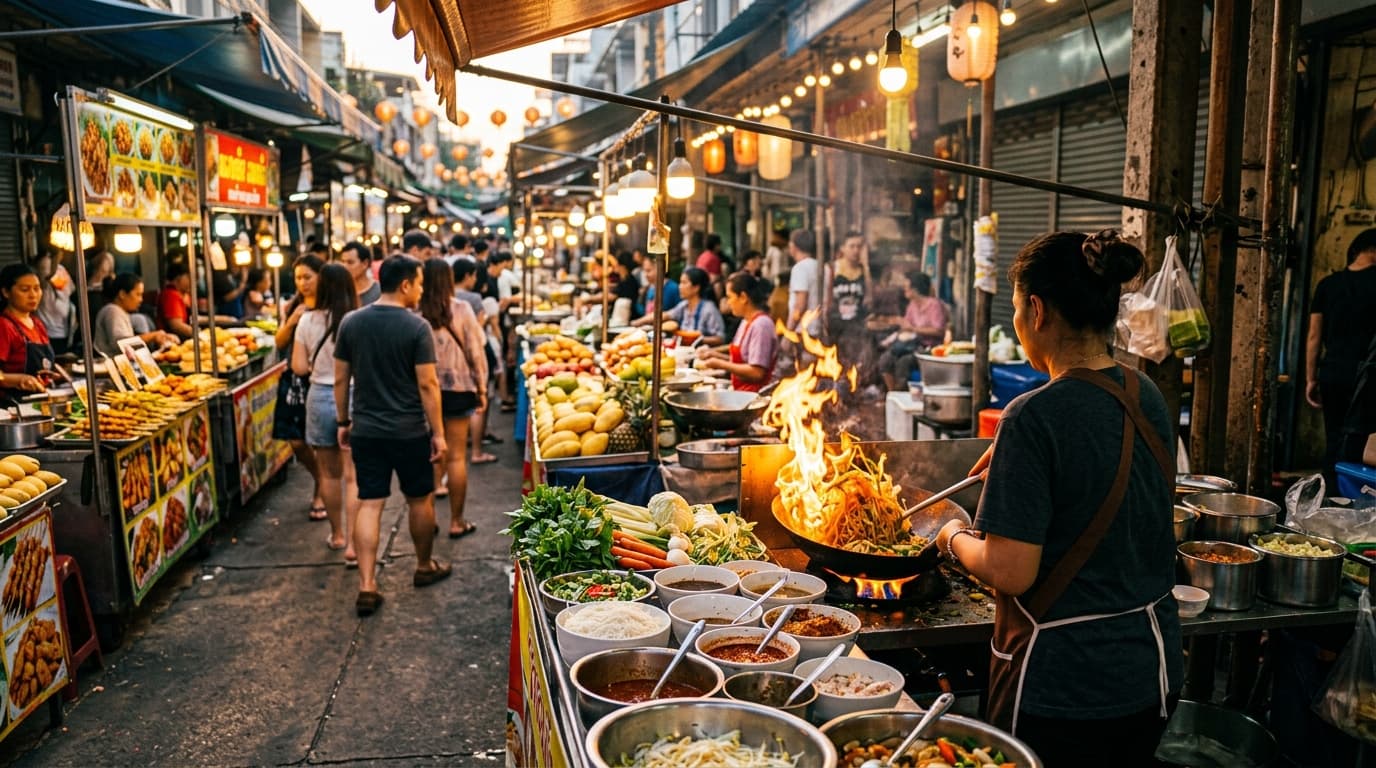
Explore China's vibrant street food and markets: must-try dishes, cultural insights, and tips for first-timers to eat like a local safely.
Imagine the sizzle of skewers on glowing grills, the steam rising from bamboo baskets, and the chatter of vendors hawking their wares under neon lights—that's the irresistible allure of China street food and markets. As a gateway to China's culinary soul, these bustling spots offer flavors that range from sweet to spicy, reflecting centuries of tradition in every bite. For first-time visitors, diving in can feel overwhelming, but starting with the right dishes unlocks an authentic adventure.
Key Takeaways
| Question | Answer |
|---|---|
| What are the must-try dishes for beginners? | Start with jiaozi (dumplings), skewered meats, and xiaolongbao (soup dumplings) for a mix of savory and steamy experiences. |
| Best cities for street food? | Beijing, Shanghai, and Guangzhou top the list for variety and authenticity. |
| How much does it cost? | Dishes typically range from 5-20 CNY (about 0.70-2.80 USD); markets are budget-friendly, but prices vary by location—check current rates. |
| When is the best time to visit markets? | Evenings, especially 6-10 PM, when stalls are liveliest and freshest. |
| Is street food safe for tourists? | Generally yes if you choose busy stalls with high turnover; avoid raw items and look for clean setups. |
| How to order like a local? | Point and use simple phrases like "yī shāo" (a little) or numbers; WeChat Pay is common for payments. |
| What cultural etiquette to follow? | Slurping noodles shows appreciation; don't waste food, as it honors the host culture. |
1. Introduction to China's Street Food Culture
China's street food scene is a vibrant tapestry woven from regional traditions, where everyday eats become communal rituals. From the nomadic influences of the north to the spice-laden dishes of the southwest, street food embodies the country's diversity, often tracing back to ancient Silk Road traders and imperial feasts. During our team's research trips across major cities, we've seen how these snacks foster social bonds, turning strangers into shared-meal companions.
This culinary landscape isn't just about taste—it's a window into daily life, where vendors pass down recipes through generations. Markets pulse with energy, offering everything from humble buns to elaborate skewers, all at pocket-friendly prices.
The Historical Roots of Street Food
Street food in China dates to the Tang Dynasty (618-907 AD), when mobile vendors served laborers and travelers along trade routes. It evolved during the Ming and Qing eras into the night markets we know today, blending influences from Mongol invasions to maritime trade. In modern times, these foods sustain urban hustle, with UNESCO recognizing certain traditions like Sichuan hotpot as intangible cultural heritage.
Our experience wandering Beijing's hutongs revealed how these origins persist: vendors grilling meats much like their ancestors did over open fires.
Why Street Food Beats Restaurants for First-Timers
For newcomers, street food provides unfiltered authenticity without the formality of sit-down meals. It's faster, cheaper, and immerses you in the crowd's rhythm. We found that trying a few stalls in a row builds confidence, revealing nuances like the perfect chew of a fresh dumpling.
Did You Know? Street food markets in China attract over 100 million daily visitors nationwide, supporting local economies and preserving culinary heritage.
Prime Location: Head to Wangfujing in Beijing for a classic intro to skewered specialties.
Essential Phrase: Learn "hǎo chī" (delicious) to compliment vendors and encourage more tries.
Safety Check: Opt for stalls with running water for prep—it's a sign of hygiene.
2. Must-Try Dishes in Beijing
Beijing's street food draws from northern China's hearty, wheat-based cuisine, influenced by its role as the capital for over 800 years. Here, flavors are bold and comforting, often featuring lamb and doughy wrappers that warm you against the winter chill. In our visits during crisp autumn days, the smoky aromas from coal braziers made every evening stroll unforgettable.
These dishes reflect Manchu and Mongolian heritage, with street vendors innovating on imperial recipes. For first-timers, Beijing offers an accessible entry point, blending familiarity with exotic twists.
Jiaozi: The Ubiquitous Dumplings
Jiaozi, boiled or pan-fried dumplings filled with pork, cabbage, or chives, symbolize prosperity—especially during Lunar New Year, when families wrap thousands. Culturally, they're a staple for family gatherings, representing unity as each person contributes to the filling. Regional variations include thinner skins in the south versus thicker, chewier ones in the north.
To order like a local, say "shuǐ jiaǒ" for boiled versions at a stall. We tried them steaming hot from a vendor cart, the juicy burst confirming why they're a daily ritual.
Jianbing: Savory Crepes for On-the-Go
This egg-and-scallion crepe, wrapped around mung bean crackers and hoisin sauce, originated as a breakfast for Tianjin workers but exploded in Beijing's streets. It's a fusion of sweet, salty, and crunchy, with variations adding spam or youtiao (fried dough). In bustling markets, it's flipped fresh, embodying the fast-paced urban life.
Point to ingredients and say "yī gĕ" (one) to customize. During our team exploration in a crowded alley, the crispy edges paired perfectly with morning tea.
Iconic Spot: Ghost Street (Gui Jie) for late-night jianbing amid neon lights.
Pro Tip: Add chili oil for heat—Beijing winters demand the warmth.
Budget Bite: Expect to pay under 10 CNY; it's filling for under 2 USD.
For more on Beijing's eats, check our Beijing travel guide.
3. Shanghai's Seafood-Inspired Street Snacks
Shanghai's street food scene fuses eastern China's coastal bounty with global influences from its treaty port history. Dishes here are lighter and sweeter, reflecting the Yangtze Delta's rice paddies and fishing heritage. When our team navigated the Yu Garden area in humid summer evenings, the briny scents from fresh catches made it a sensory highlight.
As a hub of modernity, Shanghai's markets blend tradition with fusion, like adding Western condiments to local fare. It's ideal for first-timers seeking variety without overwhelming spice.
Xiaolongbao: Soupy Dumplings with Elegance
These delicate steamed buns, filled with pork and a gelatinous broth that melts into soup, hail from nearby Nanxiang but define Shanghai cuisine. Culturally, they represent refinement, often sipped carefully to avoid burns. Variations include crab roe versions in coastal areas versus plainer pork inland.
Order by steaming basket—"yī lóng" (one cage)—and use ginger vinegar for dipping. In our research, slurping one at a market stall felt like capturing the city's sophisticated yet approachable vibe. Dive deeper in our Xiaolongbao food guide.
Shengjianbao: Crispy Bottomed Buns
Pan-fried buns with juicy pork filling and sesame-sprinkled tops, shengjianbao trace to Shanghai's working-class docks. They're crunchier than xiaolongbao, with regional tweaks like more scallions in Jiangsu. The contrast of crispy base and soupy interior makes them addictive street fare.
Ask for "shēng jiān" and eat upside down to catch drips. We savored them amid market crowds, the crunch echoing the city's dynamic energy.
Did You Know? Shanghai's street food culture influenced over 200 varieties of dumplings alone, showcasing the city's role in culinary innovation since the 19th century.
Source: Lonely Planet China
Top Market: Nanjing Road for seafood twists on classics.
Local Hack: Pair with a cold soy milk drink to balance richness.
Variety Note: Vegetarian options with greens are common and just as flavorful.
If planning a stay, explore options in our Shanghai travel guide.
4. Guangzhou's Cantonese Dim Sum Delights
In southern China's humid climes, Guangzhou's street food emphasizes fresh, steamed bites from the Pearl River Delta's fertile lands. Dim sum culture here is a morning ritual, tied to tea houses (yum cha) that date to the Silk Road era. Our team's early-morning forays into teahouse-adjacent markets captured the steam-filled camaraderie of locals sharing carts.
Guangzhou's cuisine prioritizes natural flavors, with street versions making gourmet accessible. For beginners, it's a gentle intro to Cantonese subtlety.
Har Gow: Translucent Shrimp Dumplings
These crystal-skinned shrimp dumplings, steamed to reveal pink filling, embody Cantonese finesse—light, bouncy, and seafood-forward. Culturally, dim sum like har gow fosters social dining, with carts wheeled to tables in traditional settings. Variations include scallop or veggie fillings in Chaozhou style.
Order "xiān xiā jiǎo" and aim for hot-from-steamer ones. We found them meltingly tender at a market edge, a far cry from heavier northern fare. See our Dim Sum food guide for recipes.
Cheong Fun: Rice Noodle Rolls
Silky rice sheets rolled around shrimp or beef, drizzled with soy and sesame, cheong fun is a cool contrast to fried options. From Guangdong's rice heritage, it's often street-steamed for speed. Southern variations add curry in Hakka influences.
Say "chēung fán" with your protein choice. During rainy season visits, their lightness was a refreshing pick-me-up.
Heritage Site: Shamian Island markets for upscale street dim sum.
Etiquette Tip: Use chopsticks to pick, never spears—it's polite.
Affordable Feast: Share a plate for under 15 CNY total.
Link to southern flavors in our Guangzhou travel guide.
5. Spicy Sichuan Street Eats in Chengdu
Sichuan's street food ignites with numbing peppers and fiery chilies, rooted in the province's misty mountains and tea-growing terraces. Chengdu, the spicy capital, turns markets into flavor battlegrounds. In our sweltering summer research, the bold heat cut through the humidity, leaving us reaching for cold beers.
This cuisine's "ma la" (numbing-spicy) profile stems from ancient preservation techniques. First-timers should start mild to build tolerance.
Dan Dan Noodles: Fiery and Fragrant
Hand-pulled noodles tossed in sesame paste, chili oil, and minced pork, dan dan noodles originated as porters' fuel in 19th-century streets. They're a staple of Chengdu's Muslim Quarter influences. Variations tone down spice in Chongqing or add more peanuts in self-cooked home styles.
Order "dàn dàn miàn" and specify spice level—"bù là" for mild. We slurped them sweating under market awnings, the tingle unforgettable. Explore more in our Dan Dan Noodles food guide.
Malatang: Customizable Hotpot Skewers
Skewered veggies, meats, and tofu boiled in spicy broth, malatang lets you pick like a soup buffet. From street carts in the 1980s, it's evolved with regional tweaks like fish balls in Hubei. It's communal, mirroring Sichuan's hotpot social scene.
Point and say "má là tàng" with selections. Our team customized mild versions first, gradually embracing the burn.
Spice Scale: Vendors often have 1-10 heat charts—start low.
Pairing Idea: Follow with cooling cucumber salad from nearby stalls.
Night Owl Pick: Jinli Street for illuminated malatang vibes.
For transport to Chengdu, see Beijing To Chengdu.
6. Northern China's Grilled Skewers and Breads
Northern street food favors grilled meats and flatbreads, shaped by steppe nomads and cold winters. In places like Xi'an, markets evoke ancient caravan stops. During our crisp fall explorations, the char-grilled scents transported us to historical trade routes.
These robust eats emphasize preservation through smoking and drying. They're perfect for hearty appetites.
Roujiamo: Chinese Hamburger
A spiced lamb or beef filling stuffed into crispy bianbing flatbread, roujiamo is Shaanxi's answer to fast food, dating to Qin Dynasty soldiers. Variations use pork in Gansu or veggies for vegetarians. It's portable and satisfying.
Ask for "róu jiā mó" with meat choice. We bit into one fresh off the grill, the juices soaking the bread ideally.
Yang Rou Chuan: Lamb Skewers
Cumin-dusted lamb grilled over coals, these skewers trace to Uyghur influences in Xinjiang but thrive in northern markets. Spice levels vary, with heavier cumin in Inner Mongolia.
Order by number—"shí zhī" (ten sticks). In windy evenings, they warmed us profoundly.
| Dish | Best For | Cost (CNY) | Rating |
|---|---|---|---|
| Roujiamo | Hearty meat lovers | 8-15 | ⭐⭐⭐⭐⭐ |
| Yang Rou Chuan | Quick spicy bites | 5-10 per skewer | ⭐⭐⭐⭐ |
| Jianbing | Breakfast on-the-go | 6-12 | ⭐⭐⭐⭐⭐ |
| Xiaolongbao | Delicate flavors | 20-30 per cage | ⭐⭐⭐⭐ |
Grill Mastery: Look for even char—avoids undercooked spots.
Regional Twist: Try beef in Muslim areas for halal options.
For Xi'an insights, visit our North China region guide.
7. Sweet Treats and Desserts from Street Stalls
No China street food tour skips sweets, which balance savory with seasonal fruits and nuts. From Tang Dynasty candied haws to modern tanghulu, these treats add whimsy. Our sweet tooths lit up during lantern festivals, sampling sticky delights amid crowds.
Desserts here are light, often fruit-based, reflecting Daoist harmony.
Tanghulu: Candied Fruit Skewers
Hawthorn berries coated in hardened sugar, tanghulu crunch with tart-sweet contrast, a Beijing winter favorite since the Song Dynasty. Variations use strawberries in summer or grapes in the south.
Say "táng hú lu" and choose size. We crunched through the shell, the juice bursting refreshingly.
Douhua: Silky Tofu Pudding
Soft tofu in ginger syrup or savory broth, douhua is a Hangzhou specialty but street-common nationwide. Southern versions sweeten with red beans.
Order "dòu huā" plain or flavored. In humid markets, its coolness was a relief.
Did You Know? Candied fruits like tanghulu have been a street staple for over 1,000 years, symbolizing good fortune in Chinese folklore.
Seasonal Pick: Fresh strawberries in spring for tanghulu upgrades.
Allergy Note: Nut-free options abound; ask "méi gān ɡ" (no nuts).
Festive Fun: Best during holidays for flavored varieties.
Pair with drinks from our Drinks page.
8. Navigating Markets: Tips for First-Timers
Markets are the heartbeat of China street food, from Beijing's chaotic alleys to Shanghai's organized lanes. They thrive on haggling and freshness, a custom from imperial bazaars. When we dove into Guangzhou's stalls during monsoon season, dodging puddles added to the adventure.
Success lies in observation: busy spots mean quality. Be prepared for crowds, but they're part of the thrill.
Choosing Safe and Authentic Stalls
Prioritize vendors with high foot traffic—fresh turnover reduces risks. Look for metal utensils over wooden, and avoid pre-cooked items sitting out. In our experience, asking locals "hǎo chī ma?" (is it good?) points to gems.
Cultural context: Markets often close by midnight, aligning with work rhythms. For safety, read our Safety guide.
Ordering and Paying Like a Local
Use apps like Alipay for seamless transactions—cash is fading. Pointing works universally, but numbers help: "sān" for three. We navigated language barriers with smiles and gestures, turning mishaps into stories.
Common mistake: Overordering—start small to sample more.
Payment Pro: Download WeChat before arrival for QR scans.
Haggle Hint: Offer 20% less on non-food items, but food is fixed price.
Crowd Nav: Go early to beat lines; evenings peak at 8 PM.
Visa Prep: Ensure your Tourist Visa is ready for smooth entry.
9. Regional Variations and Comparisons
China's vastness means street food shifts dramatically by region, from fiery west to delicate east. Northern wheat dominates, while south favors rice. Our cross-country research highlighted how geography dictates ingredients—coastal seafood versus inland meats.
This diversity enriches trips, letting you taste history's migrations.
North vs. South: Flavor Profiles
Northern dishes are robust and fermented, like pickled cabbage in dumplings, suited to cold climates. Southern ones steam for lightness, preserving nutrients in heat. Beijing's jianbing contrasts Guangzhou's cheong fun in texture alone.
In practice, north builds appetite; south refreshes.
Inland Spices vs. Coastal Freshness
Sichuan's peppers numb the tongue, a mountain adaptation, while Shanghai's seafood shines raw or lightly cooked. Variations: Hotpot skewers inland, grilled fish coastal.
We balanced trips with both, avoiding monotony.
For broader tastes, see East China region guide.
| Region | Signature Dish | Spice Level | Cultural Tie |
|---|---|---|---|
| North (Beijing) | Jiaozi | Mild | Lunar celebrations |
| East (Shanghai) | Xiaolongbao | Low | Port trade refinement |
| South (Guangzhou) | Har Gow | None | Tea house rituals |
| Southwest (Chengdu) | Dan Dan Noodles | High | Preservation heritage |
Fusion Find: Modern stalls mix regions, like spicy xiaolongbao.
Travel Tip: Use high-speed trains to hop regions—[book via Transport.
10. Common Pitfalls and What to Avoid
Even in vibrant China street food scenes, pitfalls lurk for the unprepared. Tourist traps near sites overcharge or skimp on quality, a common complaint in our field notes. Honesty: Not all stalls maintain standards; we've seen watered-down broths in less busy spots.
Avoid overrated "exotic" bugs unless adventurous—they're more novelty than necessity.
Tourist Traps to Sidestep
Steer clear of English-menu stalls in prime tourist zones; they're pricier and less authentic. Instead, join locals at side alleys. During peak holidays, crowds amplify pickpocketing risks—keep valuables secure.
Our advice: Research via Practical Info before diving in.
Health and Hygiene Mistakes
Raw salads pose risks in variable sanitation; stick to cooked foods. Overeating spice leads to discomfort—pace yourself. We learned to carry antacids after a fiery Chengdu night.
Avoid Alert: Pre-packaged "street" food in shops—it's not the real deal.
Recovery Remedy: Hydrate with Chinese Green Tea.
Connectivity Aid: Get an Esim for translating menus on the go.
We may earn a small commission from bookings made through our links, at no extra cost to you. This helps us keep creating free travel guides.
Frequently Asked Questions
What is the best street food to try first in China?
For beginners, start with jiaozi dumplings—they're widely available, customizable, and represent northern hospitality. Found in every market from Beijing to Shanghai, they're steamed or fried for about 10 CNY per portion. This eases you into flavors without overwhelming spice.
Is China street food safe for vegetarians?
Yes, many options like veggie-filled dumplings, tofu pudding, and noodle rolls cater to vegetarians, especially in Buddhist-influenced areas. Always confirm with "sù shí" (vegetarian) to avoid hidden meats. Markets in Shanghai offer the most variety, with over 20 plant-based stalls typical.
How do I find the best night markets in Beijing?
Wangfujing and Donghuamen are iconic, open from 5 PM to midnight, buzzing with skewers and crepes. For authenticity, venture to local spots like Jiumen for fewer tourists. Read our Beijing travel guide for maps.
What's the difference between dim sum and street dumplings?
Dim sum is a Cantonese assortment of small steamed bites like har gow, often in tea houses, while street dumplings (jiaozi) are northern, heartier, and pan-fried. Both share wrapper techniques but differ in finesse—dim sum is daintier. Guangzhou excels in dim sum; see Dim Sum food guide.
Can I try street food in China without speaking Mandarin?
Absolutely—pointing, pictures on stalls, and translation apps work wonders. Vendors are accommodating, especially in tourist cities. Learn basics like "yī gè" (one) for ease; we've managed full meals this way.
Are there spicy-free options in Sichuan street food?
Yes, Chengdu markets offer mild versions of dan dan noodles or clear-broth malatang by requesting "bù là" (not spicy). Focus on sesame or peanut-forward dishes. It's a gateway to the region's flavors without the fire.
How much should I budget for a street food meal in China?
Plan 20-50 CNY (3-7 USD) for 3-4 dishes, covering mains and a drink—very affordable compared to restaurants. Prices are stable but check for seasonal hikes. For budgeting tips, visit Money Currency.
China's street food and markets offer an unforgettable entry to its culinary world, from Beijing's hearty dumplings to Chengdu's spicy thrills—start simple, eat boldly, and savor the culture. Ready to plan your gastronomic adventure? Check our Food section for more guides and book your trip today. As the Go2China Team, we've scoured these spots firsthand through extensive research, ensuring our advice is reliable and rooted in real experiences.
来源与参考
本文基于编辑研究并使用以下来源进行验证:

关于作者
Go2China Team
Go2China编辑团队结合第一手旅行经验和深厚的文化知识,为您带来准确、最新的中国旅行指南——从长城和故宫到远离游客路线的隐藏宝地。
- ✓在中国各地长期生活和旅行
- ✓团队中有母语级普通话使用者
- ✓信息经官方中国旅游来源验证