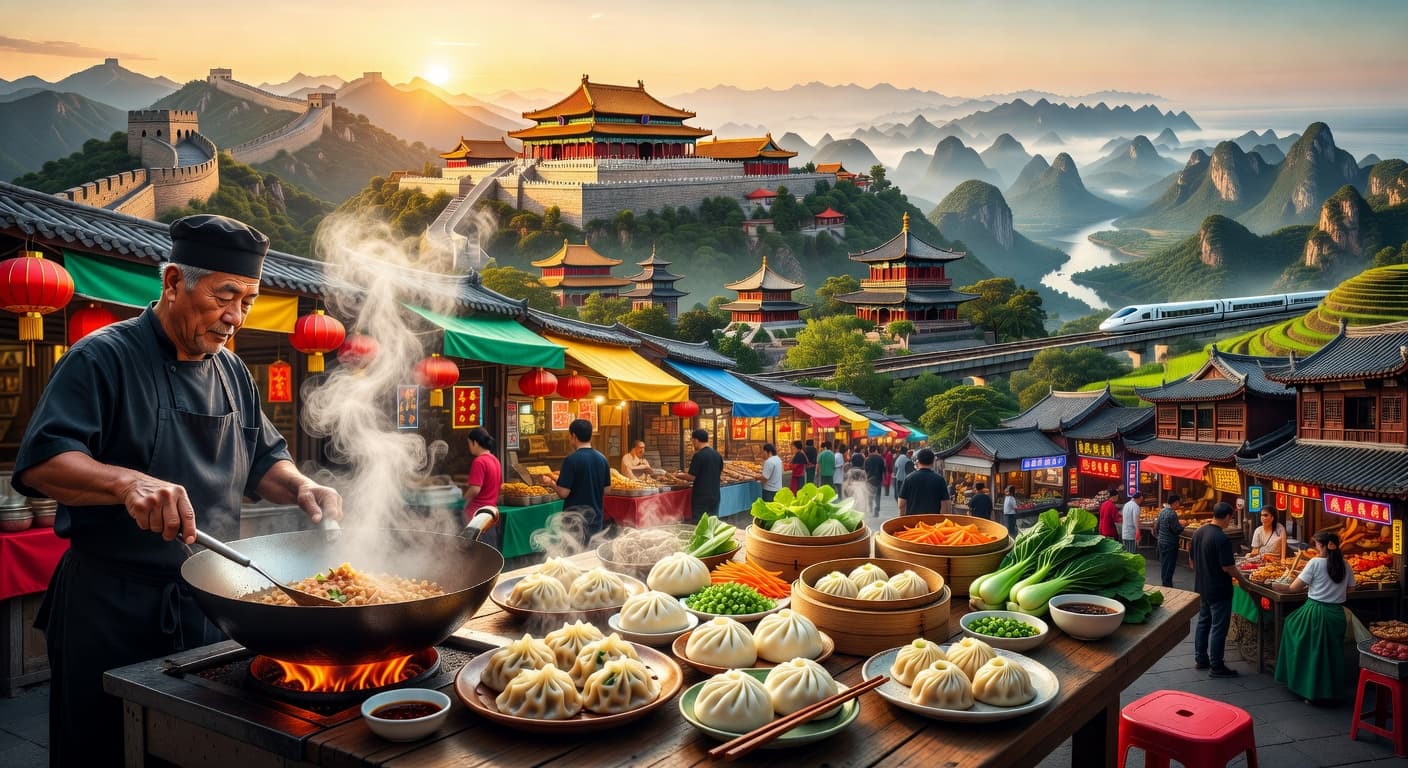
Master the art of Chinese dumplings: jiaozi, baozi, and xiaolongbao. Learn regional variations, where to find the best, and how to order like a local.
The Complete Guide to Chinese Dumplings: Jiaozi, Baozi, and Xiaolongbao
Standing in a steaming Shanghai dumpling shop at 7 a.m., watching skilled hands fold jiaozi at lightning speed, you realize these aren't just food—they're edible art. Dumplings represent the soul of Chinese cuisine, with each region claiming its own sacred recipe and folding technique. Whether you're chasing the soup-filled magic of xiaolongbao in Shanghai, the delicate pleats of Beijing jiaozi, or the pillowy softness of Cantonese baozi, understanding these three pillars of dumpling culture transforms your entire China food experience.
Key Takeaways
| Question | Answer |
|---|---|
| What's the difference between jiaozi, baozi, and xiaolongbao? | Jiaozi are thin-skinned dumplings (boiled, steamed, or fried); baozi are larger, fluffier buns with thicker dough; xiaolongbao are soup dumplings with delicate skins and aspic-based filling |
| How much do dumplings cost? | CNY 15–50 (USD 2–7) for a basket of 6–8 pieces at casual restaurants; premium spots charge CNY 60–120 (USD 8–16) |
| What's the best time to eat dumplings? | Breakfast or lunch; most dumpling shops close by 2–3 p.m. Winter (November–February) is traditional dumpling-making season |
| Where do I find the best dumplings? | Beijing for jiaozi, Shanghai for xiaolongbao, Guangzhou for baozi; street markets and hole-in-the-wall shops often beat fancy restaurants |
| Should I book in advance? | No—most dumpling shops are walk-in only. Arrive early (before 11 a.m.) to avoid queues |
| How do I order like a local? | Point at a menu photo, use hand signals for quantity, or say the dumpling name + "一份" (yī fèn—one serving) |
| Are dumplings safe to eat? | Yes, if purchased from established shops with visible food preparation. Avoid street vendors with unclear hygiene practices |
1. Understanding the Trinity: Jiaozi vs. Baozi vs. Xiaolongbao
Jiaozi (饺子), baozi (包子), and xiaolongbao (小笼包) form the holy trinity of Chinese dumplings, yet each occupies a distinct place in the dumpling hierarchy. When we first navigated Shanghai's Yuyuan Market, we watched vendors fold hundreds of xiaolongbao while elderly locals dismissed them as "tourist food"—the regional pride runs deep. Understanding these three is the gateway to mastering Chinese food culture.
The Core Differences
Jiaozi are the most versatile and widely eaten across China. These half-moon shaped dumplings feature thin, delicate wrappers (about 1mm thick) that yield to your teeth, encasing savory fillings of pork, shrimp, chives, or vegetables. They're boiled, steamed, or pan-fried, and the wrapper texture changes dramatically depending on the cooking method—boiled jiaozi are silky and tender, while fried versions develop a crispy, golden exterior.
Baozi are the comfort food of Chinese breakfasts. These larger, pillow-shaped buns have thicker, fluffier dough (made with yeast, unlike jiaozi's unleavened wrapper) that puffs up during steaming. The filling is more generous—think chunks of char siu pork, salted egg yolk, or red bean paste. A single baozi is a meal; a basket of three to four satisfies most appetites.
Xiaolongbao are the Instagram darlings—delicate soup dumplings that burst with savory broth when you bite into them. The magic lies in the aspic (meat jelly) mixed into the filling, which melts into soup during steaming. These require a specific folding technique (typically 14–18 pleats) and are always steamed, never boiled or fried. They're smaller than jiaozi and more fragile.
Did You Know? Xiaolongbao originated in Nanxiang, a suburb of Shanghai, in the 1870s when a chef added aspic to dumpling filling to create soup-filled dumplings. This innovation transformed Shanghai's food identity.
Source: China Daily
Why These Three Matter
These three dumplings represent different culinary philosophies. Jiaozi celebrate simplicity and technique—the wrapper is nearly transparent, and the filling speaks for itself. Baozi embrace indulgence and comfort, with generous portions and rich fillings. Xiaolongbao showcase innovation and precision, requiring skill to fold and finesse to eat without burning your mouth on the soup inside. Learning to appreciate all three means understanding the breadth of Chinese food culture.
2. Jiaozi: The Dumpling Everyone Knows
Jiaozi are arguably the most iconic Chinese dumpling, eaten across the country during festivals, family dinners, and casual weeknight meals. During our three years in Beijing, we learned that jiaozi-making is a family ritual—grandmothers teach grandchildren the proper pleating technique, and the New Year's dumpling feast (eating jiaozi on Chinese New Year's Eve) is non-negotiable. The name itself carries cultural weight: "jiao" (角) means "corner," and eating dumplings shaped like ancient Chinese gold ingots symbolizes prosperity.
Fillings and Regional Styles
The beauty of jiaozi lies in their adaptability. Pork and chive (猪肉韭菜) is the most common filling in northern China, particularly Beijing and Tianjin. The chives provide a peppery bite that cuts through the richness of the pork. Shrimp and pork (虾仁猪肉) is popular in coastal regions like Shanghai and Guangzhou, where the shrimp adds sweetness and a delicate texture. Vegetarian fillings—cabbage, mushroom, and tofu—are increasingly common, especially in spring when fresh vegetables peak.
Regional variations are significant. In Sichuan, you'll find jiaozi filled with spicy minced pork and Sichuan peppercorns, creating a numbing sensation. In Jiangsu, seafood fillings dominate. During our time exploring Shanghai's food scene, we discovered that Shanghai jiaozi tend to be larger and filled more generously than their Beijing counterparts, reflecting the city's wealthier merchant history.
Cooking Methods and Texture
The cooking method fundamentally changes the eating experience:
- Boiled jiaozi (水饺) have a silky, slippery texture and are the most common preparation. They're cooked in rapidly boiling water until they float, then cooked for another minute or two. The wrapper becomes translucent and tender.
- Steamed jiaozi (蒸饺) are softer and slightly chewier than boiled versions. They're often served in bamboo baskets and are popular in dim sum restaurants.
- Pan-fried jiaozi (煎饺) develop a crispy, golden bottom while the top remains soft and steamed. This contrast—crispy and tender in one bite—is addictive.
- Fried jiaozi (炸饺) are less common but appear in some northern regions. They're deep-fried until golden and crispy throughout.
When we visited a jiaozi workshop in Beijing's Dongcheng District, the chef explained that the wrapper thickness varies by cooking method: boiled jiaozi use thinner wrappers (to cook quickly without becoming mushy), while steamed versions use slightly thicker wrappers (to hold up to moisture).
3. Baozi: The Breakfast Champion
Baozi are the soul of Chinese breakfast culture, and no visit to China is complete without sitting in a crowded dim sum restaurant at 8 a.m., steaming basket of baozi in front of you. These pillowy buns represent comfort food at its finest. The yeast-based dough creates a soft, slightly sweet crumb that contrasts beautifully with savory fillings. In Guangzhou, baozi are as essential to breakfast as coffee is to Western mornings.
Classic Baozi Fillings
Char siu baozi (叉烧包) feature glazed, caramelized pork and are the most iconic variety. The filling is sweet, tender, and deeply savory—a complete meal in itself. We watched a dim sum chef prepare char siu baozi in Guangzhou, and the process involves slow-cooking pork shoulder with soy sauce, honey, and five-spice powder until it's fall-apart tender, then dicing it and mixing with a slightly sweet sauce before encasing it in dough.
Siu mai (烧卖) are open-topped dumplings (technically a baozi variant) filled with pork, shrimp, and mushrooms, topped with a single pea or shrimp roe. They're steamed and served in bamboo baskets, and their open-top design makes them visually distinctive.
Custard baozi (蛋挞包) feature a creamy, slightly sweet egg custard filling and are particularly popular in Cantonese dim sum. The custard should be just set, with a slight jiggle when the baozi is moved.
Red bean baozi (红豆包) are sweet baozi filled with red bean paste, sometimes with a salted egg yolk center. These blur the line between savory and sweet and are often eaten as a snack rather than a full meal.
The Dough Science
The dough is where baozi differ fundamentally from jiaozi. Baozi dough is enriched with yeast, sugar, and sometimes lard or oil, creating a soft, slightly sweet crumb. The dough is kneaded until smooth, then left to rise for 30–60 minutes before filling and shaping. During steaming, the yeast continues to ferment slightly, creating an airy, pillowy texture. The best baozi have a delicate skin that doesn't tear easily and a tender, almost cloud-like interior.
When we visited a baozi factory in Guangzhou, we learned that the steaming time is critical—too short and the dough remains dense; too long and it becomes mushy. The sweet spot is typically 12–15 minutes for medium-sized baozi.
4. Xiaolongbao: The Soup Dumpling Phenomenon
Xiaolongbao are the showstoppers of Chinese dumplings, and their rise to international fame is well-deserved. These delicate, soup-filled parcels represent the pinnacle of dumpling technique. The wrapper must be thin enough to see light through it, yet strong enough to hold hot soup without tearing. The filling must contain enough aspic to transform into broth during steaming, creating that magical moment when you bite into one and soup floods your mouth.
The Aspic Secret
The key to xiaolongbao is aspic—a meat jelly made by simmering pork bones, chicken, and sometimes ham in water for hours until the collagen breaks down and the liquid gels when cooled. This aspic is mixed into the filling (typically pork, sometimes with shrimp or crab) in a 1:1 ratio. During steaming, the aspic melts into soup, creating the signature broth filling.
During our time in Shanghai, we visited a xiaolongbao specialist in the Huangpu District who explained that the aspic must be made fresh daily. Frozen or reheated aspic loses its delicate flavor and becomes gelatinous rather than brothy. The best xiaolongbao shops make their aspic from scratch, using pork bones, dried scallops, and sometimes Jinhua ham for depth.
Folding Technique and Presentation
Xiaolongbao require a specific folding technique that creates 14–18 delicate pleats around the top. The pleats serve a practical purpose—they allow the wrapper to expand as the filling heats and steams, preventing the dumpling from bursting. The pleats also create a visual signature: a perfectly folded xiaolongbao looks like a tiny silk purse.
The dumplings are served in bamboo steamers (小笼, xiaolóng—literally "small basket," which is where the name comes from) and should be eaten immediately while the soup is piping hot. Locals use a specific technique: pick up the dumpling with chopsticks, place it on a soup spoon, make a small hole in the top with your chopstick, and sip the soup before eating the wrapper and filling.
Did You Know? The xiaolongbao technique was developed to preserve meat during hot summers before refrigeration. The aspic acted as a preservative, allowing the dumplings to be stored for several days without spoiling.
Source: Lonely Planet China
5. Regional Dumpling Capitals: Where to Find the Best
China's dumpling landscape is deeply regional, with each city claiming superiority in their signature style. Understanding the geography of dumplings helps you prioritize your culinary itinerary.
Beijing: The Jiaozi Heartland
Beijing is the undisputed capital of jiaozi culture. The city's dumpling tradition dates back centuries, and the technique has been refined to near-perfection. Beijing jiaozi are characterized by thinner wrappers, more delicate pleating, and fillings that emphasize the quality of individual ingredients rather than complex seasoning. The most famous filling is pork and chive, but you'll also find shrimp and pork, beef and scallion, and seasonal vegetable varieties.
During our three years in Beijing, we learned that the best jiaozi shops are often unmarked hole-in-the-wall establishments in residential neighborhoods. These family-run operations have been making the same recipe for decades, and locals queue out the door by 11 a.m. The Beijing food scene extends far beyond the famous Peking Duck—jiaozi are the everyday staple that defines the city's food culture.
Shanghai: The Xiaolongbao Throne
Shanghai's xiaolongbao are world-famous, and rightfully so. The city's dumpling shops range from casual street-level operations to upscale dim sum restaurants, but the quality is remarkably consistent. Nanxiang, the suburb where xiaolongbao originated, remains the epicenter of xiaolongbao culture. The dumplings here are smaller and more delicate than versions found elsewhere, with a more refined broth and pork filling.
When we explored Shanghai's food landscape, we discovered that the best xiaolongbao shops open early (6–7 a.m.) and often sell out by noon. The wrappers are so thin that you can see the pleats through them, and the soup inside is rich and aromatic. Shanghai's xiaolongbao culture is so strong that eating them is almost a religious experience for locals—there's a specific etiquette, a proper technique, and an understanding that these dumplings deserve respect.
Guangzhou: The Baozi and Dim Sum Dynasty
Guangzhou is the dim sum capital of China, and baozi are central to this tradition. The city's dim sum culture is unparalleled, with hundreds of restaurants serving baozi alongside siu mai, har gow (shrimp dumplings), and other steamed delicacies. Guangzhou baozi are larger and more generously filled than versions found elsewhere, reflecting the city's wealthy merchant history and access to premium ingredients.
During our time in Guangzhou, we experienced dim sum culture at its most authentic. The restaurants open at 6 a.m., and by 7 a.m., every table is full. Servers push carts laden with bamboo baskets of baozi, and you simply point at what you want. The pace is fast, the atmosphere is chaotic, and the food is exceptional. Guangzhou's food scene represents the pinnacle of Cantonese cuisine, and baozi are the foundation of that tradition.
6. How to Order Dumplings Like a Local
Ordering dumplings in China requires understanding local conventions and a bit of strategic timing. Language barriers are minimal if you know a few key phrases and can point at menu photos.
Essential Phrases and Hand Signals
- "一份饺子" (yī fèn jiǎozi)—one serving of jiaozi (typically 6–8 pieces)
- "两份" (liǎng fèn)—two servings
- "水饺" (shuǐ jiǎozi)—boiled dumplings
- "蒸饺" (zhēng jiǎozi)—steamed dumplings
- "煎饺" (jiān jiǎozi)—pan-fried dumplings
- "一笼小笼包" (yī lóng xiǎolóng bāo)—one basket of xiaolongbao
In most casual dumpling shops, menus are visual—large laminated photos of each dumpling variety with prices. Simply point at what you want and hold up fingers to indicate quantity. If the shop is crowded, you might need to shout your order to a server, but this is normal and expected.
Strategic Timing
Dumpling shops operate on strict schedules. Most open at 6–7 a.m. for breakfast service and close by 2–3 p.m. If you arrive after 1 p.m., you risk finding your favorite variety sold out. The sweet spot is 7–10 a.m. for breakfast or 11 a.m.–1 p.m. for lunch. Arriving at these times ensures maximum selection and minimal wait times.
During our time navigating Shanghai's dumpling scene, we learned that the best strategy is to arrive just as the shop opens. The dumplings are freshest, the wrappers are at their optimal texture, and you'll avoid the lunch rush. Tourist-heavy areas have longer hours and more consistent availability, but the quality often suffers compared to neighborhood shops.
Payment and Etiquette
Most dumpling shops are cash-only, though increasingly they accept WeChat Pay and Alipay. Prices are clearly marked, and bills are typically presented on a small plate or piece of paper. Tipping is not expected or customary in China. Once you've finished eating, simply leave payment on the table or hand it to the server.
The eating experience is fast-paced. Dumpling shops prioritize turnover, so don't expect leisurely dining. Eat quickly, enjoy the dumplings, and vacate your seat for the next customer. This isn't rudeness—it's the rhythm of dumpling culture.
7. Dumpling Fillings Comparison Table
| Filling | Best In | Flavor Profile | Difficulty to Find | Price (CNY) |
|---|---|---|---|---|
| Pork & Chive | Beijing jiaozi | Savory, peppery, herbaceous | Very easy | 15–25 |
| Shrimp & Pork | Shanghai jiaozi | Delicate, slightly sweet, umami | Easy | 20–35 |
| Char Siu (BBQ Pork) | Guangzhou baozi | Sweet, caramelized, savory | Easy | 20–30 |
| Crab & Pork | Shanghai xiaolongbao | Rich, briny, complex | Moderate | 40–60 |
| Vegetable | All regions | Fresh, light, seasonal | Very easy | 12–20 |
| Beef & Scallion | Northern China jiaozi | Aromatic, savory, warming | Moderate | 18–28 |
| Custard (Egg) | Guangzhou baozi | Creamy, sweet, rich | Easy | 15–25 |
| Red Bean | Guangzhou baozi | Sweet, earthy, comforting | Easy | 12–20 |
8. Cooking Dumplings at Home: A Beginner's Guide
While eating dumplings in China is the ideal experience, learning to cook them at home deepens your appreciation for the craft. The technique is learnable, though mastery takes practice.
Making Jiaozi Wrappers from Scratch
The wrapper is the foundation. Mix 2 cups all-purpose flour with ¾ cup boiling water, stirring until a shaggy dough forms. Knead for 5–10 minutes until smooth and elastic. Let rest for 30 minutes covered. Roll small portions into thin circles (about 3 inches in diameter) using a wooden dowel or dumpling roller. The wrapper should be thin enough to see light through it but strong enough not to tear.
The filling is equally important. A basic pork and chive filling combines ground pork (not too lean), finely chopped chives, soy sauce, sesame oil, and ginger. The key is to mix the filling thoroughly so the seasonings are evenly distributed. Place about 1 teaspoon of filling in the center of each wrapper, wet the edges with water, and fold into a half-moon shape. Pleat the curved edge 5–7 times to seal.
Cooking Methods
Boiling: Bring a large pot of water to a rolling boil. Gently drop dumplings in (they should float freely). Once they float, cook for another 2–3 minutes. Remove with a slotted spoon and serve immediately with dipping sauce.
Steaming: Place dumplings on a parchment-lined bamboo steamer, leaving space between each dumpling. Steam over boiling water for 8–10 minutes until the wrappers are translucent.
Pan-frying: Heat 2 tablespoons oil in a non-stick pan over medium-high heat. Place dumplings flat-side down and cook until the bottoms are golden (3–4 minutes). Add ¼ cup water, cover, and steam for 5–7 minutes until the water evaporates. The tops will be soft and steamed, while the bottoms are crispy.
During our time in Beijing, we took a dumpling-making class where the instructor emphasized that practice is essential. Your first batch will be imperfect—wrappers will tear, pleats will be uneven, and some will burst during cooking. This is normal. By your tenth batch, muscle memory kicks in, and the process becomes meditative.
9. Dumpling Dipping Sauces and Accompaniments
The sauce elevates the dumpling experience from good to transcendent. Chinese dumpling culture has specific sauce traditions that vary by region.
Classic Dipping Sauces
The most common sauce is a simple mixture of black vinegar (黑醋), soy sauce (酱油), and sesame oil (麻油). The ratio is typically 2 parts vinegar, 1 part soy sauce, and a splash of sesame oil. This sauce is tangy, salty, and aromatic—it complements the delicate wrapper and filling without overpowering them.
Chili oil sauce (辣油) adds heat and is popular in Sichuan and other spicy-food regions. Mix black vinegar with chili oil and a touch of soy sauce. The chili oil should be fragrant, not just hot.
Ginger and vinegar sauce is traditional in Shanghai and pairs beautifully with xiaolongbao. Finely julienne fresh ginger and mix with black vinegar in a 1:3 ratio. The ginger cuts through the richness of the soup filling and aids digestion.
Soy sauce and sesame oil, without vinegar, is sometimes preferred for dumplings with delicate, subtle fillings. The sesame oil provides richness and aroma.
Accompaniments
Many dumpling shops serve pickled vegetables (泡菜) on the side—pickled mustard greens, daikon radish, or chili peppers. These provide acidity and crunch that balance the richness of the dumplings. Fresh ginger slices are often provided for xiaolongbao, allowing you to customize the sauce to your preference. Some shops offer chili paste (豆瓣酱) for those who prefer heat.
When we dined at a xiaolongbao specialist in Shanghai, the server brought a small plate of fresh ginger, a dish of black vinegar, and a bottle of sesame oil, allowing us to customize our sauce. This level of customization is common in quality dumpling shops.
10. Dumpling Festivals and Seasonal Traditions
Dumplings are deeply woven into Chinese cultural traditions, and understanding these traditions enriches your appreciation for the food.
Chinese New Year (Spring Festival)
The most important dumpling tradition is eating jiaozi on Chinese New Year's Eve. The practice dates back over 1,800 years and symbolizes prosperity and family unity. The shape of jiaozi resembles ancient Chinese gold ingots (元宝, yuánbǎo), and eating them is believed to bring wealth and good fortune in the coming year. Families gather to make jiaozi together—a multi-generational activity that reinforces family bonds.
During our time in Beijing during Chinese New Year, we were invited to a family dumpling-making session. Three generations sat around a table—grandmother folding with practiced efficiency, parents and children attempting to replicate her technique, and the youngest child simply enjoying the chaos. The dumplings were boiled and served with a simple soy sauce and vinegar dip. The meal was less about the food and more about the ritual and togetherness.
Winter Solstice Festival (Dongzhi)
The Winter Solstice Festival (冬至, dōngzhì) is another important dumpling occasion, particularly in northern China. The festival marks the winter solstice and the beginning of warmer days. Eating dumplings on this day is believed to prevent illness during the cold winter months. Many families make dumplings together, and the occasion is nearly as important as Chinese New Year.
Regional Dumpling Festivals
Several cities host annual dumpling festivals celebrating local dumpling culture. These festivals feature dumpling-eating competitions, dumpling-making demonstrations, and opportunities to taste varieties from across the region. If your travel dates align with these festivals, they're worth attending for the cultural immersion and the sheer variety of dumplings available.
Did You Know? In 2020, China's dumpling industry was valued at over CNY 100 billion (USD 14 billion), with frozen dumplings representing the fastest-growing segment. The market is projected to grow 8–10% annually as dumplings gain international recognition.
Source: China Daily
Frequently Asked Questions
What's the difference between a dumpling and a wonton?
Wontons are similar to jiaozi but typically smaller and filled more generously. Wontons are usually boiled and served in soup, while jiaozi are more versatile in cooking methods. Wontons have a more delicate wrapper and are often served in a light broth, making them a soup dish rather than a standalone dumpling. If you're interested in wontons, our wonton soup guide covers this dish in detail.
Can I eat dumplings if I'm vegetarian?
Absolutely. Vegetarian dumplings filled with cabbage, mushrooms, tofu, and chives are widely available across China. Many dumpling shops offer vegetarian options, and they're often cheaper than meat-filled varieties. Simply ask for "素饺子" (sù jiǎozi—vegetarian dumplings) or point at the menu photo.
How many dumplings should I eat?
A typical serving is 6–8 dumplings (one basket), which costs CNY 15–25. Most people eat 2–3 servings as a meal, paired with soup or tea. If you're eating multiple dumpling varieties, order smaller quantities of each to maximize variety without overeating.
Are frozen dumplings from the supermarket authentic?
Frozen dumplings are convenient but rarely match the quality of fresh dumplings from specialized shops. The wrappers become thick and doughy during freezing, and the filling flavors are often muted. That said, quality frozen dumplings from reputable brands are acceptable for home cooking. Look for brands that list minimal additives and preservatives.
What's the best way to eat xiaolongbao without burning my mouth?
Use a soup spoon. Place the xiaolongbao on the spoon, make a small hole in the top with your chopstick, and sip the soup first. This cools the soup slightly and prevents burns. Then eat the wrapper and filling. Alternatively, wait 30 seconds for the soup to cool slightly before eating.
Can I find dumplings outside of China?
Yes, but quality varies dramatically. Major cities with large Chinese populations (New York, San Francisco, London, Sydney) have excellent dumpling shops run by Chinese chefs. Suburban areas and smaller cities often have lower-quality options. For the most authentic experience, eating dumplings in China is ideal—the freshness, technique, and cultural context are unmatched.
How do I know if a dumpling shop is clean and safe?
Look for visible food preparation areas, busy crowds of locals (a good sign of quality and food safety), and clear pricing. Avoid shops with unclear hygiene practices or suspicious-looking ingredients. In our experience, the busiest shops with the longest queues are almost always the safest and best-quality options. Locals vote with their feet, and they prioritize cleanliness and taste.
Conclusion
Mastering jiaozi, baozi, and xiaolongbao is more than learning to eat three types of dumplings—it's understanding the regional diversity, cultural significance, and culinary philosophy that defines Chinese food culture. From the delicate pleats of Beijing jiaozi to the soup-filled magic of Shanghai xiaolongbao to the pillowy comfort of Guangzhou baozi, each dumpling tells a story about its region's history, ingredients, and values.
The best way to deepen your dumpling knowledge is to eat them across different cities and regions. Visit Beijing for jiaozi mastery, Shanghai for xiaolongbao perfection, and Guangzhou for dim sum excellence. Arrive early, point at the menu, and embrace the fast-paced, no-frills atmosphere of authentic dumpling shops. For more comprehensive food exploration, check out our complete Chinese food guide.
We may earn a small commission from bookings made through our links, at no extra cost to you. This helps us keep creating free travel guides.
Have you discovered a dumpling shop that changed your life? Share your favorite dumpling experience in the comments below—we'd love to hear about it.
来源与参考
本文基于编辑研究并使用以下来源进行验证:

关于作者
Go2China Team
Go2China编辑团队结合第一手旅行经验和深厚的文化知识,为您带来准确、最新的中国旅行指南——从长城和故宫到远离游客路线的隐藏宝地。
- ✓在中国各地长期生活和旅行
- ✓团队中有母语级普通话使用者
- ✓信息经官方中国旅游来源验证