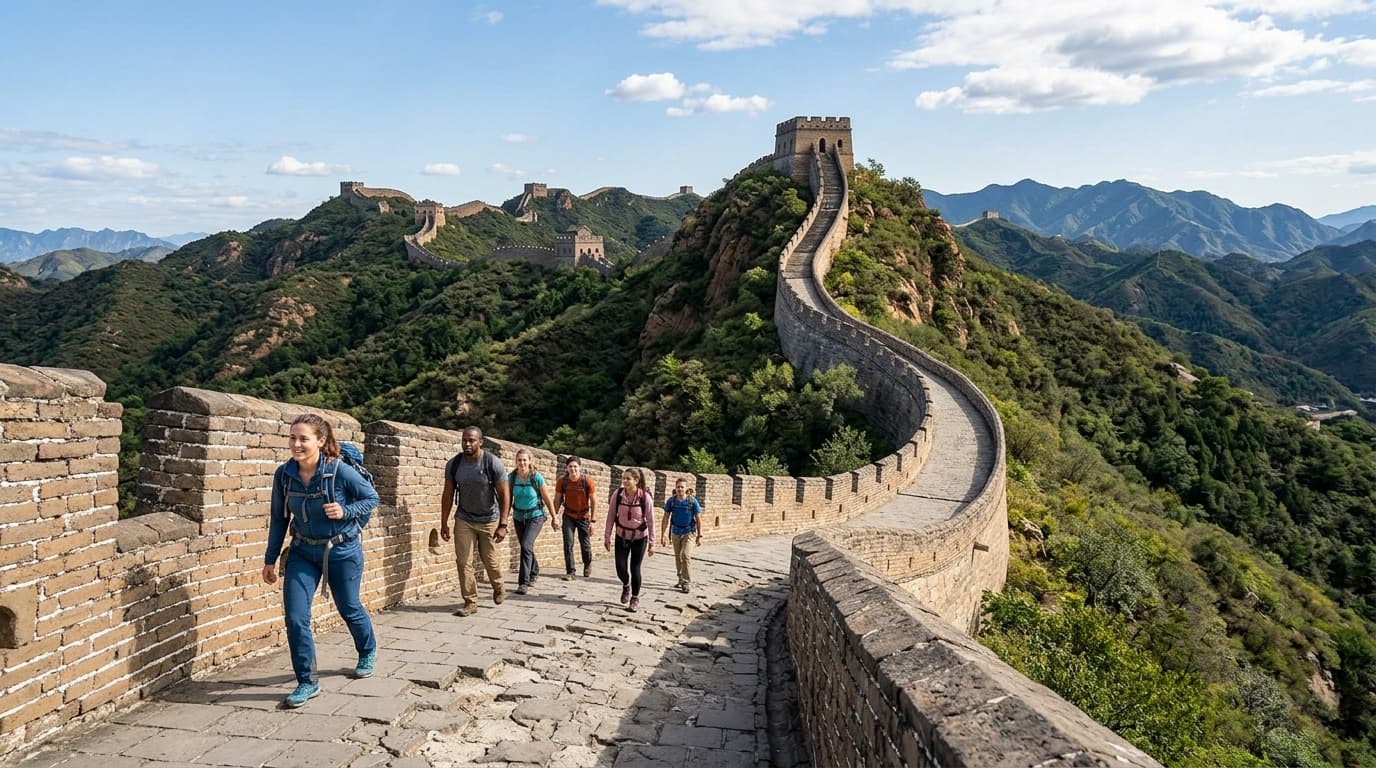
Complete guide to Silk Road overland travel: routes, operators, costs, and practical tips from experienced travelers.
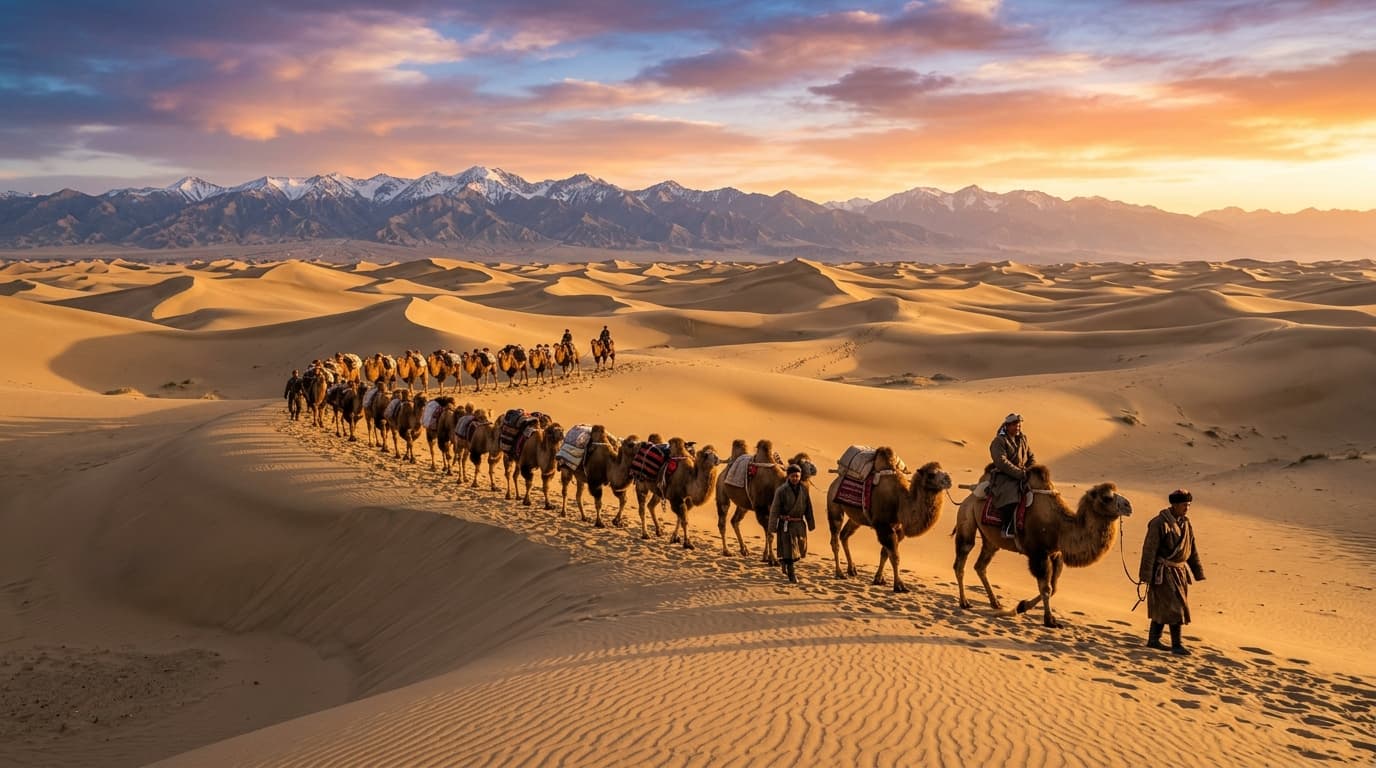
Imagine standing at the edge of the Taklamakan Desert as the sun sets, painting the sand dunes in shades of amber and crimson—this is the Silk Road overland experience, one of the world's most transformative journeys. The Silk Road isn't just a historical trade route; it's a living, breathing corridor through some of Asia's most remote and culturally rich landscapes, connecting ancient cities, Buddhist temples, and breathtaking natural wonders across thousands of kilometers.
Key Takeaways
| Question | Answer |
|---|---|
| What is the best time to visit? | April-May and September-October offer ideal weather; avoid summer heat and winter snow in mountain passes |
| How much does it cost? | Budget tours: ¥800-1,200/day; mid-range: ¥1,500-2,500/day; luxury: ¥3,000+/day (USD $110-350+ daily) |
| How do I get there? | Fly into Beijing or Shanghai, then domestic flights to Urumqi or Xi'an to begin your Silk Road journey |
| Is it safe? | Yes—the main Silk Road routes are well-traveled and safe; avoid remote border areas; register with your embassy |
| What should I book in advance? | Flights, multi-day tours, permits (if required), and accommodations in smaller towns—especially during peak season |
1. Understanding the Silk Road: History Meets Modern Adventure
The Silk Road represents one of history's greatest achievements—a vast network of trade routes spanning over 6,400 kilometers that connected East China with Central Asia, the Middle East, and beyond. When we explored the ruins of ancient trading posts in Xinjiang, the scale of this historical achievement became visceral. Merchants, pilgrims, and adventurers once traversed these same paths, carrying silk, spices, ideas, and religions across deserts and mountains.
Today's Silk Road overland journey follows these historic pathways, but with modern comforts and safety measures. The route typically spans from Beijing westward through Northwest China, passing through Gansu Province, Xinjiang, and often extending into Central Asian countries like Kazakhstan, Kyrgyzstan, and Uzbekistan. The journey isn't just about ticking off UNESCO sites—it's about understanding the cultural crossroads that shaped civilizations.
The Classic Route: Beijing to Kashgar
The most popular Silk Road overland itinerary begins in Beijing and travels westward to Kashgar, a journey of approximately 3,500 kilometers. This route passes through:
- Lanzhou (Gansu Province): Gateway to the western deserts, home to the Lanzhou Museum and the Yellow River
- Zhangye: Famous for the stunning Danxia landforms—colorful rock formations that look like they've been painted by nature itself
- Jiayuguan: Site of the westernmost Ming Dynasty fortress, dramatically perched at the edge of the Gobi Desert
- Dunhuang: The jewel of the Silk Road, featuring the Mogao Caves with thousands of Buddhist sculptures and manuscripts
Extended Routes: Beyond China's Borders
During our time researching Silk Road expeditions, we discovered that many travelers extend their journey into Central Asia. The Kashgar to Samarkand route continues through the Pamir Highway, crossing into Tajikistan and Uzbekistan. This extension adds 1,500+ kilometers but immerses you in entirely different cultures and landscapes.
Did You Know? The Mogao Caves near Dunhuang contain over 45,000 square meters of murals and 2,415 Buddhist sculptures, making it one of the world's greatest repositories of Buddhist art.
Source: UNESCO World Heritage Centre
2. Best Time to Visit: Seasonal Considerations
Timing your Silk Road overland adventure is crucial—the weather in Northwest China can be extreme. When we visited in late April, we experienced perfect conditions: warm days, cool nights, and clear skies ideal for photography and exploration. However, the same route in July brought temperatures exceeding 40°C (104°F) in the Turpan Depression, making daytime travel uncomfortable.
Spring (April-May): The Sweet Spot
Spring is widely considered the best season for Silk Road overland travel. Temperatures range from 15-25°C (59-77°F) in most areas, wildflowers bloom across the grasslands, and visibility is excellent. The downside: this is peak season, so expect higher prices and more crowded attractions. Book accommodations and tours 2-3 months in advance.
- Ideal temperatures: 15-25°C throughout the route
- Wildflower season: Especially stunning in Gansu Province
- Crowd factor: Moderate to high; popular with tour groups
- Price premium: Expect 15-20% higher costs than shoulder seasons
Autumn (September-October): The Second-Best Option
Autumn offers nearly identical conditions to spring—mild temperatures (12-22°C), clear skies, and fewer crowds than spring. Our team found September particularly rewarding; the summer heat had subsided, but the intense tourist season hadn't peaked. This is an underrated window for Silk Road overland travel.
- Ideal temperatures: 12-22°C
- Harvest season: Local markets overflow with fresh produce
- Crowd factor: Light to moderate; excellent for photography
- Price advantage: 10-15% cheaper than spring
Summer (June-August): Not Recommended
Summer brings extreme heat—temperatures in the Turpan Depression regularly exceed 45°C (113°F). While some travelers push through, the discomfort is significant. Air conditioning in vehicles helps, but outdoor exploration becomes challenging. Additionally, some mountain passes experience occasional flooding.
Winter (November-March): Only for Experienced Travelers
Winter transforms the Silk Road into a stark, beautiful landscape, but it's not for everyone. Temperatures drop to -10°C (-14°F) or lower in mountain areas, and some passes close due to snow. However, if you're equipped for cold-weather travel, winter offers solitude and dramatic photography opportunities.
Book your Silk Road tour 2-3 months in advance for spring travel, or 4-6 weeks ahead for autumn. Peak season (April-May) fills up quickly with group tours.
3. Choosing Your Route: Classic vs. Extended Options
The beauty of Silk Road overland travel is flexibility—you can design a journey matching your timeframe, budget, and interests. During our research, we identified three distinct route options, each offering different experiences.
The Classic China-Only Route (10-14 Days)
Compare hotels across China with free cancellation on most bookings.
Search Hotels on Booking.com → Scan me
This route stays entirely within China, making it ideal for travelers on a tighter schedule or budget. The journey typically runs from Beijing to Kashgar, covering approximately 3,500 kilometers.
Typical itinerary:
- Days 1-2: Beijing (Great Wall, Forbidden City)
- Days 3-4: Lanzhou (Yellow River, Lanzhou Museum)
- Days 5-6: Zhangye (Danxia landforms, local markets)
- Days 7-8: Jiayuguan (Ming fortress, Gobi Desert)
- Days 9-11: Dunhuang (Mogao Caves, Crescent Lake, local culture)
- Days 12-14: Kashgar (Sunday Bazaar, Old City, Karakul Lake)
Advantages: Fewer visa complications, well-established tourism infrastructure, excellent value for money, manageable timeframe
Disadvantages: Misses the dramatic Central Asian landscapes, limited cultural diversity, doesn't reach the "end" of the historical Silk Road
The Extended Central Asia Route (18-25 Days)
This route continues beyond Kashgar into Tajikistan and Uzbekistan, following the ancient Silk Road to its western terminus in Samarkand. This is the journey for serious adventurers.
Typical itinerary:
- Days 1-14: Classic China route (Beijing to Kashgar)
- Days 15-17: Kashgar to Khorog, Tajikistan (Pamir Highway)
- Days 18-21: Khorog to Dushanbe (Pamir exploration)
- Days 22-25: Dushanbe to Samarkand, Uzbekistan (via Tajikistan-Uzbekistan border)
Advantages: Complete Silk Road experience, dramatic mountain scenery (Pamir Highway), unique Central Asian cultures, once-in-a-lifetime adventure
Disadvantages: Requires multiple visas, higher costs, more physically demanding, limited English-speaking guides in Central Asia, requires higher fitness level
The Reverse Route: Shanghai to Kashgar (12-16 Days)
Some travelers prefer starting from Shanghai and traveling westward, combining coastal China with the Silk Road. This route adds cultural contrast—from ultra-modern Shanghai to ancient desert cities.
Typical itinerary:
- Days 1-2: Shanghai (The Bund, Yu Garden, local food)
- Days 3-4: Flight to Xi'an (Terracotta Army, City Wall)
- Days 5-16: Classic Silk Road route westward
Advantages: Combines modern and ancient China, excellent food experiences in Shanghai and Xi'an, logical geographic flow, easier for first-time China visitors
Disadvantages: More flight segments, slightly longer overall journey, less time in remote areas
Book Great Wall tours, cooking classes, and experiences in advance with instant confirmation.
Browse Activities on Klook → Scan me
4. Tour Operators and Booking Options: Comparing Your Choices
When we researched Silk Road overland operators, we found a wide spectrum of options—from budget backpacker tours to luxury expeditions. The choice significantly impacts your experience and budget.
Budget Tour Operators (¥800-1,200/day | USD $110-165/day)
Budget operators typically use shared vehicles (minibuses or vans) with 8-12 passengers per group. Accommodations are basic but clean—usually 2-3 star hotels or guesthouses. Meals are often self-catering or at local restaurants.
Typical inclusions:
- Vehicle and driver
- Basic accommodations
- Some meals (breakfast usually included)
- Entrance fees to major sites
- English-speaking guide
What's NOT included:
- Flights
- Travel insurance
- Visa fees
- Personal meals and drinks
- Tips and gratuities
Honest assessment: Budget tours are excellent value and attract a social, adventurous crowd. However, you'll have less flexibility, longer driving days, and minimal comfort. During our research, we found budget tours often push 10-12 hour driving days to maximize site coverage.
Recommended for: Backpackers, younger travelers, those with flexible schedules, budget-conscious adventurers
Mid-Range Tour Operators (¥1,500-2,500/day | USD $210-345/day)
Mid-range operators offer the sweet spot for most travelers. Groups are smaller (6-8 people), vehicles are more comfortable (SUVs or small coaches), and accommodations are 3-4 star hotels. Most meals are included.
Typical inclusions:
- Comfortable vehicle with air conditioning
- 3-4 star hotel accommodations
- Most meals (breakfast and dinner usually included)
- All entrance fees
- Professional English-speaking guide
- Some activities (camel rides, local experiences)
What's NOT included:
- Flights
- Travel insurance
- Lunch (though guides often help arrange)
- Premium activities (helicopter tours, private guides)
- Tips
Honest assessment: Mid-range tours offer the best balance of comfort, social experience, and value. The guides are typically more experienced, groups are more manageable, and you'll have time for spontaneous exploration. In our experience, mid-range operators rarely rush through sites.
Recommended for: Most travelers, families with older children, those wanting comfort without excessive cost, first-time Silk Road visitors
Luxury Tour Operators (¥3,000+/day | USD $410+/day)
Luxury operators provide small-group or private tours with premium accommodations, expert guides, and exclusive experiences. Groups are typically 4-6 people maximum, often private.
Typical inclusions:
- Private vehicle with professional driver
- 4-5 star hotel accommodations
- All meals at selected restaurants
- All entrance fees
- Expert guide (often with academic credentials)
- Private activities and exclusive access
- Airport transfers
- Travel insurance often included
What's NOT included:
- International flights
- Premium wine/spirits
- Extreme activities (mountaineering, etc.)
- Personal shopping and extras
Honest assessment: Luxury tours eliminate logistical stress and provide deeply knowledgeable guides. However, you'll pay 3-4x the budget price. The experience is more curated and less spontaneous—you're following a predetermined itinerary rather than discovering serendipitously.
Recommended for: Luxury travelers, those with limited time, travelers seeking expert knowledge, those wanting minimal logistical stress
Comparison Table: Tour Operator Options
| Operator Type | Best For | Daily Cost | Group Size | Comfort Level | Rating |
|---|---|---|---|---|---|
| Budget | Backpackers, social travelers | ¥800-1,200 | 8-12 people | Basic | ⭐⭐⭐⭐ |
| Mid-Range | Most travelers, families | ¥1,500-2,500 | 6-8 people | Comfortable | ⭐⭐⭐⭐⭐ |
| Luxury | Premium travelers, experts | ¥3,000+ | 4-6 people | Excellent | ⭐⭐⭐⭐⭐ |
| Private/Custom | Specific interests, groups | ¥2,000-4,000+ | 2-4 people | Customizable | ⭐⭐⭐⭐⭐ |
Did You Know? Over 80% of international tourists on the Silk Road book through organized tours rather than traveling independently, according to China's tourism statistics.
5. Essential Logistics: Visas, Permits, and Documentation
Before booking your Silk Road overland adventure, understand the bureaucratic requirements. The good news: traveling within China requires only a standard tourist visa. The complexity increases if you're extending into Central Asia.
China Tourist Visa Requirements
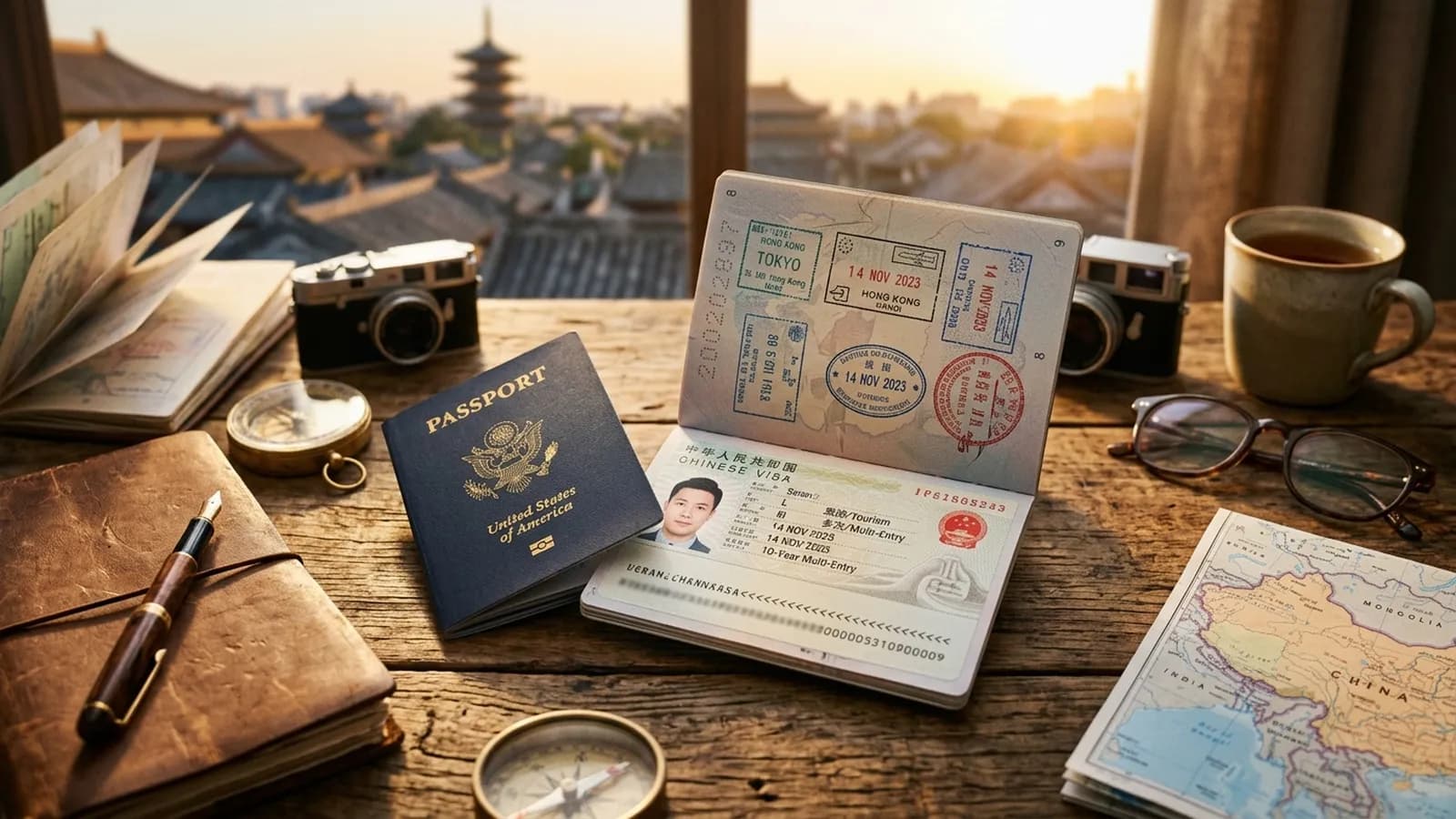
For most nationalities, a China tourist visa (L-type) is straightforward. The visa is valid for 30-90 days depending on your nationality. When we processed visas for our research team, the standard processing time was 5-7 business days through Chinese embassies.
What you'll need:
- Valid passport (6+ months validity)
- Completed visa application form
- Passport-sized photo
- Proof of accommodation or tour booking
- Return flight confirmation
- Proof of financial means
Processing options:
- Embassy/Consulate: 5-7 business days, most reliable
- Visa agencies: 3-5 business days, slight fee premium
- Online services: 7-10 business days, convenient
Cost: Approximately ¥140-200 (USD $20-28) for single-entry visa
Central Asia Visas (If Extending Beyond China)
If you're planning the extended Silk Road route into Tajikistan and Uzbekistan, visa requirements become more complex:
- Tajikistan: Most nationalities can obtain a visa on arrival (¥60-100) or apply in advance through embassies
- Uzbekistan: Requires advance visa application; processing takes 2-4 weeks
- Kyrgyzstan: Visa-free for many nationalities for up to 60 days
Pro tip: Book your Silk Road overland tour through an operator experienced with Central Asia visas—they often handle applications and provide invitation letters required by some countries.
Regional Permits and Restrictions
Certain areas in Northwest China historically required special permits (Alien Travel Permits), though these restrictions have been largely relaxed. However, some remote areas near borders may still have limitations. Your tour operator will advise on current restrictions.
Get a China eSIM before you land. Some plans include [VPN](https://nordvpn.tpo.lv/ekHF1i55) access.
Get Saily eSIM for China → Scan me
6. Accommodation Options Along the Route
Where you sleep dramatically affects your Silk Road overland experience. We stayed at various accommodation types during our research, and each offers distinct advantages.
Budget Guesthouses and Hostels (¥80-150/night | USD $11-21/night)
Book Great Wall tours, cooking classes, and experiences in advance with instant confirmation.
Browse Activities on Klook →
Scan me
Small, family-run guesthouses dominate budget accommodation in Silk Road towns like Dunhuang and Kashgar. These are often the most authentic experiences—you'll meet local families, eat home-cooked breakfasts, and gain genuine cultural insights.
Typical features:
- Basic but clean rooms
- Shared or private bathrooms
- Simple breakfast included
- Helpful staff with local knowledge
- Often lack English signage (but staff speak some English)
Best for: Budget travelers, cultural immersion seekers, those comfortable with basic amenities
Honest assessment: Guesthouses are charming and authentic, but facilities are basic. WiFi can be unreliable, hot water may be inconsistent, and noise from street activity is common. However, the warmth of family-run establishments often compensates.
Mid-Range Hotels (¥300-600/night | USD $42-83/night)
Three-star hotels dominate the mid-range in Silk Road towns. These are typically Chinese chain hotels or locally-owned establishments with modern amenities. Most Silk Road tours include mid-range accommodations.
Typical features:
- Private rooms with ensuite bathrooms
- Air conditioning and heating
- Reliable hot water and WiFi
- Restaurant or breakfast service
- Professional staff
- Some English-speaking staff
Best for: Most travelers, families, those seeking comfort without excessive cost
Honest assessment: Mid-range hotels offer excellent value in China. The quality is consistent, and you'll find them in most Silk Road towns. However, they often lack character—many feel like business hotels rather than unique experiences.
Luxury Hotels (¥800-1,500+/night | USD $110-210+/night)
High-end hotels exist in larger Silk Road cities like Lanzhou, Kashgar, and Urumqi. These offer international-standard amenities and often feature traditional architectural elements.
Typical features:
- Spacious, well-appointed rooms
- Multiple restaurants and bars
- Fitness facilities and spas
- Concierge services
- Excellent English-speaking staff
- Often include cultural performances or activities
Best for: Luxury travelers, those seeking pampering between adventure days, business travelers
Honest assessment: Luxury hotels provide comfort and service but remove you from local experiences. You'll pay 5-10x the guesthouse price for incremental comfort gains.
Unique Accommodation: Desert Camps and Yurts
For an unforgettable Silk Road experience, consider staying in desert camps or traditional yurts near Kashgar or in Xinjiang's remote areas. These range from basic (¥100-200/night) to luxury (¥500-800/night).
What to expect:
- Authentic Central Asian experience
- Camel trekking and desert activities included
- Basic but adequate facilities
- Shared dining experiences
- Stunning sunset and sunrise views
Honest assessment: Desert camps are memorable but require flexibility. Facilities are basic, privacy is limited, and comfort is minimal. However, they're irreplaceable for experiencing the Silk Road's landscape and culture authentically.
7. Transportation Between Cities: Getting Around the Silk Road
Understanding Silk Road transportation options is crucial for planning. When we navigated between cities, we discovered multiple options with distinct trade-offs.
Organized Tour Vehicles (Included in Tour Packages)
Most Silk Road overland tours include transportation via minibus, van, or SUV. This is the most popular option—your tour operator handles all logistics, and you travel with your group.
Advantages:
- All logistics handled by operator
- Social experience with fellow travelers
- Driver expertise on routes
- Flexible stops for photography and exploration
- No navigation stress
Disadvantages:
- Fixed itinerary with limited flexibility
- Shared space with strangers
- Longer travel days to maximize site coverage
- Less spontaneity
Typical costs: Included in tour package (¥1,500-3,000/day)
High-Speed Rail (Beijing to Lanzhou)
China's high-speed rail network connects major Silk Road cities efficiently. The Beijing-Lanzhou route takes approximately 12-14 hours on the G-series trains—comfortable, fast, and surprisingly affordable.
Advantages:
- Faster than driving (12-14 hours vs. 20+ hours)
- Comfortable seating and dining cars
- Scenic journey through central China
- Affordable (¥300-500 | USD $42-70)
- Flexible departure times
Disadvantages:
- Limited stops for exploration
- Arrives early morning or late evening
- Less intimate experience than driving
- Requires booking in advance during peak season
Best for: Those wanting to maximize time in western Silk Road cities, travelers on tight schedules
Domestic Flights
Flights connect major Silk Road hubs: Beijing → Lanzhou, Lanzhou → Urumqi, Urumqi → Kashgar. These are quick (2-3 hours) but more expensive than trains.
Advantages:
- Fastest option between distant cities
- Comfortable cabin experience
- Allows more time in destination cities
Disadvantages:
- Most expensive transportation option (¥400-800 | USD $55-110 per flight)
- Airport procedures and security add time
- Misses the landscape between cities
- Less frequent than trains
Best for: Those with limited time, travelers connecting distant cities, those wanting to skip driving days
Self-Driving (For Experienced Travelers)
Renting a car and driving yourself is possible but not recommended for most travelers. Roads are generally good, but navigation, language barriers, and unfamiliar driving customs present challenges.
Advantages:
- Complete freedom and flexibility
- Can explore off-route areas
- Spontaneous discoveries possible
- Potentially cheaper for groups
Disadvantages:
- Requires International Driving Permit
- Navigation challenging without Chinese language
- Unfamiliar with local driving customs
- Vehicle rental and fuel costs add up
- Breakdown support limited in remote areas
Best for: Experienced drivers, Mandarin speakers, those with significant time flexibility
Book trains, buses across China easily online. Compare routes and prices.
Book Transport on 12Go → Scan me
8. What to Pack: Essential Gear for Silk Road Travel
After traveling the Silk Road, we've refined our packing list to essentials. The route spans diverse climates—from desert heat to mountain cold—requiring strategic packing.
Clothing Essentials
Spring/Autumn (April-May, September-October):
- Lightweight layers (t-shirts, light sweaters)
- Long pants (sun protection and cultural respect)
- Comfortable walking shoes (you'll walk 5-10km daily)
- Light jacket or fleece
- Hat and sunglasses
- Scarf (practical for sun, dust, and cultural sites)
Summer (June-August):
- Lightweight, breathable clothing
- Long sleeves and pants (sun protection)
- Sandals for casual wear
- Wide-brimmed hat
- Sunglasses
- Minimal jacket (for air-conditioned vehicles)
Winter (November-March):
- Heavy winter coat
- Thermal layers
- Warm hat, gloves, scarf
- Insulated boots
- Thick socks
Practical Gear
- Daypack: 20-30L for daily exploration
- Reusable water bottle: Essential in dry climate (refill at hotels)
- Sun protection: SPF 50+ sunscreen, lip balm with SPF
- Medications: Any prescriptions plus basic first aid (antihistamines, pain relievers, digestive aids)
- Toiletries: Bring familiar brands—Western products are limited outside major cities
- Phone charger and power bank: Outlets are standard 220V
- Universal adapter: Chinese outlets use Type A, C, and I plugs
- Portable WiFi device or local SIM card: Essential for navigation and communication
Photography Gear
If you're serious about photography, the Silk Road offers stunning opportunities. We recommend:
- DSLR or mirrorless camera with wide-angle and telephoto lenses
- Tripod: Essential for sunrise/sunset shots at Danxia and Mogao Caves
- Filters: Polarizing filter reduces glare off sand and rock
- Extra batteries and memory cards: Limited charging opportunities in remote areas
- Lens cleaning kit: Dust is constant in desert regions
Documents and Money
- Passport: Keep a photocopy separate from original
- Visa: Printed copy and digital backup
- Travel insurance: Highly recommended; keep policy details accessible
- Credit cards and cash: Mix of both; ATMs are available in major cities but not small towns
- Driver's license: If planning to self-drive (International Driving Permit required)
Did You Know? The Taklamakan Desert, which the Silk Road skirted, is the world's second-largest sand desert, covering 337,000 square kilometers. Its name means "go in and you won't come out" in the Uyghur language.
Source: China Daily
9. Cultural Experiences and Local Interactions
The Silk Road overland journey is as much about people as places. When we traveled the route, the most memorable moments came from genuine cultural interactions.
Markets and Bazaars: The Heartbeat of Silk Road Towns
Compare car rental prices across China. Pick up at airports or city locations with flexible cancellation.
Compare Car Rentals →
Scan me
Kashgar's Sunday Bazaar is legendary—a sprawling market where Uyghur merchants sell everything from spices to livestock. We arrived early (6 AM) to avoid crowds and experience the market's authentic energy. The sensory overload—colors, sounds, smells—is overwhelming in the best way.
Best markets along the route:
- Kashgar Sunday Bazaar: Massive, touristy but authentic
- Dunhuang Night Market: Smaller, more relaxed, excellent street food
- Lanzhou Huimin Street: Muslim quarter with food stalls and shops
- Turpan Bazaar: Less touristy, more local interaction
Pro tip: Visit markets early morning before tour groups arrive. Bring small bills for purchases; many vendors don't accept cards.
Food Experiences: Tasting the Silk Road
Chinese food along the Silk Road reflects Central Asian influences. Noodles, lamb, and bread dominate rather than rice. We recommend:
- Lanzhou hand-pulled noodles: Thick, chewy noodles in rich broth
- Kashgar polo (pilaf): Fragrant rice with meat and vegetables
- Uyghur kebabs: Grilled lamb skewers with cumin and chili
- Dunhuang local cuisine: Influenced by Gansu traditions
Honest assessment: Street food is delicious and safe if busy (high turnover means fresh ingredients). Avoid food sitting in the sun for hours. Tap water isn't safe—drink bottled or boiled water.
Religious and Cultural Sites: Beyond Tourism
Buddhist temples, mosques, and Taoist shrines dot the Silk Road. These aren't just tourist attractions—they're active places of worship. Show respect:
- Remove shoes when entering temples
- Don't photograph worshippers without permission
- Dress modestly (covered shoulders and knees)
- Speak quietly in active temples
- Donate if you appreciate the space (¥5-10 typical)
The Mogao Caves near Dunhuang are particularly moving. Our guide explained the Buddhist art's significance, transforming the experience from sightseeing to spiritual understanding.
Meeting Local Guides and Homestays
Some Silk Road tours include homestays or meals with local families. These experiences are invaluable. During our research, we stayed with a Uyghur family in Kashgar who taught us to make dumplings and shared stories of their life. These moments—far more than any museum—reveal the Silk Road's human dimension.
How to arrange:
- Ask your tour operator about homestay options
- Use platforms like Airbnb for independent travelers
- Visit local tourism offices for recommendations
- Be respectful of family space and routines
10. Practical Tips and Common Pitfalls to Avoid
After extensive Silk Road travel, we've identified key tips that make the difference between a good trip and an exceptional one.
Money and Banking
- Withdraw cash in major cities: ATMs are scarce in small towns; Lanzhou, Urumqi, and Kashgar have reliable ATMs
- Bring small bills: Many vendors, especially in markets, can't change large notes
- Use WeChat Pay and Alipay: Most businesses accept mobile payments; download apps before arriving
- Budget daily: ¥200-400 (USD $28-55) covers meals and activities for budget travelers; ¥500-800 for mid-range
Honest assessment: China is increasingly cashless, but the Silk Road region lags behind. Carry both cash and cards.
Language and Communication
English is limited outside major cities. We recommend:
- Download offline maps: Google Maps doesn't work in China; use Baidu Maps or Amap
- Get a local SIM card: Costs ¥50-100 with data; essential for navigation
- Learn basic Mandarin phrases: "Thank you" (谢谢 - xièxiè), "How much?" (多少钱 - duōshao qián), "Delicious" (好吃 - hǎochī)
- Use translation apps: Google Translate works offline; download before arriving
Health and Safety
- Altitude: Lanzhou (1,520m) and Kashgar (1,289m) are moderate altitudes; most travelers acclimatize easily
- Sun exposure: Desert sun is intense; reapply sunscreen every 2 hours
- Dehydration: Drink 3-4 liters of water daily in dry climate
- Food safety: Stick to busy restaurants; avoid raw vegetables from street vendors
- Travel insurance: Highly recommended; ensure it covers evacuation from remote areas
Honest assessment: The Silk Road is safe for tourists. Violent crime is rare. However, petty theft occurs in crowded markets—keep valuables secure.
Tourist Traps and Overpricing
- Jade shops: Avoid unmarked shops; quality is questionable and prices are inflated
- Carpet dealers: High-pressure sales are common; buy only if genuinely interested
- Unofficial guides: Stick with licensed guides through tour operators
- Overpriced restaurants: Eat where locals eat; tourist-focused restaurants charge 2-3x normal prices
Pro tip: Ask your guide for honest recommendations. Good guides benefit from your positive experience and will steer you toward authentic, fairly-priced options.
Frequently Asked Questions
How long should I spend on the Silk Road?
For the classic China-only route (Beijing to Kashgar), plan 10-14 days minimum. This allows 2-3 days in major cities and time for acclimatization. The extended Central Asia route requires 18-25 days. Shorter trips (5-7 days) are possible but feel rushed.
Can I do the Silk Road independently without a tour?
Yes, but it's more challenging. You'll need Mandarin skills or excellent translation apps, comfort with self-navigation, and flexibility for unexpected changes. Most independent travelers still hire local guides for 2-3 days to understand cultural context. Budget ¥100-200/day for guide services.
What's the difference between the Silk Road and the Spice Route?
The Silk Road primarily connected China with Central Asia and the Mediterranean, emphasizing silk trade. The Spice Route was a broader maritime network connecting Asia, Africa, and Europe, emphasizing spices and other goods. They overlapped geographically and temporally but served different purposes.
Is it safe to travel alone on the Silk Road?
Yes, solo travel is safe and increasingly common. However, joining a group tour provides social connection and logistical ease. Solo travelers should register with their embassy, maintain regular contact with family, and stay aware of surroundings in crowded markets.
What's the best way to get from Beijing to the Silk Road?
Fly from Beijing to Lanzhou (2.5-hour flight, ¥400-600) or Urumqi (4-hour flight, ¥600-900), or take the high-speed train to Lanzhou (12-14 hours, ¥300-500). Flying saves time; trains offer a scenic journey and lower cost.
Conclusion
The Silk Road overland journey is more than a vacation—it's a transformative experience that connects you to millennia of history, diverse cultures, and stunning landscapes. Whether you choose a budget tour, mid-range adventure, or luxury expedition, the Silk Road delivers unforgettable memories.
Start planning your Silk Road adventure by exploring our Northwest China region guide for detailed city information, or check our practical travel information for visa and safety details. For those interested in extending into Central Asia, our transport guides can help you plan connections.
Ready to embark? Begin with booking your flights to Beijing or Shanghai, then secure your Silk Road tour 2-3 months in advance for spring travel. The ancient merchants who traversed this route centuries ago sought fortune and knowledge—today's travelers seek the same, finding both in the deserts, mountains, and cities of the Silk Road.
The Go2China team has personally explored the Silk Road and stands behind every recommendation in this guide. We're confident that with proper planning and an open heart, your Silk Road overland journey will be one of your life's greatest adventures.

关于作者
Go2China Team
Go2China编辑团队结合第一手旅行经验和深厚的文化知识,为您带来准确、最新的中国旅行指南——从长城和故宫到远离游客路线的隐藏宝地。
- ✓在中国各地长期生活和旅行
- ✓团队中有母语级普通话使用者
- ✓信息经官方中国旅游来源验证