Discover the most popular foods in China — from Peking Duck and Xiaolongbao to Sichuan Hotpot and dim sum. A food lover's guide to Chinese cuisine.
Chinese cuisine is one of the oldest and most diverse food traditions on the planet, with a history stretching back thousands of years across dozens of regions, climates, and cultural influences. Ask someone who has never been to China what the most popular food in China is, and they might say fried rice or sweet and sour pork. But spend time traveling through Beijing, Shanghai, Chengdu, and Guangzhou, and you quickly realize that Chinese food is a universe unto itself. Every province has signature dishes, every city has local specialties, and every neighborhood has a vendor who makes something unforgettable. This guide covers the 15 most popular foods in China that you absolutely need to try, along with the regional cuisines that produce them, the street food culture that brings them to life, and practical details on where to find them and what to pay.
Key Takeaways
| Question | Answer |
|---|---|
| What is the most popular food in China? | There is no single answer. Kung Pao Chicken, Peking Duck, and Hot Pot consistently rank among the most beloved dishes nationwide. |
| How much does food cost in China? | Street food starts at 5-15 CNY ($0.70-2 USD). Restaurant meals range from 30-80 CNY ($4-11 USD) per person. Specialty dishes like Peking Duck cost 150-300 CNY ($21-42 USD). |
| Is Chinese food really spicy? | It depends on the region. Sichuan and Hunan cuisines are famous for heat, while Cantonese and Jiangsu cooking favors subtle, delicate flavors. You can always request milder preparations. |
| Where should I go for the best food? | Chengdu for Sichuan cuisine, Guangzhou for Cantonese, Beijing for northern classics, and Shanghai for Jiangnan flavors. |
| Can I eat well on a budget? | Absolutely. Street food and local canteens serve filling, authentic meals for under 30 CNY ($4 USD). See our budget food guide for details. |
The 15 Most Popular Foods in China
1. Kung Pao Chicken (Gong Bao Ji Ding / 宫保鸡丁)
Region of origin: Sichuan Province
Kung Pao Chicken is arguably the single most recognized Chinese dish worldwide, and for good reason. This stir-fry of diced chicken, roasted peanuts, dried chili peppers, and Sichuan peppercorns delivers a complex balance of spicy, sweet, sour, and numbing flavors in every bite. The dish is named after Ding Baozhen, a late Qing Dynasty official with the title "Gong Bao" (Palace Guardian), who reportedly loved this style of cooking.
What it tastes like: The first thing you notice is the aroma of charred chilies hitting a hot wok. Then comes the interplay of tender chicken, crunchy peanuts, and a glossy sauce that clings to every piece. The Sichuan peppercorns provide a distinctive tingling numbness (mala) that sets this apart from the westernized versions many travelers have tried back home.
Where to try it: The best Kung Pao Chicken is found in Chengdu and Chongqing, though every city in China serves some version. In Chengdu, look for small family-run restaurants in the Yulin neighborhood or around Kuanzhai Alley. In Beijing, Sichuan restaurants near Guijie (Ghost Street) serve excellent renditions.
Approximate price: 28-48 CNY ($4-7 USD) at local restaurants; 68-128 CNY ($9-18 USD) at mid-range establishments.
2. Peking Duck (Beijing Kaoya / 北京烤鸭)
Region of origin: Beijing
Peking Duck is China's most celebrated ceremonial dish and a must-eat for anyone visiting Beijing. The preparation is an art form: a whole duck is air-dried, coated with a maltose glaze, and roasted in a specialized oven until the skin turns impossibly crispy while the meat stays succulent and tender. It is traditionally served in three courses: the carved skin, the sliced meat wrapped in thin pancakes with scallion, cucumber, and hoisin sauce, and a soup made from the bones.
What it tastes like: The skin is the star. It shatters between your teeth with a sweet, lacquered crunch, giving way to rich, juicy duck meat. Wrapped in a soft pancake with the cool snap of scallion and the savory depth of hoisin sauce, each bite is a masterclass in texture and flavor contrast.
Where to try it: Quanjude (founded 1864) and Dadong are Beijing's most famous Peking Duck restaurants. For a less touristy experience, locals recommend Siji Minfu near Tiananmen Square or Bianyifang, which uses a closed-oven technique dating back to the Ming Dynasty.
Approximate price: 150-300 CNY ($21-42 USD) for a whole duck at a reputable restaurant. Budget options at local eateries start around 98 CNY ($14 USD) for a half duck.
3. Xiaolongbao (Soup Dumplings / 小笼包)
Region of origin: Shanghai / Jiangsu Province
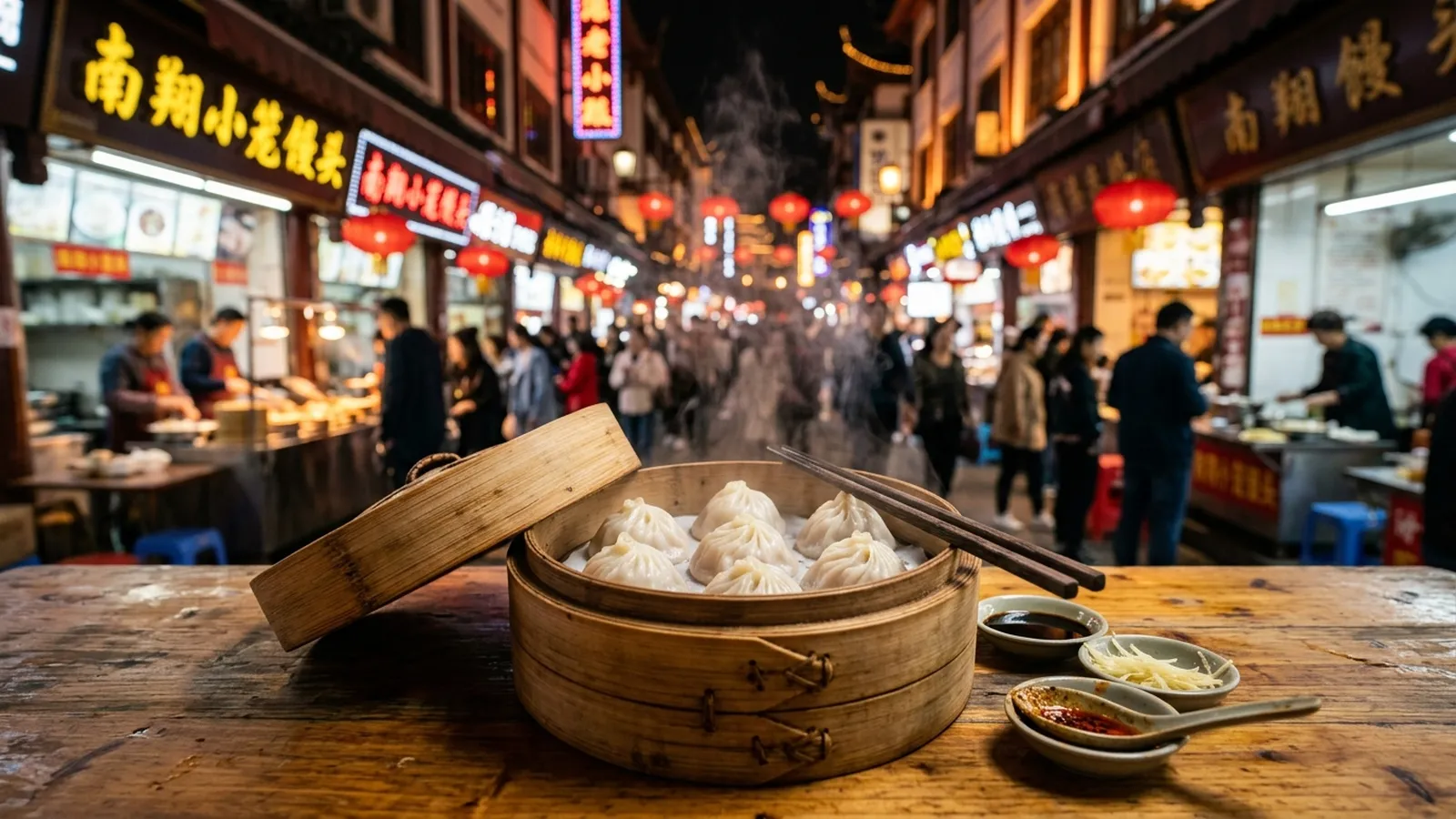
Xiaolongbao are delicate steamed dumplings filled with seasoned pork and a rich, savory broth trapped inside a thin, pleated wrapper. The technique for creating the soup filling involves setting a pork and aspic mixture that melts into liquid during steaming. Eating them requires care: you bite a small hole, sip the hot broth, then eat the rest.
What it tastes like: The first sip of broth from inside the dumpling is an explosion of concentrated pork flavor, slightly sweet and deeply savory. The thin wrapper is silky and almost translucent, and the pork filling is juicy and well-seasoned. Dipped in black vinegar with julienned ginger, the acidity cuts through the richness perfectly.
Where to try it: Din Tai Fung (originating in Taiwan but hugely popular across mainland China) is the most famous chain. In Shanghai, locals swear by Jia Jia Tang Bao on Huanghe Road or Nanxiang Mantou Dian in Yu Garden for a more traditional experience.
Approximate price: 15-30 CNY ($2-4 USD) for a steamer basket of 8-10 at local shops; 38-68 CNY ($5-9 USD) at well-known restaurants.
4. Mapo Tofu (麻婆豆腐)
Region of origin: Sichuan Province
Mapo Tofu is the definitive Sichuan comfort food. Soft cubes of silken tofu swim in a fiery, rust-red sauce of doubanjiang (fermented chili bean paste), fermented black beans, minced pork, Sichuan peppercorns, and chili oil. The dish was created in the 1860s by a woman named Chen Mapo at her small restaurant in Chengdu, and it has since become one of the most popular foods in China.
What it tastes like: The "ma" in the name refers to the numbing tingle from Sichuan peppercorns, and the "la" refers to the chili heat. Together they create the iconic mala sensation. The tofu is silky and almost custard-like, absorbing the intensely savory sauce. Served over steamed rice, it is deeply satisfying and addictive.
Where to try it: Chen Mapo Tofu Restaurant in Chengdu (the original establishment, still operating) is the pilgrimage site. In Beijing, any reputable Sichuan restaurant will serve an excellent version. Every city in China has at least one restaurant that specializes in it.
Approximate price: 18-35 CNY ($2.50-5 USD) at local restaurants; 48-78 CNY ($7-11 USD) at mid-range restaurants.
5. Hot Pot (Huoguo / 火锅)
Region of origin: Chongqing / Sichuan (though regional variations exist nationwide)
Hot Pot is less a single dish and more a communal dining experience. A pot of simmering broth sits at the center of the table, and diners cook raw ingredients -- thinly sliced meat, leafy greens, mushrooms, tofu, noodles, fish balls -- by dipping them into the bubbling liquid. Chongqing-style hot pot uses a fiery red broth loaded with chilies and Sichuan peppercorns, while Beijing-style uses a mild copper pot with clear lamb broth, and Cantonese-style features a gentle chicken or seafood stock.
What it tastes like: The experience changes with every ingredient you cook. Thinly sliced lamb takes only seconds and emerges tender and infused with the broth's flavor. Vegetables absorb the spice. Noodles soak up the rich, complex liquid. Combined with a personal dipping sauce (typically sesame paste, garlic, cilantro, and chili oil), each mouthful is customizable.
Where to try it: Chongqing and Chengdu are the hot pot capitals. In Chongqing, head to Jiefangbei district or try Dezhuang for a classic experience. In Beijing, Haidilao is famous for its over-the-top service. For a detailed guide, see our Chongqing hotpot city guide.
Approximate price: 60-120 CNY ($8-17 USD) per person at mainstream restaurants; 150-300 CNY ($21-42 USD) at premium establishments.
6. Dim Sum (Dianxin / 点心)
Region of origin: Guangdong Province (Canton)
Dim Sum refers to a tradition of small, shareable dishes served alongside tea, typically enjoyed as a leisurely morning or midday meal. The variety is staggering: har gow (crystal shrimp dumplings), siu mai (pork and shrimp dumplings), char siu bao (BBQ pork buns), cheung fun (rice noodle rolls), egg tarts, chicken feet, and dozens more. In traditional Cantonese teahouses, carts are wheeled between tables and diners point at what they want.
What it tastes like: Dim sum is about variety and delicacy. Each piece is a small, perfectly crafted bite. Har gow has a translucent wrapper that snaps slightly before yielding to plump, sweet shrimp. Siu mai is open-topped, revealing its juicy pork filling. Char siu bao has a fluffy, slightly sweet bun exterior hiding glossy, lacquered pork.
Where to try it: Guangzhou is the undisputed dim sum capital. Try Dian Dou De or Lian Xiang Lou for the authentic cart-service experience. In Hong Kong (technically a Special Administrative Region), Tim Ho Wan earned a Michelin star for its budget-friendly dim sum. In Shanghai, many Cantonese restaurants serve quality dim sum.
Approximate price: 80-150 CNY ($11-21 USD) per person for a full dim sum meal; individual dishes range from 12-38 CNY ($1.70-5 USD).
7. Jiaozi (Dumplings / 饺子)
Region of origin: Northern China (especially Shandong, Hebei, Dongbei)
Jiaozi are crescent-shaped dumplings filled with minced meat (usually pork) and vegetables (cabbage, chives, or Chinese celery), then boiled, steamed, or pan-fried. They are the symbolic food of Chinese New Year, when families gather to make them together, sometimes hiding a coin inside one dumpling for good luck. Jiaozi are eaten year-round across all of China, but the northern provinces take particular pride in their dumpling-making tradition.
What it tastes like: Boiled jiaozi have a tender, slightly chewy wrapper encasing a juicy, savory filling that bursts with flavor when you bite in. Pan-fried jiaozi (guotie) add a golden, crispy bottom that provides a satisfying crunch. Dipped in a mixture of black vinegar, soy sauce, and chili oil, they are simple, honest, and deeply comforting.
Where to try it: In Beijing, Baoyuan Jiaozi Wu is famous for its colorful dumplings. In Xi'an, dumpling banquets feature dozens of varieties shaped like flowers, animals, and fish. During Chinese New Year, virtually every household in northern China makes jiaozi from scratch.
Approximate price: 15-30 CNY ($2-4 USD) for a plate of 12-15 at local restaurants; 1-3 CNY ($0.15-0.40 USD) per piece from street vendors.
8. Dan Dan Noodles (Dan Dan Mian / 担担面)
Region of origin: Sichuan Province
Dan Dan Noodles are a Sichuan street food classic: thin wheat noodles served in a sauce of preserved mustard greens (yacai), chili oil, Sichuan peppercorn, minced pork, and sesame paste. The name comes from the carrying pole (dan) that street vendors traditionally used to transport their portable noodle stalls through the alleys of Chengdu.
What it tastes like: The sauce is where everything happens. Sesame paste provides a rich, nutty base. Chili oil adds heat and color. The preserved mustard greens bring a funky, salty depth. Sichuan peppercorns deliver that signature numbing buzz. The noodles are thin enough to carry the sauce but substantial enough to provide satisfying chew.
Where to try it: In Chengdu, seek out small noodle shops in residential neighborhoods. The streets around Wenshu Monastery and the Jinli Ancient Street area have excellent options. Many hot pot restaurants also serve dan dan noodles as a side dish.
Approximate price: 8-18 CNY ($1.10-2.50 USD) at street stalls and local noodle shops; 28-48 CNY ($4-7 USD) at sit-down restaurants.
9. Char Siu (BBQ Pork / 叉烧)
Region of origin: Guangdong Province (Canton)
Char Siu is Cantonese-style barbecued pork, marinated in a mixture of honey, five-spice powder, red fermented tofu (for color), soy sauce, and hoisin sauce, then roasted at high heat until the edges caramelize and char slightly. It is served sliced over rice, stuffed into steamed buns (char siu bao), folded into puff pastries, or eaten on its own.
What it tastes like: The exterior is sticky, sweet, and slightly charred with deep caramelized edges. The interior is tender and juicy, with the pork's natural fat rendered just enough to keep it moist. The balance of sweet and savory with a faint undercurrent of five-spice makes it instantly addictive.
Where to try it: Guangzhou and Hong Kong are the best places for char siu. In Guangzhou, look for restaurants that display whole slabs of char siu hanging in the window. Joy Hing Roasted Meat in Hong Kong is legendary. In Shanghai and Beijing, Cantonese restaurants serve quality versions.
Approximate price: 30-60 CNY ($4-8 USD) for a char siu rice plate; 15-25 CNY ($2-3.50 USD) for char siu bao (2-3 buns).
10. Sweet and Sour Pork (Tang Cu Li Ji / 糖醋里脊)
Region of origin: Cantonese and Jiangsu traditions (debated)
Sweet and Sour Pork is one of the dishes that put Chinese food on the global map. In China, the authentic version is quite different from the neon-orange takeout version found abroad. Properly made, it features lightly battered pork tenderloin pieces fried until crispy, then tossed in a sauce of rice vinegar, sugar, ketchup (a relatively modern addition), and sometimes pineapple and bell peppers.
What it tastes like: The batter is shatteringly crispy, and the sauce is tangy and bright rather than cloyingly sweet. Good versions maintain a clear distinction between the crunch of the pork and the glossy, balanced sauce. The vinegar provides a sharp acidity that lifts the dish and prevents heaviness.
Where to try it: Cantonese restaurants in Guangzhou serve the most refined versions. In Shanghai, try the Shanghainese variation (tang cu pai gu) made with pork ribs instead of tenderloin, which adds a richer, meatier flavor. Nearly every Chinese restaurant nationwide has it on the menu.
Approximate price: 35-58 CNY ($5-8 USD) at local restaurants; 68-98 CNY ($9-14 USD) at mid-range restaurants.
11. Fried Rice (Chao Fan / 炒饭)
Region of origin: Nationwide (Yangzhou-style is the most famous)
Fried rice is the great unifier of Chinese cuisine. Every region, every city, every household has its own version. The most well-known variety is Yangzhou Fried Rice (扬州炒饭) from Jiangsu Province, which combines day-old rice with shrimp, char siu pork, eggs, peas, and scallions, all tossed in a blazing-hot wok until each grain is separate, lightly oily, and infused with wok hei (the smoky breath of the wok).
What it tastes like: Good fried rice is about texture above all else. Each grain should be individual, slightly firm, and coated with a thin sheen of oil. The wok hei adds a smokiness that you simply cannot replicate at home without a commercial burner. The eggs provide richness, the shrimp adds sweetness, and the char siu delivers savory depth.
Where to try it: Yangzhou itself, in Jiangsu Province, is the origin of the classic version. Street stalls and local canteens across China serve fried rice as a quick, satisfying meal. Night markets in every major city offer versions fried to order in seconds.
Approximate price: 12-25 CNY ($1.70-3.50 USD) at street stalls and canteens; 28-48 CNY ($4-7 USD) at restaurants.
12. Congee (Zhou / 粥)
Region of origin: Nationwide (especially Guangdong and Fujian)
Congee is a slow-cooked rice porridge that has been a staple of Chinese breakfast culture for millennia. The rice is simmered in a large volume of water or stock until it breaks down into a smooth, creamy consistency. Toppings vary enormously: century egg and lean pork (pidan shourou zhou) is a Cantonese classic, while seafood congee dominates in coastal Fujian. Plain congee served with pickled vegetables and steamed buns is the everyday breakfast across much of northern China.
What it tastes like: The base is mild, soothing, and gently savory, like a warm, rice-scented embrace. It is comfort food in its purest form. The toppings add dimension: century egg brings a creamy, mineral quality; fried dough sticks (youtiao) provide crispy contrast; pickled vegetables add a sharp, bright tang.
Where to try it: Congee is a breakfast staple everywhere in China. In Guangzhou, congee shops open before dawn and serve dozens of varieties. In Beijing, look for congee alongside traditional breakfast items at any local breakfast stall. Street-side congee vendors are found in every neighborhood.
Approximate price: 5-15 CNY ($0.70-2 USD) for a basic bowl; 15-30 CNY ($2-4 USD) for specialty versions with premium toppings.
13. Spring Rolls (Chun Juan / 春卷)
Region of origin: Jiangnan region (Shanghai, Zhejiang, Jiangsu)
Spring Rolls are thin, crispy pastry wrappers filled with vegetables (cabbage, carrots, mushrooms), sometimes pork or shrimp, rolled tightly and deep-fried until golden. They are traditionally associated with the Spring Festival (Chinese New Year) but are eaten year-round across China. The Cantonese version tends to be smaller and crispier, while the Shanghainese version is larger and often filled with sweet red bean paste for dessert.
What it tastes like: The wrapper shatters with a satisfying crunch, revealing a hot, savory filling of tender vegetables and seasoned meat. The contrast between the crispy exterior and the soft, flavorful interior is what makes spring rolls so universally loved. Served with a sweet chili dipping sauce, they are irresistible.
Where to try it: In Shanghai, spring rolls are a street food staple, especially during Chinese New Year. Cantonese dim sum restaurants serve miniature spring rolls as part of the dim sum spread. Night markets across the country feature freshly fried spring rolls.
Approximate price: 5-10 CNY ($0.70-1.40 USD) for 2-3 pieces from street vendors; 18-35 CNY ($2.50-5 USD) at restaurants.
14. Wonton Soup (Huntun Tang / 馄饨汤)
Region of origin: Guangdong and Sichuan (with variations across China)
Wonton Soup features small, delicate dumplings filled with seasoned pork and shrimp, floating in a clear, savory broth. Cantonese wontons have thin, almost translucent wrappers and are typically served in a shrimp-shell broth with egg noodles. Sichuan-style wontons (chao shou) are served in spicy chili oil with garlic and Sichuan peppercorns -- an entirely different experience from the same basic dumpling.
What it tastes like: In Cantonese style, the broth is light, clean, and deeply savory from slow-simmered pork bones and dried shrimp. The wontons are silky and tender with a shrimp-forward filling that pops with freshness. In Sichuan style, the chili oil transforms the wontons into a spicy, numbing, intensely flavored bowl that wakes up every taste bud.
Where to try it: Guangzhou and Hong Kong for Cantonese-style wontons. In Chengdu, try the spicy chao shou at Long Chaoshou, one of the city's most famous noodle and wonton shops. In Shanghai, look for small Cantonese noodle shops that specialize in wonton noodle soup.
Approximate price: 10-20 CNY ($1.40-2.75 USD) at local shops; 25-45 CNY ($3.50-6 USD) at restaurants.
15. Baozi (Steamed Buns / 包子)
Region of origin: Nationwide (especially Tianjin, Shanghai, and Guangdong)
Baozi are soft, fluffy steamed buns filled with savory or sweet fillings. The variety is enormous: pork and cabbage in the north, juicy soup-filled tangbao in Shanghai (a larger cousin of xiaolongbao), char siu bao in Guangdong, and sweet red bean or custard versions across the country. They are an everyday breakfast food for hundreds of millions of Chinese people and are sold at virtually every street corner from bamboo steamers.
What it tastes like: The dough is cloud-soft, slightly sweet, and pillowy. Biting into a well-made baozi reveals a generous, juicy filling that bursts with flavor. The pork and cabbage version is savory and comforting; the char siu version is sweet-savory with sticky, lacquered pork; the red bean paste version is gently sweet and perfect with tea.
Where to try it: Tianjin's Goubuli Baozi (founded 1858) is the most historically famous baozi brand in China, though locals debate whether it still lives up to its reputation. In Shanghai, try tangbao at Nanxiang Mantou Dian. For everyday quality, any street vendor with a line of local customers is a safe bet.
Approximate price: 1.5-5 CNY ($0.20-0.70 USD) per bun from street vendors; 15-30 CNY ($2-4 USD) for a steamer basket at restaurants.
The 8 Great Cuisines of China (Ba Da Cai Xi / 八大菜系)
Understanding the most popular food in China requires understanding the regional cuisines that produce them. China's culinary tradition is formally classified into eight great schools, each tied to a province and defined by distinct ingredients, techniques, and flavor profiles.
Sichuan Cuisine (Chuan Cai / 川菜)
Defining flavors: Mala (numbing-spicy), complex layered heat, bold seasoning
Sichuan cuisine from Chengdu and Chongqing is famous for its fearless use of chili peppers and Sichuan peppercorns. The cuisine goes far beyond mere heat -- it encompasses seven recognized flavor profiles, including garlic paste, strange flavor (guaiwei, a sweet-sour-spicy-numbing combination), and lychee flavor (a sweet-sour balance). Key dishes: Kung Pao Chicken, Mapo Tofu, Dan Dan Noodles, Twice-Cooked Pork, Fish-Fragrant Eggplant.
Cantonese Cuisine (Yue Cai / 粤菜)
Defining flavors: Fresh, mild, sweet, emphasizing natural ingredients
Cantonese cuisine from Guangdong Province is considered the most refined and internationally influential of China's regional cuisines. The cooking philosophy is to preserve the natural flavor of premium ingredients rather than mask them with heavy seasoning. Steaming, stir-frying, and braising are preferred techniques. Key dishes: Dim Sum, Char Siu, Wonton Noodle Soup, Steamed Fish, Roast Goose.
Shandong Cuisine (Lu Cai / 鲁菜)
Defining flavors: Salty, savory, rich, generous use of vinegar and garlic
Shandong cuisine is the oldest of the eight great cuisines and heavily influenced the imperial court cooking of Beijing. It emphasizes fresh seafood from the coast, braised meats, and cornmeal-based staples. The cuisine is known for its meticulous knife skills and elaborate banquet preparations. Key dishes: Braised Sea Cucumber, Dezhou Braised Chicken, Sweet and Sour Carp of the Yellow River.
Hunan Cuisine (Xiang Cai / 湘菜)
Defining flavors: Pure chili heat (without the numbing element), sour, smoked
Hunan cuisine is often compared to Sichuan but is distinctly different. Where Sichuan uses the numbing peppercorn, Hunan relies on direct, untempered chili heat combined with smoking and curing techniques. The food is oily, rich, and intensely flavored. Key dishes: Chairman Mao's Red-Braised Pork, Steamed Fish Head with Chopped Chili, Stir-Fried Smoked Pork with Dried Tofu.
Jiangsu Cuisine (Su Cai / 苏菜)
Defining flavors: Sweet, delicate, emphasis on presentation and seasonal ingredients
Jiangsu cuisine from cities like Nanjing, Suzhou, and Yangzhou is known for its elegant presentation and carefully balanced flavors. The cuisine features slow-braised dishes, intricate knife work, and refined flavors that emphasize sweetness. Key dishes: Yangzhou Fried Rice, Sweet and Sour Mandarin Fish, Nanjing Salted Duck, Lion's Head Meatballs.
Zhejiang Cuisine (Zhe Cai / 浙菜)
Defining flavors: Fresh, light, mellow, with an emphasis on seasonal seafood
Closely related to Jiangsu cuisine, Zhejiang cooking from Hangzhou, Ningbo, and Shaoxing emphasizes freshness and simplicity. Seafood and freshwater fish feature prominently, and the cuisine uses Shaoxing wine extensively as a cooking ingredient. Key dishes: Dongpo Pork, West Lake Vinegar Fish, Beggar's Chicken, Ningbo Rice Cakes.
Fujian Cuisine (Min Cai / 闽菜)
Defining flavors: Umami-rich, seafood-focused, soups and broths, light
Fujian cuisine from China's southeastern coast is renowned for its soups and seafood preparations. The cuisine uses an enormous variety of seafood and freshwater ingredients, combined with woodland mushrooms and herbs. It is lighter and more broth-based than other Chinese cuisines. Key dishes: Buddha Jumps Over the Wall (a legendary multi-ingredient soup), Oyster Omelette, Red Wine Chicken.
Anhui Cuisine (Hui Cai / 徽菜)
Defining flavors: Hearty, wild herbs, slow-braised, rustic
Anhui cuisine originates from the mountainous interior of eastern China and emphasizes wild-foraged ingredients, including herbs, mushrooms, and game. The cooking is rustic and robust, with slow-braised and stewed dishes that reflect the province's agricultural roots. Key dishes: Stewed Soft-Shelled Turtle, Bamboo Shoot and Ham Stew, Li Hongzhang Hodgepodge.
Street Food Favorites You Cannot Miss
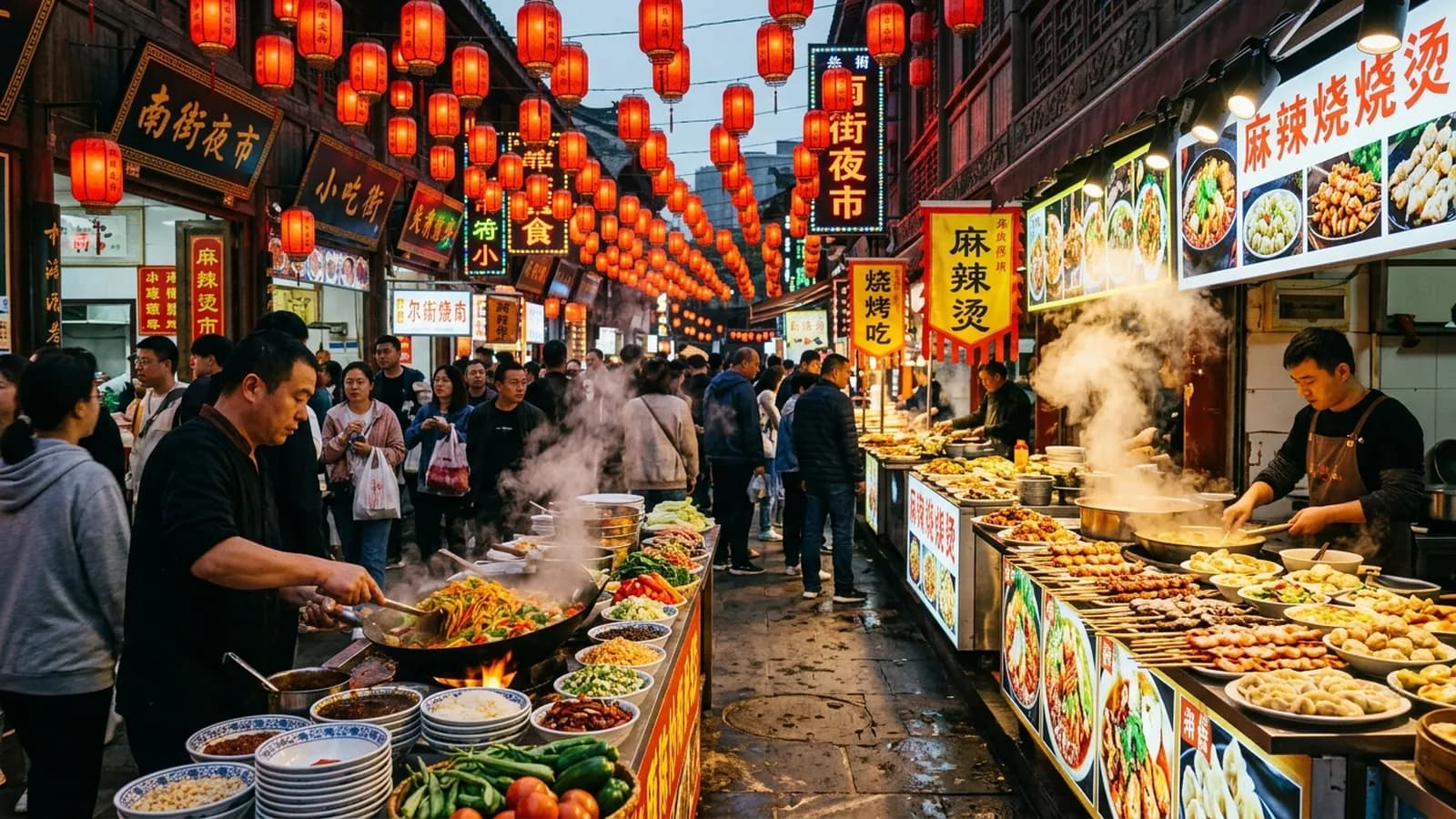
Beyond the formal dishes listed above, China's street food culture is a world of its own. Here are the street food staples that locals eat daily and that travelers fall in love with.
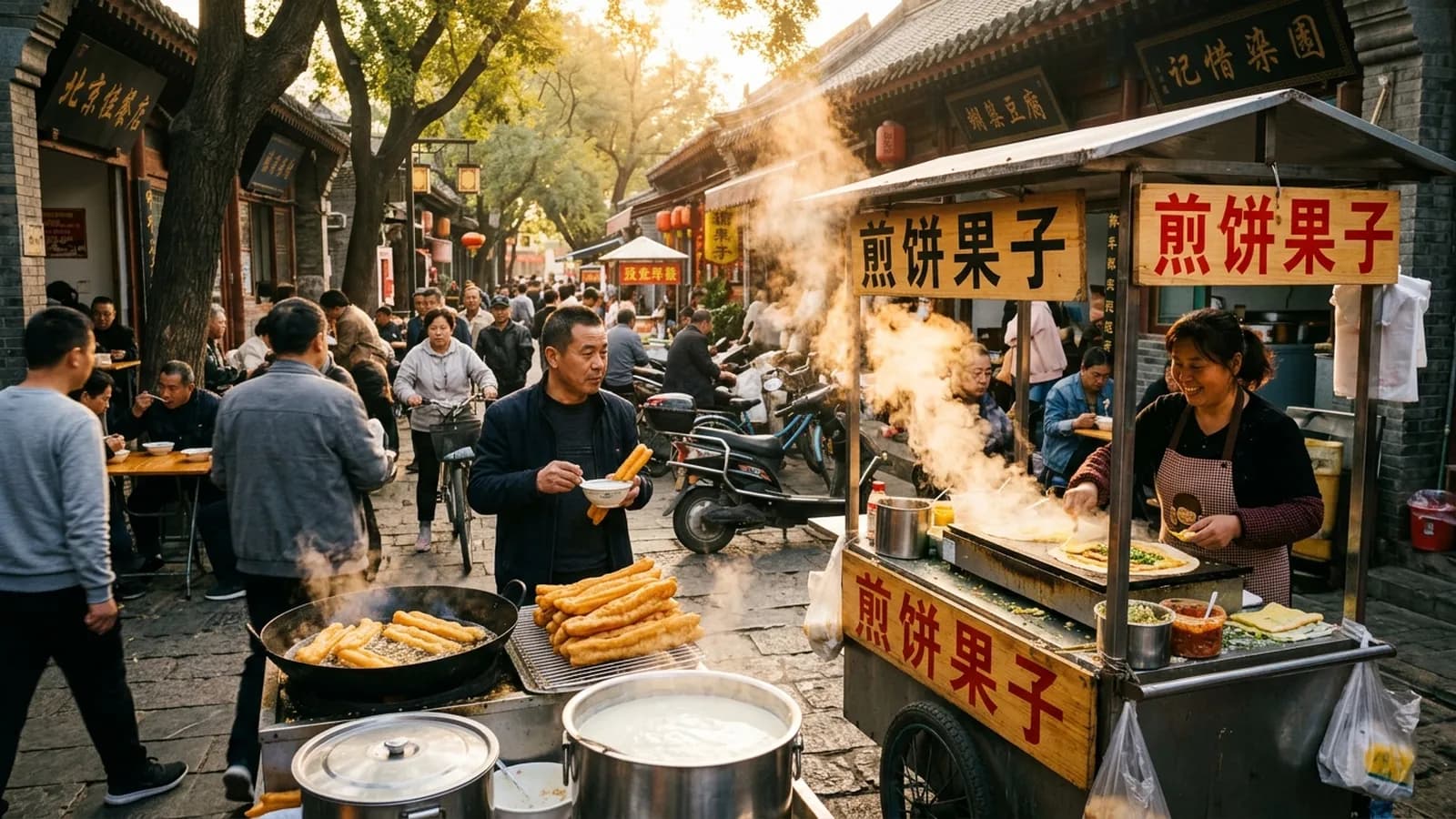
Jianbing (煎饼) -- China's answer to the breakfast crepe. A thin batter is spread on a circular griddle, an egg is cracked on top, and the whole thing is folded with crispy fried dough, scallions, cilantro, and a sweet-spicy sauce. Found at breakfast stalls across northern China for 6-10 CNY ($0.80-1.40 USD).
Roujiamo (肉夹馍) -- Often called the "Chinese hamburger." Slow-braised, spiced pork is chopped and stuffed into a crispy, flaky flatbread baked in a clay oven. It originated in Xi'an and is one of the most satisfying handheld meals in all of China. Costs 8-15 CNY ($1.10-2 USD).
Chuanr (串儿) -- Lamb or beef skewers seasoned with cumin, chili flakes, and salt, grilled over charcoal. Originally from the Xinjiang Uyghur region, chuanr has spread to every corner of China and is the ultimate late-night street food. Typically 3-8 CNY ($0.40-1.10 USD) per skewer.
Tanghulu (糖葫芦) -- Candied fruit on a stick, traditionally hawthorn berries coated in a hard, glassy sugar shell. Modern versions use strawberries, grapes, and other fruits. Found throughout northern China, especially in winter, for 5-15 CNY ($0.70-2 USD).
Stinky Tofu (Chou Doufu / 臭豆腐) -- Deep-fried fermented tofu with an aroma that divides opinion sharply but a crispy exterior and custardy interior that converts most skeptics. Best tried in Changsha (Hunan Province) or at night markets in Shanghai. Costs 8-15 CNY ($1.10-2 USD).
For a deeper dive into eating affordably while traveling in China, check out our complete guide to eating like a local for under $8 a day.
Tips for Exploring Chinese Food as a Traveler
-
Eat where the locals eat. A long line of Chinese customers is the best quality signal. Empty restaurants with English menus near tourist sites are usually the worst value.
-
Learn a few food words in Mandarin. Even basic phrases like "bu la" (not spicy), "duo shao qian" (how much), and "zhe ge" (this one) while pointing at a menu go a long way.
-
Use food delivery apps. Meituan and Ele.me are China's major food delivery platforms. They require a Chinese phone number and WeChat Pay or Alipay, but once set up, they open up a world of restaurant options. See our guide on setting up WeChat and Alipay.
-
Try regional specialties in their home province. Peking Duck is best in Beijing. Dim Sum is best in Guangzhou. Hot Pot is best in Chongqing. Do not rely on the versions served outside their region of origin.
-
Embrace breakfast culture. Chinese breakfast is an entirely separate culinary world from lunch and dinner. Congee, jianbing, baozi, soy milk, and youtiao are best experienced early in the morning at dedicated breakfast stalls.
FAQ
What is the number one most popular food in China?
There is no single "number one" food because China's culinary landscape is so regionally diverse. However, if forced to choose, many food experts and surveys point to Hot Pot (huoguo) as the most universally beloved dining experience across all of China. It transcends regional boundaries and is enjoyed in every province. For individual dishes, Kung Pao Chicken and Jiaozi (dumplings) are among the most widely eaten.
Is Chinese food always spicy?
Not at all. Sichuan and Hunan cuisines are famously spicy, but Cantonese cuisine is mild and delicate, Jiangsu cuisine is sweet and refined, and Shandong cuisine is savory without much heat. When traveling in China, you can always find non-spicy options, and most restaurants will adjust the spice level on request.
What Chinese food should I try first?
If you are new to authentic Chinese food, start with dishes that offer broad appeal: Xiaolongbao (soup dumplings), Peking Duck, Fried Rice, and Dim Sum. These are flavorful without being overwhelmingly spicy and showcase the craftsmanship that defines Chinese cooking.
How much should I budget for food per day in China?
For budget travelers eating street food and at local canteens, plan for 40-80 CNY ($5.50-11 USD) per day. Mid-range dining runs 100-200 CNY ($14-28 USD) per day. Fine dining and specialty dishes like Peking Duck can push daily costs above 300 CNY ($42 USD). See our budget food guide for detailed daily breakdowns.
What is the difference between Chinese food in China and Chinese food abroad?
The differences are enormous. Chinese food abroad has been heavily adapted to local tastes: sweeter sauces, less complex spicing, limited regional variety, and dishes like General Tso's Chicken that do not exist in China. Authentic Chinese cuisine features far more variety, subtlety, and regional distinction. Many travelers describe eating in China as a revelation compared to what they knew previously.
Are there vegetarian options in Chinese cuisine?
Yes. Buddhist vegetarian cuisine (su cai) has a centuries-old tradition in China, and many temples operate vegetarian restaurants. Dishes like Mapo Tofu (can be made without pork), stir-fried vegetables, congee, and many dim sum items are vegetarian-friendly. However, be aware that many dishes use meat stock or oyster sauce as a base, so communication is important. Learning the phrase "wo chi su" (I eat vegetarian) is helpful.
What are the best cities for food in China?
The top food destinations are Guangzhou (Cantonese cuisine and dim sum), Chengdu (Sichuan cuisine), Chongqing (hot pot and Sichuan flavors), Shanghai (Jiangnan cuisine and xiaolongbao), Beijing (Peking Duck and northern cuisine), and Xi'an (Muslim Quarter street food and noodles). Each city offers a completely different culinary identity.
Ready to eat your way through China? Explore our complete food guide for detailed pages on individual dishes, or browse our city guides for restaurant recommendations and neighborhood food maps in Beijing, Shanghai, Chengdu, and beyond.

关于作者
Go2China Team
Go2China编辑团队结合第一手旅行经验和深厚的文化知识,为您带来准确、最新的中国旅行指南——从长城和故宫到远离游客路线的隐藏宝地。
- ✓在中国各地长期生活和旅行
- ✓团队中有母语级普通话使用者
- ✓信息经官方中国旅游来源验证