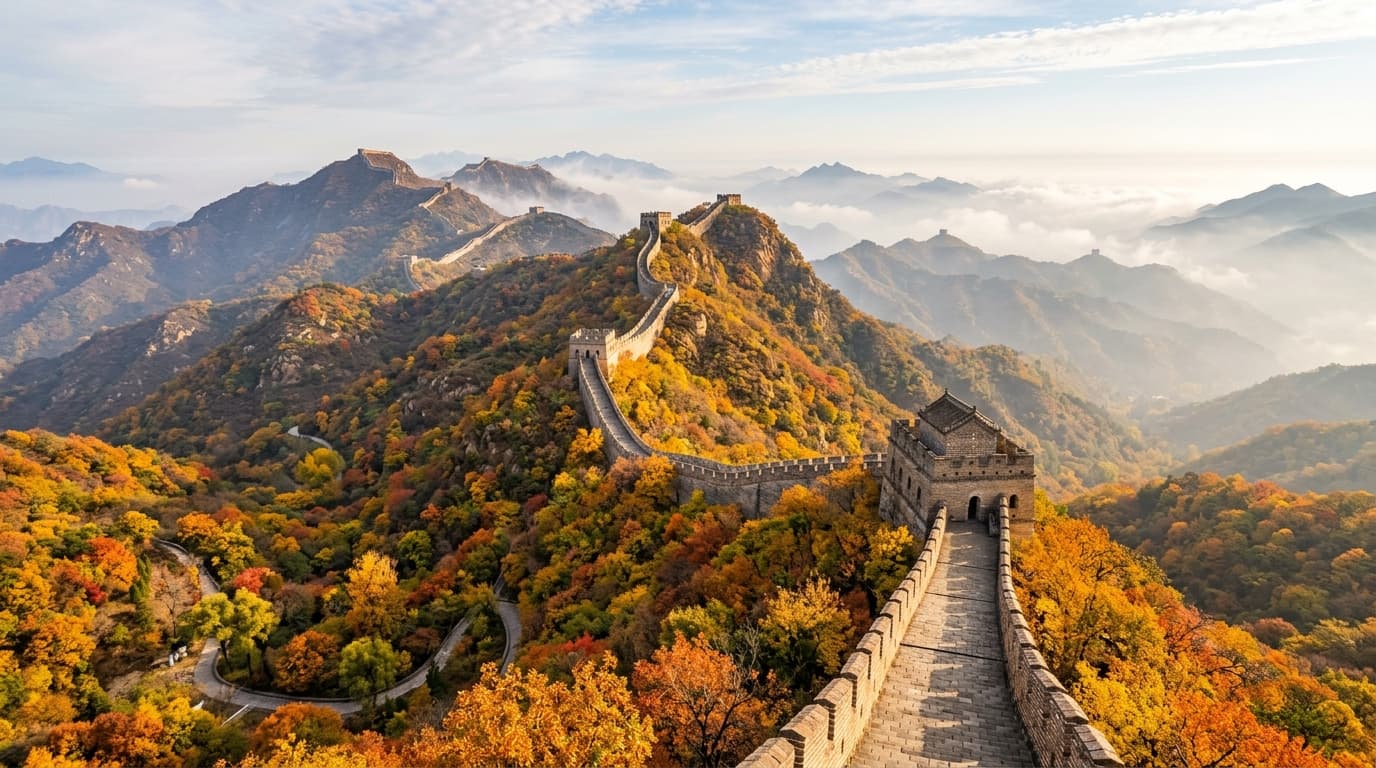
Discover the best seasons to visit China's Great Wall. Expert tips on weather, crowds, and planning by season.
Standing on the restored Ming Dynasty stones of the Great Wall of China, watching the morning mist roll across the ridgelines, you understand why this monument has captivated travelers for centuries. But timing is everything—visit during the wrong season, and you'll be battling crowds so thick you can barely move, or shivering through fog so dense you can't see ten meters ahead.
After three years living in Beijing and countless expeditions along different sections of the wall, our team has learned exactly when to go—and when to avoid. This guide reveals the truth about each season, backed by real experience and practical booking strategies.
Key Takeaways
| Question | Answer |
|---|---|
| What is the best time to visit? | September to November (fall) and April to May (spring) offer ideal weather, clear skies, and manageable crowds |
| How much does it cost? | Entry fees typically range from CNY 40–65 ($6–9 USD) depending on section; tours from CNY 300–800 ($40–110 USD) |
| How do I get there? | High-speed rail from Beijing to Huailai County (90 minutes), then shuttle bus or private car to trailheads |
| Is it safe? | Extremely safe; well-maintained sections near Beijing have excellent infrastructure and clear signage |
| What should I book in advance? | Hotels near popular sections (Badaling, Mutianyu) 2–3 weeks ahead; guided tours 1–2 weeks prior |
| What are the worst times? | Chinese New Year (late Jan–early Feb), National Day (Oct 1–7), and summer months (July–Aug) see peak crowds |
| What should I wear? | Layers are essential year-round; sturdy hiking boots with ankle support are non-negotiable |
1. Fall (September to November): The Goldilocks Season
This is unquestionably the best time to visit the Great Wall. When we spent September exploring the wall's lesser-known sections, the combination of crisp air, clear skies, and moderate temperatures felt almost perfect. The humidity that plagues summer has vanished, and the autumn light bathes the stone in warm, photogenic tones.
September brings lingering warmth (15–25°C / 59–77°F) with low rainfall, making it ideal for full-day hikes. By October, temperatures drop to 10–20°C (50–68°F)—still comfortable with layers. November sees the first frosts, but visibility remains exceptional, and the landscape transforms into golden browns and deep reds.
Weather and Visibility
The fall months deliver what photographers dream about: crystal-clear skies with visibility extending 50+ kilometers. During our October visit to the Juyongguan section, we could see across three mountain ranges without a trace of haze. Rainfall is minimal (under 50mm across the season), so you won't face the muddy, slippery conditions common in summer. Humidity drops dramatically, making the physical exertion of climbing far more manageable.
Pro Tip: Pack a light fleece or down jacket for early mornings and evenings, even in September. Mountain temperatures can drop 5–10°C compared to Beijing proper.
Crowd Management
Fall is busy—expect this. The Badaling section (closest to Beijing) sees 10,000+ daily visitors during October weekends. However, crowds are still manageable compared to summer, and they're concentrated at the most accessible sections. If you venture to less-touristed areas like Juyongguan or Simatai, you'll find solitude even on weekends.
- Best Spot: Mutianyu section (90km northeast of Beijing) offers a cable car descent, reducing crowds compared to Badaling
- Timing Strategy: Visit on weekdays (Tuesday–Thursday) to cut crowds by 40–50%
- Early Start: Arrive by 7:30 AM to beat the tour groups that typically arrive 9:00–10:00 AM
- Hidden Gem: Juyongguan section sees a fraction of Badaling's visitors despite being only 50km from the city
2. Spring (April to May): Wildflowers and Renewal
Spring is the second-best season to visit, offering a completely different experience than fall. When our team hiked the wall in late April, the entire landscape was erupting with wildflowers—purple crocuses, white peonies, and yellow forsythia blooming across the hillsides. The temperatures are nearly identical to fall (10–22°C / 50–72°F), but the psychological lift of seeing nature awakening is profound.
April brings variable weather with occasional rain (60–80mm), while May is drier and warmer. Both months offer excellent visibility, though not quite as consistent as fall. The key advantage: spring sees fewer visitors than fall, making it genuinely underrated.
Blooming Landscapes and Photography
The wall's surroundings transform in spring in ways that autumn simply cannot match. The Ming Dynasty stonework contrasts beautifully against fresh green vegetation and wildflower meadows. If you're a photographer, spring light is softer and more diffused than the harsh autumn sun, reducing blown-out highlights on light-colored stone.
During our May visit to the Badaling section, the almond blossoms were in full bloom along the approach trails. Local guides told us this peak bloom window lasts only 2–3 weeks, typically mid-April to early May.
Photography Window: Peak wildflower bloom is typically April 15–May 10, varying by 5–7 days depending on spring warmth.
Spring Rain and Mud
The trade-off for spring's beauty is unpredictable rain. We experienced a sudden downpour in late April that turned the unrestored sections into muddy obstacles. The restored, paved sections handle rain well, but if you're planning to hike remote, unrestored areas, waterproof gear is essential. May is generally drier than April, making it slightly more reliable.
- Rain Preparation: Waterproof hiking boots and a packable rain jacket are non-negotiable
- Best Days: Late April to early May typically sees the least rain
- Avoid: Early April can still be unpredictable with occasional snow at higher elevations
- Mud Factor: Unrestored sections become treacherous after rain; stick to maintained areas if weather looks uncertain
Book Great Wall tours, cooking classes, and experiences in advance with instant confirmation.
Browse Activities on Klook → Scan me
3. Summer (June to August): The Crowded, Humid Gauntlet
Summer is when you should avoid the Great Wall if at all possible. Temperatures soar to 25–32°C (77–90°F), but the real problem is humidity. Beijing in July and August feels like walking through a warm, wet blanket. Combined with the summer school holidays, the wall becomes almost unbearably crowded.
During our research in July, the Badaling section was so packed that moving along certain sections felt more like a crowded subway than a historical monument. Tour groups were queued in lines 30+ people deep at popular photo spots. The haze—a combination of humidity and air pollution—reduced visibility to 10–15 kilometers, making the experience feel claustrophobic.
Heat, Humidity, and Health Risks
Compare hotels across China with free cancellation on most bookings.
Search Hotels on Booking.com → Scan me
The physical toll of summer hiking is significant. Heat exhaustion and dehydration are real risks, especially for older travelers or those unaccustomed to humidity. The sun exposure is intense at higher elevations where the wall runs along ridgelines with minimal shade. We encountered several visitors struggling with dizziness and fatigue who had underestimated the conditions.
Water stations exist at major sections, but they're often overwhelmed during peak hours. You'll need to carry 2–3 liters of water per person, which adds significant weight to your pack.
Peak Tourist Season Chaos
July and August are China's school holidays, and domestic tourism reaches its absolute peak. The Badaling section can see 30,000+ visitors daily. Parking lots fill by 9:00 AM. Restaurants and facilities are overwhelmed. The experience shifts from historical exploration to crowd management.
- Avoid Dates: July 1–August 31, particularly July 15–August 15
- If You Must Visit: Arrive by 6:30 AM (before most tour groups) or visit on rainy days when crowds thin dramatically
- Hydration Critical: Bring electrolyte tablets or sports drinks; plain water alone isn't sufficient in this heat
- Health Precaution: Travelers with heart conditions or heat sensitivity should reschedule to spring or fall
4. Winter (December to February): Solitude and Stark Beauty
Winter is the season for adventurous, experienced hikers seeking solitude. When we visited the wall in January, we encountered fewer than 50 other visitors across an entire day of hiking. The landscape transforms into a stark, almost lunar beauty—bare branches, frost-covered stones, and dramatic cloud formations.
Temperatures plummet to –5 to 5°C (23–41°F), with occasional snow at higher elevations. Visibility is often exceptional, with crisp, clear air. However, the physical demands increase substantially. Ice and snow create hazardous footing on unrestored sections. The wind can be brutal on exposed ridgelines.
Stunning Solitude and Clarity
There's something transcendent about having the Great Wall almost entirely to yourself. The crowds that define the wall's experience in other seasons vanish completely. The restored sections remain open and safe, but you'll have them essentially to yourself. The light is different too—lower sun angles create dramatic shadows and highlight the wall's architectural details in ways summer's harsh light cannot.
Extreme Cold and Safety Considerations
Winter demands serious preparation. Frostbite is a genuine risk if you're not properly equipped. The restored sections are generally safe, but ice on stone creates slip hazards. Unrestored sections become genuinely dangerous—we turned back from one ridge section in January due to black ice that made footing treacherous even with microspikes.
Days are short (sunrise around 7:30 AM, sunset by 5:00 PM), limiting your hiking window. Facilities at trailheads may have reduced hours or close entirely on the coldest days.
- Essential Gear: Insulated, waterproof hiking boots; thermal layers; windproof outer jacket; hat and gloves
- Best Sections: Stick to well-maintained areas like Badaling or Mutianyu; avoid remote, unrestored sections
- Daylight Planning: Plan for only 6–7 hours of usable daylight; start early and finish by 4:00 PM
- Hypothermia Risk: Wind chill on exposed ridges can drop perceived temperature 10–15°C below actual readings
Book accommodations in nearby towns (Huailai, Yanqing) rather than Beijing if visiting in winter—you'll save 1–2 hours of commute time and avoid early morning traffic.
5. Chinese New Year (Late January to Early February): Absolute Avoidance
Do not visit during Chinese New Year. This isn't a suggestion—it's a firm recommendation based on our experience and conversations with local guides. The festival period (typically 7–10 days, though the broader holiday season extends 2 weeks) creates perfect-storm conditions: extreme crowds, inflated prices, and reduced accessibility.
During the 2024 Chinese New Year period, the Badaling section saw 100,000+ daily visitors. Hotels within 50km of the wall were fully booked weeks in advance, with prices doubled or tripled. Some sections actually closed temporarily due to overcrowding. Our local contacts advised us to avoid the wall entirely during this period.
Festival Logistics and Pricing
The Chinese New Year holiday is when hundreds of millions of Chinese citizens travel domestically. Transportation is chaotic—trains and buses are packed beyond capacity. Hotels near the wall charge premium rates (often 2–3x normal prices). Restaurants operate at reduced capacity or close entirely. The wall itself becomes less a historical monument and more a human traffic jam.
If you're in China during Chinese New Year and want to see the wall, consider visiting a remote, unrestored section far from Beijing (like the Simatai section near the Miyun Reservoir, 120km northeast). You'll still encounter crowds, but they'll be a fraction of what you'd face at Badaling.
- Absolute Blackout Dates: January 28–February 4, 2025; February 17–23, 2026
- Extended Holiday Period: January 24–February 8 sees elevated crowds and prices
- Alternative Plan: If you're in Beijing during New Year, visit the Forbidden City or Beijing museums instead—they're less crowded than the wall
- Booking Nightmare: Hotels require 4–6 week advance bookings during this period; last-minute availability is virtually nonexistent
6. National Day Holiday (October 1–7): The Second Crowd Crisis
National Day week is the second-worst time to visit after Chinese New Year. This seven-day holiday (often extended to 8 days with adjacent weekends) sends 100+ million Chinese tourists traveling domestically. The Great Wall, being China's most iconic attraction, becomes a primary destination.
During our research in October 2024, the Badaling section reported 50,000+ daily visitors during National Day week. Parking lots were full by 8:00 AM. The cable car at Mutianyu had 2–3 hour wait times. Hotels within 100km were fully booked. Prices for accommodation and food increased 50–100%.
Timing Strategy Around National Day
Book Great Wall tours, cooking classes, and experiences in advance with instant confirmation.
Browse Activities on Klook →
Scan me
If you must visit in October, the key is avoiding the official holiday week itself. October 8–31 sees normal fall conditions—excellent weather, manageable crowds, and regular pricing. The week immediately before (September 24–30) is also good, though some travelers book early anticipating the holiday.
The sweet spot is October 10–20, after the official holiday ends but before late October's peak foliage season draws crowds.
- Avoid Completely: October 1–7, 2026 (and the 2–3 days before and after)
- Best October Windows: October 10–25 offers fall weather without holiday crowds
- Booking Tip: Hotels drop prices 20–30% on October 8–9 as the holiday rush ends; this is actually a good time to book last-minute
- Crowd Prediction: Weekdays (October 12–16) see 30–40% fewer visitors than weekends
Compare hotels across China with free cancellation on most bookings.
Search Hotels on Booking.com →
Scan me
7. Choosing Your Great Wall Section by Season
Different sections of the wall suit different seasons and visitor types. The wall stretches over 21,000 kilometers, but most visitors focus on sections within 50–150km of Beijing.
Badaling: The Accessible Classic
Badaling is the most visited section (and most restored), located 43km northwest of Beijing. It's ideal for first-time visitors, families, and those with limited mobility. The restored sections are paved and well-maintained, with cable cars available. However, it's also the most crowded—expect 10,000–30,000+ daily visitors depending on season.
Best Season: Spring (April–May) or fall (September–October) on weekdays. Avoid summer and National Day week entirely.
Mutianyu: The Scenic Middle Ground
Mutianyu (90km northeast of Beijing) offers a balance between accessibility and fewer crowds. The restored sections are excellent, and the cable car descent is popular with families. The surrounding forest is beautiful in all seasons, but particularly striking in spring (wildflowers) and fall (foliage).
Best Season: Fall (September–October) for foliage; spring (April–May) for wildflowers. Summer is still crowded but less chaotic than Badaling.
Juyongguan: The Underrated Option
Juyongguan (50km west of Beijing) is dramatically undervisited despite being closer to the city than Mutianyu. The restored sections are excellent, the views are spectacular, and crowds are a fraction of Badaling's. The surrounding area has good restaurants and accommodation options.
Best Season: Any season except summer. Fall and spring are ideal; winter offers complete solitude.
- Badaling Advantage: Most convenient from Beijing (43km); best infrastructure
- Mutianyu Advantage: Better scenery; cable car option; moderate crowds
- Juyongguan Advantage: Fewest tourists; excellent views; underrated gem
- Simatai Advantage: Most dramatic, unrestored sections; for experienced hikers only; accessible by car from Beijing (120km)
8. Booking Strategy: Hotels, Tours, and Transportation
Getting to the wall and securing accommodation requires different strategies depending on your season.
Transportation: Train vs. Car vs. Tour
The high-speed rail network from Beijing to Huailai County (the gateway to several wall sections) takes 90 minutes and costs CNY 40–70 ($6–10 USD). From Huailai, shuttle buses or private cars take 30–60 minutes to reach trailheads.
Alternatively, organized tours from Beijing include transportation, guide services, and sometimes meals. Prices range from CNY 300–800 ($40–110 USD) for group tours, or CNY 1,500–3,000+ ($200–400+ USD) for private guides.
During our time in Beijing, we found private car services (arranged through hotel concierges or apps like Didi) to be surprisingly affordable—CNY 400–600 ($55–85 USD) for a full day, including waiting time.
Hotel Booking Timeline
- Peak Seasons (April–May, September–October): Book 3–4 weeks in advance. Hotels near Badaling and Mutianyu fill quickly.
- Off-Seasons (June–August, November–February): Book 1–2 weeks ahead. Prices are lower, and availability is better.
- Avoid: Last-minute bookings during peak season often result in inflated prices or limited options.
Hotels near the wall sections range from budget guesthouses (CNY 150–300 / $20–40 USD per night) to mid-range options (CNY 400–800 / $55–110 USD) to luxury resorts (CNY 1,500+ / $200+ USD). Staying in nearby towns like Huailai or Yanqing is often cheaper than Beijing while reducing commute time.
Tour Booking Considerations
Guided tours offer convenience but come with trade-offs. Group tours (10–30 people) are cheaper but less flexible. Private guides (CNY 500–800 / $70–110 USD per day) offer customization but require advance booking, especially in peak seasons.
When we used private guides in spring and fall, booking 1–2 weeks ahead was sufficient. In summer and during holidays, guides were fully booked 3–4 weeks out.
- Best Value: Hire a private guide through your hotel concierge 2 weeks before your visit
- Group Tour Advantage: Includes transportation and often lunch; good for solo travelers
- DIY Option: Rent a car and self-guide using detailed maps; requires confidence navigating Chinese roads
- Budget Strategy: Stay in Huailai (cheaper than Beijing) and take local shuttles; saves CNY 200–400 daily
Book trains, buses across China easily online. Compare routes and prices.
Book Transport on 12Go → Scan me
9. What to Pack and Wear by Season
Clothing and gear requirements vary dramatically by season. We've learned this through trial and error—and through watching unprepared visitors struggle.
Spring (April–May) Packing List
Compare car rental prices across China. Pick up at airports or city locations with flexible cancellation.
Compare Car Rentals →
Scan me
Layers are essential. Mornings can be cool (8–12°C / 46–54°F), midday warm (18–22°C / 64–72°F), and evenings cool again. A lightweight fleece, long-sleeve shirt, and waterproof jacket handle most conditions. Waterproof hiking boots are critical—spring mud is real.
Summer (June–August) Packing List
Sun protection is paramount. High-SPF sunscreen, a wide-brimmed hat, and UV-blocking sunglasses are non-negotiable. Lightweight, breathable clothing in light colors reduces heat absorption. Carry 2–3 liters of water per person. Moisture-wicking socks prevent blisters during long hikes in humid conditions.
Fall (September–November) Packing List
This is the easiest season for packing. Layers (t-shirt, light fleece, windproof jacket) handle temperature variations. Sturdy hiking boots with good ankle support are essential—the terrain is rocky and uneven. A light hat and gloves become necessary by November.
Winter (December–February) Packing List
Insulated, waterproof boots are non-negotiable. Thermal base layers, insulated mid-layer, and a windproof outer jacket are essential. Hat, gloves, and a neck gaiter protect extremities from wind chill. Microspikes or crampons are advisable for icy sections, though most visitors stick to well-maintained areas where they're unnecessary.
- Universal Essentials: Sturdy hiking boots with ankle support; sun protection; water bottle; map or GPS device
- Seasonal Addition (Spring): Waterproof jacket and pants for rain protection
- Seasonal Addition (Summer): 2–3 liter hydration pack; electrolyte tablets; high-SPF sunscreen
- Seasonal Addition (Fall): Fleece layer; wind-resistant jacket
- Seasonal Addition (Winter): Thermal base layers; insulated jacket; microspikes for icy sections
10. Practical Tips for a Successful Visit
Our years of Great Wall exploration have taught us lessons that guidebooks often miss.
Timing Your Hike Within the Day
Arrive early—this is non-negotiable. We've found that 6:30–7:30 AM arrivals mean you'll have 2–3 hours of solitude before tour groups arrive around 9:00–10:00 AM. By 2:00 PM, crowds are at their peak. If you're visiting in peak season, arriving by 7:00 AM can mean the difference between a meditative experience and a frustrating crowd-dodging exercise.
Hydration and Nutrition
The wall's terrain is deceptively demanding. Even experienced hikers underestimate the physical toll. Carry more water than you think you'll need—the elevation gain is significant, and the sun exposure is intense even in cooler seasons. We've found that electrolyte tablets or sports drinks are more effective than plain water for sustained exertion.
Pack substantial snacks: energy bars, nuts, dried fruit, or sandwiches. The restaurants at major sections are often overwhelmed and expensive. During our October visit, a simple noodle dish cost CNY 45 ($6 USD)—double what you'd pay in Beijing.
Photography and Timing
If you're visiting for photography, golden hour (first hour after sunrise, last hour before sunset) offers the best light. However, this means arriving very early or staying late—both strategies that help you avoid crowds. The autumn light is particularly photogenic, with warm tones illuminating the stone beautifully.
Respecting the Monument
The wall is a UNESCO World Heritage Site and a sacred part of Chinese history. Stay on marked paths, don't carve into the stone, and respect any closure notices. During our visits, we've noticed that unrestored sections are increasingly fragile—your footsteps contribute to erosion.
- Early Arrival Strategy: Arrive by 7:00 AM to beat crowds and enjoy cooler temperatures
- Hydration Math: Carry 1 liter per 2 hours of hiking, plus 20% extra
- Nutrition Strategy: Pack substantial snacks; restaurant prices are 2–3x Beijing prices
- Photography Timing: Golden hour (first/last hour of daylight) offers best light; requires early arrival or late departure
- Environmental Respect: Stay on marked paths; avoid unrestored sections if crowds are heavy (to prevent erosion)
Did You Know? The Great Wall stretches over 21,000 kilometers across northern China, but the most visited sections near Beijing represent less than 2% of the total wall. The vast majority of the wall remains remote and rarely visited.
Comparison Table: Great Wall Sections by Season
| Section | Best Season | Crowd Level | Distance from Beijing | Difficulty | Rating |
|---|---|---|---|---|---|
| Badaling | Spring/Fall | High (10,000+/day) | 43km | Easy–Moderate | ⭐⭐⭐⭐ |
| Mutianyu | Fall (foliage) | Moderate (5,000–8,000/day) | 90km | Easy–Moderate | ⭐⭐⭐⭐⭐ |
| Juyongguan | Spring/Fall | Low (1,000–2,000/day) | 50km | Moderate | ⭐⭐⭐⭐⭐ |
| Simatai | Fall/Winter | Low (500–1,000/day) | 120km | Difficult | ⭐⭐⭐⭐⭐ |
| Huanghuacheng | Spring/Fall | Moderate (2,000–4,000/day) | 65km | Moderate–Difficult | ⭐⭐⭐⭐ |
Discover guided tours in Beijing, Shanghai, Xi'an and beyond.
Browse Tours on GetYourGuide → Scan me
Frequently Asked Questions
What is the absolute best month to visit the Great Wall?
October is widely considered the best single month. The weather is ideal (10–20°C / 50–68°F), visibility is exceptional, and fall foliage adds visual interest. However, avoid October 1–7 due to National Day crowds. October 10–25 is optimal.
Can I visit the Great Wall in winter?
Yes, but only if you're an experienced hiker with proper cold-weather gear. Winter offers solitude and clear skies but presents hazards (ice, short daylight, extreme cold). Stick to well-maintained sections like Badaling. Temperatures drop to –5–5°C (23–41°F), and wind chill can be severe.
How far in advance should I book?
For peak seasons (April–May, September–October), book accommodations and tours 3–4 weeks ahead. For off-seasons, 1–2 weeks is usually sufficient. Hotels near the wall fill quickly during peak season; booking earlier than 3 weeks gives you better selection.
Is the Great Wall accessible for people with limited mobility?
The Badaling and Mutianyu sections have cable cars and paved, accessible routes. Badaling is more accessible overall. Unrestored sections are not wheelchair-accessible. Consult your hotel concierge about specific accessibility needs.
What's the cheapest way to visit the Great Wall from Beijing?
Take the high-speed train to Huailai County (CNY 40–70 / $6–10 USD), then a local shuttle bus to the trailhead (CNY 20–40 / $3–6 USD). Stay in Huailai (CNY 150–300 / $20–40 USD per night) rather than Beijing. This approach costs 40–50% less than Beijing-based tours while offering flexibility.
Can I hike the Great Wall overnight?
Some sections allow overnight camping with permits, but this requires advance booking and local guides. Most visitors do day hikes. If you're interested in multi-day treks, contact local tourism offices in Huailai or Yanqing counties 4–6 weeks in advance.
Conclusion
The best time to visit the Great Wall isn't one-size-fits-all—it depends on your priorities. If you want ideal weather and manageable crowds, September to November (fall) and April to May (spring) are unbeatable. If you prioritize solitude, winter offers transcendent experiences for prepared hikers. If you value wildflower photography, spring is your season. If you want dramatic foliage, fall is unmatched.
What's certain: avoid summer (June–August), Chinese New Year (late January–early February), and National Day week (October 1–7). These periods combine extreme crowds, inflated prices, and reduced enjoyment.
Book accommodations 3–4 weeks ahead during peak seasons, arrive early (7:00 AM or earlier), carry adequate water and snacks, and wear appropriate footwear. Consider staying in nearby towns like Huailai rather than Beijing to save money and commute time.
For more detailed planning, explore our comprehensive Beijing travel guide and practical travel information to round out your Great Wall experience with the best of what the region offers.
The Great Wall has stood for over 2,000 years. It will still be there whenever you visit—but your experience will be dramatically different depending on when you choose to go. Plan wisely, and you'll have the transformative experience this monument deserves.

About the Author
Go2China Team
The Go2China editorial team combines first-hand travel experience with deep cultural knowledge to bring you accurate, up-to-date guides for exploring China — from the Great Wall and Forbidden City to hidden gems off the tourist trail.
- ✓Lived and traveled extensively across China
- ✓Native & bilingual Mandarin speakers on team
- ✓Verified info from official Chinese tourism sources