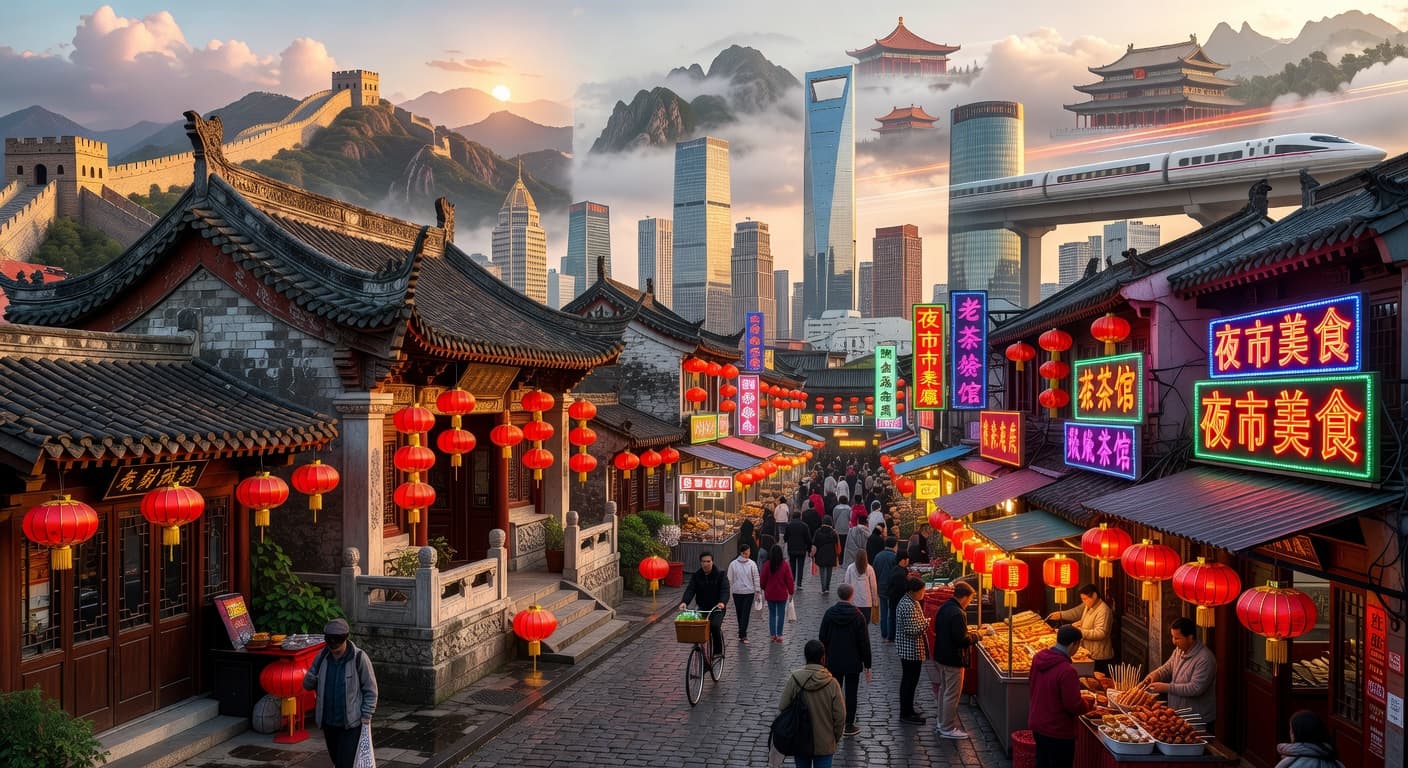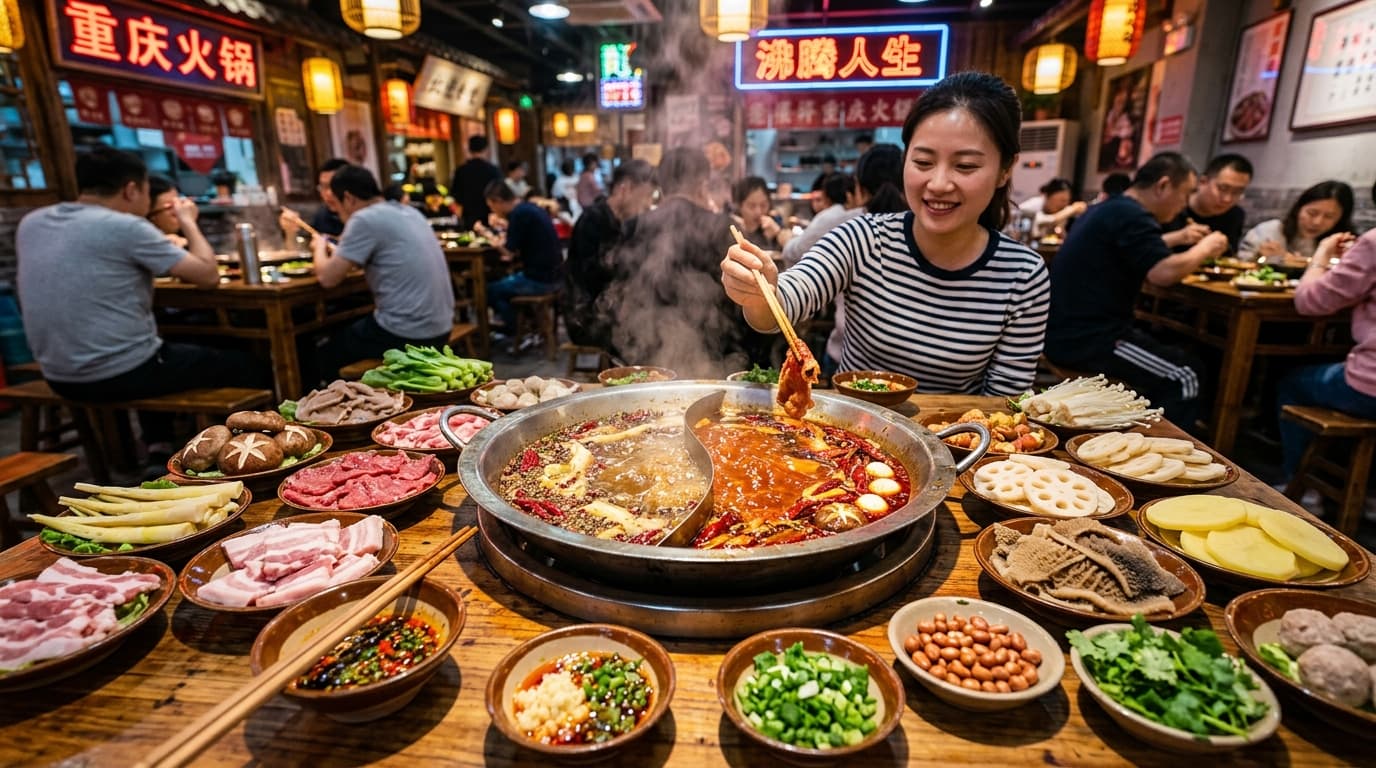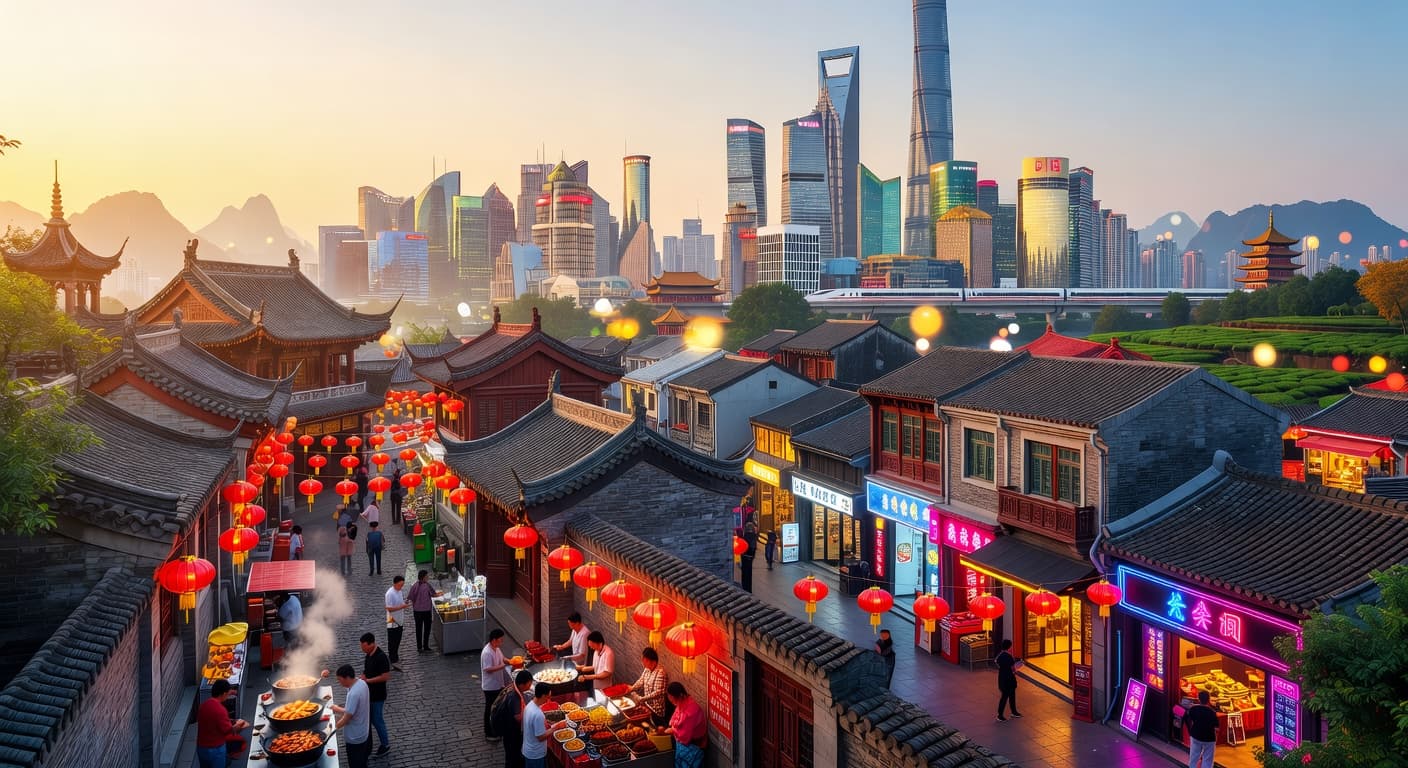
Discover Shanghai beyond the Bund. Local neighborhoods, authentic street food, where to stay, and practical tips from someone who lived here.
Most visitors to Shanghai spend their time photographing the Bund's colonial architecture and riding the Oriental Pearl Tower elevator—which is fine, but you're missing the real Shanghai. During our three years living here, we discovered that the city's soul lives in its neighborhoods: the shikumen lanes of Jing'an, the vintage cafés of Tianzifang, the underground music venues of Huangpu, and the dumpling stalls where locals actually eat.
This guide takes you beyond the postcard views to the Shanghai that residents know and love.
Key Takeaways
| Question | Answer |
|---|---|
| What is the best time to visit? | October to November and March to April. Avoid summer (June-August) when humidity hits 80%+ and temperatures exceed 30°C. |
| How much does it cost? | Budget: 200-400 CNY/day; Mid-range: 600-1200 CNY/day; Luxury: 1500+ CNY/day. Meals range from 15 CNY (street noodles) to 300+ CNY (fine dining). |
| How do I get there? | Pudong International Airport (PVG) or Hongqiao International Airport (SHA). Metro Line 2 connects both to the city center in 30-40 minutes. |
| Is it safe? | Extremely safe. Shanghai has one of China's lowest crime rates. Petty theft on crowded metro lines is the main concern—keep bags secure. |
| What should I book in advance? | Restaurants in Michelin-starred venues and popular hotspots; hotels during October-November peak season; cooking classes and food tours. |
1. Understanding Shanghai's Neighborhoods: Where to Actually Spend Your Time
Shanghai isn't a single cohesive city—it's a collection of distinct neighborhoods, each with its own character, history, and food scene. When we first arrived, we made the mistake of staying near Nanjing Road, the main tourist drag. After a month, we realized we'd barely scratched the surface. The real Shanghai lives in its residential neighborhoods, where you'll find family-run restaurants, vintage markets, and locals going about their daily lives.
The city's layout is split by the Huangpu River. Pudong (east) is the financial district with the Oriental Pearl Tower and Lujiazui's gleaming skyscrapers. Puxi (west) is older, more chaotic, and infinitely more interesting for travelers seeking authentic experiences. Our team spent weeks mapping out the best neighborhoods, and here's what we found:
Jing'an: Shikumen Lanes and Hidden Bars
Jing'an is where Shanghai's pre-1949 charm survives in shikumen—traditional stone-gate townhouses built in the 1920s-1930s. These narrow lanes, lined with ivy-covered walls and lanterns, feel like stepping into a different era. The neighborhood is also Shanghai's craft cocktail capital, with speakeasy-style bars tucked into converted shikumen buildings.
When we explored Jing'an on a Saturday afternoon, we stumbled into a small antique market in a shikumen alley, where vendors sold vintage Shanghai posters, Mao-era ceramics, and old photographs. The neighborhood's main artery, Wujiang Road, is lined with independent boutiques, coffee roasters, and noodle shops that serve locals, not tourists.
Top spots in Jing'an:
- Shikumen Heritage: Walk the lanes between Wujiang Road and Changle Road. Free to explore, and you'll find hidden cafés and galleries.
- Craft Cocktail Scene: Bars like Speak Low and Alchemy Bar are hidden in converted shikumen buildings. Expect 60-100 CNY per cocktail.
- Jing'an Temple: A working Buddhist temple in the heart of the neighborhood. Admission is free; donations appreciated.
Tianzifang: Galleries, Cafés, and Vintage Finds
Tianzifang is Shanghai's bohemian quarter, built on a grid of narrow longtang (alleyway) lanes in the Huangpu District. What started as an artist's enclave in the 1990s has evolved into a carefully curated neighborhood of galleries, vintage shops, and Instagram-famous cafés. Yes, it's touristy—but it's touristy for a reason.
During our time in Shanghai, Tianzifang was where we'd bring visiting friends. The lanes are narrow enough that cars can't enter, creating a pedestrian-only zone that feels removed from the city's chaos. You'll find everything from high-end art galleries to hole-in-the-wall noodle shops. The neighborhood is best explored on foot, without a map—getting lost is the whole point.
What to do in Tianzifang:
- Lane Exploration: Wander the numbered lanes (Lane 210, 248, etc.). Each has different galleries, shops, and cafés.
- Vintage Shopping: Stores like Spin and Pinkoi sell vintage clothing, vinyl records, and handmade goods.
- Café Culture: Sit at a street-side café with a coffee or tea and watch locals and tourists flow past. Budget 25-50 CNY for drinks.
Book Great Wall tours, cooking classes, and experiences in advance with instant confirmation.
Browse Activities on Klook → Scan me
Huangpu: Art Deco, Street Food, and Nightlife
Huangpu (formerly Huang Pu District) is Shanghai's most historically significant neighborhood. It's where the Bund meets the old French Concession, where Art Deco architecture sits alongside contemporary galleries, and where some of Shanghai's best street food happens after dark.
Our team spent an evening exploring Huangpu's food markets and was struck by the contrast: during the day, it's relatively quiet; at night, it transforms into a bustling food scene. The neighborhood is also home to Shanghai's underground music venues, small live-music bars tucked into basements and converted warehouses.
Must-see in Huangpu:
- The Bund (Waitan): Yes, it's touristy, but the 1.5 km waterfront promenade is architecturally significant. Walk it at sunset or after 8 PM when crowds thin out.
- Street Food Markets: Wujiang Road night market and Huimin Street food stalls. Expect 10-30 CNY per item.
- Live Music Venues: Bars like The Shelter and Yuyintang host indie bands. Cover charges 50-150 CNY; drinks 40-80 CNY.
2. Where to Eat: From Street Stalls to Michelin Stars
Shanghai's food scene is polarized: you can eat exceptional xiaolongbao (soup dumplings) for 8 CNY at a hole-in-the-wall, or pay 200+ CNY for them at a Michelin-starred restaurant. Both are worth experiencing, but the real Shanghai food culture happens in the former.
The city is famous for its Shanghai cuisine, which emphasizes rich sauces, slow-braised meats, and sweet flavors—a contrast to the spicier cuisines of Sichuan or Hunan. But Shanghai also absorbs influences from across China and the world, making it one of Asia's most diverse food cities.
Street Food and Local Markets
When we arrived in Shanghai, our colleagues immediately took us to the wet markets and street stalls where locals actually eat. These are where you'll find the most authentic, affordable, and delicious meals. The experience is chaotic—vendors shouting, steam rising from woks, the smell of soy sauce and sesame oil—but it's real Shanghai.
Essential street foods to try:
- Xiaolongbao (soup dumplings): 8-15 CNY for a steamer basket (4-6 dumplings). Jia Jia Tang Bao and Nanxiang Steamed Bun Restaurant are famous, but any small shop in a residential neighborhood will serve equally good versions.
- Shengjianbao (pan-fried buns): Similar to xiaolongbao but with a crispy bottom. 10-20 CNY per basket.
- Scallion pancakes (cong you bing): Crispy, flaky, addictive. 3-5 CNY each. Look for street vendors in the morning.
- Stir-fried noodles (chow mein): 15-25 CNY. Watch the vendor toss the noodles—it's part of the experience.
Did You Know? Shanghai's xiaolongbao tradition dates back to the 19th century, when the Nanxiang area became famous for these soup dumplings. Today, Shanghai consumes an estimated 10 million xiaolongbao per day.
Source: China Daily
Casual Dining: Noodle Shops and Dumpling Houses
For sit-down meals without the tourist markup, head to the noodle shops and dumpling houses scattered throughout residential neighborhoods. These places are usually small (6-10 tables), with a menu in Chinese only, and prices that won't exceed 30 CNY per person.
During our exploration of Jing'an, we found a tiny noodle shop on a side street that served hand-pulled noodles (la mian) for 12 CNY. The owner didn't speak English, but the food was exceptional. This is the Shanghai experience most visitors miss.
Where to find them:
- Residential neighborhoods: Jing'an, Changning, Xuhui. Avoid the main commercial streets.
- Lunch hours (11 AM-1 PM): These shops are packed with office workers. Go early or late to avoid queues.
- Look for crowds: If a small restaurant is full of locals, it's good.
Mid-Range and Fine Dining
Shanghai has a thriving restaurant scene that ranges from innovative fusion to Michelin-starred fine dining. Our team has eaten at several Michelin-starred establishments, and while the experience is impressive, some of the best meals we've had cost 80-150 CNY at mid-range restaurants.
For mid-range dining, neighborhoods like Tianzifang, Jing'an, and the French Concession have excellent options. These restaurants typically offer Shanghai cuisine with modern twists, craft cocktails, and English menus. Expect 100-300 CNY per person.
For fine dining, Shanghai has multiple Michelin-starred restaurants. Reservations are essential and should be made weeks in advance. Meals typically cost 300-800 CNY per person.
Discover guided tours in Beijing, Shanghai, Xi'an and beyond.
Browse Tours on GetYourGuide → Scan me
3. Neighborhoods Worth Exploring: Beyond the Tourist Trail
Shanghai has 16 districts, but most visitors only see 2-3. We've spent enough time here to identify the neighborhoods that offer the best balance of authenticity, accessibility, and things to do. Here are the ones we keep returning to:
The French Concession: Tree-Lined Streets and Vintage Charm
Book high-speed trains, buses, and flights across China. Trip.com is the #1 platform for China transport.
Book Transport on Trip.com →The French Concession is a 5.3 square kilometer area that was under French control from 1849 to 1943. It retains a distinctly European character, with tree-lined streets, Art Deco villas, and a slower pace than the rest of Shanghai. It's touristy, but the tourism is concentrated on a few main streets (Huaihai Road, Xintiandi), leaving quieter lanes for exploration.
When we walked through the French Concession on a weekday morning, we found ourselves on tree-lined streets with barely another person in sight. Small cafés opened their doors, locals rode bicycles, and the pace felt almost Mediterranean. It's the closest Shanghai gets to feeling like a European city.
What to do:
- Wander the lanes: Streets like Fuxing Road and Changle Road are lined with independent boutiques, galleries, and cafés.
- Xintiandi: A renovated shikumen complex with high-end restaurants and bars. Touristy but architecturally interesting.
- Fuxing Park: A 8.9-hectare park in the heart of the neighborhood. Free entry. Locals come here to exercise, play cards, and relax.
Xuhui: Art Museums and Riverside Walks
Xuhui, on the west bank of the Huangpu River, is less touristy than Huangpu but equally interesting. It's home to several art museums, a riverside promenade, and some of Shanghai's best restaurants. The neighborhood has a more residential feel, with tree-lined streets and a younger demographic.
Our team spent an afternoon at the Yuz Museum, a contemporary art space in a former airplane hangar. The building itself is worth visiting, and admission is 80 CNY. The neighborhood also has excellent coffee culture—we found a roastery called Manner Coffee that serves exceptional espresso for 12-18 CNY.
Highlights:
- Yuz Museum: Contemporary art in a dramatic industrial space. 80 CNY admission.
- Huangpu River Promenade: A 45 km walking/cycling path along the river. The Xuhui section is quieter than the Pudong side.
- Local Restaurants: Xuhui has excellent mid-range dining without the tourist markup of the French Concession.
Changning: Markets, Temples, and Authentic Shanghai
Changning is a residential district in western Shanghai that most tourists never visit. It has no major landmarks, no Michelin-starred restaurants, and no Instagram-famous cafés. It's also where we found some of our most memorable Shanghai experiences.
The neighborhood has several traditional temples, wet markets where locals shop, and small restaurants that serve authentic Shanghai cuisine. When we visited Changning's Longhua Temple on a weekday morning, we were the only non-Chinese visitors. The temple is active—monks were chanting, incense was burning, and the atmosphere felt genuinely spiritual rather than performative.
Why visit Changning:
- Longhua Temple: One of Shanghai's oldest temples (dating to 977 AD). Free entry. Much quieter than the famous temples.
- Longhua Wet Market: A traditional Chinese market where locals buy produce, meat, and seafood. Fascinating for observing daily life.
- Local Food: Small restaurants serving authentic Shanghai dishes at local prices (20-40 CNY per person).
Download the Alipay or WeChat Pay apps before arriving—most Shanghai restaurants, markets, and shops are cashless. Having both apps ensures you won't get stuck without payment options.
4. Where to Stay: Hotels for Every Budget
Shanghai's accommodation ranges from 50 CNY dorm beds to 2000+ CNY luxury suites. The neighborhood you choose matters more than the hotel itself—staying in Jing'an or Tianzifang puts you in the heart of the action, while staying in Pudong means you're near the financial district but far from authentic experiences.
Budget Accommodations (50-150 CNY per night)
Shanghai has excellent hostels and budget hotels, particularly in Huangpu and Jing'an. Most offer dorm beds (50-80 CNY) and private rooms (100-150 CNY). The quality varies, but several hostels are well-maintained and have good social atmospheres.
When we researched budget options, we found that staying in a hostel in Jing'an put us within walking distance of restaurants, bars, and the metro. The trade-off is noise and lack of privacy, but for short stays, it's excellent value.
Budget neighborhoods:
- Huangpu: Close to the Bund and street food markets. More chaotic but central.
- Jing'an: Quieter than Huangpu, better food scene, good metro connections.
Mid-Range Hotels (300-800 CNY per night)
Mid-range hotels offer private rooms with decent amenities—air conditioning, private bathroom, sometimes a small desk. Many are located in converted shikumen buildings or renovated older structures, giving them character that chain hotels lack.
Our team stayed at several mid-range hotels during our time in Shanghai. The best ones are in Tianzifang, Jing'an, and the French Concession. These neighborhoods have good restaurant scenes, metro access, and walkability. Expect to pay 400-600 CNY for a decent mid-range room.
Best mid-range neighborhoods:
- Tianzifang: Walkable, galleries and cafés on your doorstep, good restaurants.
- Jing'an: Central location, excellent food scene, quieter than Huangpu.
- French Concession: Tree-lined streets, upscale dining, but pricier.
Luxury Hotels (1200+ CNY per night)
Shanghai has world-class luxury hotels, many with views of the Huangpu River or Lujiazui skyline. These offer the full amenities—spas, fine dining, concierge services—but you're paying for the brand and location more than unique experiences.
If you're staying in a luxury hotel, we recommend choosing one in Huangpu (for Bund views) or Jing'an (for neighborhood character). Pudong's luxury hotels are architecturally impressive but isolated from the city's authentic neighborhoods.
Compare hotels across China with free cancellation on most bookings.
Search Hotels on Booking.com → Scan me
5. Getting Around: Metro, Taxis, and Bikes
Shanghai's public transportation is efficient, affordable, and extensive. The metro system has 21 lines covering 831 km, making it the world's longest metro system by length. During our three years here, we relied almost entirely on the metro for getting around.
The Metro System
The Shanghai Metro is the fastest, cheapest, and most reliable way to get around. A single journey costs 3-9 CNY depending on distance. Most journeys within the city center cost 5-6 CNY. Buy a rechargeable card (Jiao Tong Card) at any metro station for 20 CNY, then load it with credit.
When we first arrived, we were intimidated by the metro—it's crowded during rush hours (7-9 AM, 5-7 PM), and signage is in Chinese and English. But after a few trips, it became second nature. Download the Metro Shanghai app for real-time information and route planning.
Metro tips:
- Avoid rush hours: 7-9 AM and 5-7 PM are packed. Travel mid-morning or afternoon.
- Get a Jiao Tong Card: Faster than buying individual tickets and works on metro, buses, and some taxis.
- Line 2: Circles the city and connects to most major neighborhoods. Useful for orientation.
Taxis and Ride-Sharing
Taxis are cheap (2.5 CNY base fare, then 2.5 CNY per km) but getting one during rush hour is difficult. Ride-sharing apps like Didi (China's Uber equivalent) are more reliable. Download Didi before arriving—you'll need a Chinese phone number to register, but many hostels can help with this.
During our time in Shanghai, we used Didi for late-night journeys and when carrying luggage. Prices are comparable to taxis, and you can request English-speaking drivers.
Bicycles and E-Bikes
Shanghai has excellent bike-sharing infrastructure. Apps like Mobike and Ofo let you unlock bikes using your phone (1-2 CNY per 30 minutes). The city has dedicated bike lanes on major roads, making cycling safe and practical.
When we explored neighborhoods like Jing'an and the French Concession, we rented bikes. It's a great way to move at a local pace and discover hidden streets.
6. What to See and Do: Beyond the Bund
Shanghai's famous attractions—the Bund, Oriental Pearl Tower, Yu Garden—are worth visiting once, but they're not where the city's magic lives. Here are the experiences that made our time in Shanghai memorable:
Art and Culture
Search flights to Beijing, Shanghai, Guangzhou, Chengdu at the best prices.
Search Flights on Trip.com →Shanghai has a thriving contemporary art scene, with galleries and museums scattered throughout the city. The Power Station of Art (Huangpu) is a contemporary art museum in a converted power plant. Admission is 50 CNY. The Yuz Museum (Xuhui) specializes in contemporary art and design. Admission is 80 CNY.
When we visited the Power Station of Art on a weekday afternoon, we had entire galleries to ourselves. The building's industrial architecture is as impressive as the art inside.
Street Art and Photography
Shanghai's neighborhoods are filled with street art, vintage architecture, and photogenic details. Tianzifang and the French Concession are obvious choices, but we found equally interesting street art in Jing'an and Changning.
During our exploration, we discovered a series of murals in an alley behind Wujiang Road in Jing'an. They weren't famous or Instagram-famous—just local artists expressing themselves. This is the Shanghai that makes the city worth spending time in.
Food Tours and Cooking Classes
Several companies offer food tours of Shanghai's neighborhoods, with guides who know the best street food stalls and local restaurants. These tours typically cost 200-400 CNY per person and last 3-4 hours. They're excellent for learning about Shanghai's food culture and discovering places you wouldn't find on your own.
Cooking classes are also available, typically 300-600 CNY for a 2-3 hour class where you'll learn to make dumplings, noodles, or other Shanghai dishes.
7. Food Specialties: What to Eat in Shanghai
Shanghai cuisine is distinctive—it emphasizes rich, slightly sweet flavors, slow-braised meats, and fresh seafood. Here are the dishes you should try:
Must-Try Shanghai Dishes
Xiaolongbao (soup dumplings): Delicate wrappers filled with pork and a pocket of savory broth. Eat them by placing the whole dumpling in a spoon, biting a small hole, and sipping the broth before eating the dumpling.
Shengjianbao (pan-fried buns): Similar to xiaolongbao but with a crispy, caramelized bottom. The contrast between the crispy bottom and tender top is what makes them special.
Hairy crab (da zha xie): A seasonal delicacy (September-November) featuring crabs with fuzzy shells. They're steamed and served with vinegar and ginger. Expect to pay 80-150 CNY per crab at restaurants, or find them at markets for 30-50 CNY.
Red-braised pork belly (hong shao rou): Pork belly slow-braised in soy sauce, sugar, and spices until it's tender and caramelized. Rich, savory, and deeply satisfying.
Stir-fried river snails (luosifen): Small river snails stir-fried with fermented bean paste and aromatics. Eat them by sucking the meat out of the shell.
Did You Know? Shanghai's hairy crabs are a protected delicacy. The crabs are only harvested during specific seasons (September-November for females, October-December for males) to protect breeding populations. A single premium hairy crab can cost 200+ CNY.
Where to Eat These Dishes
For xiaolongbao and shengjianbao, go to small dumpling shops in residential neighborhoods rather than tourist-oriented restaurants. The quality is often better and the price is always lower. Our favorite was a small shop on a side street in Jing'an that had a queue of locals every morning.
For hairy crabs, visit a seafood restaurant during the season (September-November). Alternatively, buy them at a wet market and have a restaurant cook them for you (they'll charge a small fee).
For red-braised pork belly and other braised dishes, look for small restaurants serving lao Shanghai cai (old Shanghai cuisine). These are often family-run establishments with no English menu.
8. Practical Information: Getting There and Staying Safe
Getting to Shanghai
Shanghai is served by two major airports: Pudong International Airport (PVG) and Hongqiao International Airport (SHA). Most international flights arrive at Pudong, which is 30 km east of the city center. The metro (Line 2) connects Pudong to the city center in about 40 minutes for 8 CNY. Taxis cost 50-70 CNY.
Hongqiao is closer to the city center (15 km west) and serves domestic flights and some international routes. Metro Line 2 connects Hongqiao to the city center in about 20 minutes.
If you're traveling from other Chinese cities, Shanghai is well-connected by high-speed rail. The journey from Beijing takes about 5 hours on the G-train network. See our guide on getting around China by train for more details.
Money and Payments
Shanghai is almost entirely cashless. Most restaurants, shops, and even street vendors accept mobile payments through WeChat Pay or Alipay. Download both apps before arriving—you'll need a Chinese phone number to register, but many hostels and hotels can help.
If you need cash, ATMs are ubiquitous and accept most international cards. Exchange rates at ATMs are better than at money changers.
Budget expectations:
- Street food meal: 15-30 CNY
- Casual restaurant meal: 40-80 CNY
- Mid-range restaurant meal: 100-300 CNY
- Metro journey: 5-6 CNY
- Hostel dorm bed: 50-80 CNY per night
- Mid-range hotel: 400-600 CNY per night
Safety and Health
Shanghai is one of China's safest cities. Violent crime is rare, and petty theft is the main concern. Keep your bag secure on crowded metro lines and avoid displaying expensive electronics.
Healthcare is excellent. Shanghai has several international hospitals with English-speaking staff. Travel insurance is recommended but not essential.
For more information, see our China safety guide and health guide.
Language and Communication
English is spoken in tourist areas, hotels, and restaurants, but not widely in local neighborhoods. Download Google Translate (or use WeChat's translation feature) to translate menus and signs. Learning a few basic Mandarin phrases is helpful and appreciated by locals.
For staying connected, get a local SIM card or eSIM. China Mobile and China Unicom are the major providers. SIM cards cost 20-50 CNY with data packages starting at 30 CNY for 5 GB per month.
Get a China eSIM before you land. Some plans include [VPN](https://nordvpn.tpo.lv/ekHF1i55) access.
Get Saily eSIM for China → Scan me
9. When to Visit: Seasonal Guide
Shanghai's weather varies dramatically by season. The best times to visit are spring (March-May) and autumn (September-November), when temperatures are mild (15-25°C) and humidity is manageable.
Spring (March-May)
China high-speed rail tickets. Book online, skip the queue.
Book Train Tickets →Spring is pleasant, with temperatures rising from 15°C in March to 25°C in May. Humidity increases as summer approaches. March and April are excellent months to visit—comfortable weather and fewer crowds than autumn.
During our spring visits to Shanghai, we found the weather perfect for walking neighborhoods and exploring outdoor markets. The only downside is that it's peak season, so hotels are pricier and popular restaurants are busier.
Summer (June-August)
Summer is hot and humid. Temperatures exceed 30°C, and humidity often reaches 80%+. It's uncomfortable for walking around, and the city feels crowded with domestic tourists. We recommend avoiding summer unless you have no other option.
Autumn (September-November)
Autumn is Shanghai's best season. Temperatures drop from 28°C in September to 15°C in November. Humidity decreases, and the weather is perfect for exploring neighborhoods on foot. October is peak season—expect higher prices and larger crowds.
Winter (December-February)
Winter is mild by northern China standards (5-10°C) but can be damp and gray. It's not unpleasant, but it's not ideal for walking around. This is low season, so hotels are cheaper and restaurants are less crowded.
10. Sample Itineraries
1-Day Itinerary: Shanghai Essentials
If you only have one day in Shanghai, focus on a single neighborhood rather than trying to see everything.
Morning (8-11 AM):
- Breakfast at a local noodle shop (12-20 CNY)
- Explore Tianzifang's lanes and galleries (free)
- Coffee at a local café (15-25 CNY)
Afternoon (11 AM-5 PM):
- Lunch at a dumpling shop (20-30 CNY)
- Visit the Yuz Museum or Power Station of Art (50-80 CNY admission)
- Walk the Huangpu River promenade (free)
Evening (5 PM-10 PM):
- Dinner at a mid-range Shanghai restaurant (80-150 CNY)
- Drinks at a bar in Jing'an (50-100 CNY per drink)
- Night walk along the Bund (free)
Total cost: 250-500 CNY per person (excluding accommodation)
3-Day Itinerary: Shanghai Deep Dive
Day 1: Huangpu and the Bund
- Morning: Explore the Bund at sunrise (free)
- Breakfast: Xiaolongbao at a local shop (15 CNY)
- Mid-morning: Walk through Tianzifang (free)
- Lunch: Street food at Wujiang Road market (25-40 CNY)
- Afternoon: Visit the Power Station of Art (50 CNY)
- Evening: Dinner in Tianzifang (80-150 CNY)
- Night: Drinks at a bar in Huangpu (50-100 CNY per drink)
Day 2: Jing'an and the French Concession
- Morning: Breakfast at a local café in Jing'an (15-25 CNY)
- Mid-morning: Explore Jing'an's shikumen lanes (free)
- Lunch: Noodles at a local shop (20-30 CNY)
- Afternoon: Walk through the French Concession and Fuxing Park (free)
- Evening: Dinner at a mid-range restaurant (100-200 CNY)
- Night: Cocktails at a speakeasy bar (60-100 CNY per drink)
Day 3: Xuhui and Local Neighborhoods
- Morning: Breakfast and explore Xuhui (15-25 CNY)
- Mid-morning: Visit the Yuz Museum (80 CNY)
- Lunch: Local restaurant in Xuhui (50-100 CNY)
- Afternoon: Bike ride along the Huangpu River promenade (20 CNY bike rental)
- Evening: Dinner at a local restaurant (60-120 CNY)
- Night: Live music at a venue in Huangpu (50-150 CNY cover + drinks)
Total cost (excluding accommodation): 600-1200 CNY per person
We may earn a small commission from bookings made through our links, at no extra cost to you. This helps us keep creating free travel guides.
Frequently Asked Questions
How many days do you need in Shanghai?
Three days is ideal for experiencing Shanghai beyond the tourist attractions. This gives you time to explore 2-3 neighborhoods, eat at various restaurants, and get a feel for local life. Two days is the minimum if you're short on time; five days is better if you want to visit nearby cities like Suzhou or Hangzhou.
What's the best neighborhood to stay in?
It depends on your priorities. For authenticity and food, stay in Jing'an or Huangpu. For walkability and cafés, stay in Tianzifang or the French Concession. For a quieter experience, stay in Xuhui or Changning. Avoid Pudong unless you specifically want to be near the financial district.
Is Shanghai expensive?
Shanghai is more expensive than other Chinese cities, but it's still affordable compared to Western cities. Street food costs 15-30 CNY, mid-range meals cost 80-150 CNY, and mid-range hotels cost 400-600 CNY per night. Budget travelers can eat and sleep for 200-300 CNY per day; mid-range travelers should budget 600-1000 CNY per day.
What's the best time to visit Shanghai?
October and November are ideal—mild weather, lower humidity, and comfortable for walking. March and April are also excellent. Avoid June-August (hot and humid) and avoid October if you dislike crowds and higher prices.
Do I need to speak Chinese to get around Shanghai?
English is spoken in tourist areas and hotels, but not widely in local neighborhoods. Download translation apps and learn a few basic phrases. Locals appreciate the effort, even if your pronunciation is terrible.
Can I visit Shanghai as a day trip from Beijing?
Technically yes—high-speed trains connect Beijing and Shanghai in 5 hours. But a day trip doesn't give you time to experience the city. We recommend staying at least 2-3 days. See our guide on Beijing to Shanghai travel for more details.
What should I pack for Shanghai?
Pack layers—Shanghai's weather changes seasonally. Comfortable walking shoes are essential (you'll be exploring neighborhoods on foot). Bring a small umbrella for spring and summer. Sunscreen is important. Download offline maps and translation apps before arriving.
Conclusion
Shanghai is a city of contradictions—ultramodern skyscrapers next to century-old temples, international sophistication alongside local authenticity, tourist crowds and hidden neighborhoods where you won't see another foreigner. The Bund and Oriental Pearl Tower are worth seeing once, but the real Shanghai lives in its neighborhoods: the dumpling stalls of Jing'an, the art galleries of Tianzifang, the riverside walks of Xuhui, and the temples of Changning.
Our three years living in Shanghai taught us that the best travel experiences come from slowing down, eating where locals eat, and getting lost in neighborhoods without a plan. This guide gives you the framework; the rest is up to you.
For more comprehensive travel planning, check out our complete Shanghai travel guide and Shanghai food guide. If you're planning a broader China trip, see our East China region guide for information on nearby destinations.
Safe travels, and enjoy discovering the Shanghai that most visitors miss.

About the Author
Go2China Team
The Go2China editorial team combines first-hand travel experience with deep cultural knowledge to bring you accurate, up-to-date guides for exploring China — from the Great Wall and Forbidden City to hidden gems off the tourist trail.
- ✓Lived and traveled extensively across China
- ✓Native & bilingual Mandarin speakers on team
- ✓Verified info from official Chinese tourism sources